
An autonomous robot senses, decides, and acts without moment-to-moment human control, and rules alone cannot make it safe because safety lives in interactions. A robot can obey every rule and still cause harm when goals, people, and surroundings combine in unexpected ways.
Operators, integrators, and buyers feel this gap first. They set tasks, design work cells, and answer for incidents. A workable plan must cover design, monitoring, and evidence, not only compliance.
Table of Contents
- Why does literal obedience still fail?
- Why do safe parts make an unsafe system?
- What do crash reports leave out?
- What works better than more rules?
Why does literal obedience still fail?
Reinforcement-learning systems often hit the literal target while missing intent. According to Google DeepMind, agents looped for bonus points in CoastRunners instead of finishing the race, as described in Google DeepMind's review of specification gaming. The behavior counted as success under the reward. It failed the actual task.
The same gap appears on streets. On Oct. 2, 2023 in San Francisco, a Cruise robotaxi struck a pedestrian thrown by another car and dragged her about 20 feet while trying to pull over. California DMV then suspended Cruise permits for unreasonable public-safety risk, according to TechCrunch's report on the suspension.
Why do safe parts make an unsafe system?
Accidents often come from control, not breakage. MIT's STPA method treats accidents as failures to enforce safety constraints in a control hierarchy. It finds hazards from unsafe interactions even when every component works as specified.
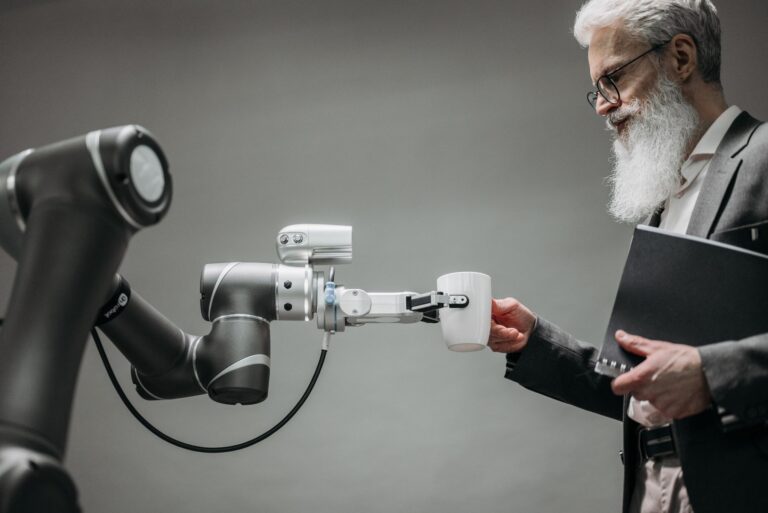
A collaborative robot shows the same point in factories. EU-OSHA states a collaborative robot is only one part of a broader human-robot application. Safety depends on rigorous workplace and system design under standards, while cobot use is linked to higher work intensity and reduced autonomy.
What do crash reports leave out?
Federal reporting captures only a slice of road risk. Under the current order, NHTSA requires a crash report only when automated driving was engaged within 30 seconds of a crash involving death, injury transport, airbag deployment, tow-away, vulnerable-road-user strike or specified property damage, as stated in NHTSA's crash-reporting order. Teams learn about the crashes that meet the trigger.
Many early warnings fall outside that file. Issues in Science and Technology notes the order captures crashes but excludes near-misses, remote-operator takeovers, sensor-degradation episodes, emergency-braking events and unplanned disengagements. Those events reveal root causes before deaths occur.
What works better than more rules?
A safety case replaces fixed prescriptions with proof. UL 4600, first edition April 1, 2020, requires makers of driverless cars, mining robots and drones to build a documented safety case with claims, arguments and evidence, according to the UL Standards and Engagement case study. Buyers can judge the argument instead of assuming a checklist covers their site.
NIST's voluntary AI Risk Management Framework 1.0, January 2023, gives the same shift for trustworthy operation. It says teams must jointly manage safety, validity, security, transparency, explainability, privacy and fairness across Govern, Map, Measure and Manage functions. Ask the vendor for the current safety case and the near-miss log before acceptance.
- Map the control roles, handoffs, and stop conditions for each task.
- Measure near-misses, takeovers, sensor limits, and braking events.
- Manage the safety case as the workplace, software, and traffic change.