
Foundry Robotics, a company that runs factories for customers, is using its $100 million Series A to build autonomous factories for complex assembly. The Robotics Media reports the oversubscribed round closed Oct.
28, 2026 and funds expansion of its 130,000-square-foot factory in Emeryville, California the Series A report. Robotics 24/7 reports Foundry builds and operates AI-controlled robotic cells with manufacturing experts rather than selling robots or software licenses the company announcement. It serves defense and commercial buyers whose products stall at assembly, according to Tectonic Defense.
Table of Contents
- What buyers actually purchase
- Which hardware is in scope?
- How does hourly changeover work?
- What does FoundryOS connect?
- Who uses it now, and what is the limit?
What buyers actually purchase
Buyers purchase throughput, not equipment. The Robotics Media describes the model as manufacturing-as-a-service. Human technicians work beside robots to handle checks and edge cases.
That structure lets a defense startup move from finished design to volume in weeks without financing a dedicated line. Capital risk stays with Foundry while it scales a single factory, according to the same reporting. Readers should weigh speed against dependence on one site.
Which hardware is in scope?
Tectonic Defense, summarizing the Business Wire release, lists defense and infrastructure hardware as the funding target the funding breakdown. The list centers on systems where assembly is slow or specialized.
The mix points to small and mid-volume builds. Managers can compare their bottleneck part to that list before contacting a service.
- drones and quadcopters
- underwater vehicles
- satellites and satellite subsystems
- ground robots and robotic dogs
- autonomous-vehicle subassemblies
How does hourly changeover work?
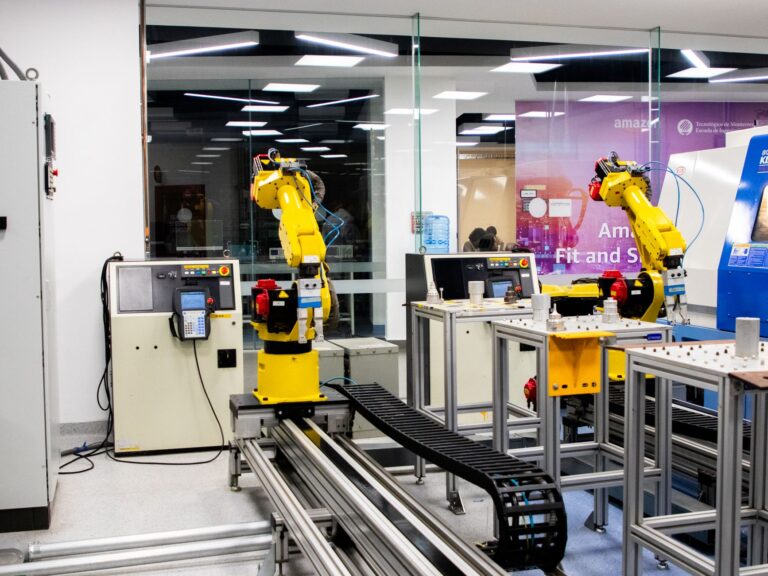
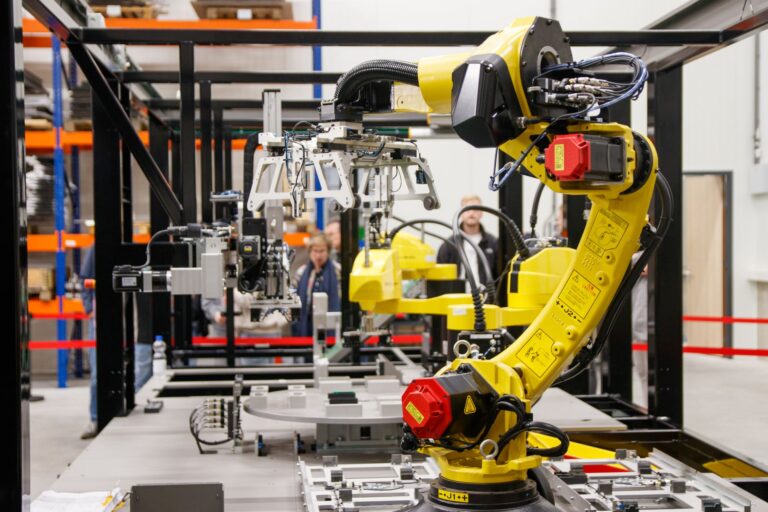
The Emeryville plant uses reconfigurable robotic cells, according to The Robotics Media. The cells assemble different products hour by hour instead of running one fixed line. The same reporting says Foundry's footprint grew twentyfold in the past year.
HII Unmanned Systems' Duane Fotheringham described production capacity as a national constraint on getting unmanned systems to the fleet. The expansion aims at that constraint. For readers, the practical test is changeover. Ask what fixtures, tests, and inspections move with each product switch.
What does FoundryOS connect?
Intelligent CIO North America describes FoundryOS as a single agentic robotic foundation-model system linking robots, factory-floor operations, and cloud systems the FoundryOS description. Every production run feeds data back to improve later runs.
That feedback loop is the efficiency claim. Later runs should need less tuning and catch defects earlier. Buyers can ask which run data they receive and which stays in the platform.
Who uses it now, and what is the limit?
Tectonic Defense says Foundry already assembles robotic dogs, quadcopters, unmanned underwater vehicles, and satellite subsystems. It reports five paying customers, including shipbuilder HII. The work covers defense and commercial buyers.
The limit is scale and concentration. Throughput service removes the need for a customer-owned line. Ask how your assembly time is queued if Emeryville fills before a second site opens.