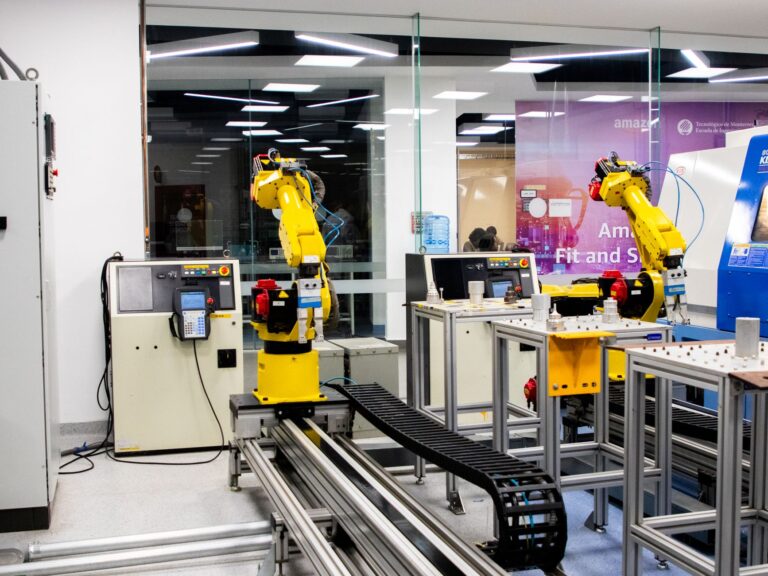
Machenta teaches robots with a foundation model pretrained entirely in simulation to learn how to learn. After watching one human demonstration, it performs a new physical task instantly with no task-specific retraining.
The CapTable lists an 11-person London Imperial spinout founded in 2025 by CEO Edward Johns and CTO Vitalis Vosylius. It left stealth on October 27, 2026 with a $40 million seed round co-led by Creandum and Union Square Ventures, Imperial College London reports. Imperial College London describes the financing as the largest seed raise ever by a UK robotics startup.
Table of Contents
- What happens after one demonstration?
- Why train only in simulation?
- Who feels the change first?
- What remains to prove?
What happens after one demonstration?
Instant Robot Learning means a single human example sets the robot task. The robot watches once, then executes the same kind of physical work on new objects. Machenta says in its Instant Robot Learning post the model needs no additional task-specific training.
That is a break from current deployment practice. Machenta says factories and warehouses now need hours or days of demonstrations plus hours or days of retraining for every task. One demo replaces both collection and retraining.
Why train only in simulation?
The model is pretrained entirely in simulation without any real-world training data. It learns how to learn new physical skills rather than memorizing individual tasks. That design aims to transfer directly to real robots and objects.
Preview clips show robots handling previously unseen objects after one demo. Generalization comes from the learning method, not from prior exposure to that object. For readers, the test is simple: same skill, different shape, size, and placement.
Who feels the change first?
Factory and warehouse deployers face the retraining bottleneck. New SKUs, packaging changes, and line changeovers each trigger data collection and tuning today.
Instant setup would shorten that loop from days to minutes. Practical teams can map the fit now:.
- List tasks with frequent object or layout changes
- Note cycle time lost to demos and retraining per change
- Identify one cell where a single-demo setup would pay
- Keep force, safety, and fixture needs separate from vision and motion
What remains to prove?
Public evidence so far consists of company preview videos. Unite.AI notes the demos show unseen objects handled after one example with no independent external test or commercial deployment yet reported.
Treat speed claims as vendor-demonstrated until your parts run the same way. Ask a vendor to teach your exact part from one demo on your floor before you sign.