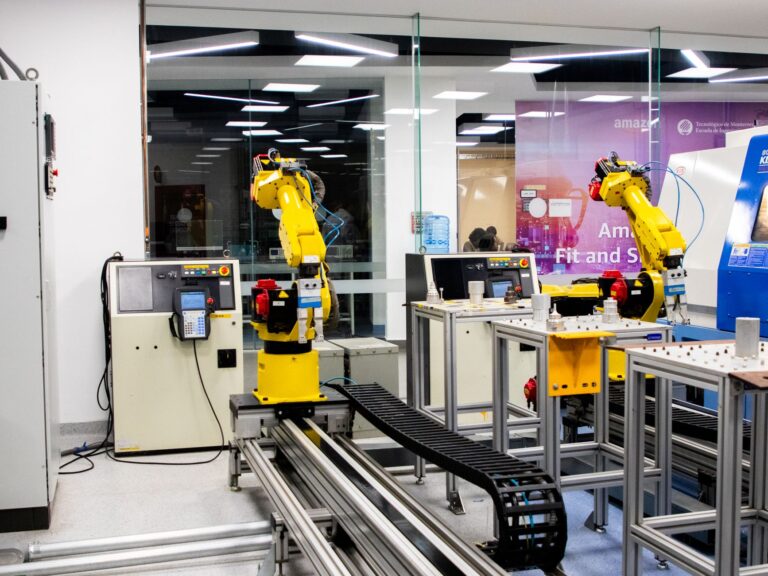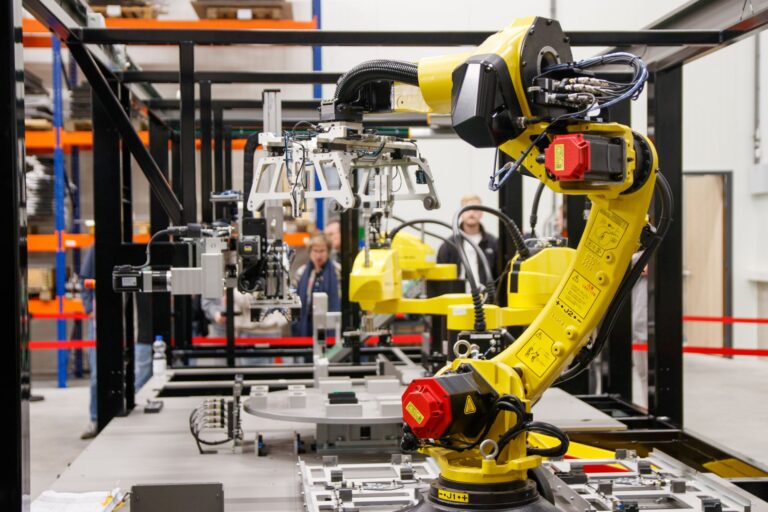

Capital-Riesgo.es reports that YK-Robotics has closed a €1 million seed round co-led by Draper B1 and First Drop the seed-round report. The goal is to make the whole YK-Platform operable entirely in natural language. A robotic cell is a self-contained workstation where a robot performs a fixed factory task. YK-Platform acts as the cell's brain, turning plain-word descriptions into the industrial protocols and programming languages that run the equipment.
Table of Contents
- How does word-based programming work?
- Which robots and factory jobs fit?
- How can manufacturers adopt it?
- What happens next in Spain?
How does word-based programming work?
An operator describes the need in everyday language. The platform then generates the code and machine commands required to execute it. Dealroom describes YK-Platform as the brain of the cell, translating task descriptions into runnable controls Dealroom's funding brief.
The same system covers design, simulation, programming, commissioning, operation, and maintenance. Digital-twin testing lets teams check a cell virtually before running it on the floor. Its AI also supports diagnosis and resolution of issues inside each deployed cell.
Which robots and factory jobs fit?
The platform is hardware-agnostic across major robot brands. Dealroom lists KUKA, FANUC, ABB, Universal Robots, and Comau among the supported makers Dealroom's funding brief.
Early target work is repetitive production handling, not one-off custom automation: That focus matters for small and mid-size plants. These jobs are common, structured, and easier to standardize across cells.
- palletising boxes or bags at end of line
- machine tending for loading and unloading equipment
- picking parts or products for sorting and packing
How can manufacturers adopt it?
YK-Robotics sells turnkey robotic cells and robotics-as-a-service. Buyers include manufacturers, system integrators, and machine builders. Turnkey means the supplier delivers a working cell ready for production.
Robotics-as-a-service spreads cost over time instead of one large equipment purchase. Integrators and machine builders can also embed the platform in their own offers. That route may suit plants that already use an automation vendor.
What happens next in Spain?
Funds will roll out cells first in Catalonia, Valencia, Aragon, and the Basque Country. The company also plans to expand its partner network and grow its team mainly in Barcelona, with hiring already opened. Readers evaluating a pilot should ask about installation support in their region.
Partner coverage will affect commissioning speed and service response. At €1 million, this is a modest early-stage bet. Its significance depends on proving safe, dependable operation across real factory equipment, not only translating words into code.