

AeroVironment, trading under the ticker AVAV, has positioned itself as the dominant force in tactical unmanned systems for military applications, earning comparisons to Google’s search engine monopoly but in the lethal domain of autonomous warfare. The Monrovia, California-based company controls an estimated 85 percent of the small unmanned aircraft systems market for the U.S. Department of Defense, a concentration of market power that makes it the default supplier when American soldiers need eyes in the sky or precision strike capability at the squad level. Just as Google became synonymous with internet search, AeroVironment has become the name warfighters associate with tactical drones, from the hand-launched Raven reconnaissance aircraft to the Switchblade loitering munition that has reshaped modern combat in Ukraine.
The comparison to Google extends beyond market share to the company’s approach to data, integration, and ecosystem lock-in. AeroVironment has spent decades building relationships with military procurement offices, training generations of soldiers on its platforms, and creating a family of systems designed to work together seamlessly. When a military unit needs to add strike capability to its existing reconnaissance drones, the path of least resistance leads straight back to AeroVironment. This article examines how the company achieved this dominance, the technology behind its product lines, the competitive threats it faces, and what investors and defense observers should understand about the future of autonomous warfare.
Table of Contents
- Why Is AeroVironment Called the Google of Autonomous Warfare?
- How Switchblade Changed Modern Combat Doctrine
- The Technology Behind AeroVironment’s Drone Ecosystem
- Financial Performance and Defense Budget Dependency
- Competitive Threats and Market Erosion Risk
- Export Controls and International Market Challenges
- The Future of Autonomous Warfare and AeroVironment’s Position
- Conclusion
Why Is AeroVironment Called the Google of Autonomous Warfare?
The nickname stems from AeroVironment’s overwhelming market position in small tactical drones, similar to how google commands roughly 90 percent of global search queries. When the U.S. Army, Marine Corps, or Special Operations Command needs small unmanned aircraft, they overwhelmingly turn to AeroVironment products. The company’s Raven, Puma, and Wasp systems constitute the backbone of American tactical intelligence, surveillance, and reconnaissance capabilities at the battalion level and below. This dominance did not happen overnight. AeroVironment pioneered the small drone category in the 1980s and 1990s, initially developing solar-powered high-altitude platforms before pivoting to tactical systems.
The company won the Army’s initial small UAS contract in 2005 and has successfully defended its position through successive competitive rebids. By 2023, more than 30,000 of its small unmanned aircraft had been delivered to military customers, creating an installed base that generates recurring revenue through training, spare parts, and upgrades. The Google comparison also reflects how AeroVironment benefits from network effects and switching costs. Military personnel trained on Raven systems during their first deployment naturally prefer familiar equipment on subsequent rotations. Maintenance crews stock AeroVironment parts. Tactical doctrine gets written around AeroVironment capabilities. Competitors must overcome not just technical barriers but an entire ecosystem built over two decades.

How Switchblade Changed Modern Combat Doctrine
The Switchblade loitering munition represents AeroVironment’s most consequential innovation and the product most responsible for recent investor enthusiasm. Unlike traditional drones that return to base after surveillance missions, Switchblade is designed for one-way trips””the operator identifies a target, guides the weapon to impact, and the system destroys itself along with the objective. The Switchblade 300 fits in a backpack and eliminates individual combatants, while the larger Switchblade 600 can destroy armored vehicles. Ukraine’s battlefield use of Switchblade systems beginning in 2022 demonstrated both the potential and limitations of loitering munitions.
Ukrainian forces praised the weapons’ precision and portability but noted challenges including limited range, susceptibility to electronic warfare, and the learning curve required for effective employment. The real-world testing accelerated AeroVironment’s product development cycle, with the company incorporating combat feedback into subsequent variants faster than peacetime procurement would allow. However, investors should understand that Switchblade’s combat debut also invited intense competition. Turkish, Chinese, Israeli, and Iranian manufacturers watched the Ukraine footage and accelerated their own loitering munition programs. The tactical drone market that AeroVironment once dominated nearly alone now includes dozens of credible competitors, many offering systems at substantially lower price points.
The Technology Behind AeroVironment’s Drone Ecosystem
AeroVironment’s engineering philosophy emphasizes soldier-portable systems that can be deployed without specialized launch equipment or extensive ground support. The Puma 3 AE, for instance, can be hand-launched, fits in two transit cases, and provides over three hours of flight time””specifications optimized for infantry units operating far from established airfields. The aircraft uses a modular payload system allowing operators to swap between electro-optical, infrared, and other sensor packages depending on mission requirements. The company’s ground control systems represent another source of competitive advantage. A single controller can operate multiple aircraft types, reducing training burden and simplifying logistics.
This commonality means a unit equipped with Puma for long-endurance reconnaissance can add Switchblade strike capability without requiring entirely new support infrastructure. The integration creates the ecosystem stickiness that justifies the Google comparison. Battery technology remains a persistent limitation across the product line. Small drones cannot carry fuel for internal combustion engines and must rely on lithium-polymer batteries that constrain both endurance and payload capacity. AeroVironment has partially addressed this through incremental improvements and hybrid designs, but physics imposes hard constraints that no amount of engineering cleverness can fully overcome. Competitors with access to advanced battery technology from commercial electric vehicle development may eventually narrow this gap.
Financial Performance and Defense Budget Dependency
AeroVironment’s financial trajectory reflects broader defense spending patterns and the episodic nature of military procurement. Revenue surged following the September 11 attacks as the Pentagon prioritized counter-insurgency capabilities, plateaued during budget sequestration, and surged again after Russia’s 2022 invasion of Ukraine triggered emergency security assistance packages. Fiscal year 2024 revenue exceeded $700 million, with the company projecting continued growth as Western nations replenish stocks depleted by Ukraine aid. The company’s business mix has shifted meaningfully toward loitering munitions and away from pure reconnaissance platforms.
Switchblade variants now constitute a substantial portion of revenue, changing the margin profile since munitions are consumed in use rather than generating years of aftermarket revenue. This transition offers higher near-term growth potential but may reduce the predictable recurring revenue that defense investors typically prize. Compared to defense giants like Lockheed Martin or Northrop Grumman, AeroVironment occupies a different risk profile. The company lacks diversification across major weapons programs and remains heavily exposed to small UAS procurement decisions. A single Army program cancellation or competitive loss could materially impact financial performance in ways that would barely register at larger contractors.
Competitive Threats and Market Erosion Risk
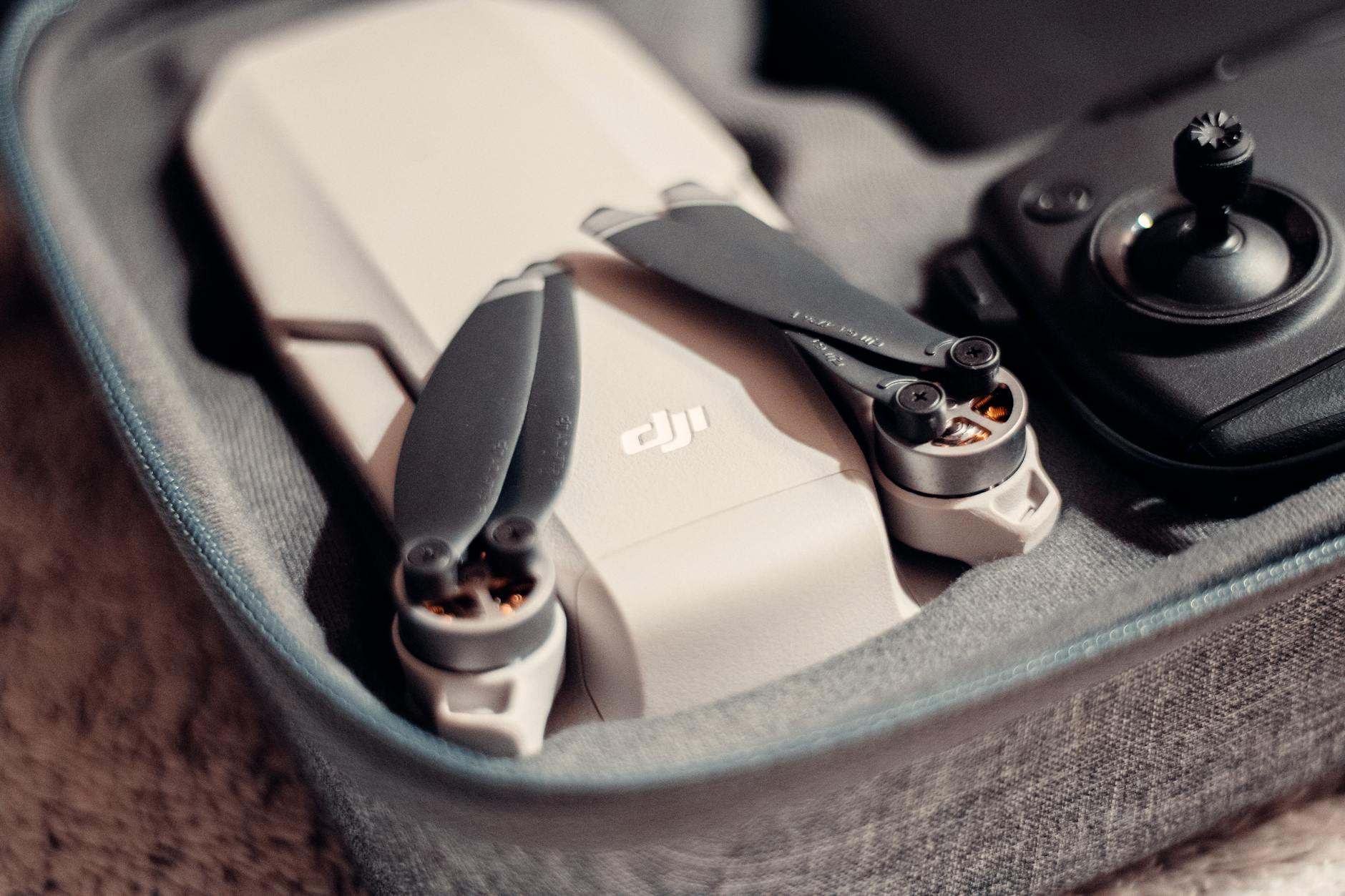
AeroVironment’s dominant market position faces pressure from multiple directions. Defense primes including Northrop Grumman and L3Harris have acquired or developed competing small drone capabilities, bringing substantial resources and existing Pentagon relationships to the competition. These larger firms can bundle small UAS with other systems, potentially offering package deals that AeroVironment cannot match. Commercial drone manufacturers present an asymmetric challenge. Companies like DJI have driven component costs down dramatically, and while their products cannot meet military specifications directly, the underlying technology””brushless motors, flight controllers, cameras, communication links””transfers readily to defense applications.
Ukrainian forces have demonstrated that modified commercial quadcopters can perform many tactical missions at a fraction of the cost of purpose-built military systems. The most concerning competitive dynamic involves foreign manufacturers in allied nations. Turkish Bayraktar drones achieved global recognition through Ukrainian combat footage, and Turkey now competes aggressively for contracts that might previously have defaulted to American suppliers. Israeli firms offer mature alternatives across the capability spectrum. Even traditional allies may prefer domestic production for industrial policy reasons, limiting AeroVironment’s international growth potential.

Export Controls and International Market Challenges
AeroVironment’s international expansion faces significant headwinds from U.S. export control regulations. Loitering munitions fall under strict Missile Technology Control Regime guidelines, limiting sales to a relatively small club of approved nations.
Even when exports are theoretically permitted, the State Department approval process can take years, during which potential customers may select alternative suppliers. The company has attempted to address this constraint by establishing international partnerships and licensed production arrangements. These deals sacrifice some margin for market access but may prove necessary as allied nations increasingly demand domestic manufacturing content as a condition of procurement.
The Future of Autonomous Warfare and AeroVironment’s Position
Artificial intelligence and increasing autonomy represent both opportunity and uncertainty for AeroVironment’s market position. Current systems require human operators to identify targets and authorize strikes, but next-generation platforms will incorporate greater machine decision-making. The Pentagon’s Replicator initiative aims to field thousands of autonomous systems, potentially creating procurement opportunities far larger than historical small UAS programs.
However, AI-enabled warfare may favor different competitive dynamics than the current market structure. Software capability could matter more than hardware pedigree, potentially allowing technology companies or defense startups to challenge established drone manufacturers. AeroVironment’s two-decade head start in tactical unmanned systems provides no guarantee of leadership in whatever autonomous warfare becomes over the next twenty years.
Conclusion
AeroVironment has earned its reputation as the Google of autonomous warfare through sustained market dominance, ecosystem integration, and successful navigation of military procurement cycles spanning multiple conflicts. The company’s products have become default choices for American tactical units, generating the recurring revenue and switching costs that defense investors value.
The durability of this position deserves scrutiny rather than assumption. Commercial drone technology proliferation, aggressive competition from allied nation manufacturers, and the uncertain implications of artificial intelligence all present legitimate challenges to AeroVironment’s market share. Investors and defense observers should recognize both the genuine competitive advantages the company has built and the real threats that could erode them.