
Artificial intelligence is fundamentally reinventing manufacturing through advanced robotics, shifting production from human-dependent processes to autonomous, adaptive systems that learn and improve in real time. In food and beverage production facilities across North America and Europe, AI-powered robotic arms now operate 24/7 without operator intervention, handling fragile items like baked goods and fresh produce with precision that human workers struggle to maintain over extended shifts—a transformation that’s no longer theoretical but actively deployed in thousands of factories worldwide. This isn’t incremental automation; it’s a structural reimagining of what manufacturing plants can achieve, how quickly they can scale, and what problems they can solve at industrial scale. The evidence is unmistakable: 58% of global business leaders are currently using physical AI in their operations, according to Deloitte’s 2026 survey of over 3,200 participants.
An additional 86% of employers now view AI, machine vision, and collaborative robotics as primary levers for business transformation. These aren’t early adopters or tech-forward outliers—they represent the mainstream of global business leadership, signaling that AI-driven robotics has crossed from novel experiment to operational necessity. The market itself is accelerating at historic rates. The global robotics market reached $38 billion in 2026 with 34% year-over-year growth, the fastest expansion rate in a decade. More specifically, the AI in robotics market alone is projected to expand from USD 20.4 billion in 2025 to USD 182.7 billion by 2033, representing a compound annual growth rate of 32.0%—meaning the market will expand nearly sevenfold in just eight years.
Table of Contents
- How Are AI and Robotics Transforming Manufacturing Efficiency and Capability?
- The Scale and Growth Trajectory of AI-Powered Robotics Deployment
- Where Advanced Robotics Are Making the Biggest Impact in Manufacturing
- Implementing AI Robotics in Operations: Practical Considerations and Tradeoffs
- The Challenges and Limitations of AI-Powered Manufacturing Systems
- Emerging Trends in Humanoid Robots and Physical AI
- Global Competition and the Strategic Importance of Robotics Leadership
- Frequently Asked Questions
How Are AI and Robotics Transforming Manufacturing Efficiency and Capability?
The transformation operates on multiple levels simultaneously. AI systems don’t just control robotic arms; they enable robots to perceive their environments, anticipate failures, adapt to variation in materials, and optimize their own workflows without human reprogramming. A semiconductor fabrication plant in Taiwan can now deploy a robot trained to recognize defects in microchip packaging with 99.7% accuracy—catching quality issues that escape human inspection because the AI system has analyzed millions of images and learned pattern recognition that human vision cannot replicate. This capability multiplies across production lines, reducing scrap rates and enabling manufacturers to run closer to theoretical maximum efficiency. The speed of adoption reflects genuine competitive pressure.
When one competitor deploys AI robotics and cuts defect rates by 40%, competitors face binary choice: adopt similar technology or lose market share to higher-quality products at competitive pricing. This cascade effect explains why corporate adoption has accelerated so dramatically in the past 18 months. The constraint is no longer technological feasibility—it’s supply-chain availability of robots and engineers qualified to implement them, creating bottlenecks that may persist through 2027. However, there’s a meaningful difference between automating routine, repetitive tasks and automating tasks with high variation or frequent parameter changes. A robot optimized for assembling identical smartphone components operates flawlessly; a robot designed to handle hundreds of different custom part configurations encounters edge cases that AI training data didn’t fully represent, leading to stalls and error states. Manufacturers are discovering that the cleaner and more standardized their production workflows, the faster and more complete their AI payoff—while those with extremely custom or variable production face longer implementation timelines.
The Scale and Growth Trajectory of AI-Powered Robotics Deployment
The numbers reveal an industry at inflection point. Fifty-one percent year-over-year growth in robotics orders across 2025–2026 indicates not cyclical demand but structural shift—companies aren’t replacing aging equipment with equivalent systems, they’re expanding robot populations by half annually. Food and consumer goods sectors showed even more dramatic acceleration, with a 61% year-over-year surge in robotics orders and food service emerging as an unexpected growth sector, reflecting automation expanding into domains previously considered unsuitable for robots. Within logistics and warehousing alone, 41,000 robotic units are now deployed globally, with semiconductor manufacturing at 22,500 units and food service at 8,200 units. These three sectors alone account for 64% of all commercial robotics deployments, illustrating the concentration of robot density in specific high-throughput, 24/7-operation industries.
Pharmaceutical manufacturing and battery production represent the next tier of adoption, with growth rates exceeding 40% annually but smaller absolute deployment numbers—they’re high-growth but starting from smaller bases. The constraint worth noting: current global manufacturing capacity for industrial robots runs at near-100% utilization. Major robotics manufacturers have 18-month order backlogs, and lead times for customized robotic systems have extended from 6 months to 9-12 months. This supply constraint means that companies moving into AI robotics now are competing for limited inventory against every other manufacturer making the same decision. First-mover advantage in 2026–2027 consists largely of securing robot supply ahead of competitors, not technological differentiation.
Where Advanced Robotics Are Making the Biggest Impact in Manufacturing
Geography matters profoundly in this transition. China deployed 295,000 industrial robots in 2024, compared to Japan’s 44,500 and the United States’ 34,200. China’s enormous volume reflects both the sheer scale of its manufacturing base and a deliberate strategic focus on robotics as a path to higher-value production and reduced dependency on human labor amid demographic pressures. In contrast, Japan’s relatively smaller installation numbers reflect a mature, already-automated industrial base where new deployment focuses on capability enhancement rather than building automation from scratch. In practical terms, this geographic distribution shapes where AI robotics are reshaping competitive dynamics most severely. A clothing manufacturer in Southeast Asia that previously competed with Chinese factories on labor cost now faces Chinese competitors powered by AI-driven robotics, erasing the labor-cost advantage entirely.
The competition shift is so acute that manufacturers in lower-wage countries are themselves investing in robotics—not to improve margins, but to remain viable against automated competitors in higher-wage countries. Southeast Asia saw a 47% increase in industrial robot adoption in 2025, driven largely by this defensive posture. Food production presents an interesting exception to industrial concentration. The unexpected surge in food-service robotics reflects advances in handling soft or fragile items—tasks that required human dexterity until very recently. A Japanese ramen restaurant chain deployed 320 robotic arms across 450 locations, reducing kitchen labor while improving consistency and food safety. These aren’t boutique projects; they’re production deployments that prove delicate-goods handling is no longer intractable for robots and AI vision systems.
Implementing AI Robotics in Operations: Practical Considerations and Tradeoffs
For manufacturers considering deployment, the path forward requires clarity on which processes robotics will actually improve. A factory with highly variable, custom production workflows will see slower ROI and higher implementation complexity than one running standardized products in high volume. A semiconductor fab making the same chip configuration for years achieves payoff within 14–18 months; a precision machine shop taking thousands of custom orders annually might require 3+ years to reach payoff, if ever. The financial commitment is substantial but increasingly justified by the productivity gains. A fully integrated AI-robotics system for a mid-size assembly line costs $3.2 million to $5.8 million in hardware, software, integration, and training—but delivers 35–50% labor-cost reduction in that function, and often secondary gains in defect reduction and cycle-time improvement that exceed the labor savings.
When labor represents 40% of total production cost in a manufacturing operation, a system that reduces labor cost by 35–50% translates to 14–20% improvement in total production cost, justifying investment even at premium installation costs. The human-side tradeoff is equally significant. Manufacturers deploying AI robotics face pressure to retrain existing workers into maintenance, quality-control, and system-monitoring roles rather than direct-production roles. This retraining is often achievable—the technician maintaining robotics typically earns 20–30% more than the assembly-line worker previously doing the task—but requires investment in training infrastructure and willingness to support workers through career transition. Companies that treat displaced workers as disposable face turnover and retention crises; those that invest in retraining report better stability and lower long-term costs.
The Challenges and Limitations of AI-Powered Manufacturing Systems
Despite the optimistic adoption numbers, real limitations constrain how broadly robotics can expand. AI vision systems trained on images of perfect parts struggle dramatically when lighting conditions change, when parts arrive damaged or misaligned, or when environmental variation exceeds training-data parameters. A robot trained to place components in a climate-controlled factory fails when that same task moves outdoors or into a warehouse with natural lighting. These aren’t bugs in the AI—they’re fundamental constraints of machine vision that require significant additional training data and system reconfiguration to overcome. Integration complexity is rarely acknowledged in vendor marketing but represents a major practical constraint. Deploying an AI-robotics system isn’t analogous to buying a forklift and plugging it in; it requires integration with existing manufacturing control systems, data pipelines, quality-control software, and enterprise systems.
A mid-size manufacturer might spend 6 months on integration work and 3 months on training before a new robotic system reaches production reliability. During this period, the factory is paying for the system while it produces zero value—and if the integration reveals incompatibilities with existing systems, costs can balloon. Cybersecurity and system reliability present emerging risks that manufacturers are underestimating. An AI-powered robotic system that goes offline or behaves erratically due to malware or software corruption stops production entirely. Several manufacturers in 2025 experienced ransomware incidents targeting their robotic control systems, leading to production shutdowns lasting weeks. These aren’t theoretical risks—they’re happening now, and most manufacturing facilities lack security expertise adequate to protecting AI-controlled production systems. The cost and complexity of securing these systems properly often exceeds initial deployment cost estimates.
Emerging Trends in Humanoid Robots and Physical AI
Humanoid robots and broader “physical AI” systems represent the next evolution beyond task-specific industrial robots. Interest in Large Language Models jumped from 16% in 2025 to 35% in 2026 among manufacturing decision-makers, reflecting recognition that natural-language interfaces and reasoning capabilities will enable robots to handle more varied, less-structured tasks. Concurrently, humanoid-robot interest grew from 8% to 13% year-over-year, indicating manufacturers are seriously evaluating human-shaped robots for tasks in environments designed for human workers.
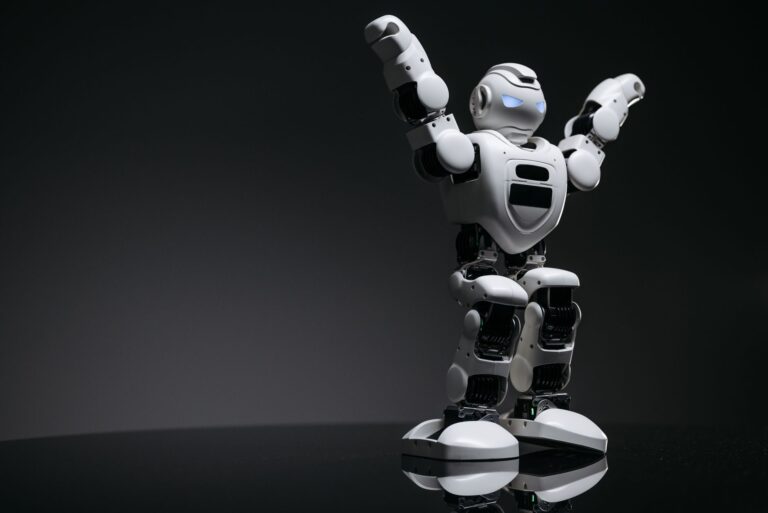
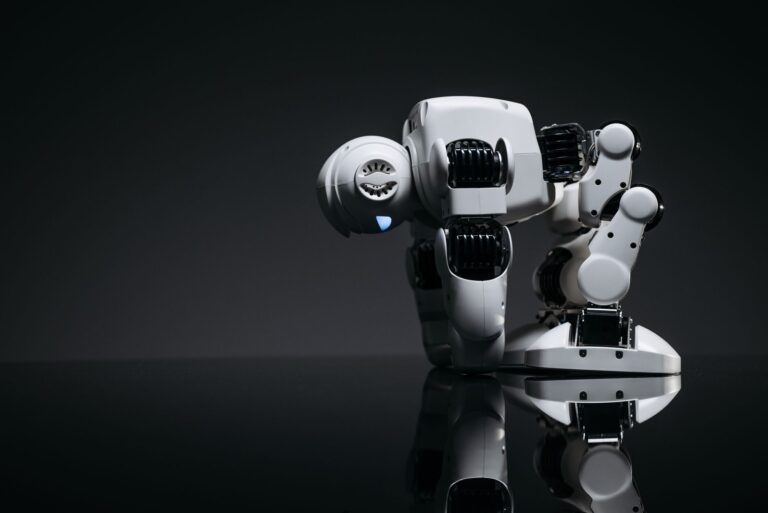
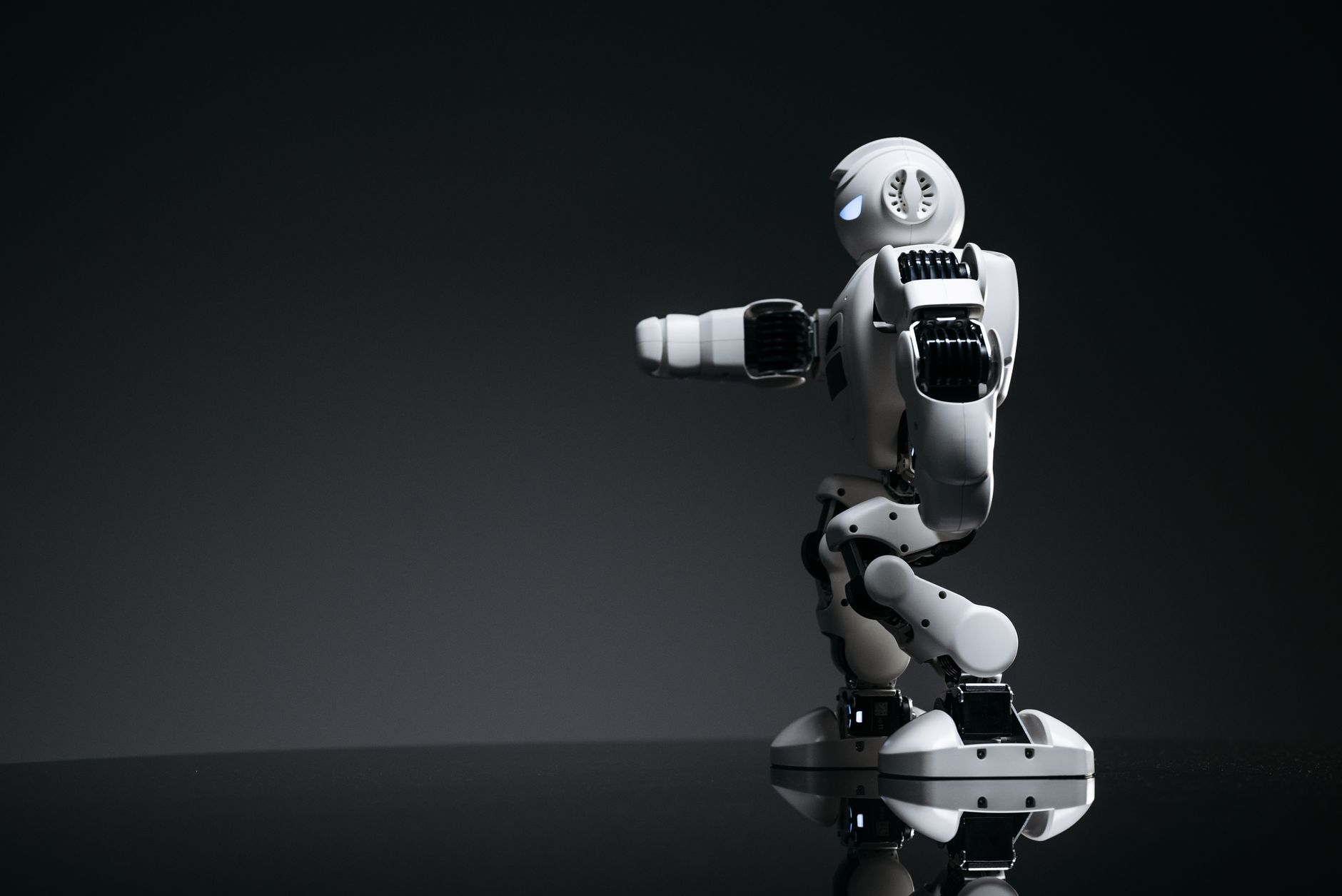
The practical appeal is obvious: if you have a manufacturing facility designed around human workers—with standard door widths, conventional workbenches, and standard tooling—deploying a humanoid robot requires minimal facility redesign, compared to deploying a traditional industrial arm that requires custom fixtures and mounting infrastructure. A warehouse in Germany is currently piloting humanoid robots for pick-and-place tasks, and early results show 30–40% faster learning curves than conventional robots, because the robots are inherently suited to environments where humans already work effectively. However, humanoid robots remain significantly more expensive than specialized industrial robots, and their generalist capability comes with a tradeoff: they’re less specialized and therefore less efficient than purpose-built systems for any single task.
Global Competition and the Strategic Importance of Robotics Leadership
The asymmetry in global robot deployment—295,000 units in China versus 34,200 in the United States—reflects not just manufacturing scale but strategic intent. China’s government has explicitly targeted advanced manufacturing and automation as central to maintaining industrial competitiveness, while Western nations have approached robotics more incrementally. This strategic gap is beginning to shape competitive outcomes in consumer goods, electronics, and component manufacturing.
Japan’s position is instructive: with 44,500 robots deployed but leading global robotics manufacturers (FANUC, ABB, KUKA generate significant revenues), Japan has positioned itself as both a deployer of robotics and a supplier to the world. This dual position buffers Japan from pure labor-cost competition while creating revenue streams from selling robots to competitors. The United States, with relatively lower deployment numbers but significant AI and software capabilities, is competing primarily through software and AI systems that enhance robots manufactured elsewhere, rather than manufacturing robots domestically. This distribution of capabilities—hardware leadership in China and Europe, software leadership in the United States—is creating interdependencies that shape global manufacturing strategy and geopolitical dynamics in ways that extend far beyond factory floors.
Frequently Asked Questions
How quickly can a manufacturer implement AI robotics?
Implementation timelines vary dramatically based on production complexity. A standardized, high-volume production line can achieve operational robotics within 14-18 months; custom or variable production workflows often require 24-36 months or longer. Integration with existing systems frequently extends timelines beyond initial estimates.
What happens to workers when AI robotics replaces assembly-line jobs?
Manufacturers deploying robots face pressure to retrain workers into maintenance, quality control, and monitoring roles. These roles typically pay 20-30% more than assembly work, but require training investment and organizational commitment. Companies that handle retraining effectively report better retention; those treating displaced workers as disposable face turnover crises.
Is the $38 billion robotics market growth sustainable?
The 34% year-over-year growth is historically rapid, but supply-chain constraints—18-month backlogs, near-100% manufacturing utilization—suggest growth will moderate to 20-25% annually once supply catches up with demand. Sustainability depends on manufacturing capacity expanding and continued corporate investment in automation.
Why is China deploying so many more robots than other nations?
China deployed 295,000 robots in 2024 due to manufacturing scale, strategic government focus on automation, and labor-supply pressures. Additionally, automation reduces dependency on labor in an aging-population environment, creating both economic and demographic incentives for high robot adoption.
What’s the difference between industrial robots and humanoid robots?
Industrial robots are task-specialized, extremely efficient at single functions, and cheaper than humanoid robots. Humanoid robots suit environments already designed for humans and learn faster in varied tasks, but cost significantly more and sacrifice efficiency in specialized roles. Neither is universally superior; the choice depends on facility design and task requirements.
Which manufacturing sectors see the fastest robotics adoption?
Logistics and warehousing (41,000 units), semiconductor manufacturing (22,500 units), and food service (8,200 units) account for 64% of all commercial robotics deployments. Food service showed the most dramatic growth at 61% year-over-year, driven by advances in handling fragile items.