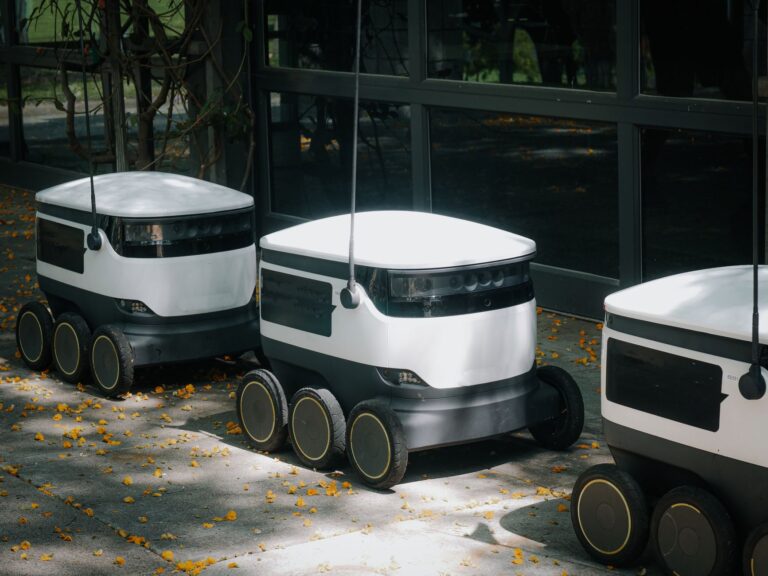

Authorities investigating a cyclist injury in Miami have determined that an autonomous vehicle was not involved in the incident, attributing the accident instead to a conventional car. This finding underscores a critical reality in the evolving transportation landscape: most traffic incidents involving cyclists continue to involve traditional human-operated vehicles, not the emerging autonomous systems that often dominate public safety discussions.
The distinction matters significantly for both the affected cyclist and for the broader conversation around autonomous vehicle deployment and public confidence. The investigation’s conclusion highlights how preliminary assumptions or public concern about autonomous vehicles can shape initial accident narratives, only to be clarified once evidence is examined. When incidents occur in cities where autonomous vehicle testing is active, authorities must carefully differentiate between the technologies involved to avoid misattribution that could either unfairly stigmatize autonomous systems or misdirect safety focus away from more common hazards.
Table of Contents
- Why Distinguishing Vehicle Types in Accident Investigations Matters
- The Role of Autonomous Vehicle Testing Infrastructure in Investigation
- Cyclist Safety and the Dominance of Conventional Vehicle Incidents
- How Vehicle Operator Behavior Differs in Investigation and Accountability
- Risks of Premature Conclusion in Autonomous Vehicle Incidents
- Insurance and Legal Implications of Vehicle Type
- Maintaining Investigative Integrity in Evolving Transportation Systems
Why Distinguishing Vehicle Types in Accident Investigations Matters
Accurate identification of which vehicle type caused an accident is foundational to safety analysis and regulatory oversight. When authorities attribute an incident to the wrong category of vehicle, it clouds the actual risk profiles that riders and pedestrians face on city streets. A cyclist struck by a conventional car and a hypothetical autonomous vehicle scenario present different investigative questions and different policy implications, even if the physical outcome is identical. The investigation process typically involves examining vehicle registration records, eyewitness descriptions, vehicle damage patterns, and sometimes video footage from traffic cameras or nearby businesses.
In a Miami incident, investigators would need to confirm whether the vehicle involved was registered as an autonomous testing unit, whether it was operating autonomously at the time, and whether any autonomous systems were active or engaged. Conventional vehicles, by contrast, involve only driver behavior and vehicle mechanics to evaluate. Misidentifying a vehicle type can misdirect safety resources. If a cyclist injury is initially reported as involving an autonomous vehicle but later confirmed as a conventional car accident, time and investigative attention may have been diverted from understanding the actual human driver’s actions, road conditions, or visibility issues that contributed to the collision.
The Role of Autonomous Vehicle Testing Infrastructure in Investigation
Cities hosting autonomous vehicle testing programs typically have data infrastructure that can help clarify what was happening at the time and location of an incident. Testing operators generally maintain logs of vehicle movements, sensor data, and system status. If an autonomous vehicle had been operating in the area, its telematics could provide a record of its location and operational state during the relevant timeframe. However, this data is not always immediately accessible to investigators, which can lead to initial confusion or speculation.
The process of coordinating between law enforcement, autonomous vehicle operators, and city regulators adds procedural steps before the actual vehicle type can be definitively confirmed. A preliminary report might suggest autonomous vehicle involvement based on where the incident occurred or what witnesses observed, only for follow-up investigation to establish that no autonomous vehicle was present or operating at that moment. The uncertainty period between incident and clarification presents a vulnerability for public perception. Media reports from the early hours after an incident may emphasize autonomous vehicle concerns before confirmation, and subsequent corrections often receive less attention. For cities and autonomous vehicle operators invested in demonstrating safety and gaining public acceptance, these narrative corrections are important but often come too late to shape initial public reaction.
Cyclist Safety and the Dominance of Conventional Vehicle Incidents
Across most urban areas where autonomous vehicles operate, cyclist injuries involving conventional cars vastly outnumber any autonomous vehicle-related incidents. The National Highway Traffic Safety Administration and local transportation agencies document that human drivers cause the overwhelming majority of traffic incidents affecting vulnerable road users. A Miami cyclist injury attributed to a conventional car aligns with this statistical reality. The reasons for this dominance are straightforward: conventional vehicles are exponentially more numerous, human drivers are fallible and sometimes distracted or fatigued, and the decision-making processes of human operators differ fundamentally from the sensor-based awareness and reaction protocols of autonomous systems.
A human driver might glance at a phone, misjudge a cyclist’s speed, or fail to notice someone in a bike lane, whereas an autonomous vehicle’s sensors continuously monitor its surroundings and systems react without the cognitive distractions that affect human operators. This does not mean autonomous vehicles are perfectly safe or require no additional safety validation. Rather, it means that the primary ongoing risk to cyclists in cities remains the conventional vehicle fleet. Focusing investigation and public concern appropriately on this reality directs safety efforts more effectively than over-indexing on autonomous vehicle risks that remain statistically marginal in most jurisdictions.
How Vehicle Operator Behavior Differs in Investigation and Accountability
When a conventional car injures a cyclist, accountability flows through traffic laws, driver licensing systems, and potentially criminal or civil liability frameworks established over decades of driving regulation. An officer investigating a conventional vehicle accident will focus on the driver’s actions: speed, attention, compliance with traffic signals, right-of-way rules, and whether any mechanical failure contributed. Driver statements, cell phone records, and witness accounts all feed into understanding human decision-making at the moment of impact. Autonomous vehicle incidents, by contrast, present novel investigative questions.
There is no driver to interview about their awareness or intentions. Instead, investigators must examine the vehicle’s sensor data, software logs, and pre-collision decision trees. The accountability framework is less established; questions arise about manufacturer responsibility, operator responsibility, and whether the incident reveals a systems-level defect or a one-off scenario the autonomous system failed to handle correctly. The Miami case, having been confirmed as a conventional vehicle incident, follows the traditional investigative pathway. This clarity allows both the cyclist and authorities to focus on conventional traffic safety interventions: potential driver citations, civil liability claims, and any local safety improvements to the roadway or intersection.
Risks of Premature Conclusion in Autonomous Vehicle Incidents
Early media reports or public speculation that an autonomous vehicle was involved create investigative pressure and can lead authorities to reach conclusions before evidence is complete. Conversely, premature ruling out of autonomous vehicle involvement—before proper investigation—creates the opposite risk: a genuine autonomous vehicle incident might be attributed to a conventional car, allowing a genuine safety gap to go unaddressed. The Miami case involved authorities ruling out autonomous vehicle involvement, which presumably means they followed proper investigative procedure to confirm the vehicle was not an autonomous system.
This distinction is critical but often invisible to the public, who may never learn exactly how investigators confirmed the vehicle type. Without transparency about the investigative process and the evidence supporting the conclusion, the public has limited basis to trust that the distinction was made carefully rather than assumed. A limitation of incident investigation in the autonomous vehicle era is that many cities and operators lack standardized protocols for rapidly determining whether a vehicle involved in an incident was autonomous or conventional. Investing in clearer data-sharing frameworks and investigation procedures would reduce the period of uncertainty and speculation that follows ambiguous initial reports.
Insurance and Legal Implications of Vehicle Type
Whether an incident involves a conventional vehicle or an autonomous vehicle has profound implications for insurance claims and legal liability. Conventional vehicle accidents typically flow through the at-fault driver’s liability coverage and the insurance industry’s established claims process. An autonomous vehicle incident, by contrast, may involve questions about manufacturer liability, operator liability, and whether existing insurance frameworks even cover the incident appropriately.
The cyclist injured in a conventional vehicle accident can pursue a claim against the at-fault driver’s insurance using well-established legal procedures. The human driver’s potential negligence, failure to maintain the vehicle, or violation of traffic law all fit neatly into existing liability law. An autonomous vehicle incident might raise questions about whether the manufacturer bears liability for a software failure, whether the testing operator’s insurance is adequate, or whether regulatory approval of the vehicle’s operation established different liability standards.
Maintaining Investigative Integrity in Evolving Transportation Systems
As autonomous vehicles become more common in urban testing and eventual deployment, the investigative process for distinguishing vehicle types becomes both more routine and more important. A city with dozens of autonomous vehicles operating daily cannot afford to misattribute incidents to the wrong vehicle class; doing so undermines both accountability for conventional driver safety and confidence in autonomous vehicle oversight.
The Miami case, though involving a conventional vehicle, represents practice in an investigative competency that cities will need to refine. Authorities demonstrated the ability to rule out autonomous vehicle involvement, presumably based on evidence and proper procedure. This baseline competency—reliably determining which vehicle type was involved—must be maintained and formalized as autonomous vehicle numbers increase.