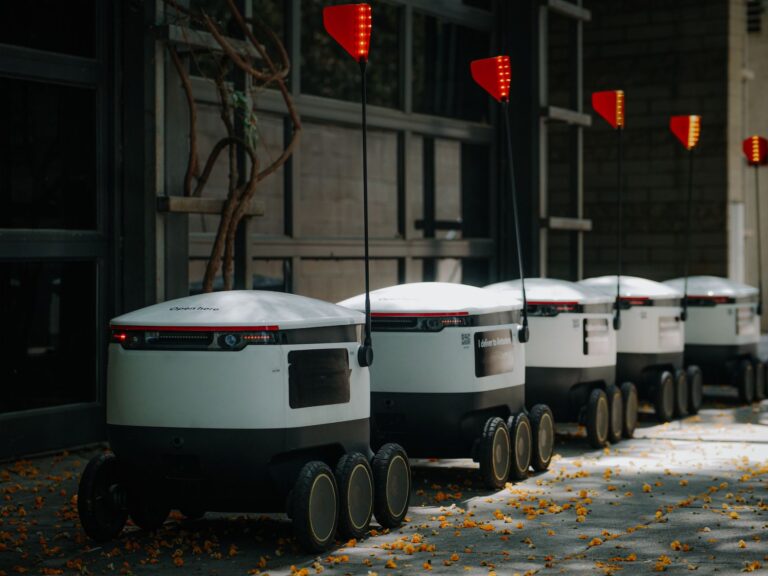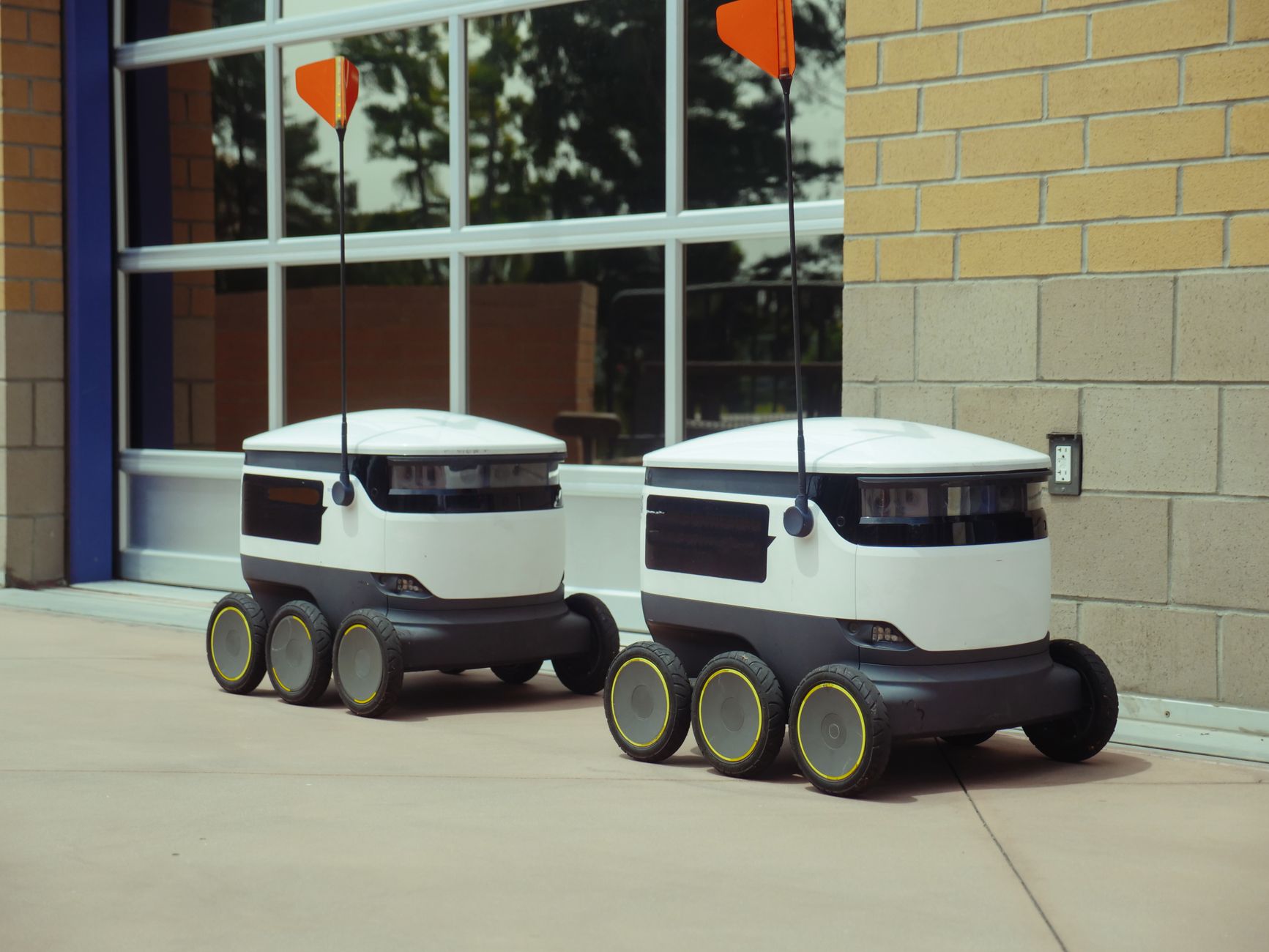

Wichita State University has discontinued its campus delivery robot operations, marking another pause in the wave of autonomous robot deployments that swept through higher education institutions over the past five years. The decision reflects a broader reality facing universities that adopted these systems: the gap between promotional visions of autonomous campus logistics and the messy, unpredictable reality of operating robots among students, faculty, and infrastructure designed for humans. WSU’s robots, which were introduced to handle food and package deliveries across campus pathways, encountered the same operational friction that has plagued similar programs at other institutions—weather complications, limited delivery routes, integration challenges with campus planning, and the simple fact that manual delivery still outperformed autonomous alternatives in many situations.
The discontinuation is not unique. Across North America, universities have quietly wound down or significantly scaled back campus robot programs as initial enthusiasm collided with operational expenses, regulatory uncertainty, and the realization that campus delivery remains a complex logistics problem without straightforward automation answers. These failures offer valuable lessons about the actual deployment challenges of autonomous systems in human-occupied spaces, beyond the controlled environments where robot technology excels.
Table of Contents
- Why Campus Delivery Robots Struggled at Universities
- The Operational Limitations That Led to Discontinuation
- Lessons from Other Campus Robot Programs
- What Campus Administrators Learned About Automation Implementation
- Technical Limitations That Made Operations Unsustainable
- The Broader Implications for Campus Technology Adoption
- Operational Realities That Current Autonomous Systems Cannot Yet Address
- Frequently Asked Questions
Why Campus Delivery Robots Struggled at Universities
Campus environments present a deceptively difficult operating space for autonomous delivery vehicles. Unlike controlled warehouse environments or fixed-route urban streets, university grounds require navigation through mixed-use spaces where pedestrian safety, sidewalk obstacles, seasonal weather changes, and campus events constantly disrupt planned operations. robots that performed acceptably during initial testing periods encountered maintenance bottlenecks, software update requirements, and the need for constant human oversight that negated labor-cost savings.
The economics rarely worked in practice. Universities expected robots to handle the same delivery volumes as human couriers while reducing labor costs, but actual deployment showed robots managed only a fraction of deliveries, operated within narrow time windows, and required dedicated staff for troubleshooting, recharging, and route planning. A robot that operates eight hours daily might complete what a human courier finishes in three to four hours, eliminating the cost advantage that justified the capital investment. Additionally, universities discovered that customers preferred human delivery for food orders and packages that required signatures or real-time problem-solving during delivery.
The Operational Limitations That Led to Discontinuation
Campus delivery robots face weather constraints that dramatically limit their operating window. Rain, snow, and ice—common in many university regions—force operations to shut down or proceed at dangerous speeds. Some programs attempted to operate year-round in climates where robots could manage only four to six months of reliable service annually. This seasonal limitation meant paying for infrastructure and maintenance during extended periods of minimal use, making annual operating costs far exceed initial projections.
Liability and safety concerns created unexpected complications. Universities faced potential liability if a robot malfunctioned and struck a student or damaged campus property, and many discovered that their general liability insurance did not clearly cover autonomous vehicle operations. Establishing clear protocols for robot-pedestrian interactions, managing the robots during high-traffic campus events, and addressing public concerns about safety consumed management time without generating measurable benefits. Some universities also encountered student vandalism or deliberate interference with robots, a reality that manufacturers and administrators initially underestimated. The robots, which were designed for suburban sidewalks in controlled settings, lacked the durability and security features needed for campus environments where hundreds of students pass them daily.
Lessons from Other Campus Robot Programs
Several universities that deployed similar systems before WSU already scaled back or ended operations. The common pattern shows initial enthusiasm driven by press coverage and vendor demonstrations, followed by disappointing performance metrics and mounting operational problems. These precedents suggest that campus administrators considering robot deployments should prioritize actual performance data from similar institutions rather than vendor projections, yet marketing materials for autonomous delivery robots often highlight early-stage pilots while excluding data from sustained operations.
The robots that performed better than others tended to operate in more restricted environments—single building-to-building deliveries on fixed paths, rather than campus-wide networks. This limitation contradicted the vision of flexible, autonomous logistics and highlighted that the cost savings and operational benefits were achievable only in scenarios so constrained that traditional fixed-route delivery services could have accomplished the same task. Universities that continued limited robot operations typically maintained them as research platforms rather than operational logistics solutions, a shift that reframes robots as campus infrastructure for computer science and engineering programs rather than cost-reduction measures.
What Campus Administrators Learned About Automation Implementation
The discontinuation of programs like WSU’s carries practical implications for how universities approach automation decisions. The initial assumption—that technological capability plus capital investment would automatically improve operations—overlooked the embedded labor and expertise in existing delivery systems. Human couriers navigate complex pathways, adapt to obstacles, handle customer interactions, and solve problems in real time using judgment that autonomous systems cannot replicate. Replacing this with robots required either accepting reduced service quality or investing in hybrid systems where human workers still handled complex cases, eliminating the promised cost savings.
Universities that maintained limited campus robot operations typically did so by reducing the scope significantly. Rather than campus-wide delivery networks, they deployed robots for single, well-defined routes or specific delivery types. This pragmatic approach acknowledged that robots work well for narrow, repeatable tasks but fail when asked to handle the variability of real campus logistics. The lesson is that automation succeeds when it matches specific, bounded problems rather than when it attempts wholesale replacement of complex human systems. WSU’s decision to discontinue operations reflected the realistic assessment that campus delivery, with all its human complexity, remained outside the capability envelope of current autonomous vehicle technology.
Technical Limitations That Made Operations Unsustainable
Campus delivery robots depend on software that requires constant updating and refinement. Unlike traditional delivery vehicles, which operate reliably for years with minimal software changes, autonomous robots need regular security patches, sensor recalibration, and updates to navigate around campus construction, new pathways, and changes to campus layout. These maintenance costs appeared modest in initial budgets but consumed significant technical resources in practice. Universities without dedicated robotics staff struggled particularly with this requirement, often discovering that robot manufacturers expected customers to maintain sophisticated software systems despite limited local expertise.
The physical durability of delivery robots designed for suburban environments proved insufficient for intensive campus use. Repeated trips over varied terrain, exposure to temperature extremes, and damage from weather or interference degraded robot performance over two to three years faster than manufacturers’ projections suggested. Replacement costs and repair downtime further strained budgets already stressed by ongoing operational expenses. The limited operational lifespan, combined with rapid technological change in autonomous vehicles, meant that robot fleets became outdated after just a few years—a different problem than traditional delivery vehicles, which can operate for a decade or more with routine maintenance.
The Broader Implications for Campus Technology Adoption
WSU’s discontinuation reflects a pattern in which universities adopt technology promoted as revolutionary cost-savers, only to discover that the technology solves problems differently than advertised. Campus delivery robots succeeded as research platforms and proof-of-concept demonstrations but failed as operational systems, suggesting that universities should carefully distinguish between technology suitable for experimentation and technology suitable for mission-critical logistics. The visibility of failed robot programs also affects institutional credibility—when the public campus presence of a technology project ends, it signals to the broader community that the technology did not deliver on its promises.
The discontinuation also indicates that universities are becoming more cautious about autonomous vehicle deployments in general. Campus administrators now scrutinize vendor claims more carefully and demand evidence from comparable institutions operating at scale, not just initial pilots. This skeptical stance improves decision-making but also slows the adoption of technologies that might genuinely improve operations in specific contexts. The challenge for the robotics industry is demonstrating sustained, profitable operations rather than impressive demonstrations.
Operational Realities That Current Autonomous Systems Cannot Yet Address
Campus delivery robots were fundamentally limited by their inability to climb stairs, navigate interior hallways reliably, and handle the complete delivery process from pickup to final destination. Most campus buildings require some interior navigation or stair access, meaning robots could deliver only to ground-level entrances. Customers accustomed to doorstep delivery or in-building delivery rejected robots that required meeting the robot at a central location. This last-mile gap meant that campus delivery robots solved only part of the delivery problem, requiring human intervention for the final step and thus eliminating the operational efficiency that justified their deployment.
The robots also could not reliably integrate with campus security and access control systems. Campus buildings use access cards, codes, and human judgment to admit deliveries, systems that autonomous robots could not navigate without permanent security vulnerabilities or custom integration work that proved expensive and time-consuming. WSU and similar institutions discovered that automating logistics across a campus required not just replacing the delivery vehicle but also redesigning security systems, building layouts, and customer service processes—a level of infrastructure change that far exceeded the scope of simply deploying robots. The reality that true automation required institutional redesign, not just technology deployment, was the fundamental lesson that led to the discontinuation of programs that seemed like straightforward operational improvements.
- —
Frequently Asked Questions
Why did campus delivery robots fail to reduce delivery costs at universities?
Robots operated only a fraction of delivery volumes, required constant maintenance and software updates, and often needed human oversight. In practice, they completed fewer deliveries per hour than human couriers, eliminating the cost savings that justified their purchase.
What weather limitations affected campus robot programs?
Rain, snow, and ice forced extended shutdowns in many climates, limiting operational seasons to only four to six months annually in some regions. This seasonal constraint meant paying full operating costs for extended periods of minimal use.
How did campus delivery robots affect university safety and liability?
Robots malfunctioned occasionally in high-traffic areas, universities faced unclear liability insurance coverage, and some programs encountered student interference or vandalism. These safety and legal concerns added compliance costs that manufacturers had not anticipated.
Could campus delivery robots work if deployed in a more limited way?
Yes. Universities that maintained limited operations typically restricted robots to single building-to-building routes or specific delivery types. Broader campus-wide networks proved unsustainable, suggesting robots work only when matched to narrow, highly constrained tasks.
What integration challenges prevented robots from completing full deliveries?
Robots could not navigate interior hallways, climb stairs, or work with campus security systems without custom modifications. Most deliveries required the final steps to be completed by humans, negating the operational benefits of automation.