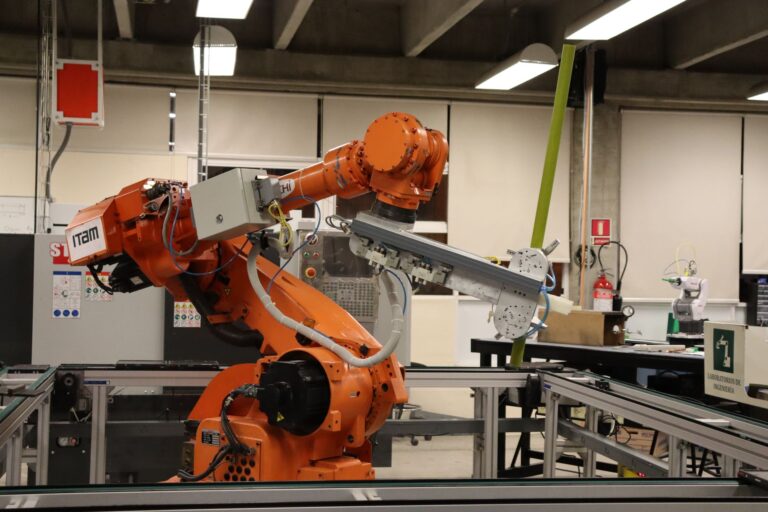
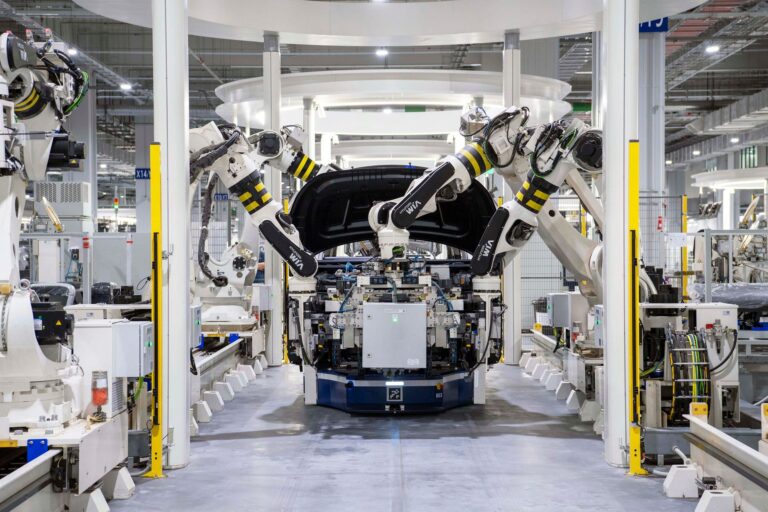
Drilling robots for ceilings and overhead installation are mobile machines that drill anchor holes overhead using a digital floor plan. They lift a drill to the ceiling, place each hole in the planned location, and mark nearby codes for the crew. Overhead drilling strains shoulders, necks, and arms, and manual layout invites error. These robots handle the repetitive reach-and-drill work so installers focus on mounting and connecting parts.
Table of Contents
- How do they drill from a plan?
- What work fits best?
- Where do they struggle?
- What should you check before deployment?
How do they drill from a plan?
The crew loads a digital ceiling plan into the robot control software. The plan shows every drill point for hangers, rails, and supports. The robot drives to each work zone and braces itself against the floor.
It then raises its drill mast, drills to set depth, and vacuums dust while it works. Onboard sensors track position so each hole lands where the plan calls for it. After drilling, it often prints or projects a color mark beside the hole. The mark tells the installer what system the anchor serves and what hardware fits.
What work fits best?
These machines fit repetitive overhead anchors across large, open areas. Common uses include pipe hangers, cable tray, ventilation ducts, and mounting rails for mechanical, electrical, and plumbing systems. They reduce ladder moves, overhead reaching, and hand measuring.
Layout stays consistent from bay to bay, which helps prefabricated supports fit without field adjustment. Crews still set anchors, hang rods, and install equipment. The robot prepares accurate holes and marks, then the trades follow with installation and connections.
Where do they struggle?
Floor and ceiling conditions set clear limits. Cluttered floors, soft coverings, ramps, and tight rooms slow travel and setup. Very high ceilings, congested structure, and blocked access can put points out of reach. Dust control, noise, and power also need attention.
The drill needs vacuum collection and safe disposal, plus clearance for the mast to extend. Operators must coordinate with other trades so no one works under an active drill. Digital plans must match the real building. Outdated models, shifted walls, or moved equipment create holes in the wrong place, so the team should verify control points before full production.
What should you check before deployment?
Confirm the site is ready for autonomous travel and overhead work. Review the plan, the structure, and the daily sequence with foremen and the robot operator.
Walk the first work zone with the operator and confirm marks match the intended systems. Keep one person responsible for plan updates so changes reach the robot before drilling resumes.
- Clear, firm travel paths and marked work zones for each shift
- Ceiling height, anchor depth, and drill diameter suited to the machine
- Dust collection, power supply, and edge or occupied-space rules
- A check hole pattern to confirm layout against site control points