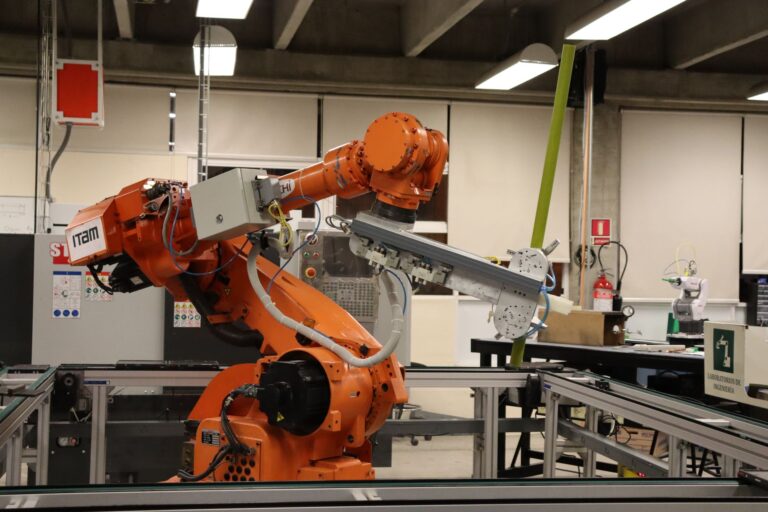
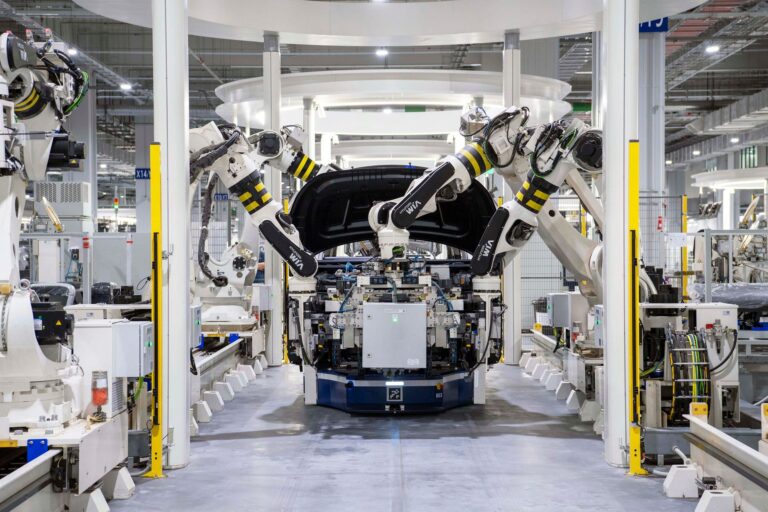
Rebar tying robots fasten rebar, the steel bars that reinforce concrete, by twisting wire around each crossing. They target one repetitive site task: securing large mats and cages so bars stay in place during a pour.
Handheld power tiers assist a worker at each joint, while larger rigs travel along a mat or use an arm to reach tie points. Both types reduce repeated bending and wrist twisting. Choice depends on mat layout, access, and how much setup the job allows.
Table of Contents
- What happens at each tie point
- Which repetitive work fits automation best
- Why people stay in the loop
- How to judge fit before committing
What happens at each tie point
A tie point is the crossing where two bars meet. The tool feeds wire around the joint, twists it tight, then cuts the tail. The worker or rig then moves to the next crossing.
Handheld units still need a person to position the head and pull the trigger. Rail, gantry, or arm-based machines locate the crossing with guides, vision, or preset spacing and then run the same wrap-and-twist cycle. Bars must sit close to their planned position before either type can make a clean tie.
Which repetitive work fits automation best
Flat slabs, footings, and precast beds often fit first because ties repeat in straight rows with clear tool access. Straight walls and columns can also fit when bar spacing stays consistent and ties sit within easy reach.
Irregular cages, dense laps, and congested corners usually stay manual. Good early candidates share a few traits:.
- large areas of similar ties in open space
- stable bar layout that does not shift underfoot
- clear access for the tool head, cord, or travel base
- simple tie pattern approved for the pour
Why people stay in the loop
Crews still set, space, and support bars before tying starts. People also check cover, alignment, and tie tightness, since loose or missed ties can move during concrete placement. Around blockouts, embeds, edge forms, and stepped steel, hands can adjust wire path and tension faster than a fixed cycle.
Supervision also covers safety and upkeep. Wire spools run out, tails jam, and dust builds up on heads and sensors. A worker watching the work can clear faults, replace wire, and keep ties consistent across shifts.
How to judge fit before committing
Start with one bay or one cage type, not the whole job. Map tie locations, bar sizes, spacing, and obstructions, then trial the tool on that exact layout.
Watch for missed ties at edges, chairs, spacers, and supports where the head cannot seat fully. Use the trial to set the work plan: Walk one bay with the crew lead and mark every tie the tool cannot reach before you plan labor.
- mark zones for machine ties and zones for hand ties
- assign one person to feed bars, clear jams, and check quality
- keep spare wire, batteries or power, and cleaning tools nearby
- agree on how to recheck ties after foot traffic and final alignment