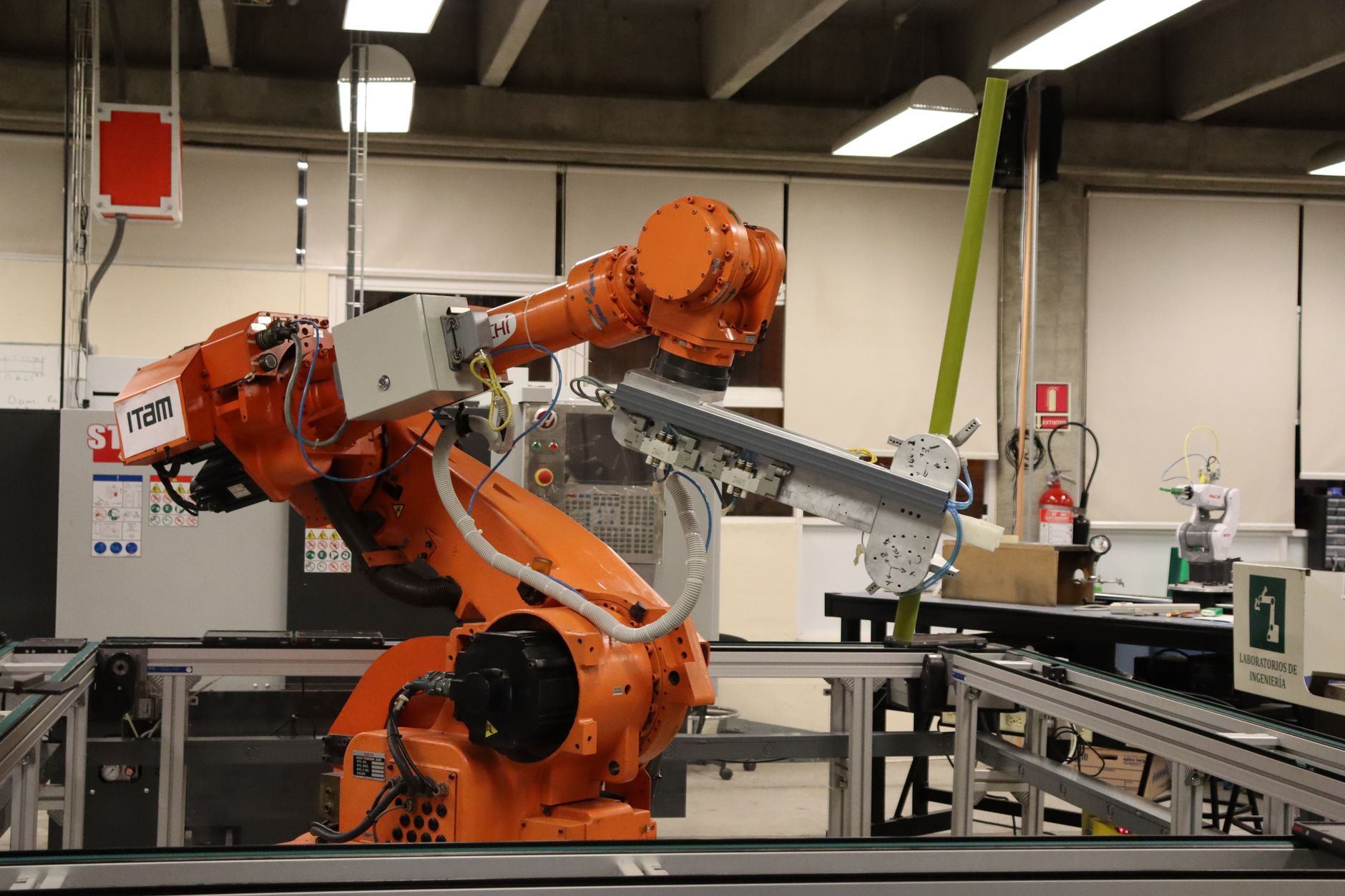

Construction robots handle rebar tying by moving across a steel grid, wrapping wire around each bar crossing, then twisting and cutting it. Rebar means steel bars tied into grids to strengthen concrete, and tying holds those bars still for the pour.
Most systems work on flat work like slabs, foundations, and bridge decks. They reduce bending and repetitive twisting for human crews. A supervisor still sets spacing, wire type, and tie pattern.
Table of Contents
- What happens at each tie point?
- How does it find the next crossing?
- Which machine types do the work?
- What limits use on real jobsites?
- What should a crew check before choosing one?
What happens at each tie point?
The robot centers its tying head over the crossing and seats the wire path under the lower bar. Many heads press lightly on the upper bar to keep the joint steady. The goal is a tight wrap without shifting the grid.
The head then feeds one or two loops of wire around the joint, twists the ends together, and cuts the tail. Twist tightness sets holding strength and affects how the joint survives foot traffic and concrete flow. After the cut, the machine lifts, indexes forward by one spacing, and repeats the cycle. Misses cluster near edges, chairs, spacers, and pipes where bars sit unevenly.
- position head over the crossing
- clamp or press the bars steady
- feed wire around the joint
- twist, cut, and move on
How does it find the next crossing?
On regular mats, the robot follows a set spacing entered by the operator. Wheels, tracks, or an overhead frame carry it in straight lanes across the grid. A sensor or camera corrects drift by spotting the next bars.
On messy site-built grids, sensing matters more. Touch probes, vision, and force feedback help the head find bars that bow, overlap, or vary in spacing. Crews can mark keep-out zones around openings, embeds, and congested splices.
Which machine types do the work?
Overhead gantries suit prefab yards that tie many identical mats. The frame rolls on rails while the tying head scans across the mat. They favor steady ground, clear access, and repeat layouts. Mobile bases suit slabs and decks poured in place.
They drive slowly over or beside the grid and tie downward. Robotic arms add reach for tight bays but need stable footing and clear swing space. Powered handheld tiers are different tools, not navigating robots. A worker places the nose at each crossing and pulls a trigger to wrap and twist. They help small crews but still need a person at every tie.
What limits use on real jobsites?
Heavy congestion slows every approach. Double mats, tight lap splices, coated bars, and chairs can block the head or change wire grip. Vertical walls, columns, and beams are harder because gravity, access, and head angle change.
Site conditions also intrude. Mud, standing water, loose tie wire, and cutoffs snag wheels and sensors. Battery charge, wire spool changes, and jam clearing set work rhythm more than top tying speed.
What should a crew check before choosing one?
Match the machine to flat, repeat tying first. Uniform bar size, steady spacing, and open travel lanes give the best result.
Save varied edges, penetrations, and cages for trained ironworkers. Walk one grid with the supplier and count missed or loose ties at edges and around openings.
- bar size and spacing range the head accepts
- wire type and tie style required by spec
- ground clearance, weight limits, and access paths
- who clears jams, refills wire, and checks ties