
A construction robot operator runs and oversees jobsite machines that work partly or fully autonomously, and needs from days to about 30 hours of machine-specific training. The exact time depends on robot type and prior trade experience.
Heavy machines demand experienced operators and longer onboarding. Layout robots and robot arms use shorter courses focused on one system. Safety instruction applies in every case and is tied to the specific robot setup.
Table of Contents
- Why Heavy Equipment Operators Train Longer
- How Quickly Can You Operate a Layout Robot?
- What Does a Two-Day Operations Course Teach?
- What Safety Training Does Every Operator Need?
Why Heavy Equipment Operators Train Longer
KHL Construction Briefing reports Built Robotics created a Robotic Equipment Operator role for autonomous heavy equipment. Frontline operators complete about 30 hours of training to run and manage the machines. The program runs in partnership with the International Union of Operating Engineers.
Built Robotics sets high entry bars before that training starts. Trainees must already meet three minimums: After clearing those minimums, trainees learn Exosystem hardware, software and jobsite safety perimeters, according to Built Robotics in its Built Robotics REO Training details. Exosystem is the company package that adds autonomy to heavy equipment. Safety perimeters are the marked zones that separate people from machine motion.
- Minimum 5 years of equipment experience
- OSHA-30 certification or equivalent
- Strong safety record
How Quickly Can You Operate a Layout Robot?
Dusty Robotics says its FieldPrinter layout robot prints full BIM models autonomously. BIM models are digital building plans used for layout. One operator controls the robot from an iPad and certifies in days through Dusty Academy without surveyor-level training.
Western States Carpenters Training Fund lists a 24-hour Robotic Layout course that takes beginners to expert FieldPrinter operation. The course covers control points, app features, ink and jobsite planning. Control points are fixed reference marks that guide layout. It ends in official Dusty Robotics Certification, according to the Fund in its Western States Robotic Layout course description.
What Does a Two-Day Operations Course Teach?
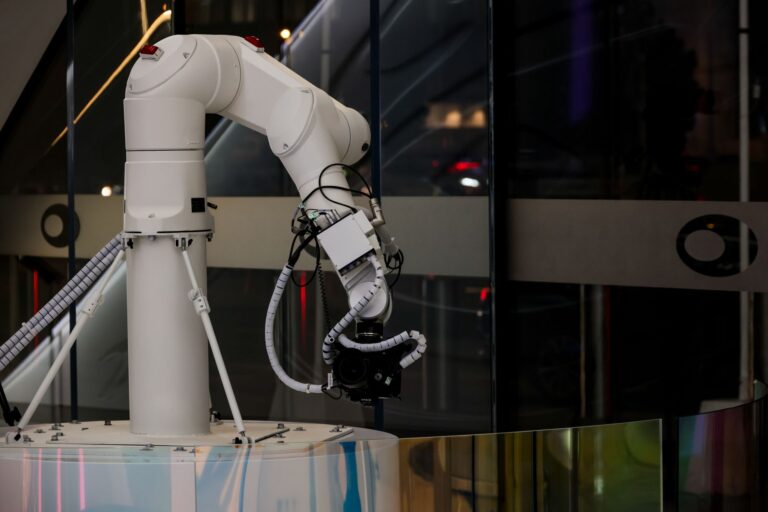
FANUC America lists an introductory Robot Operations course of 2 days and 16 classroom hours. It teaches operators to interact with, power up, jog and set up robots. Jog means manually move the robot in small steps.
The course uses HandlingTool software. HandlingTool is the FANUC program used for robot setup in the course. That short format suits workers who need basic operation skills before setup-specific instruction.
What Safety Training Does Every Operator Need?
Robots Done Right, summarizing OSHA guidance, reports no dedicated robot standard and points to ANSI/RIA safeguards in its OSHA robot safety requirements summary. OSHA calls for a documented risk assessment at design, integration, operation and maintenance stages. It also calls for safeguarding devices around industrial robots.
Virginia Tech Environmental Health and Safety states that anyone who assembles, installs, programs, integrates, operates, maintains or repairs robot systems needs adequate, cell-specific safety training. Cell-specific means training for that exact robot work area, not generic robotics instruction. Workers must demonstrate competency before assignment. Ask for written competency sign-off for that exact setup before you operate.