
Rockwell Automation's acquisition of AGILOX, the Austrian maker of autonomous mobile robots announced in January 2025, gives food and beverage plants a path to buy intralogistics robots from the same vendor that already supplies their control systems. For food robotics, the practical effect is less about new robot capability and more about integration: AMRs that speak the same software and data language as the PLCs, drives, and MES layer already running the line.
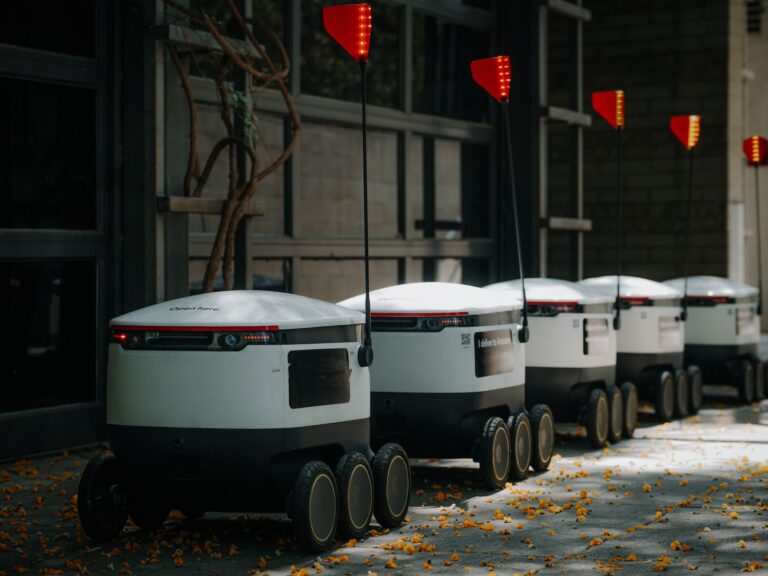
AGILOX builds autonomous mobile robots — driverless vehicles that move pallets and totes around a facility without fixed guidance tracks — and markets them on "swarm" control, meaning each unit plans its own route and negotiates with the others rather than taking orders from a central traffic manager. Rockwell, whose Allen-Bradley and FactoryTalk lines are entrenched in North American food and beverage plants, said the deal expands its autonomous production logistics portfolio. The consequence for a food plant is a shorter integration project, a narrower vendor list, and a new set of questions about lock-in.
Table of Contents
- What AGILOX actually brings to a food plant
- Why the integration layer is the real change
- Which food and beverage operations see a difference
- Freezers, washdown, and the limits nobody puts in the brochure
- The lock-in question, and how to protect against it
- How to evaluate it without waiting for the market to settle
- Frequently Asked Questions
What AGILOX actually brings to a food plant
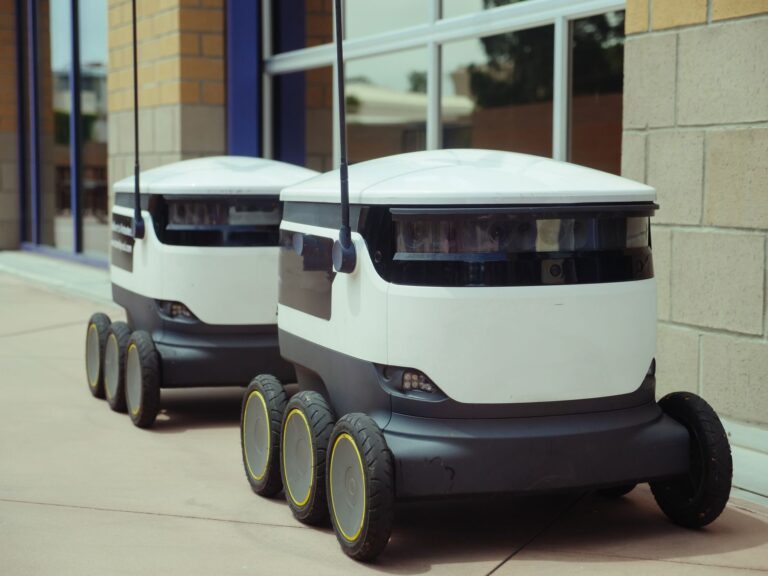
AGILOX's fleet centers on pallet-handling and tote-handling vehicles: counterbalanced and straddle-style units that lift standard pallets, and smaller transport robots for cases and bins. These are intralogistics machines, not food-contact robots. They do not pick product, portion, or pack; they move loads between production, cold storage, palletizing, and the dock. That distinction matters because "food robotics" covers two very different equipment classes.
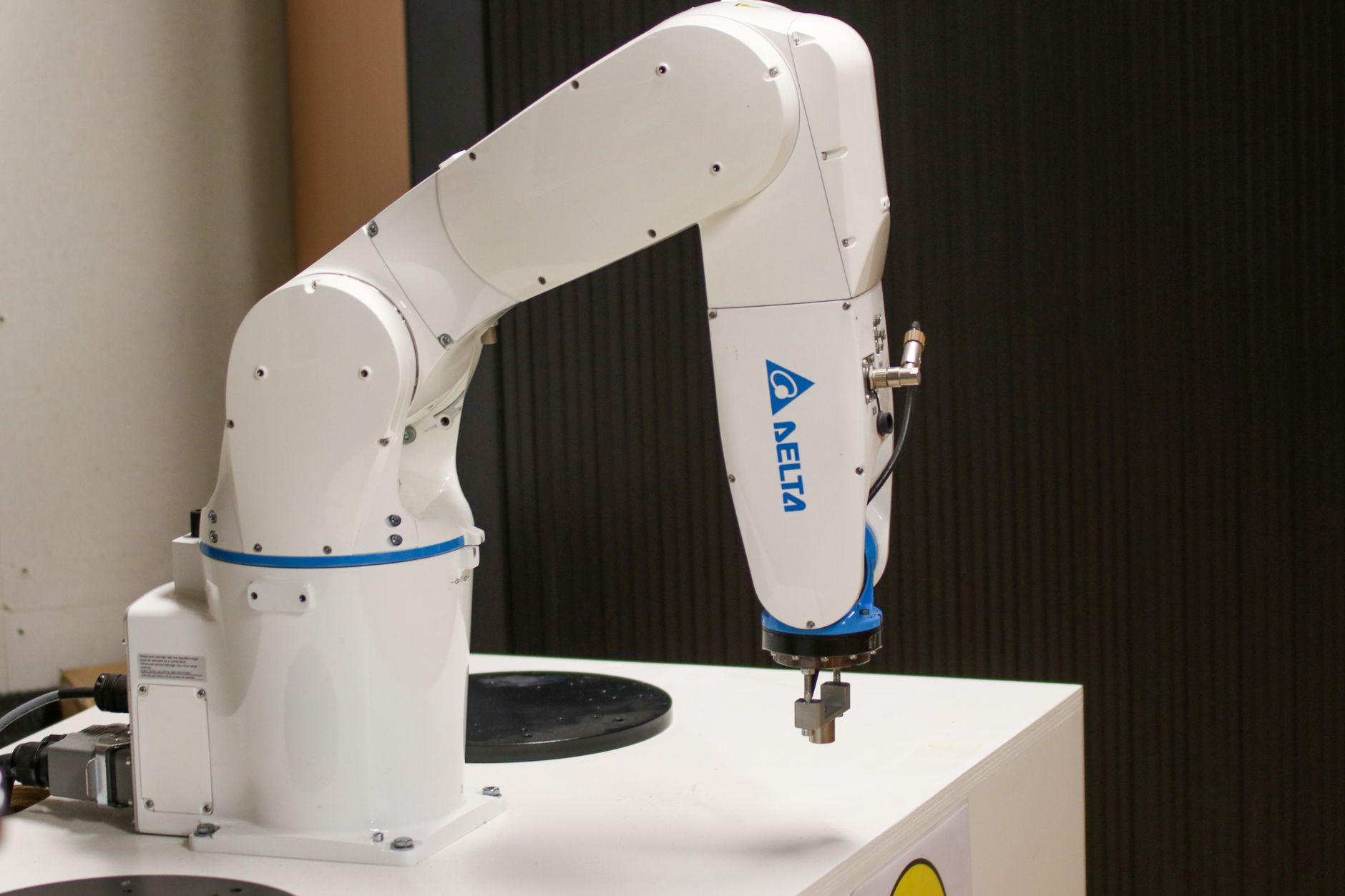
One is hygienic-design machinery in the wet zone — delta pickers over a conveyor, washdown-rated arms, case packers — where the design constraints are IP69K ingress protection, cleanable surfaces, and food-grade lubricants. The other is material movement in the dry and ambient zones, which is where AMRs earn their keep. The swarm architecture is the more interesting technical claim. A conventional AMR deployment runs a central fleet manager that assigns and sequences every mission. AGILOX distributes that decision-making to the vehicles, which the company presents as a way to add or remove units without reconfiguring a central controller — useful in a plant that runs three shifts in peak season and one in the off-season.
Why the integration layer is the real change
The hard part of an AMR project in food manufacturing is rarely the robot. It is the handshake: telling the vehicle that a pallet at the end of line 4 is complete, that the load is 1,180 kg and out of square, that the freezer door interlock is open, and that the warehouse management system expects it in aisle 12. Each of those is a separate interface, often built by a systems integrator as custom middleware. Rockwell's position is that owning the AMR removes that custom layer, because the vehicle fleet and the line controls sit inside one software environment.
In practice, expect the first benefit to show up in commissioning time and in diagnostics — one historian, one alarm list, one set of HMI screens — rather than in the robots moving faster. The second effect is commercial. A plant engineer specifying an AMR cell today assembles a quote from a robot vendor, a fleet-software vendor, a controls vendor, and an integrator. Consolidating two of those into an existing supplier relationship changes the approval path, which in capital-constrained food operations is often the actual blocker.
Which food and beverage operations see a difference
The deal matters most to plants that are already standardized on Rockwell controls and are looking at their first or second AMR deployment. It matters least to greenfield facilities choosing their automation stack from scratch, and to operations whose bottleneck is in the wet zone.
Use these conditions to judge whether it changes your own plan: If three or more of those describe your plant, a single-vendor AMR conversation is worth opening. If the top constraint is hygienic product handling, this acquisition is adjacent to your problem, not aimed at it.
- Your line controls are predominantly Allen-Bradley and you report through FactoryTalk — the integration argument applies directly.
- Your material movement is palletized and repetitive: end-of-line to stretch wrapper, wrapper to cold storage, storage to dock.
- You run a mixed fleet of manual forklifts in congested aisles and have a documented pedestrian-safety concern.
- Your labor gap is in moving product, not in handling it — AMRs do not solve a packaging-line staffing shortage.
- Your facility has stable floor conditions. Standing water, heavy washdown runoff, and deep freezer floors are where AMR projects under-perform their pilot numbers.
Freezers, washdown, and the limits nobody puts in the brochure
Cold and wet environments are where food AMR deployments get humbling, and no acquisition changes the physics. Lithium-ion cells lose usable capacity at freezer temperatures, which shortens runtime and lengthens charging — a fleet sized on ambient-temperature cycle times will come up short in a -20 °C store. Condensation when a vehicle leaves the freezer fogs optical sensors and can set off safety stops until it clears. Washdown is the harder constraint.
Most AMRs, including pallet-movers generally, are not rated for direct high-pressure sanitation, so they belong in zones that are dry-cleaned or in packaging halls, not in a process area that gets hosed down between shifts. Confirm the ingress rating and the written cleaning procedure before the vehicle is designed into a layout, not after. Floor quality and traffic also decide the outcome. AMRs need reasonably flat, intact floors and predictable aisle widths; a plant that has absorbed twenty years of pallet-jack damage may need concrete repair as a prerequisite line item. And every slow-down for a human in the aisle is throughput you lose, which is why pilot throughput figures from an empty weekend run are not a planning basis.
The lock-in question, and how to protect against it
Single-vendor integration cuts both ways. The same tight coupling that shortens commissioning makes it costlier to put a different robot in the same cell later, and it concentrates your negotiating position in one supplier across controls, software, and now vehicles. Several contract terms keep that manageable, and they are worth asking for while the vendor is competing for the order:.
- Written interface specification for mission dispatch and status reporting, so a second AMR brand can be pointed at the same handoff points.
- Data access on your terms: confirm you can export vehicle telemetry and mission history without a subscription you cannot leave.
- Support and spares commitments with a stated term, especially for a product line that has just changed owners.
- A migration clause covering what happens to your fleet software if the product is renamed, rebundled, or discontinued.
- Pilot acceptance criteria measured in your own plant, in the worst zone, during a production shift — not a demo cell.
How to evaluate it without waiting for the market to settle
Treat the acquisition as a change in the supplier landscape, not as a reason to re-open a decision you have already made well. The disciplined move is to run the same evaluation you would have run anyway, and let the integration advantage show up as a line in the comparison rather than as the premise of it. Start by measuring the movement you actually want to automate: pallets per hour per route, distance, and the hours of the day when the route is saturated. Then price three paths — a Rockwell-integrated fleet, a competing AMR with an integrator-built interface, and doing nothing but reorganizing the routes.
The third option wins more often than vendors acknowledge, and quantifying it is the only way to know what the robots are worth. Finally, ask your incumbent integrator what the handoff work costs in each case. That number is the whole argument for single-vendor AMRs, and it is specific to your plant. If it comes back small, the integration story is thin for you; if it comes back as six figures of custom middleware, the deal has changed your economics.
Frequently Asked Questions
Does this mean Rockwell now sells food-contact robots?
No. AGILOX makes intralogistics vehicles that move pallets and totes. Hygienic product-handling robots in the wet zone remain a separate equipment class with different ratings and different suppliers.
Can an AGILOX unit replace a forklift one-for-one?
Rarely. An AMR runs a defined route reliably but handles exceptions poorly — a crushed pallet, a load parked out of position, an unplanned trailer. Most plants keep manual trucks for exception work and use AMRs for the repetitive legs.
Will existing AGILOX customers outside Rockwell's ecosystem be affected?
Product continuity after an acquisition is a reasonable thing to get in writing. Ask for support term, spares availability, and software roadmap commitments at your next renewal rather than assuming current terms carry over indefinitely.