
To verify tutorials and DIY robotics claims in 2026, trace company releases and research papers to independent evidence before you build or buy. Require origin records, test data, and clear paid-relationship disclosures, and pause when performance claims lack proof.
Content Credentials are cryptographically signed manifests that record where media came from and how it was edited. They help because tutorials often mix real demos, simulations, and edited clips. A careful reader checks the source, the evidence, and the safety limits together.
Table of Contents
- What should a credible company release include
- How do you read a robotics research paper
- What evidence makes a tutorial worth following
- Which red flags should stop a build
- How do you check DIY power and safety claims
What should a credible company release include
A credible release names the robot, the test conditions, and the measured result. It links to data, code, or a paper, not only to a highlight video. It also states limits on payload, speed, runtime, and environment. The Federal Trade Commission states in its Endorsement Guides that endorsers must have tried the product and hold proof for performance claims, as explained in advertisement endorsement guidance.
Look for that proof in the release itself. Paid creators should disclose material connections clearly and early. Be wary when a storefront promises easy income from an AI robot kit or automation scheme. That pattern drew federal action against unsubstantiated AI money-making claims. Treat income screenshots and urgency timers as marketing, not evidence.
How do you read a robotics research paper
Start with methods, datasets, hardware, and evaluation, then read claims. A strong paper reports failure cases, sample size, compute needs, and repeat steps. A weak paper shows only the best run with no code or calibration detail. An arXiv listing alone does not mean peer review.
arXiv notes that first-time authors need endorsement and that screening covers topicality and scholarly value, as described in endorsement help documentation. Use the timestamp as priority evidence, then seek later peer review, reproductions, or independent benchmarks. For industrial work, compare the paper against workplace integration practice. The International Organization for Standardization publishes ISO 10218-2:2025 for integration, commissioning, programming, operation, maintenance, and decommissioning of industrial robot cells. Home tutorials rarely meet that scope, so do not transfer factory claims to a garage build.
What evidence makes a tutorial worth following
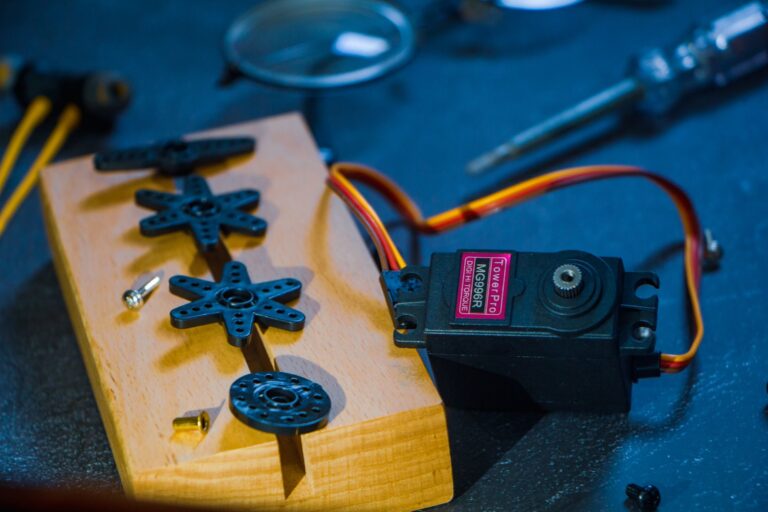
A trustworthy tutorial lists parts with exact models, tools, wiring diagrams, firmware versions, and settings. It shows full runs, including calibration, errors, and recovery, rather than one clean take. It also separates simulation from physical testing. Check media provenance where available. The C2PA open specification supports cryptographically signed Content Credentials manifests for origin and edit history, detailed in the C2PA technical specification.
Verification works only when creators opt in and platforms preserve the manifest. Missing credentials do not prove fakery, but preserved credentials make reuse and edits easier to trace. Cross-check the author, intent, and date before sharing or buying parts. Pause on sensational clips, consult trusted sources and fact-checkers, and avoid spreading unverified claims. Rebuild the key result at small scale first, then scale up.
Which red flags should stop a build
Stop when claims cannot be tested, replicated, or inspected. Vague breakthroughs, secret algorithms, and missing measurements are signals to wait. Pressure tactics are another signal.
Treat generative-AI summaries, voices, and demos as drafts until sourced. Confabulation, lost context, and missing provenance remain known risks for generative systems. Require the original paper, datasheet, or manufacturer page for every decisive number.
- No bill of materials, schematic, code, or version numbers
- Only edited highlights, no continuous uncut run or live test
- Performance numbers without load, distance, lighting, surface, or battery state
- Paid demo presented as neutral review with no disclosure
- Safety steps skipped around batteries, chargers, blades, heat, or high torque
How do you check DIY power and safety claims
Power claims deserve separate checks because battery failure can cause fire. Use cells and packs certified by a nationally recognized lab, and follow charger, current, and enclosure ratings. Stop use at swelling, excess heat, or strange odor. The U.S. Consumer Product Safety Commission points DIY builders toward lithium batteries certified to UL 1642 or UL 2054, listed on its voluntary standards page for batteries.
Keep that certification mark visible in your parts list. Replace damaged packs through proper recycling, not the trash. Record your own limits during testing: runtime under load, motor temperature, charge time, and cutoff voltage. Save photos of wiring, fuses, and strain relief. If a tutorial omits fusing, isolation, emergency stop, or safe charging practice, do not copy that section.
You Might Also Like
- How to Verify Exoskeletons Robotics Claims in 2026: company releases and research papers, Evidence, and Red Flags
- How to Verify Education Robotics Claims in 2026: company releases and research papers, Evidence, and Red Flags
- How to Verify Construction Robotics Claims in 2026: company releases and research papers, Evidence, and Red Flags