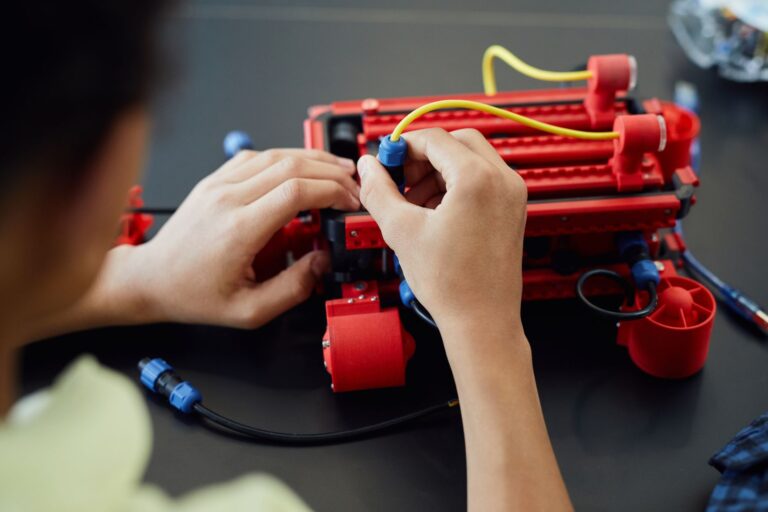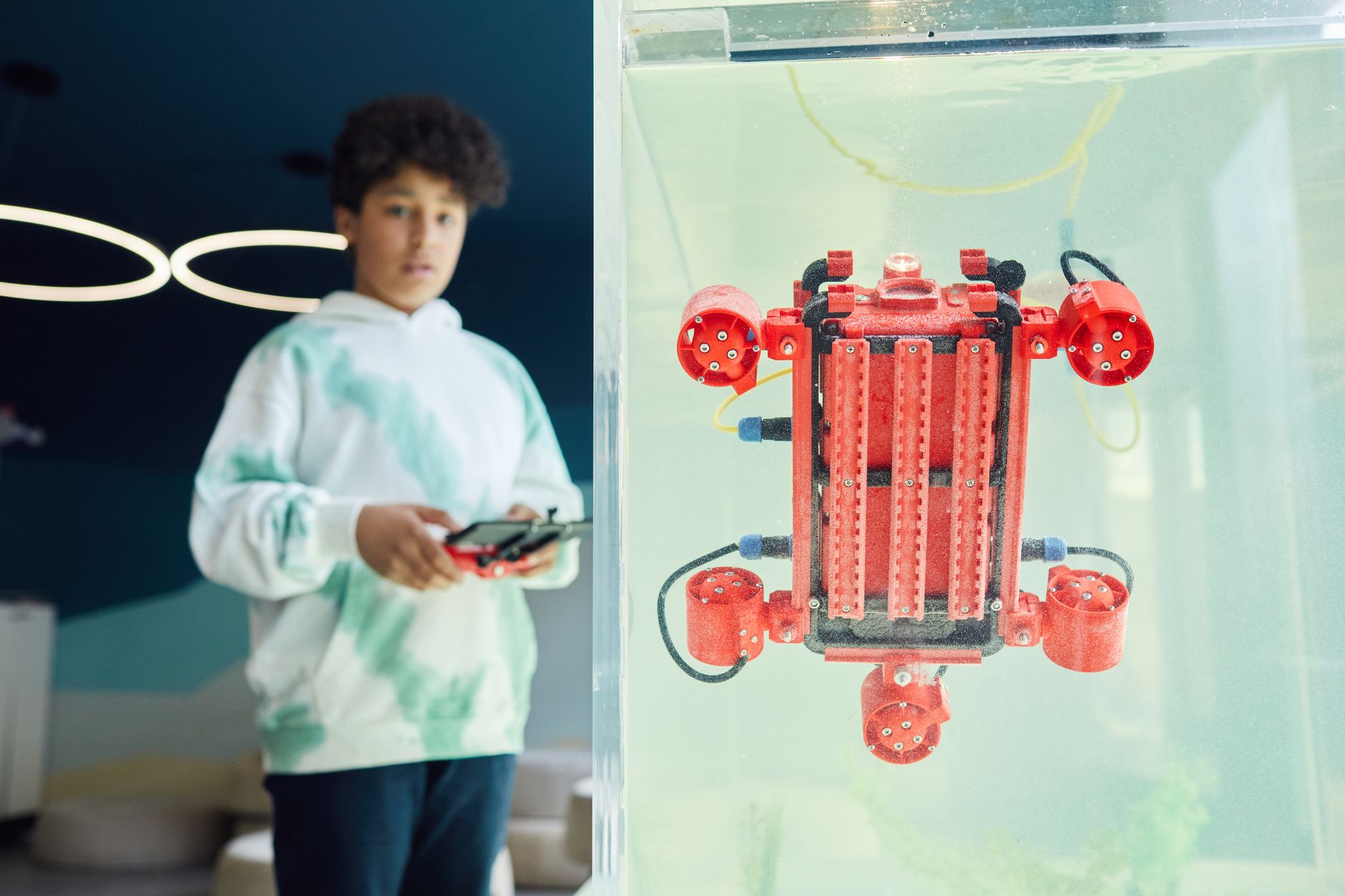

Underwater robots plant corals by carrying nursery-grown fragments or young colonies to a reef and fixing them onto rock, frames, or plugs. A remotely operated vehicle or autonomous vehicle follows a survey map, then uses a gripper, holder, or dispenser to place each coral in a selected spot.
A remotely operated vehicle, called an ROV, is driven by a pilot through a tether. An autonomous underwater vehicle, called an AUV, follows programmed routes with onboard sensors. Both types let restoration teams work deeper, longer, and more repeatedly than divers alone.
Table of Contents
- What do planting robots carry?
- How does a planting mission run?
- How do corals stay attached?
- Where are the limits?
What do planting robots carry?
Planting robots usually carry corals as small fragments attached to plugs, discs, or short pins. The hard base gives the gripper something to hold and gives the coral a stable surface for early growth.
Some systems dispense many small units across a wide area instead of placing a few large colonies. The choice depends on reef shape, water motion, and the species being restored. Larger pieces resist movement better, while smaller pieces let a team cover more ground per dive.
How does a planting mission run?
A mission starts with mapping. Cameras, sonar, and depth sensors record bottom shape, existing coral cover, and open hard surfaces.
Software or a pilot then selects planting points with suitable light, flow, and spacing. Position holding matters more than speed. Thrusters, tether management, and computer vision help the robot stay steady while the arm works close to fragile reef structure.
- Survey the reef and mark firm attachment points
- Load coral units into racks, tubes, or cartridges on the vehicle
- Navigate to each point and hold position against current
- Place, press, or glue each unit, then photograph it for records
How do corals stay attached?
Attachment depends on a firm connection between the coral base and the reef. Common methods include cement, epoxy, ties, wedges, screws, or slots in artificial frames. The robot presses the unit into place so water motion does not dislodge it before tissue grows over the joint.
Teeth, texture, and shape on the plug improve grip on rough limestone or dead coral rock. Operators avoid sand, loose rubble, and algae-covered surfaces because new corals cannot anchor there. A short photo check after placement helps teams find tilted or loose units.
Where are the limits?
Robots do not replace coral biology. Placed corals still need clean water, suitable temperature, enough light, and protection from predators, disease, storms, and heat stress. A well-placed fragment can still die if conditions turn bad.
Automation also faces practical limits in navigation, dexterity, and payload. Currents reduce precision, arms have limited reach and strength, and each dive carries only a fixed number of corals. For that reason, teams often use robots for mapping, transport, and repeatable placement, with divers or surface crews preparing corals and checking survival later. Divers still inspect attachment points after rough weather and remove debris or predators around new plantings.