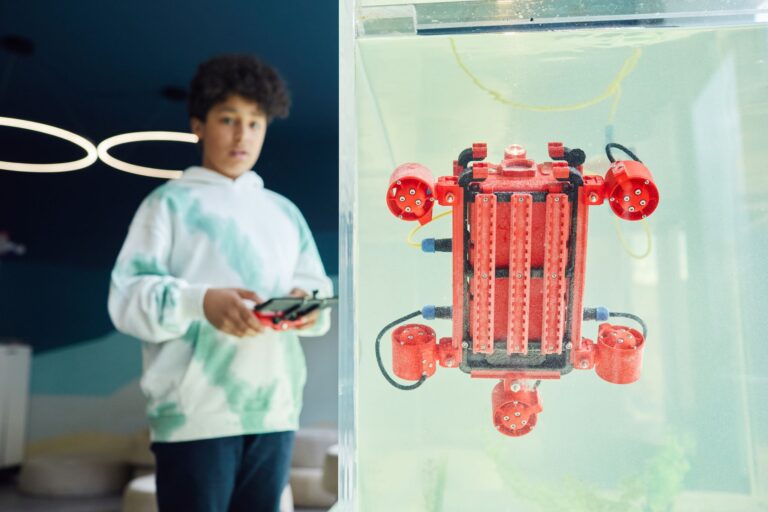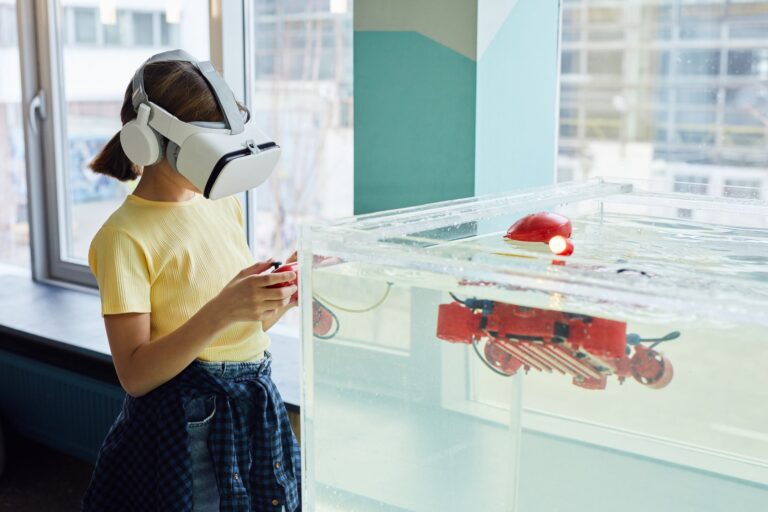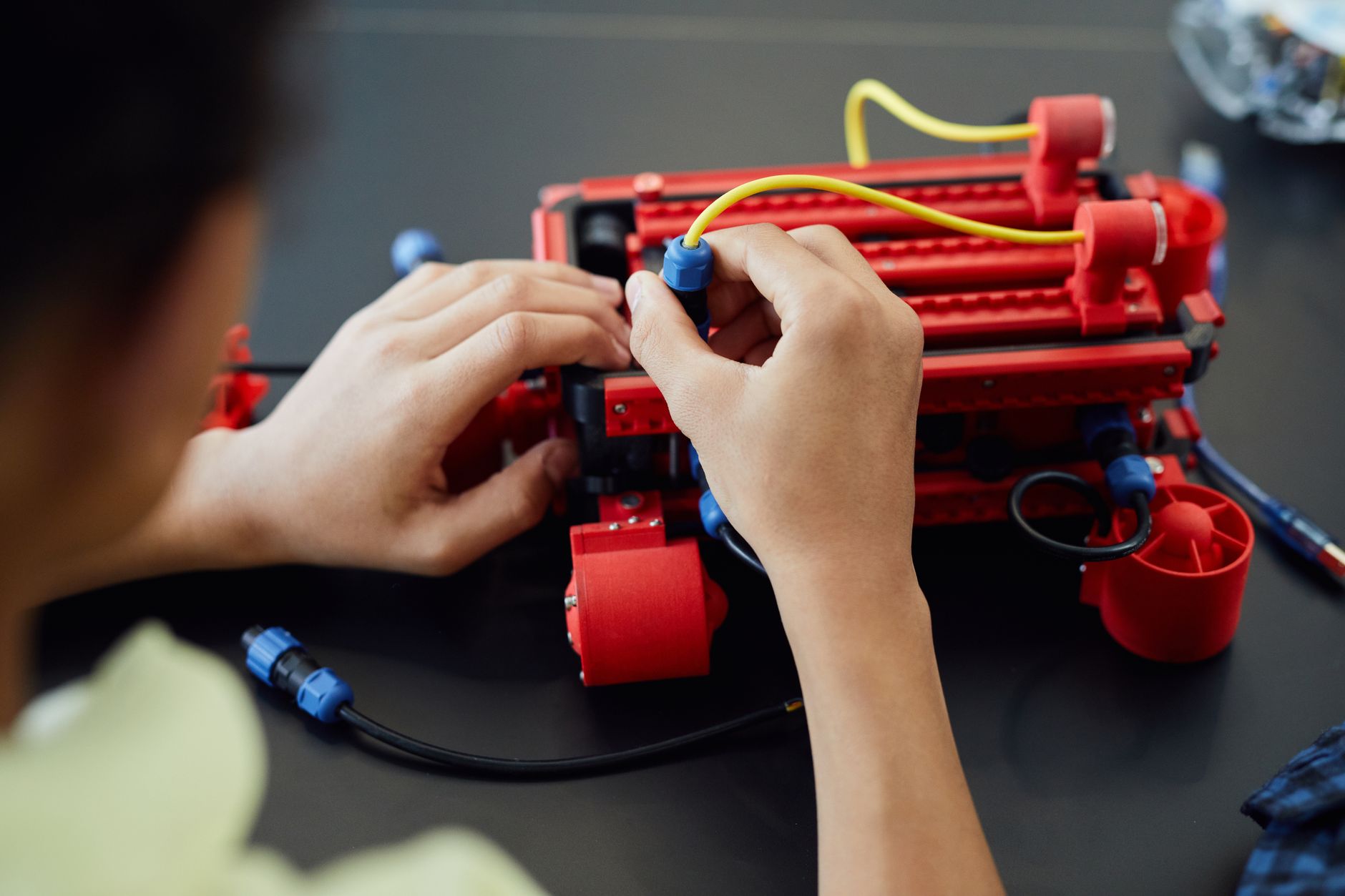

There is no single best underwater robot for ocean research. The best choice depends on the job: tethered ROVs for live video and intervention, AUVs for preplanned mapping surveys, and crewed submersibles for direct observation.
An ROV is a remotely operated vehicle linked to a ship by a tether. An AUV is an autonomous underwater vehicle that runs a programmed mission without that link. According to the Woods Hole Oceanographic Institution, each type fits a different research task, so buyers should match vehicle to mission first Ocean Robots overview.
Table of Contents
- When does a tethered ROV win?
- When does an autonomous mapper win?
- When should people go down?
- What limits the choice?
When does a tethered ROV win?
Choose an ROV when scientists need live eyes and hands on the seafloor. The tether carries power, control, and video between ship and vehicle. That link supports long work periods and quick changes in plan.
WHOI's ROV Jason gives shipboard teams round-the-clock seafloor access to 6,500 meters on multi-day missions. Schmidt Ocean Institute reports that its ROV SuBastian is rated to 4,500 meters, transits up to 3 knots, and lifts about 200 kg of payload. SuBastian handles 4K imaging, mapping, and rock, animal, and water sampling.
- Pick an ROV for live inspection and precise sampling.
- Pick an ROV for multi-day intervention from a support ship.
- Avoid an ROV when cable drag, ship time, or range is the main limit.
When does an autonomous mapper win?
Choose an AUV for wide, close, repeatable survey without a tether. It follows a planned track and carries its energy onboard. This makes it strong for mapping, search, and background environmental data.
WHOI describes its AUV Sentry as fully autonomous and rated to 6,000 meters. Sentry carries sonar, camera, and chemical sensors for close bottom-following survey, alone or with Alvin and Jason, according to WHOI's Sentry summary Sentry one-pager. Kongsberg lists its HUGIN 6000 AUV as rated to 6,000 meters with synthetic-aperture sonar, multibeam echosounder, sub-bottom profiler, cameras, and environmental sensors.
- Pick an AUV for high-resolution seabed mapping.
- Pick an AUV for sonar, camera, and chemical survey lines.
- Pair an AUV with an ROV or submersible for survey-then-sample work.
When should people go down?
Choose a crewed submersible when direct human observation changes the science. Two scientists can see context, select targets, and adjust sampling in real time. Robotic arms extend that judgment to objects and instruments. WHOI reports that the human-occupied Alvin carries two scientists to 6,500 meters on dives lasting up to ten hours.
The vehicle uses robotic arms for sampling and instrument handling. Use it for dives where eyesight, experience, and careful handling matter most. Crew time is short and support needs are high. Plan fewer dives, clear objectives, and backup sampling with an ROV or AUV.
What limits the choice?
Endurance and logistics often decide more than depth rating. WHOI notes that crewed dives are limited to about ten hours, and deep vehicles need launch, recovery, and ship support. Tether management also adds work for ROV operations.
Surface robots can extend coverage without diving deep. Saildrone reports deploying 10 Explorer unmanned surface vehicles for the 2026 hurricane season to send NOAA real-time ocean and atmospheric data for rapid-intensification forecasting 2026 NOAA hurricane mission launch. Match that surface layer against dive depth, payload, imaging, and mapping needs before buying ship time.