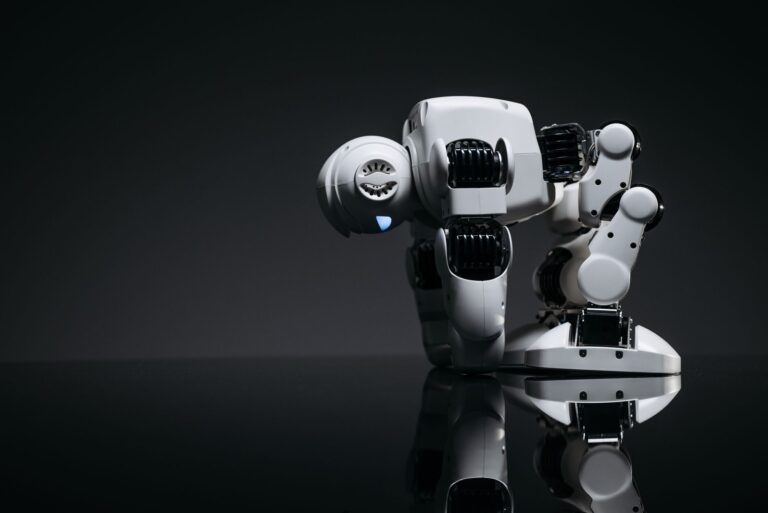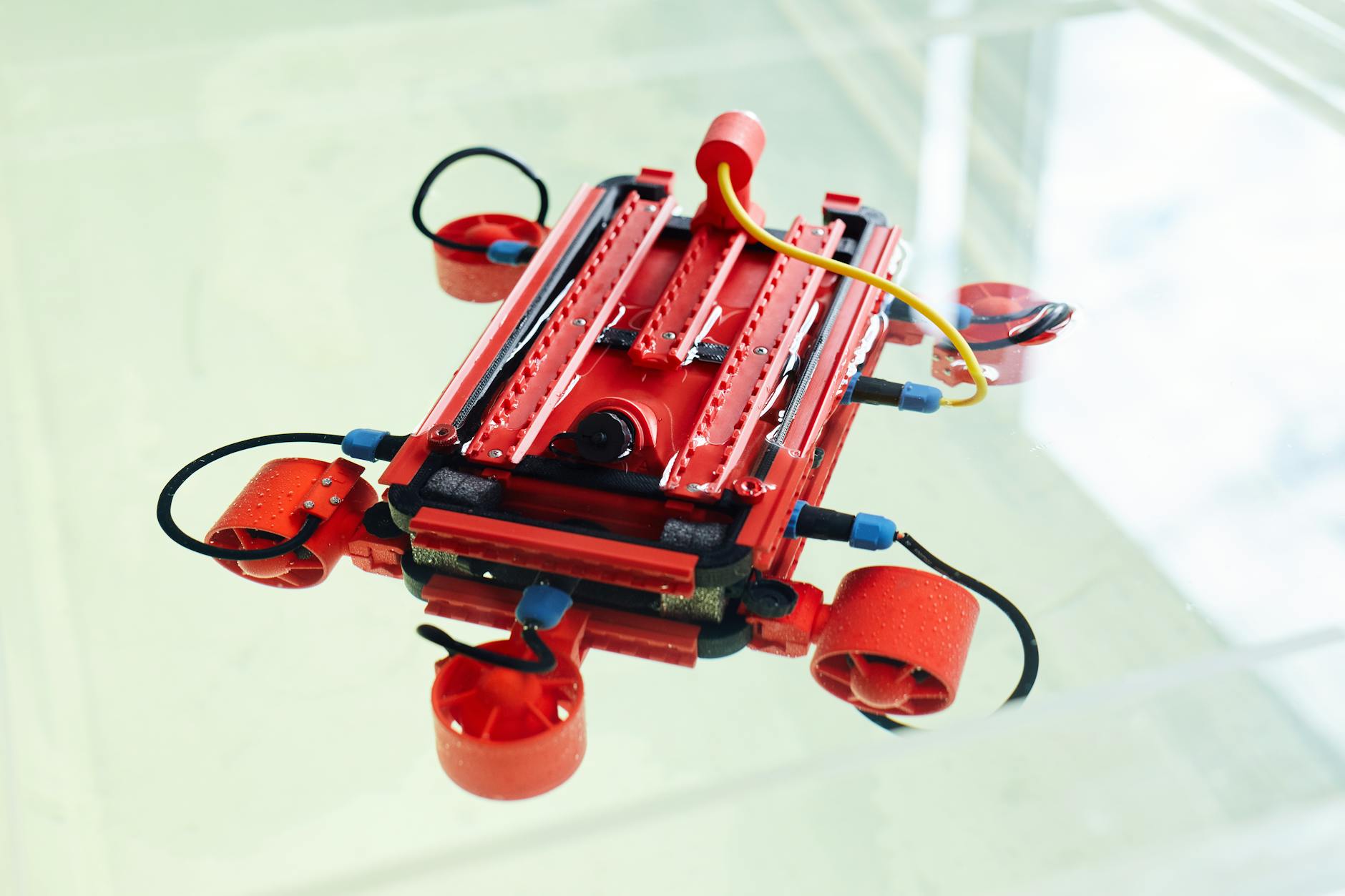

KRKNF represents a data integration and intelligence platform designed to consolidate information from distributed ocean robotics systems—much like how Palantir integrates disparate enterprise datasets into a unified analytical framework. Rather than forcing ocean roboticists to jump between proprietary interfaces, sensor readings, and disconnected databases, KRKNF aggregates telemetry, sonar data, video feeds, and operational logs into a single coherent system. For example, a research institution deploying autonomous underwater vehicles (AUVs) across multiple ocean surveys can ingest real-time position data, environmental measurements, and equipment diagnostics from each robot into KRKNF, enabling operators to spot patterns and anomalies that would be invisible in isolated systems.
The comparison to Palantir is instructive: just as Palantir extracts actionable intelligence from messy, heterogeneous data in enterprise settings, KRKNF is built to handle the complexity of ocean robotics—where systems come from different manufacturers, operate under varying communication constraints, and produce incompatible data formats. This capability addresses a genuine pain point in marine robotics: the fragmentation problem. Traditional approaches require researchers to manually reconcile data from multiple robots and sensors, a process that is error-prone, time-consuming, and leaves insights on the table.
Table of Contents
- What Makes Ocean Robotics Data Integration Necessary?
- The Architecture and Core Limitations of Unified Ocean Robotics Platforms
- Data Fusion and Real-Time Situational Awareness
- Implementing KRKNF in Operational Settings—Practical Considerations
- Data Quality, Validation, and Common Failure Modes
- Integration with AI and Advanced Analytics
- The Future of Ocean Robotics Intelligence Platforms
- Conclusion
- Frequently Asked Questions
What Makes Ocean Robotics Data Integration Necessary?
Ocean robotics has expanded far beyond simple underwater drones. Today’s marine research involves fleets of autonomous systems—gliders, profilers, benthic crawlers, and swarms of micro-robots—each generating streams of data that are essential for understanding ocean dynamics, climate patterns, and underwater infrastructure. The problem is that these systems rarely “talk” to each other in standardized ways. An AUV from one manufacturer might transmit sonar imagery in a proprietary format, while a competing system uses a different encoding. Without a unified platform, marine scientists waste significant effort mapping, converting, and validating data before analysis can even begin.
Real-world example: A deep-ocean mapping mission involving a fleet of underwater gliders might collect acoustic backscatter data, temperature profiles, and current vectors simultaneously. Without integration, researchers face the challenge of synchronizing these datasets across different time bases, coordinate systems, and resolution levels—all while managing communication delays inherent in subsea operations. krknf addresses this by providing a universal data intake layer that translates diverse sensor inputs into a common schema, allowing researchers to focus on questions about ocean conditions rather than data plumbing. The alternative—maintaining separate analytical pipelines for each robot type—creates silos that limit scientific insight. An oceanographer studying harmful algal blooms might need temperature, nutrient concentration, and biological data from multiple sensors. Without integration, connecting these datasets manually can introduce lag and errors, potentially missing critical events that would be obvious in a unified view.

The Architecture and Core Limitations of Unified Ocean Robotics Platforms
KRKNF operates on a hub-and-spoke architecture: ocean robotics systems transmit data (sometimes via satellite uplink, sometimes through acoustic modems, sometimes via conventional networks) to a central platform where it is normalized, indexed, and made available for query and analysis. This design enables real-time and post-mission data fusion, allowing operators and researchers to explore questions like, “Which robots detected the strongest thermal gradient?” or “Where did sensor readings diverge from expected models?” A critical limitation of this approach is latency and bandwidth constraints in subsea operations. Unlike enterprise data flowing through fiber-optic networks, ocean robotics data often travels through acoustic links with severe bandwidth restrictions. KRKNF must therefore include intelligent data prioritization and compression—transmitting only the most critical information in real-time while queuing lower-priority data for batch transfer when bandwidth is available. This creates a trade-off: systems achieve better real-time awareness at the cost of potentially losing granular detail or historical fidelity. Operators must be aware that the data they see on shore is often a compressed or down-sampled representation of what the robots actually measure.
Another limitation is the assumption of system reliability. KRKNF works best when sensors, communication links, and robot subsystems function as designed. In the ocean environment, where corrosion, biological fouling, and mechanical stress are constant threats, systems fail unpredictably. A robot loses GPS lock, an acoustic modem malfunctions, or a sensor drifts out of calibration. KRKNF can flag anomalies and inconsistencies, but it cannot always resolve them without human intervention. Marine operators must remain trained and ready to diagnose and compensate for system degradation in real-time.
Data Fusion and Real-Time Situational Awareness
One of KRKNF’s primary strengths lies in its ability to synthesize data from heterogeneous sources into coherent situational awareness. Consider a scenario where multiple AUVs are conducting bathymetric surveys of a submarine canyon while oceanographic profilers measure water properties simultaneously. Each system generates data in its native format and cadence.
KRKNF ingests all of this, cross-references timestamps, resolves coordinate systems, and presents a unified view to operators: “Here is the precise bathymetry, and here is the temperature, salinity, and dissolved oxygen profile at each location.” This fusion capability becomes especially valuable in dynamic environments. If a research institution is monitoring a coastal upwelling event—a natural phenomenon where deep, nutrient-rich water rises to the surface—multiple robot types must coordinate observations. KRKNF allows researchers to see not just where upwelling is occurring, but to correlate it with biological responses (species distribution data), chemical changes (nutrient concentrations), and physical dynamics (current patterns). A single integrated platform replaces the mental model-building that researchers would otherwise have to do manually, dramatically accelerating hypothesis testing and decision-making.

Implementing KRKNF in Operational Settings—Practical Considerations
Deploying a unified ocean robotics intelligence platform requires more than technical infrastructure; it demands organizational and procedural adaptation. Teams must agree on metadata standards, calibration protocols, and data validation procedures before integration can succeed. For a research institution with existing robotic systems, adoption of KRKNF typically involves a phased approach: start with one robot type or mission profile, validate the data pipeline, then gradually add more systems as confidence grows. A key trade-off organizations face is between customization and standardization. KRKNF can be tailored to specific mission requirements, adding specialized sensors or algorithms for unique oceanographic questions.
However, each customization increases complexity and maintenance burden. A lean, standard configuration delivers faster time-to-value and lower operational overhead but may miss domain-specific opportunities. Research teams must decide: Do we want a general-purpose platform that handles 80% of use cases reliably, or a highly customized system that perfectly fits our niche but requires ongoing engineering investment? Most mature deployments start standardized and add selective customization only for high-impact capabilities. Cost is another practical consideration. Unified platform licensing, infrastructure provisioning (data storage, compute for analytics), and staff training represent significant capital and operational expenses. Smaller research groups or institutions with limited budgets may find that the benefits of full integration do not justify the cost, and hybrid approaches—full integration for critical systems, selective integration for others—become pragmatic compromises.
Data Quality, Validation, and Common Failure Modes
A unified platform is only as valuable as the quality of data flowing into it. KRKNF must incorporate rigorous validation logic to detect sensor drift, systematic errors, and anomalies introduced during transmission or conversion. In ocean robotics, a common failure mode is silent data degradation: a sensor gradually loses calibration, producing plausible but increasingly inaccurate readings. A platform that simply aggregates such data without quality oversight can mislead researchers into confidently acting on bad information. Best-practice KRKNF implementations include automated quality checks that flag suspicious measurements—for example, a temperature reading that contradicts known ocean thermodynamics, or a robot position that violates known current dynamics. However, these checks are reactive and imperfect. Sensor errors can mimic real ocean phenomena, making it difficult to distinguish signal from noise.
Teams using KRKNF must maintain expertise in oceanographic physics and robot operations to interpret platform alerts critically. Warnings and anomaly flags are prompts for human investigation, not definitive judgments. Another advanced consideration is data provenance and reproducibility. KRKNF should maintain detailed records of how data was collected, transmitted, processed, and integrated. This audit trail is essential for scientific integrity and for debugging platform issues. A researcher reviewing results from six months ago needs to know not just the final integrated dataset, but how each component was derived. Without this transparency, seemingly integrated data becomes a black box, and confidence in results erodes.

Integration with AI and Advanced Analytics
Modern KRKNF implementations increasingly incorporate machine learning and artificial intelligence layers on top of the unified data foundation. For instance, neural networks trained on historical oceanographic data can be deployed within KRKNF to predict phenomena like harmful algal bloom onset or thermocline formation based on current sensor readings. This is where the “intelligence” in “ocean robotics intelligence” becomes concrete: the platform does not just aggregate data, but extracts actionable patterns.
A concrete example: a coastal research program monitoring kelp forest health can use KRKNF to ingest urchin population counts, water temperature, nutrient levels, and light penetration from multiple surveying robots. An integrated predictive model can then forecast which regions are at risk of ecological degradation within weeks, allowing management decisions before damage becomes severe. Without unified data, such predictions would require researchers to manually assemble datasets and run external analytical tools—a workflow that is slow and error-prone.
The Future of Ocean Robotics Intelligence Platforms
The trajectory of KRKNF and systems like it points toward increasingly autonomous and self-optimizing platforms. Future versions may incorporate adaptive sensor prioritization—where the platform itself decides which robot to query next or which sensor to activate, based on real-time environmental conditions and research objectives. This represents a shift from passive data aggregation to active intelligence generation, where the platform becomes a semi-autonomous research partner rather than a passive repository.
Climate change and increasing interest in ocean health will likely accelerate adoption of unified ocean robotics intelligence platforms. As monitoring requirements expand and the cost of robotics decreases, institutions will deploy more diverse fleets of robots. Platforms like KRKNF will be essential for extracting maximum value from these distributed assets. The future of marine research depends not just on better robots, but on better systems for making sense of the data those robots generate.
Conclusion
KRKNF exemplifies a necessary evolution in ocean robotics: the recognition that a fleet of independent systems, no matter how sophisticated individually, yields suboptimal insights without integration. By consolidating heterogeneous data streams into a unified intelligence platform—much as Palantir does in enterprise analytics—KRKNF enables researchers and operators to discover patterns, respond to anomalies, and make decisions with far greater speed and confidence than isolated workflows would allow. The approach is not without limitations; latency, data quality, and the inherent complexity of ocean systems remain challenges.
For research institutions and marine technology companies considering adoption, the question is not whether unified platforms provide value, but how to implement them cost-effectively within existing operations. Organizations that successfully deploy platforms like KRKNF gain a significant competitive and scientific advantage, accelerating discovery and improving the safety and efficiency of ocean robotics missions. As ocean exploration and monitoring become increasingly critical to understanding climate and ecosystems, platforms that can intelligently fuse ocean robotics data will be essential infrastructure.
Frequently Asked Questions
How does KRKNF differ from simply pooling data in a shared cloud storage system?
Cloud storage provides centralized space; KRKNF adds active integration—normalizing formats, cross-referencing data, flagging inconsistencies, and enabling unified querying. It transforms unstructured data archives into intelligent, queryable systems.
What happens if one robot’s data is corrupted or compromised?
KRKNF detects anomalies through validation logic, but human judgment is required to determine whether an anomaly reflects real ocean conditions or system failure. Operators must investigate, and the platform should isolate suspicious data to prevent it from contaminating analyses.
Can KRKNF work with legacy robots that are decades old?
Yes, provided data can be extracted and formatted for ingestion. This may require custom translation layers, but systems like KRKNF are designed to handle heterogeneous inputs. The effort is typically highest for the oldest or most proprietary systems.
Is KRKNF dependent on constant internet connectivity?
No. KRKNF can operate in offline or intermittent-connectivity modes, queuing data locally and syncing when connections are available. This is essential for ocean robotics, where continuous connectivity is impossible.
How long does it take to see value from deploying KRKNF?
Initial value—unified data visibility and basic analytics—typically emerges within weeks. Strategic value—discovery of patterns that drive research or operational decisions—develops over months to years as the platform gains historical depth.
What skill sets are required to operate KRKNF effectively?
Teams need oceanographic domain knowledge, data engineering expertise, and familiarity with robotics operations. KRKNF augments but does not replace human expertise in these areas.