
RVLZ represents a new approach to robotics intelligence that mirrors Palantir’s data integration model but applies it specifically to autonomous systems and robotic fleets. Where Palantir built its reputation synthesizing disparate intelligence sources for government and enterprise clients, RVLZ focuses on aggregating data streams from multiple robots and sensors to create unified operational intelligence for manufacturers, logistics companies, and research institutions. The comparison holds practical weight: both platforms attack the problem of siloed information by providing visualization, integration, and analytical tools that help operators make faster, better-informed decisions across complex systems. The significance of this approach becomes clear when you consider a real warehouse operation.
A typical distribution center might have autonomous mobile robots from different manufacturers, computer vision systems, inventory databases, and motion tracking systems all operating independently. Without a unified intelligence layer, managers see fragmented data—robot status here, item locations there, congestion metrics elsewhere. RVLZ sits between these systems, pulling signals from all sources and presenting actionable intelligence on a single platform. This consolidation transforms how operators understand and optimize their robotic deployments at scale.
Table of Contents
- How Does RVLZ Aggregate Multi-Source Robotics Data?
- The Challenge of Real-Time Data Synchronization Across Heterogeneous Fleets
- Decision-Making and Autonomous System Optimization
- Implementation Strategy and Systems Integration
- Realistic Limitations and Expectations
- Competitive Positioning and Market Context
- The Future of Robotics Intelligence Platforms
- Conclusion
How Does RVLZ Aggregate Multi-Source Robotics Data?
rvlz functions as a data integration and analytics platform built from the ground up for robotics-heavy environments. Rather than forcing robotic systems into enterprise software designed for other purposes, it natively ingests APIs and sensor feeds from autonomous platforms and presents them through domain-specific interfaces. The platform can consume telemetry from wheeled robots, drones, computer vision systems, motion capture arrays, and environmental sensors simultaneously, then correlate this information in real time. A practical example illustrates the value. Imagine a manufacturing facility running 50 collaborative robots on different production lines, each with its own control system and monitoring dashboard.
An operator needing to understand overall production throughput must flip between interfaces. RVLZ consolidates this into a single view: which robots are in use, which are idle, which are experiencing errors, what the bottlenecks are. Instead of checking five dashboards, an operator gets one unified picture. This matters because bottlenecks often emerge from interactions between systems—a robot queuing because a conveyor is slow—not from isolated component failures. That pattern becomes visible in integrated data but stays hidden in siloed systems.

The Challenge of Real-Time Data Synchronization Across Heterogeneous Fleets
Integration at this scale introduces significant technical challenges that no amount of software elegance fully solves. Different robot manufacturers use different protocols, different latencies, different data schemas. Merging real-time streams from multiple sources creates synchronization problems: if one sensor reports a robot’s position 200 milliseconds before another sensor updates the same robot’s status, which version of reality should the platform present? Delays compound across large fleets, and data collisions become inevitable. RVLZ handles this through timestamp alignment and conflict resolution strategies, but these are workarounds rather than solutions.
The platform inherits the weakest link problem—if one data source is unreliable or has high latency, that degrades the intelligence for the entire fleet visualization. Additionally, the platform depends heavily on consistent, clean data inputs. Garbage data from a misconfigured sensor or a communication error can propagate through the system and corrupt the insights downstream. Users need to maintain data quality upstream, which requires discipline that many manufacturing environments lack. A facility with poor sensor calibration or inconsistent robot firmware updates will find that RVLZ’s insights are only as good as the underlying data cleanliness.
Decision-Making and Autonomous System Optimization
Where RVLZ approaches Palantir’s power is in enabling humans to extract decision-making intelligence from robot fleets. By visualizing fleet behavior patterns, operators can identify inefficiencies that individual robot controllers cannot optimize. A robot fleet might have access only to local information—where it is, where nearby obstacles are—but lacks global fleet context. RVLZ provides that context back to human operators who can then adjust routing, task allocation, or charging schedules based on fleet-wide optimization.
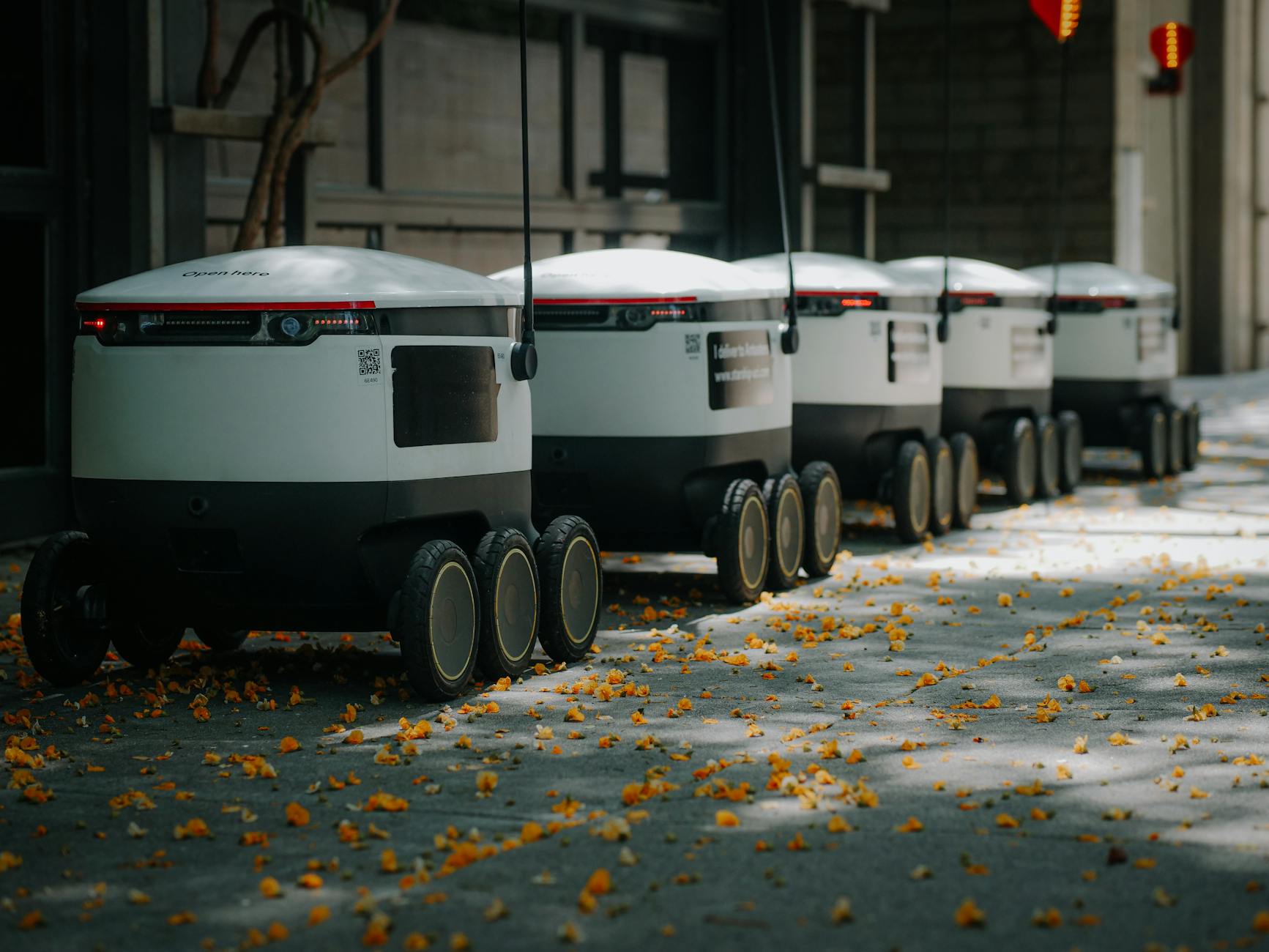
Consider a logistics operation with 200 autonomous mobile robots moving packages through a warehouse. Each robot optimizes its path locally, but globally the fleet might be creating congestion at specific chokepoints during peak hours. An operator monitoring RVLZ can see these emerging patterns in real time and adjust task queuing to prevent gridlock. Similarly, RVLZ can surface predictive signals—a robot’s battery drains faster than expected, suggesting maintenance issues—that humans can act on proactively. The platform doesn’t make decisions autonomously; it makes human decision-making more informed and faster.
Implementation Strategy and Systems Integration
Deploying RVLZ requires careful planning because integration depth varies significantly depending on your existing infrastructure. If your robots already expose well-documented APIs and your facility has reliable network connectivity, deployment can be relatively straightforward. If you’re running older equipment or a hodgepodge of different generations of robots, integration becomes a custom engineering project. The tradeoff is between integration depth and time to value.
A quick deployment might create dashboards showing robot locations and status—useful but limited. A deeper integration that pulls in item-level inventory data, workstation sensors, and downstream processes takes longer to implement but provides significantly more valuable insights. Many organizations start with a shallow integration to prove value quickly, then expand gradually. The risk is that after the initial deployment, the integration becomes static and falls behind as new robots or systems are added to the facility. RVLZ integration requires ongoing maintenance; it’s not a set-it-and-forget-it installation.
Realistic Limitations and Expectations
RVLZ is a tool for human operators, not an autonomous optimization system. The platform doesn’t automatically route robots or make operational decisions; it surfaces information to humans who do. This is both a strength and a limitation. It’s a strength because humans understand context and constraints that are difficult to encode—when to deviate from optimization because a client relationship matters more, or when to sacrifice efficiency for safety. It’s a limitation because the value depends entirely on how well operators use the information.
A platform showing you the problem doesn’t solve it if you can’t act on it. Additionally, RVLZ depends on stable network connectivity. In environments with spotty wireless or high electromagnetic interference, the real-time data synchronization that makes the platform valuable breaks down. Similarly, the platform’s intelligence is fundamentally reactive. It shows you what is happening and can surface patterns that already occurred, but it cannot predict novel failure modes it has never encountered. If a new class of robots starts experiencing a failure mode without historical precedent, RVLZ won’t warn you about it until operators recognize the pattern manually.
Competitive Positioning and Market Context
The robotics platform market includes various players addressing different segments. MiR (Mobile Industrial Robots) focuses on their own hardware ecosystem and provides built-in fleet management for their robots. Universal Robots similarly provides task orchestration within their product line.
RVLZ differentiates by being hardware-agnostic—it works with robots from different manufacturers and multiple generations, which appeals to enterprises with mixed fleets. This breadth comes at the cost of depth; RVLZ won’t know robot-specific performance characteristics as intimately as a manufacturer’s native software. Palantir’s Gotham platform operates in a different domain—government intelligence—but the architectural philosophy of data fusion and visualization parallels RVLZ’s approach. The comparison signals that RVLZ is tackling a similar class of problem (making sense of heterogeneous data sources) but applying it to commercial robotics.
The Future of Robotics Intelligence Platforms
As robotics deployments scale and factories become increasingly complex, the demand for unified intelligence platforms will only grow. RVLZ’s position in this space depends on whether it can maintain integration breadth as new robot manufacturers and sensor types proliferate. The platform will likely evolve toward more predictive analytics—not just showing you current state, but flagging emerging problems before they disrupt operations.
Machine learning can identify patterns in fleet behavior that humans miss, but only if the underlying data quality supports it. The long-term question is whether robotics intelligence becomes a standalone platform business or gets absorbed into broader enterprise platforms. As major ERP and MES providers add robotics-native modules, they may commoditize the integration layer that RVLZ provides. The defensibility of a platform like RVLZ depends on maintaining superior integration capability and providing insights that generic platforms cannot.
Conclusion
RVLZ fills a genuine need in modern manufacturing and logistics: the need to synthesize data from heterogeneous robotic systems into actionable intelligence. The Palantir comparison is apt because both tackle the problem of turning fragmented data into strategic advantage, though in very different domains. For enterprises running mixed-fleet robotics operations, RVLZ provides tangible value by eliminating data silos and enabling more informed operational decisions.
The platform’s success ultimately depends on two factors: the quality of the underlying data it ingests, and the capability of the humans operating it. RVLZ is not autonomous robotics magic; it’s sophisticated data integration applied to a domain that desperately needs it. Organizations considering deployment should plan for meaningful integration investment and recognize that the platform will only be as valuable as the decisions humans make based on the intelligence it provides. In the growing complexity of modern autonomous warehouses and factories, that intelligence advantage often justifies the effort.