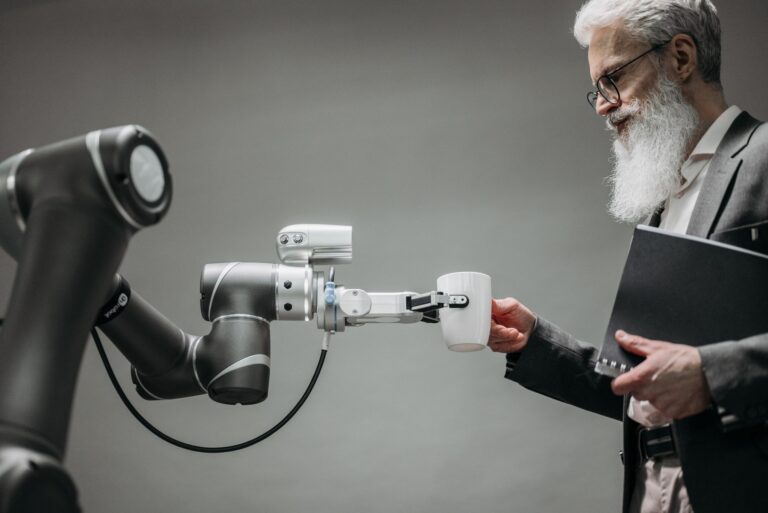

October 2026 brought higher humanoid output, new robotaxi response rules in California, and continued warehouse and service-robot deployments. The practical takeaway is to watch manipulation reliability, staffing for emergency response, and approved mobile robots rather than headline unit counts.
The anchor was the IEEE/RSJ IROS 2026 research conference. The IEEE Robotics and Automation Society lists it as running September 27–October 1, 2026 at the David L. Lawrence Convention Center in Pittsburgh, focused on intelligent robots and smart machines event listing.
Table of Contents
- What did IROS 2026 signal?
- Are humanoids scaling toward useful deployment?
- What will California require of robotaxi operators?
- Where are robot fleets actually entering service?
What did IROS 2026 signal?
Shenzhen-based Astribot used IROS 2026 for its T1 humanoid debut in North America. The company presented T1 as a physical-AI manipulation research platform, meaning hardware and AI intended for learning real-world handling tasks, with an approximately $18,000 starting price.
For lab and startup buyers, that positions T1 as research equipment rather than a finished worker. A manipulation platform is most useful when a team has tasks, fixtures, and evaluation measures ready before purchase.
Are humanoids scaling toward useful deployment?
Tesla raised Fremont Optimus output to several hundred humanoid robots per week in late September 2026, about 10 times its second-quarter rate. Electrek reported that suppliers were asked for parts for about 15,000 units in 2026 production ramp report.
The reported blocker is not shells per week. Electrek, citing The Information, identifies Optimus hands and AI inability to generalize across tasks as the main obstacles to useful mass deployment. That distinction matters for automation plans:.
- Unit output measures manufacturing progress.
- Dexterity measures whether a hand can do varied grasps reliably.
- Generalization measures whether one trained behavior transfers to new objects, layouts, and lighting.
What will California require of robotaxi operators?
California Gov. Gavin Newsom signed Senate Bill 1246 on September 30, 2026. According to California Senate District 15, the law requires AV operators including Waymo, Tesla and Zoox to provide local on-site support and face fines if a robotaxi blocks first responders for over 30 minutes Senate announcement.
The near-term effect is preparation, not immediate penalties. TechCrunch reported that the first-responder rules take effect in July 2028, giving operators time to build response staffing before fines apply enforcement timeline. Operators with city fleets should map handoff points, staffing coverage, and tow or remote-move procedures now. Cities and agencies should clarify local contacts, incident documentation, and what counts as blocking emergency access.
Where are robot fleets actually entering service?
Warehouse mobile robots face a separate national-security screen. The FCC added foreign-produced advanced robotic devices to its Covered List on July 28, 2026, then granted ANSCER Robotics conditional approval effective September 18, 2026 for AR250, AR650 and AR1250 warehouse AMRs to remain on the U.S. market.
An AMR is an autonomous mobile robot that moves material without fixed tracks. Conditional approval lets buyers continue specifying those three models while checking purchase terms, software-update terms, and replacement parts. Large entertainment deployments are also advancing. Shanghai-based Agibot delivered its 20,000th robot to Chimelong Spaceship Park in late September 2026, deploying over 300 robots across seven entertainment, education and service uses after reaching 15,000 units in July 2026.
You Might Also Like
- Startups and Innovation Robotics October 2026 Update: What Changed, Why It Matters, and What to Watch Next
- Simulation Digital Twins Robotics September 2026 Update: What Changed, Why It Matters, and What to Watch Next
- Robotics Companies September 2026 Update: What Changed, Why It Matters, and What to Watch Next