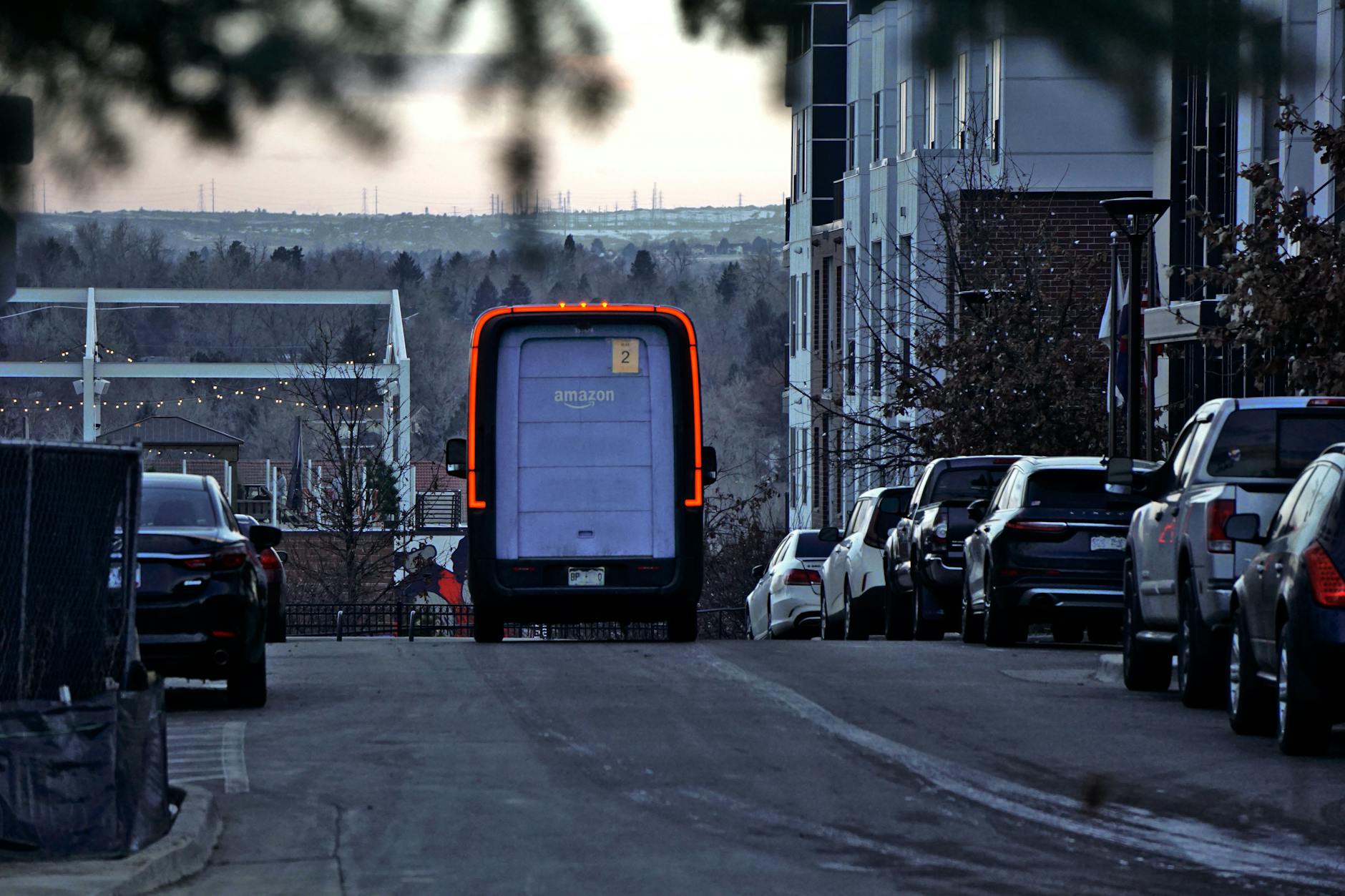

SERV represents a significant contender in the autonomous delivery robotics market, positioning itself as a potential dominant force in last-mile logistics. While comparing any startup to Amazon is ambitious, SERV’s technology and operational model do reflect many of the same principles that made Amazon successful—automated logistics, last-mile efficiency, and scalable infrastructure. The company has developed autonomous robots designed to handle package delivery in urban and suburban environments, competing directly with established logistics operations and other robotics startups like Waymo and Nuro.
The comparison to Amazon extends beyond mere ambition. Like Amazon, SERV is building not just robots, but an entire ecosystem designed to reduce delivery costs, increase speed, and operate at scale. Their robots navigate sidewalks and streets autonomously, handling the final stretch from distribution centers to doorsteps. A typical SERV robot can carry multiple packages and complete deliveries throughout the day without human intervention, operating in real conditions rather than controlled environments.
Table of Contents
- What Makes SERV’s Autonomous Delivery System Different?
- The Technical Architecture Behind Autonomous Last-Mile Delivery
- Market Position and Competitive Landscape
- Regulatory Pathways and Geographic Expansion Strategy
- Cost Economics and the Path to Profitability
- Integration with Existing Logistics Networks
- Future Outlook and Technological Evolution
- Conclusion
- Frequently Asked Questions
What Makes SERV’s Autonomous Delivery System Different?
SERV’s approach focuses on medium-distance autonomous delivery—the 1 to 5-mile range that represents a significant cost burden for traditional logistics. Their robots use advanced perception systems combining LiDAR, cameras, and radar to navigate urban environments safely. Unlike some competitors who prioritize robotic speed or futuristic designs, SERV emphasizes reliability and regulatory compliance, features essential for sustainable growth.
The company’s operational model mirrors Amazon’s philosophy of vertical integration and infrastructure control. SERV isn’t just manufacturing robots; they’re developing software, mapping systems, and logistics networks. this contrasts with competitors who focus primarily on hardware or partner exclusively with existing delivery services. One limitation to note: SERV’s robots currently operate in limited geographic areas, restricting their ability to demonstrate the true “Amazon scale” their branding suggests.

The Technical Architecture Behind Autonomous Last-Mile Delivery
SERV’s robots operate using sophisticated simultaneous localization and mapping (SLAM) technology that allows them to build and understand their environment in real time. The system integrates geospatial data with real-time sensors, enabling the robots to adjust routes around obstacles, weather conditions, and changing urban landscapes. Their software continuously learns from deployments, improving navigation accuracy and delivery efficiency with each operational cycle.
However, autonomous delivery faces significant technical limitations that separate established operations from startup aspiration. Weather conditions, particularly heavy rain and snow, degrade sensor performance and complicate navigation. Winter operation in northern climates remains a challenge across the industry. Additionally, SERV’s robots must integrate with last-mile pickup points, customer properties, and local infrastructure—connections that require ongoing coordination and refinement rather than self-solving technology.
Market Position and Competitive Landscape
SERV enters a market where Amazon itself is actively deploying autonomous delivery through Amazon Scout, while established logistics companies like UPS and FedEx are investing heavily in robotic solutions. Smaller competitors including Waymo, Nuro, and Marble are pursuing similar market niches. SERV’s distinction lies in focusing specifically on urban environments where delivery density justifies the robotics investment, rather than expanding into lower-density areas.
The competitive pressure is intense and comes from unexpected quarters. Last-mile delivery costs represent the primary margin pressure in e-commerce, making this sector a natural target for innovation investment. Unlike manufacturing robotics or industrial automation, delivery robotics must operate in public spaces, navigate regulatory approval processes, and coexist with pedestrian and vehicular traffic. This complexity creates barriers to entry but also limits first-mover advantages—success requires continuous adaptation rather than static solutions.

Regulatory Pathways and Geographic Expansion Strategy
SERV’s growth depends directly on navigating a fragmented regulatory landscape where rules for sidewalk robots vary dramatically by city and state. Some municipalities have embraced autonomous delivery with minimal restrictions, while others maintain strict permit requirements or prohibit sidewalk robots entirely. SERV’s strategy involves securing pilot programs and long-term operational agreements in progressive cities before expanding.
The trade-off between rapid expansion and regulatory security is unforgiving in this sector. Companies that expand too quickly into unprepared jurisdictions face sudden shutdowns and damaged relationships. Conversely, companies that move too cautiously cede market opportunity to aggressive competitors. SERV appears to prioritize market validation and regulatory stability over first-to-scale positioning—a calculated approach that differs from Amazon’s historical playbook.
Cost Economics and the Path to Profitability
Autonomous delivery only succeeds economically if robots can complete deliveries at costs dramatically lower than human couriers. This creates pressure on capital costs, operational overhead, and deployment efficiency. SERV’s robots must ultimately achieve delivery costs below $2 per package to compete effectively in the current market, a target that remains unproven at production scale. The economics present two critical warnings.
First, unexpected maintenance costs, technology obsolescence, and regulatory changes can rapidly alter unit economics. A single design flaw discovered after mass deployment can reshape entire financial projections. Second, delivery market pricing pressure is intense—if robots reach cost parity with drivers, adoption accelerates, but margins remain thin. SERV must maintain technological advantages or build strategic partnerships to justify continued investment, avoiding the path where robotics becomes commoditized.
Integration with Existing Logistics Networks
SERV’s actual market opportunity depends on integration with established logistics operations. Packages don’t originate at robot depots; they flow through distribution centers, sorting facilities, and regional hubs operated by Amazon, UPS, FedEx, and other carriers. SERV must position itself as either a service provider within existing networks or build parallel infrastructure—each approach carrying different risks.
An example of successful integration appears in SERV’s partnerships with local delivery services where robots augment rather than replace human operations. In areas with mature robot deployment, mixed teams of humans and robots handle different segments of deliveries based on efficiency and technical feasibility. This hybrid approach reduces the “all-or-nothing” risk that has derailed some robotics ventures.
Future Outlook and Technological Evolution
The next five years will determine whether SERV’s positioning as a significant player becomes validated or fades. Key developments include advancing autonomous driving in varied weather conditions, improving package handling capabilities, and extending delivery distance and speed.
If SERV achieves rapid deployment across 50+ major cities while maintaining profitability, the Amazon comparison becomes more realistic. Looking forward, SERV faces the same challenge that will define the entire delivery robotics sector: proving that autonomous systems genuinely reduce costs while increasing reliability compared to existing human-based networks. The technology is advancing, but adoption momentum still relies on demonstrating operational success at meaningful scale, not just technical capability.
Conclusion
SERV represents a credible entry into autonomous delivery robotics, incorporating lessons from both Amazon’s logistics dominance and the robotics industry’s technical evolution. Their focus on urban delivery, careful regulatory navigation, and integrated technology approach positions them better than many competitors, but comparison to Amazon remains aspirational rather than current reality.
The next phase of SERV’s growth will reveal whether they can execute at scale while maintaining the cost advantages that justify robotics investment. Success requires balancing aggressive expansion with sustainable operations, technical innovation with regulatory compliance, and startup agility with infrastructure reliability—a combination that remains unproven across the autonomous delivery sector.
Frequently Asked Questions
How do SERV robots handle package security and theft?
SERV robots employ sealed compartments, GPS tracking, and automated verification systems that ensure packages are delivered only to verified recipients. Cameras and sensors monitor interactions throughout delivery, creating accountability uncommon in traditional courier services.
What is SERV’s typical delivery radius and speed?
Current SERV deployments operate effectively within 1 to 5-mile delivery zones, completing trips in 20 to 45 minutes depending on distance and urban density. Speed varies based on traffic, weather, and navigation complexity.
Can SERV robots operate in all weather conditions?
Current robots perform well in moderate conditions but experience reduced reliability during heavy rain, snow, or extreme temperatures. Winter deployment remains a sector-wide challenge requiring ongoing technological refinement.
How does SERV pricing compare to traditional delivery services?
SERV’s target economics aim for significantly lower cost per delivery than human couriers, but current pricing still undercuts rather than replaces traditional services in most markets where both operate.
Which cities currently have SERV delivery robot operations?
SERV operates active deployments in select major metropolitan areas, with ongoing expansion tied to regulatory approval and logistics partnerships. Specific coverage areas expand regularly as pilot programs convert to permanent operations.
Is SERV technology proprietary or licensed from other companies?
SERV develops proprietary autonomous driving and robotics technology internally while licensing certain components and integrating third-party sensors and platforms where advantageous.