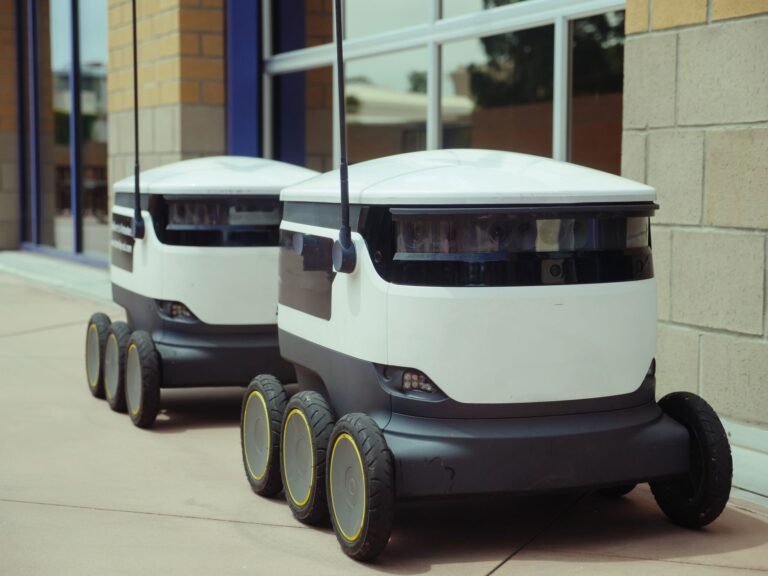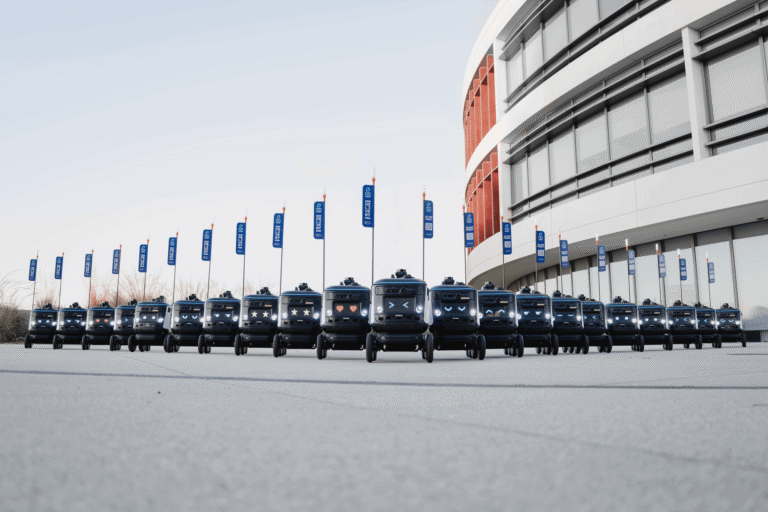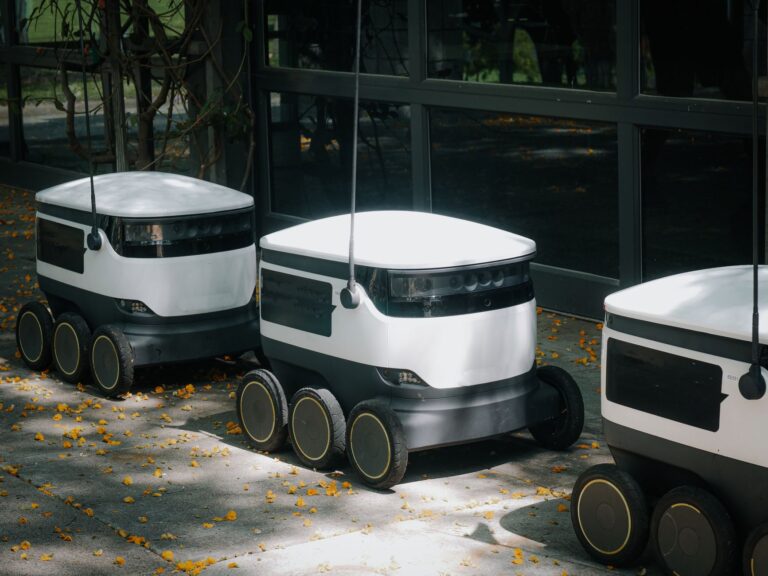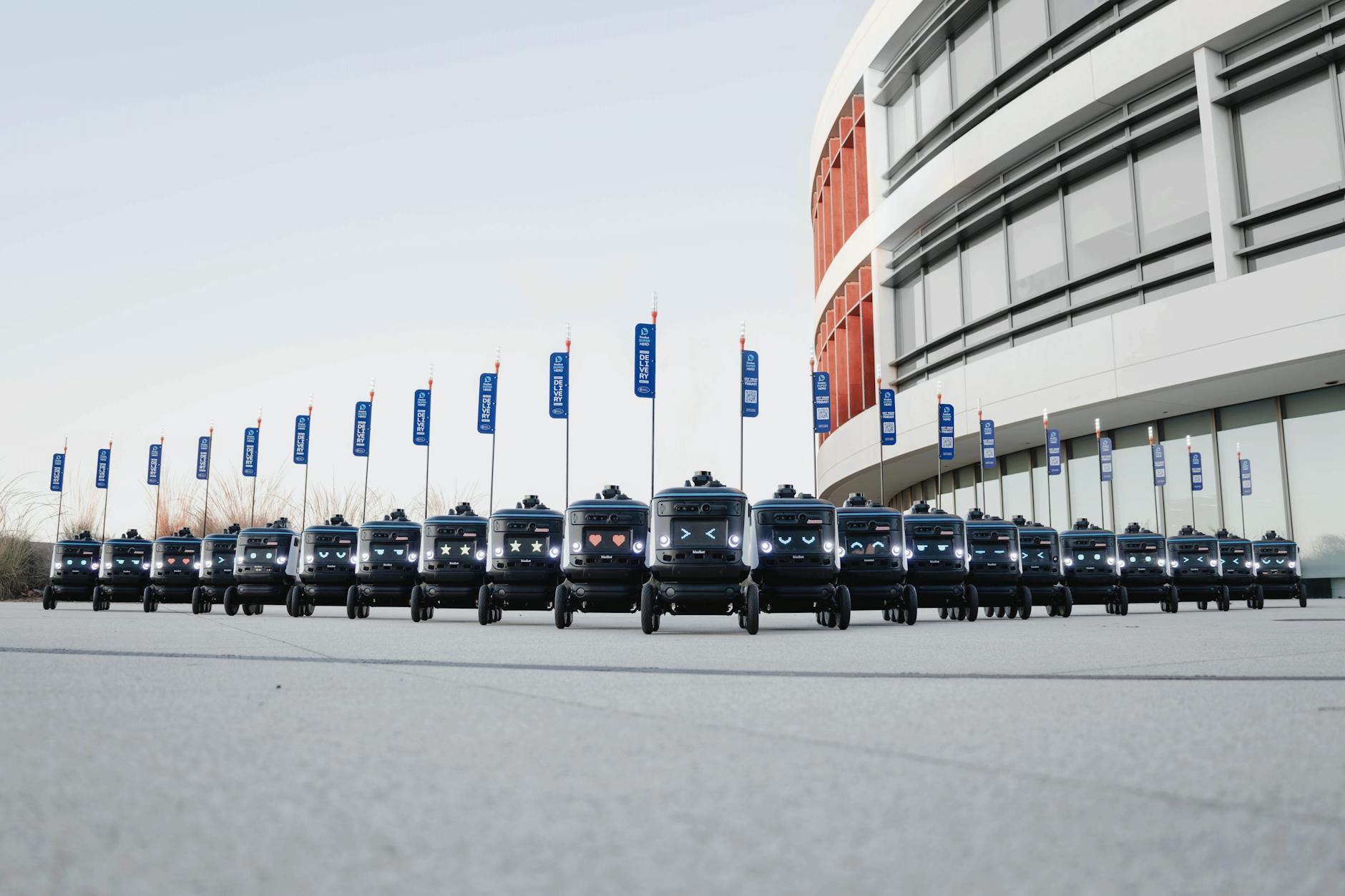

SYM has emerged as the dominant force in robotic fulfillment automation, earning the comparison to Google through its market dominance, technological innovation, and ability to set industry standards. Like Google’s grip on search, SYM controls significant market share in automated warehouse solutions, with its systems now operating in hundreds of facilities worldwide. The company’s rise reflects a broader shift in logistics: as e-commerce order volumes have tripled in the past five years, companies from Amazon to mid-market retailers have turned to SYM’s robotic systems to handle fulfillment at scales that human-only operations cannot match.
SYM’s strength lies not just in its hardware, but in treating fulfillment automation as an integrated software and robotics ecosystem. Traditional automation companies sell machines; SYM sells complete operational transformation. Their fulfillment centers use coordinated networks of mobile robots, automated storage systems, and AI-driven logistics software that learn and optimize workflows in real time—similar to how Google’s algorithms constantly refine search results.
Table of Contents
- Why SYM Dominates the Robotic Fulfillment Market
- How SYM’s Technology Actually Works—And Its Limitations
- Real-World Applications: Where SYM Systems Deliver Results
- SYM vs. Competitors: Tradeoffs and When Alternatives Win
- Common Implementation Challenges and Warnings
- The Software Advantage and Emerging Capabilities
- Future Outlook and Industry Implications
- Conclusion
- Frequently Asked Questions
Why SYM Dominates the Robotic Fulfillment Market
sym‘s market leadership stems from several converging advantages. First, their early-mover status—establishing major partnerships with large retailers in 2015-2017—created a moat of operational data and customer relationships that newer competitors struggle to overcome. Second, their modular system design allows deployment at varying scales, from regional distribution centers to massive fulfillment hubs. A mid-sized electronics retailer can start with a 50-robot deployment; Amazon-scale operations run thousands of units in concert.
The company’s competitive advantage also reflects technological differentiation. SYM robots use advanced computer vision and machine learning to handle SKU identification, sort accuracy, and dynamic routing—tasks that required manual quality control just a decade ago. Competitor systems like those from Swisslog or Vanderlande offer strong alternatives, but often require more pre-planning and manual configuration. SYM’s systems adapt, which translates to faster ROI. One beverage distributor replacing manual sorting with SYM’s system reported 40% faster order fulfillment and 30% reduction in mis-picks within six months.

How SYM’s Technology Actually Works—And Its Limitations
At its core, a SYM deployment combines mobile robots (which move inventory), fixed robotic arms (which perform picking or packing), and a central orchestration platform that coordinates the entire operation. The orchestration layer is where the real innovation lives: machine learning models predict demand patterns, optimize robot movement to minimize congestion, and dynamically adjust task allocation based on real-time facility conditions. This is genuinely impressive engineering, but it comes with a serious caveat: deployment is capital-intensive and time-consuming. Implementing a full SYM system typically requires 12-18 months of planning, integration, and validation—not counting pre-implementation facility redesign.
A major sporting goods retailer’s deployment ran nearly $40 million for a 300,000-square-foot facility, a figure that excludes retraining staff and operational disruption during transition. For smaller operators, the cost-per-unit of throughput can exceed traditional alternatives. The technology also assumes stable, repetitive workflows; highly seasonal businesses or those handling unusual or fragile SKUs report lower utilization rates. One food distributor noted that SYM’s systems handled high-volume dry goods efficiently but required manual override for fresh produce, limiting ROI.
Real-World Applications: Where SYM Systems Deliver Results
SYM systems excel in high-velocity, high-accuracy environments where labor costs and space constraints create acute operational pressure. Apparel fulfillment—where mix complexity is high and demand is volatile—has become a primary use case. A major athleisure brand deployed SYM across three facilities, improving order cycle time from 48 hours to 6 hours and cutting labor costs by 35% despite substantial ongoing maintenance and licensing fees. Similarly, third-party logistics (3PL) providers have embraced SYM as a differentiator; the ability to promise same-day order fulfillment to multiple retail clients relies on the kind of throughput and accuracy SYM enables.
Pharmaceutical and medical device fulfillment represents another high-value use case where accuracy and traceability matter as much as speed. SYM’s systems integrate with regulatory compliance software, creating an auditable record of every item’s movement—critical for supply chain control in regulated industries. However, this same strength becomes a liability in less structured environments. Consumer goods companies dealing with numerous SKUs, frequent promotions, and irregular demand patterns often find that SYM’s benefits plateau; human flexibility remains valuable in chaotic situations.

SYM vs. Competitors: Tradeoffs and When Alternatives Win
The competitive landscape includes established players like Swisslog (owned by KUKA), Vanderlande, and newer entrants like Locus Robotics. Swisslog offers deeper integration with existing warehouse management systems, particularly in European facilities, but often at higher consulting costs. Vanderlande’s strength is in baggage handling and postal sorting—edge cases where SYM’s mobile-robot approach is overkill. Locus Robotics specializes in collaborative human-robot workflows, cheaper to deploy than full SYM systems but with lower throughput.
The critical tradeoff: SYM scales horizontally (add more robots as volume grows) but requires upfront architectural investment. Competitors often scale incrementally (add equipment piece by piece). For a company uncertain about long-term volume, this matters. One quick-commerce startup initially chose a Locus system because it allowed 18-month payback; SYM would have required 36+ months of sustained high volume to justify the initial $25 million investment. SYM wins with certainty of scale; it underperforms with operational uncertainty.
Common Implementation Challenges and Warnings
The biggest risk in SYM deployment is underestimating integration complexity. Software compatibility with legacy warehouse management systems, data migration, and staff retraining consume months and millions in hidden costs. One automotive parts distributor launched a SYM system expecting 90-day payback; unforeseen WMS incompatibilities, staff resistance to new workflows, and initial throughput underperformance extended the timeline to 14 months. By then, operational disruption had cost far more than anticipated savings.
Another critical limitation: SYM systems are only as good as their input data. Mislabeled inventory, inaccurate location databases, or poor barcode quality will cripple throughput. Systems are also vulnerable to software bugs and updates—a poorly timed cloud platform update once caused a 6-hour outage across multiple facilities for one retailer. This isn’t a SYM-specific risk, but the scale of dependency makes it acute. Operators must maintain rigorous testing and backup protocols, not all of which SYM customers implement.

The Software Advantage and Emerging Capabilities
What increasingly separates SYM from hardware-only competitors is their software platform’s continuous improvement. SYM deploys updates quarterly, adding features like predictive maintenance (using sensor data to flag component failure before it occurs) and demand forecasting optimization. These capabilities accrue to existing customers without hardware replacement—a crucial advantage.
A five-year-old SYM facility can access tools that nearly match brand-new competitor installations, primarily through software updates. Emerging capabilities include AI-driven exception handling, where the system flags unusual orders (oversized items, hazardous goods, or fragile SKUs) and routes them to human stations automatically. Integration with labor management systems is also improving, allowing facilities to reduce contingency staffing. However, these advances assume continuous vendor engagement and upgrade investment, adding ongoing costs that sometimes surprise customers accustomed to traditional equipment.
Future Outlook and Industry Implications
As reshoring and nearshoring reshape global logistics, demand for high-throughput domestic fulfillment capacity will likely drive SYM deployments deeper into mid-market operations. Their advantage in handling complexity and speed will remain defensible, especially as e-commerce standards shift toward same-day delivery expectations. The long-term risk: commoditization.
As competitors mature and open-source warehouse automation software improves, SYM’s proprietary moat narrows. SYM’s trajectory resembles Google’s own path—dominant but increasingly facing pressures from adjacent competitors, regulatory scrutiny, and market saturation. Whether they maintain “Google of fulfillment” status depends on continued innovation and customer lock-in through superior software, not just hardware superiority.
Conclusion
SYM has achieved market dominance in robotic fulfillment through a combination of early-mover advantage, modular technology, integrated software-and-hardware architecture, and proven ROI in high-volume, complexity-heavy operations. They are genuinely transformational for operations with stable, high-velocity demand—but they are not the universal solution some marketing implies. Implementation is capital-intensive, long, and carries real integration risk.
Success requires honest assessment of facility readiness, demand certainty, and operational maturity. For businesses considering SYM deployment, the question isn’t whether the technology works—it demonstrably does—but whether your operation’s characteristics (volume stability, SKU complexity, labor cost structure, space constraints) justify the 12-18 month transition and significant ongoing investment. Smaller operators, those with seasonal demand, or facilities requiring flexibility may find greater ROI in incremental automation or competitive systems. The real opportunity lies not in adopting technology for its own sake, but in using it to solve the specific operational constraints that drive your business.
Frequently Asked Questions
What’s the typical ROI timeline for a SYM deployment?
Most customers report break-even within 24-36 months, assuming stable volume. Early-stage deployments at high-volume, consistent-demand facilities (like large 3PLs or major retailers) achieve 18-month payback. Seasonal or unpredictable operations often exceed 40-month payback.
Can SYM systems handle fragile or unusual items?
SYM handles standard SKUs efficiently. Fragile items, hazardous goods, and oversized products typically require human handling or hybrid workflows, which reduces the system’s utilization and ROI.
How much does a SYM implementation cost?
Facility-specific, but typical ranges: small regional hub ($10-15M), mid-size facility ($25-40M), large-scale center ($50M+). These exclude facility redesign, WMS replacement, and hidden integration costs, which can add 20-30%.
What happens if SYM goes out of business?
A real concern in robotics, though less acute with SYM’s scale. Customers would face loss of software updates and support. This is why long-term support contracts and technology roadmaps matter in vendor selection.
Are SYM systems vulnerable to supply chain disruption?
Yes. Component sourcing, software dependencies, and cloud infrastructure create dependencies. Facilities should maintain adequate spare parts inventory and robust backup protocols.
How does SYM handle returns and reverse logistics?
Less efficiently than forward fulfillment. Returned items typically bypass the automated system for manual inspection and restocking, limiting ROI benefits on high-return-rate categories.