
Yes, the next Nvidia in robotics could absolutely be an edge computing company—and several are already making bold moves to claim that title. Unlike traditional chip giants that have historically served the cloud and consumer markets, edge computing specialists are specifically architected for the computational demands of physical AI: low power consumption, real-time decision-making at the device level, and the distributed intelligence that modern robots require. Axelera AI, a European startup that just raised $250 million in February 2026 with BlackRock as a new investor, exemplifies this emerging pattern. With $450 million total raised and over 500 customers already, Axelera is launching its Europa AIPU processor in the first half of 2026, positioning itself as the kind of specialized, fast-growing AI infrastructure company that could reshape the robotics industry the way Nvidia reshaped AI computing.
What makes edge computing companies different from traditional semiconductor makers is their singular focus: they’re not trying to be everything to everyone. They’re building processors specifically optimized for running complex AI models directly on robots, drones, and autonomous systems—not in the cloud. This represents a fundamental shift in robotics architecture. As the robotics industry itself explodes with seven companies minting unicorn status in 2026 alone, the demand for specialized edge AI hardware is reaching a critical inflection point.
Table of Contents
- Why Edge Computing is the Real Battleground for Robotics
- The Specialized vs. Generalist Trade-Off
- Axelera AI’s European Challenge to American Dominance
- NVIDIA’s Edge Strategy and the Competitive Landscape
- The Computational Ceiling for Physical AI
- Market Momentum and the Unicorn Wave
- The Next Five Years and the Path to Dominance
- Conclusion
Why Edge Computing is the Real Battleground for Robotics
The robotics industry isn’t waiting for cloud-based AI solutions. Real robots need to make decisions in milliseconds—whether it’s a humanoid robot coordinating movement, an autonomous mobile robot navigating a factory floor, or an industrial vision system inspecting components. Cloud-dependent systems introduce unacceptable latency, dependency on network connectivity, and privacy concerns when sensitive operational data leaves the device. this is where edge computing becomes essential, and it’s why Qualcomm’s recent robotics push matters so much. In March 2026, Qualcomm partnered with NEURA Robotics to develop what they’re calling a “brain + nervous system” architecture for humanoid robots—essentially embedding AI decision-making directly into the robot’s hardware.
Qualcomm’s approach reveals how established semiconductor makers are adapting to this shift. Their Dragonwing IQ10 processor was introduced specifically as a “brain” for high-performance humanoid and autonomous mobile robots. The Q-7790 processor delivers 24 TOPS of NPU performance for AI-enabled systems ranging from smart cameras to industrial sensors. However, there’s a critical limitation: Qualcomm is a broadly diversified company. While they’re investing heavily in robotics, they’re also managing commitments to smartphones, automotive, IoT, and enterprise markets. Specialized edge AI companies don’t have this divided attention.
The Specialized vs. Generalist Trade-Off
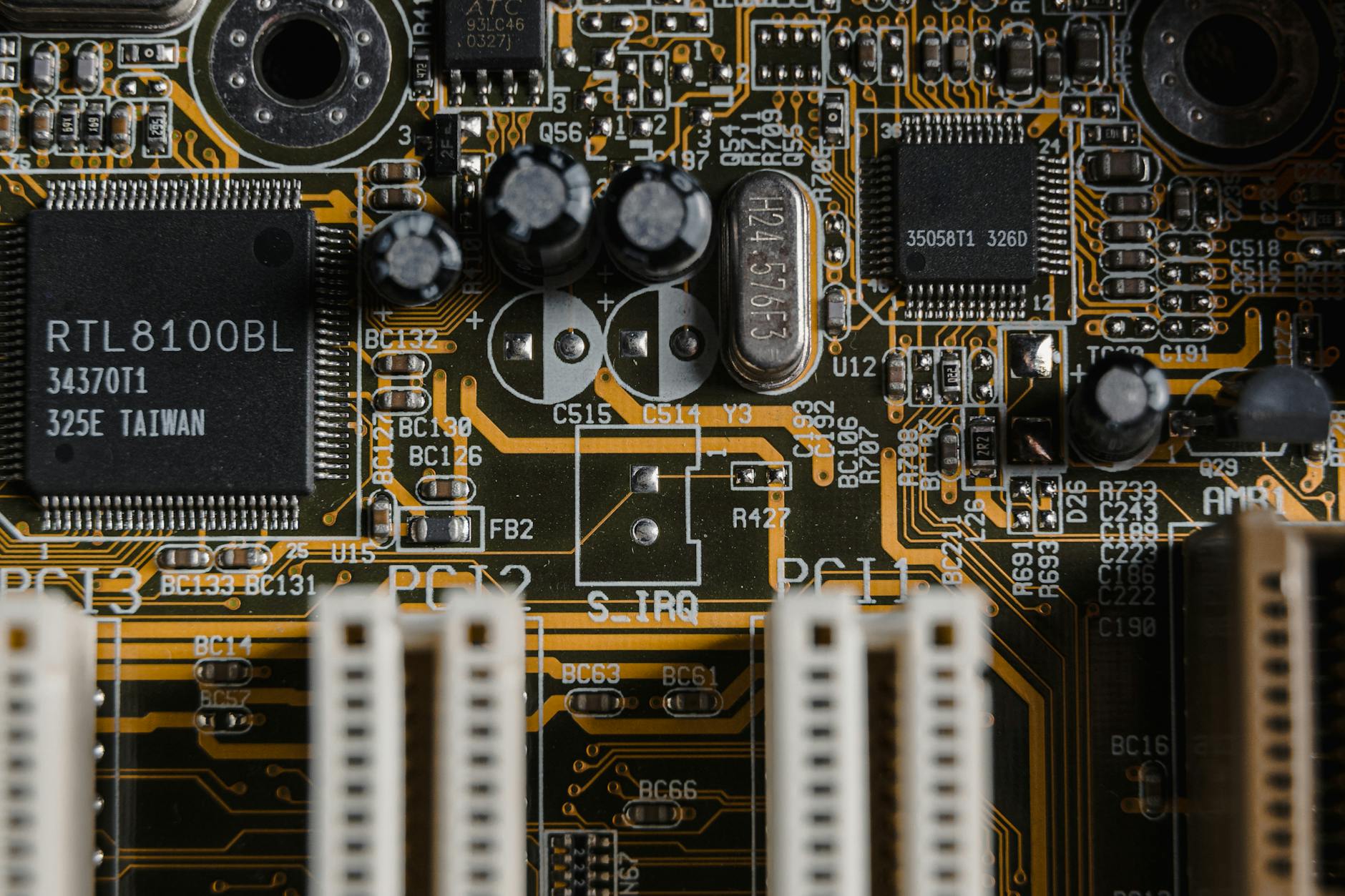
This is where the opportunity for new edge computing players becomes clear. nvidia revolutionized AI infrastructure not just because it made great chips, but because it bet everything on deep learning when most competitors thought the market was niche. Today’s specialized edge computing companies are making a similar bet on robotics and on-device AI. They’re willing to optimize aggressively for specific use cases—low power consumption, inference speed, multi-modal AI—rather than trying to maintain compatibility with legacy systems or serve multiple markets. Take Axelera AI’s Metis processor as an example of this optimization philosophy. It performs 214 trillion computations per second while consuming only approximately 10 watts—the kind of power profile that makes battery-powered robotics feasible.
Compare that to the broader optimization targets of a diversified chip maker, and you see the difference. Axelera isn’t trying to be the best at everything; they’re trying to be unbeatable at edge AI for autonomous systems. The company is already collaborating with Kudelski Labs on secure edge AI specifically for robotics applications, and they’ll demonstrate their KLARQ autonomous robotic platform at Computex 2026. This kind of focused roadmap is difficult for larger companies to maintain. The warning here is clear: specialization is powerful until the market shifts. If robotics demand suddenly drops or if cloud-based AI solutions overcome their latency problems, specialized edge companies would face a narrower pivot path than diversified semiconductor makers.
Axelera AI’s European Challenge to American Dominance
Axelera AI represents something noteworthy in the semiconductor industry: a genuine European competitor in a space historically dominated by American companies and, more recently, by American and Chinese firms. The $250 million Series C round in February 2026, which BlackRock participated in, was specifically described as “the largest investment ever in an EU AI semiconductor company.” That headline alone signals how capital markets view the opportunity. What makes Axelera’s position particularly interesting is timing and focus. They’re launching their Europa AIPU processor in the first half of 2026, which means production deployment is happening right now, in real time.
The processor is designed for multi-modal AI inference with improved energy efficiency and cost performance—exactly what robotics companies need. With over 500 customers already in their installed base, Axelera is beyond the theoretical stage. They’re in production, generating revenue, and capturing customer relationships in a growing market. This is the kind of traction that typically precedes explosive growth in specialized chip markets.

NVIDIA’s Edge Strategy and the Competitive Landscape
It’s important not to write off Nvidia in this story. The company isn’t sitting idle in the robotics edge space. Nvidia has released the Jetson T4000 module based on its Blackwell architecture, which delivers 4x greater energy efficiency compared to previous generations. The IGX Thor platform is already in use by companies like Diligent Robotics, EndoQuest Robotics, and Joby Aviation—real robotics companies making real products. However, here’s the structural difference: Nvidia’s edge offerings are extensions of its core data center business. They’re excellent products, but they’re not the company’s primary focus.
The competitive advantage of specialized edge companies lies not in superior technology (at least not yet), but in momentum and alignment. A company whose entire business model depends on robotics edge AI adoption will typically move faster, take more risks, and maintain tighter feedback loops with customers than a company managing a diversified portfolio. This creates a David-vs-Goliath dynamic that can play out in different ways. Sometimes the specialist wins through agility and focus. Sometimes the giant wins through resources and ecosystem. In semiconductors, these dynamics have historically favored companies that achieved dominance in their segment early—which is why the next few years matter enormously.
The Computational Ceiling for Physical AI
Here’s a limitation that cuts across all edge computing players: robotics is still figuring out what computational demands it actually needs. Current robotics applications range from relatively simple autonomous mobile robots (which need real-time SLAM and obstacle avoidance) to humanoid robots that require continuous multi-modal AI for perception, decision-making, and fine motor control. This diversity creates a targeting problem. A processor optimized for humanoid reasoning might be overkill for an industrial inspection robot. Conversely, a chip designed for lightweight edge tasks might struggle with complex multi-model inference. Axelera’s Europa AIPU is designed to handle multi-modal AI, which suggests they’re targeting the higher-capability end of the market. Qualcomm’s Q-7790 with 24 TOPS targets more modest computational needs.
The market might eventually segment clearly—light-duty edge, medium-duty, and high-end autonomous robotics—or it might consolidate around a few flexible platforms that work across use cases. That uncertainty is a real risk for companies making billion-dollar capital bets on specific architectures. Another limitation worth noting: software maturity. Chips are only as useful as the software ecosystems they support. Nvidia has CUDA and a sprawling ecosystem of robotics frameworks built on top of its hardware. Qualcomm has the Snapdragon platform and developer tools. Axelera and other newer entrants need to build equivalent developer communities and software maturity. This is not an insurmountable problem, but it’s a real one that could slow adoption.

Market Momentum and the Unicorn Wave
The context for all of this is explosive market growth. The edge computing market itself is projected to reach $156.2 billion by 2030, growing from its current baseline. More dramatically, the robotics industry saw seven companies achieve unicorn status in 2026 alone, with March 2026 alone producing four unicorn-status companies. These included Mind Robotics ($2.0 billion valuation), Bedrock Robotics ($1.8 billion), Rhoda AI ($1.7 billion), Robotera ($1.4 billion), and Sunday ($1.6 billion). This isn’t hypothetical demand.
This is capital-backed signal that robotics is real, valuable, and growing. Rockwell Automation’s Q1 2026 results provide another concrete data point: their intelligent devices business reached $1 billion in quarterly sales, up 13% year-over-year. This is a traditional industrial automation company reporting that its smart, AI-enabled devices are growing faster than its legacy products. When mainstream industrial companies start reporting that growth in edge-enabled devices is outpacing traditional offerings, it’s a clear sign that the market structure is shifting. Edge computing companies aren’t creating this demand—they’re capturing a slice of demand that already exists and is accelerating.
The Next Five Years and the Path to Dominance
If the pattern from prior semiconductor revolutions holds, the next dominant edge computing player in robotics will likely emerge over the next 3-5 years based on three factors: achieving clear technological advantages at scale (which Axelera is pursuing with Metis and Europa), building a credible ecosystem of software and developer tools (where Qualcomm has advantages but Axelera is investing heavily), and establishing customer lock-in through superior integration with popular robotics frameworks. Whichever company gets two of these three dynamics right will likely become the defining player in the segment. The most likely scenario isn’t that a new edge company completely displaces Nvidia or Qualcomm. It’s more likely that the robotics hardware market fragments into specialized segments, with different players dominating different use cases.
Qualcomm might own the mid-range industrial robotics market through its established relationships with industrial OEMs. Nvidia might maintain strength in high-end autonomous systems that can afford Jetson’s power consumption. And a company like Axelera could dominate the battery-powered, resource-constrained edge robotics segment where power efficiency is non-negotiable. This fragmentation is exactly what creates opportunities for new dominant players to emerge.
Conclusion
The next Nvidia in robotics could absolutely be an edge computing company because the market structure favors specialization right now. Unlike the cloud AI era, where Nvidia succeeded through being broadly useful and architecturally superior, the robotics era is creating niches—humanoid robots need different computational profiles than autonomous mobile robots, which need different profiles than distributed sensor networks. Companies willing to specialize deeply in these niches, move fast, and build developer ecosystems have a genuine path to dominance that isn’t available to broadly diversified competitors. What matters in the next 18-24 months is execution.
Axelera needs to prove that Europa scales reliably and that customers choose it over Nvidia and Qualcomm alternatives. Qualcomm needs to prove that its robotics platform vision translates into adoption in products that matter. NVIDIA needs to maintain its architectural advantages even as competitors focus exclusively on edge. The winner won’t necessarily be the company with the best chip—it will be the company that builds the most compelling robotics ecosystem fastest. For investors and companies planning edge infrastructure, this is the critical moment to place bets.