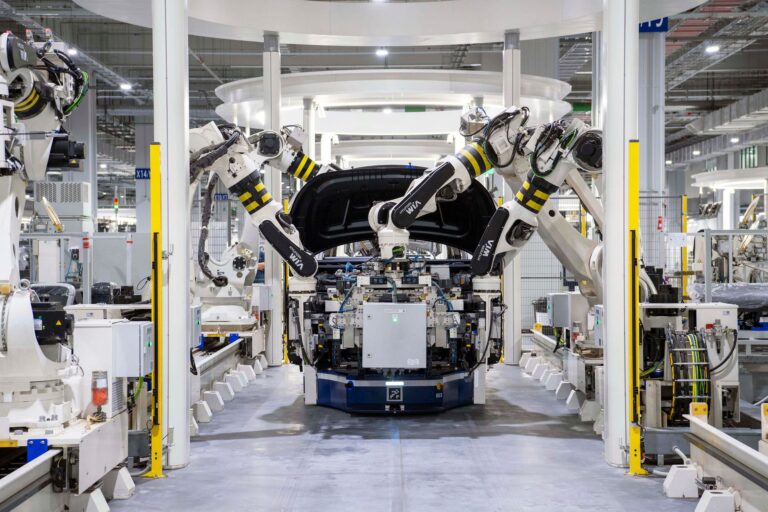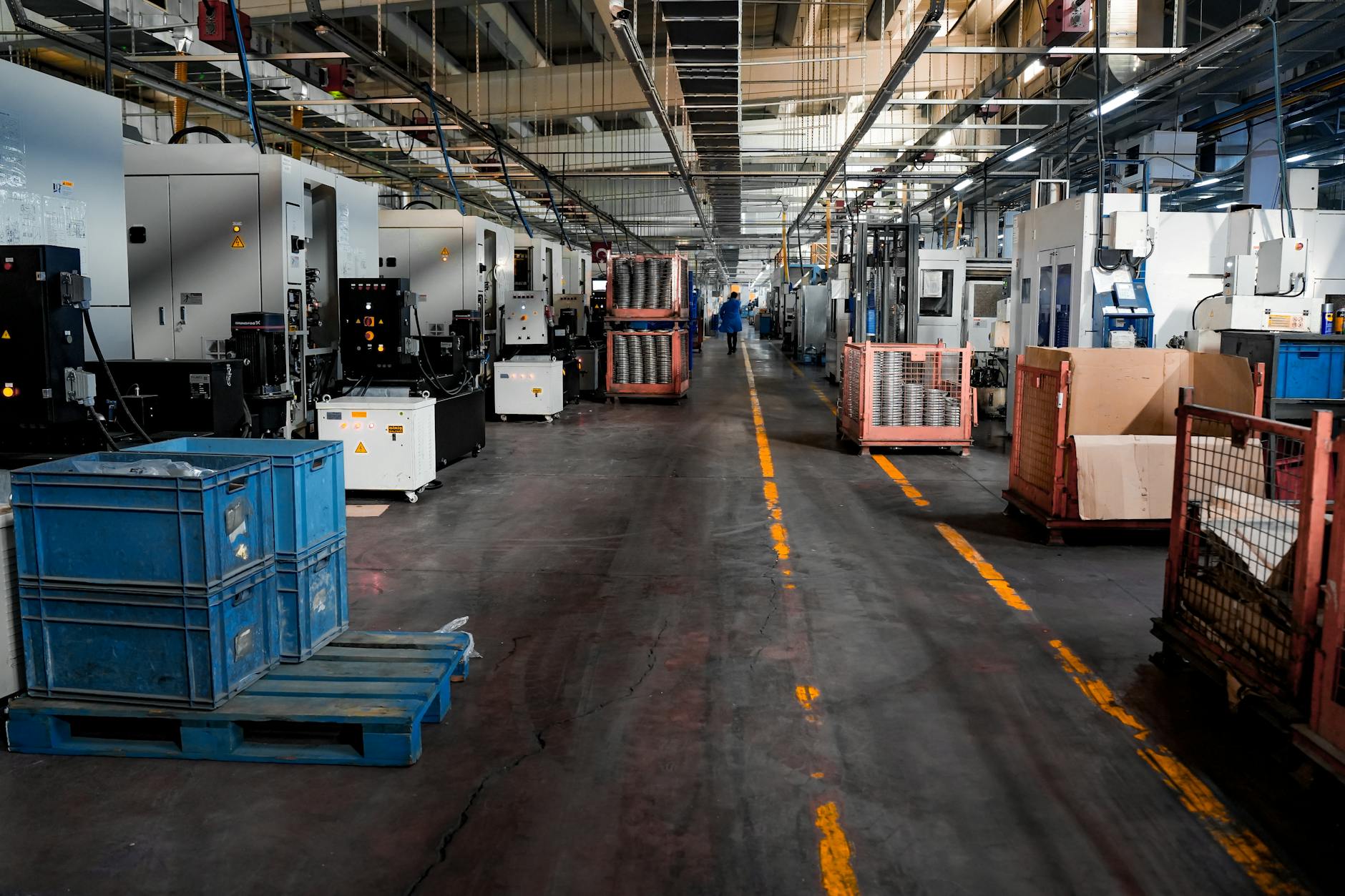

FANUY positions itself as a B2B marketplace that simplifies how manufacturers discover, source, and integrate automation equipment and services—much like Amazon did for consumer e-commerce, but focused on industrial automation, robotics, and manufacturing solutions. Rather than forcing buyers to navigate fragmented supplier networks, contact dozens of integrators individually, and piece together quotes from competing vendors, FANUY centralizes access to equipment, software, and professional services in one platform.
A small automotive parts supplier looking to automate its assembly line, for example, can browse pre-vetted integrators, view automation solutions tailored to their specific production needs, and compare pricing without the months of vendor outreach traditionally required. The manufacturing automation space has long suffered from inefficiency—buyers spend substantial time on supply-chain discovery, integrators compete on opacity rather than value, and mid-market manufacturers often lack the resources to evaluate cutting-edge solutions. FANUY addresses this friction by aggregating equipment vendors, system integrators, software providers, and consultants into a single ecosystem where automation projects can move faster and more transparently.
Table of Contents
- How Does FANUY Work as a Manufacturing Automation Marketplace?
- The Challenge of Standardizing Automation Sourcing
- How FANUY Addresses Equipment Discovery and Vendor Lock-In
- Integration Complexity and the Integrator Role
- Quality Assurance and Risk of Substandard Integration
- Data, Analytics, and Continuous Improvement
- The Future of Manufacturing Automation Marketplaces
- Conclusion
How Does FANUY Work as a Manufacturing Automation Marketplace?
fanuy operates on a two-sided network model: on one side are manufacturing companies seeking automation solutions; on the other are equipment suppliers, robotics vendors, control systems providers, and system integrators. The platform acts as a clearinghouse where manufacturers post automation requirements—whether retrofitting an existing production line, building a new facility, or upgrading to Industry 4.0 systems—and qualified vendors respond with tailored proposals. Unlike traditional procurement, which might involve three months of RFQ processes and back-and-forth negotiations, marketplace matching can accelerate initial vendor identification to weeks. The platform includes tools that allow manufacturers to specify automation needs in technical detail: production volume, part geometry, required throughput, existing equipment compatibility, and budget constraints.
Integrators can filter opportunities matching their expertise and submit bids. Transparency on both sides—visibility into past projects, integrator ratings, and standardized cost breakdowns—reduces information asymmetry, a major cost driver in automation sales. A mid-sized consumer goods manufacturer needing to automate its packaging line would traditionally spend months calling integrators, visiting their facilities, and waiting for custom ROI analyses. On a platform like FANUY, that same manufacturer can post specifications and receive vetted proposals within days, compare solutions from five different integrators, and view case studies of similar projects the integrators have completed. This acceleration doesn’t just save time; it lowers the soft costs of decision-making and can surface innovative solutions from integrators the buyer would never have found through traditional networks.

The Challenge of Standardizing Automation Sourcing
One of FANUY’s core value propositions is standardization, but this runs headlong into a fundamental reality of manufacturing automation: no two automation problems are identical. A beverage bottling line requires entirely different logic, hardware, and integration than an electronics assembly operation, and each comes with legacy equipment, facility constraints, and unique production workflows that resist standardization. Platforms that aggregate diverse automation solutions must solve a translation problem: how to represent incompatible technical requirements in a comparable format. An integrator specializing in precision positioning for medical device manufacturing operates in a different solution space than one focused on bulk-material handling for mining. Comparing a $500,000 vision-guided robotic cell to a $50,000 conveyor automation retrofit requires not just matching cost but evaluating whether solutions are substitutable—which they often aren’t.
FANUY must resist the temptation to reduce complex automation into simplified product categories, or risk surfacing irrelevant proposals that waste time for both manufacturers and integrators. Another limitation is geographic and logistical friction. Automation system integration is not purely digital; it requires on-site assessment, installation, commissioning, and long-term support. A manufacturer in rural Ohio cannot work as easily with an integrator based in Singapore as with a regional partner, even if the remote integrator offers technically superior solutions. This means FANUY’s network effects are regional, not global—the value of the platform depends on having dense, nearby supplier networks, which takes time to build outside major industrial hubs.
How FANUY Addresses Equipment Discovery and Vendor Lock-In
A key friction in manufacturing automation has long been equipment discovery. A manufacturer wanting to replace a worn-out injection-molding robot in 2024 cannot simply search “replacement robot” and compare units by specifications and cost. Instead, they often contact their original equipment vendor first—even if that vendor’s equipment is outdated or overpriced—because the switching cost of learning a new system feels high. Over time, manufacturers end up locked into proprietary ecosystems, paying premium maintenance costs and slow adoption timelines.
FANUY reduces this lock-in by making it easier for manufacturers to compare solutions from multiple equipment classes and vendors. A shopper can see that Fanuc, ABB, and Yaskawa robots with similar specifications differ in cost, that one integrator specializes in migration from legacy systems, and that alternative automation approaches (like collaborative robots or vision-based systems) might solve their problem more cost-effectively. This transparency puts pressure on vendors to compete on value rather than switching costs. A automotive tier-1 supplier might discover that switching from Siemens to Beckhoff control systems and retraining operators could reduce automation costs by 15% over five years—a comparison they’d never have made without the discovery friction on FANUY being low.

Integration Complexity and the Integrator Role
While FANUY simplifies vendor discovery, the actual work of integrating automation—designing control logic, adapting equipment to legacy production lines, training staff, and optimizing performance—remains complex and bespoke. The platform aggregates integrators, but integration itself is not a commodity. A world-class integrator brings domain expertise (food processing, automotive, electronics, pharmaceuticals), experience with specific equipment brands, and problem-solving skills that cannot be replicated across platforms. FANUY’s role is to expand the competitive field so manufacturers aren’t captive to one or two local integrators, not to reduce integration to a plug-and-play commodity.
This has a tradeoff: broader integrator networks mean lower switching costs for manufacturers, but it also means integrators must compete more aggressively on price and service quality. In mature markets, this drives healthy competition and innovation. In regions with few integrators, the platform may not add as much value because the competitive field cannot expand. An integrator in a densely populated industrial region like southeastern Michigan or the Ruhr Valley may face more price pressure than an integrator in a rural area where FANUY simply brings visibility to what was already a thin market.
Quality Assurance and Risk of Substandard Integration
One risk with any marketplace that aggregates service providers is quality control. Not all integrators are equally competent, and a poorly executed automation project can cost manufacturers far more than the initial savings on integrator fees. A low-cost bid from an inexperienced integrator might deliver a system that fails frequently, requires expensive ongoing maintenance, or cannot scale as production demands grow. The manufacturer bears the risk; FANUY’s role is to provide transparency and mechanisms to mitigate it. FANUY must therefore invest heavily in vetting integrators, collecting performance data, and providing recourse mechanisms when projects go wrong.
Ratings and reviews help, but they can be gamed or reflect incomplete information. An integrator with five glowing reviews might have taken on only small, straightforward projects; one with mixed reviews might have tackled ambitious, high-risk automation challenges that a more conservative competitor avoided. The platform needs to surface relevant context so manufacturers can distinguish between “this integrator plays it safe” and “this integrator is unreliable.” A warning: manufacturers should not assume marketplace presence implies deep vetting. Before committing to an integrator through FANUY or any platform, verify references, audit their past projects, and confirm they have genuine expertise in your specific industry and equipment. A low bid should trigger skepticism, not excitement—automation system failure is costly, and the cheapest option often carries hidden risk.

Data, Analytics, and Continuous Improvement
As FANUY aggregates more project data—timelines, costs, equipment used, outcomes—the platform gains the ability to generate intelligence about what works. Machine learning models can analyze historical projects to predict which integrator is best matched to a specific automation challenge, what timeline is realistic, or what equipment combination is most cost-effective for a given production scenario.
This data advantage compounds over time and becomes defensible competitive moat. A manufacturer considering a complete line redesign could ask the platform, “Based on 500 similar projects we’ve analyzed, integrators in your region charge between $X and $Y for this scope, take Z weeks, and typically result in an ROI of N% over five years.” This kind of benchmarking was previously available only through consultants charging premium fees. FANUY’s ability to deliver it at scale is a genuine innovation that should accelerate automation adoption, particularly among mid-market manufacturers who cannot afford expensive consulting.
The Future of Manufacturing Automation Marketplaces
The long-term potential of platforms like FANUY depends on building global coverage while maintaining regional relevance. Manufacturing automation is inherently local—facilities, supply chains, and labor markets differ by region—but digitized marketplaces can operate across regions if they maintain dense, high-quality networks. The parallel to Amazon is imperfect: Amazon succeeded by standardizing product categories and logistics; manufacturing automation is less standardized and requires deeper expertise integration.
Over the next decade, expect platforms like FANUY to evolve toward deeper software and data integration. Rather than simply matching manufacturers to integrators, they could offer design simulation, vendor-agnostic control software, real-time project management, and predictive analytics. The winners will be those that solve for data portability—allowing manufacturers and integrators to own their data, switch platforms if they choose, and avoid being locked into a single ecosystem. The fear of lock-in is real in manufacturing; a platform perceived as extractive or proprietary will struggle to build the trust required for a thriving two-sided network.
Conclusion
FANUY’s positioning as “the Amazon of manufacturing automation” captures a genuine opportunity: the manufacturing automation industry has long been fragmented, opaque, and slow to move. By aggregating vendors, standardizing discovery, and providing transparency, platforms can lower the friction of finding and executing automation projects. For manufacturers, this means faster access to solutions and broader competitive choice. For integrators, it means access to a larger market but also pressure to compete more intensely on value rather than market position.
However, the analogy to Amazon breaks down in important ways. Manufacturing automation is less standardizable, more dependent on local expertise, and involves higher switching costs and longer sales cycles than e-commerce. FANUY’s success will hinge not on achieving Amazon’s scale but on building genuinely trusted networks of integrators, solving the quality assurance problem, and providing data and intelligence that manufacturers cannot get elsewhere. For any manufacturer considering automation, platforms like this are worth exploring—but they should augment, not replace, direct relationships with proven integrators and a clear-eyed assessment of integration risk and long-term support requirements.