
USC researchers are advancing humanoid robotics through cutting-edge research being presented at major international robotics conferences in 2026, showcasing significant progress in robot perception and autonomy. The University of Southern California will present 32 papers at the IEEE International Conference on Robotics and Automation (ICRA) in Vienna from June 1–5, 2026, with humanoid robotics and dexterous manipulation forming a core part of their research portfolio. This institutional commitment represents not a single dramatic unveiling, but rather a sustained research effort being shared across the robotics community through peer-reviewed conference presentations.
The scale of USC’s presence at ICRA 2026 reflects the breadth of work underway across multiple labs. While humanoid robotics represents one research thrust among many, it demonstrates how university-industry partnerships are accelerating progress in embodied AI. The work builds on years of foundational research and positions USC as a significant contributor to humanoid robotics innovation.
Table of Contents
- What Are Vision-Language-Action Systems for Humanoids?
- Deploying on Unitree and Dexmate Platforms
- Industry Partnerships Fueling Research
- Addressing Real-World Humanoid Challenges
- Safety, Reliability, and Deployment Hurdles
- Conference Presentations and Research Dissemination
- Timeline and Research Momentum
- Frequently Asked Questions
What Are Vision-Language-Action Systems for Humanoids?
USC’s Learning and Interactive robot Autonomy Lab, led by Erdem Biyik, is developing Vision-Language-Action (VLA) systems that integrate 3D perception, language understanding, and motor control into unified frameworks for humanoid robots. These systems represent a departure from modular approaches where perception, reasoning, and control operate as separate pipelines. Instead, VLA systems attempt to learn end-to-end policies that connect visual input directly to robotic actions, with language providing a semantic bridge between human intent and robot behavior. The challenge with VLA systems lies in scaling them to work with complex embodied systems like humanoids. A humanoid robot must coordinate dozens of joints while maintaining balance, avoiding obstacles, and interpreting naturally-phrased human instructions—simultaneously.
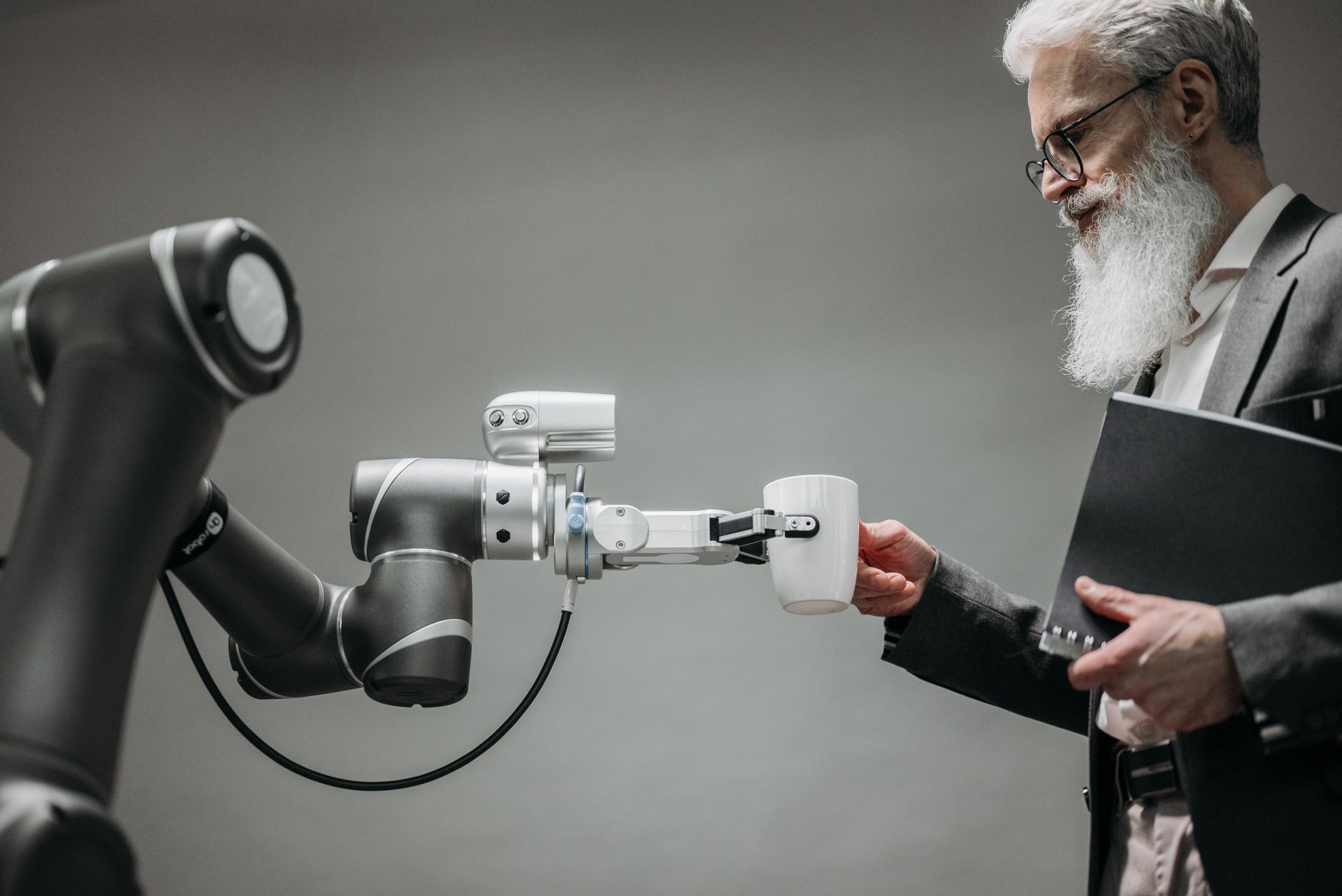
Consider the difference between commanding a single robotic arm to “pick up the coffee cup” versus commanding a humanoid to do the same task while standing on a moving surface. The additional degrees of freedom introduce exponentially greater complexity in learning robust control policies. Current limitations in VLA systems include their data efficiency and generalization. Training these systems typically requires millions of demonstrations or simulation interactions. Sim-to-real transfer—moving policies trained in simulation to physical robots—remains a persistent challenge, with many learned behaviors failing immediately when deployed on hardware due to unmodeled dynamics, friction, and sensor noise.
Deploying on Unitree and Dexmate Platforms
USC’s research deployment involves humanoid systems including Unitree and Dexmate platforms, which serve as testbeds for validating VLA systems and other autonomy research. These platforms represent different design philosophies: some emphasize bipedal locomotion and whole-body coordination, while others prioritize manipulative dexterity through advanced hand systems. By working with multiple platforms, USC researchers can test whether their algorithms generalize across different morphologies or require hardware-specific tuning. Hardware platform selection involves significant tradeoffs. Unitree robots, for example, offer robust commercial support and established software ecosystems, making them practical for rapid prototyping.
However, they may not match the specific embodied characteristics required to fully test cutting-edge research. Conversely, custom or specialized platforms might better fit research hypotheses but introduce engineering overhead that diverts resources from algorithmic innovation. The choice between platforms often reflects a compromise between scientific purity and practical constraints. A warning for researchers and organizations pursuing similar work: hardware platform dependency creates long-term technical debt. If a lab standardizes on a particular robot platform and that platform becomes unavailable or its manufacturer discontinues support, entire research trajectories may require reconstruction. This risk has materialized in past robotics research programs where institutional knowledge and specialized code became stranded on obsolete platforms.
Industry Partnerships Fueling Research
USC’s Physical Super Intelligence Lab has received support from Toyota Research Institute, Dolby, Google DeepMind, Capital One, Nvidia, and Qualcomm—representing a mix of automotive, technology, and financial services companies with differing interests in robotics. Toyota brings expertise in manufacturing automation and embodied intelligence from decades of industrial robot deployment. Google DeepMind contributes foundational AI research and computational resources. Nvidia provides accelerator hardware and software frameworks optimized for robotics workloads. This partnership structure reflects how humanoid robotics research has become too resource-intensive for universities alone to sustain.
Industrial partners bring funding, hardware access, and real-world problem statements that ground academic research in practical constraints. When Qualcomm invests in robotics research, they bring concerns about power efficiency and edge computing that academic labs might deprioritize. When Toyota participates, manufacturing robustness and reliability become central considerations. The diversity of partner interests, however, can create conflicting research priorities. A partner focused on consumer robotics may favor flashy demonstrations of robot capabilities, while a partner building industrial systems requires reliability metrics and failure analysis. Managing these tensions requires clear communication about research objectives and intellectual property expectations.
Addressing Real-World Humanoid Challenges
The integration of 3D perception, language understanding, and motor control addresses several practical problems that have limited humanoid deployment. Most existing humanoid systems rely on pre-programmed routines or teleoperation, which scales poorly when robots operate in unstructured environments where variability is high. A humanoid robot in a warehouse, hospital, or home setting encounters countless scenarios that don’t match anticipated conditions. Language interfaces allow non-technical operators to communicate tasks naturally rather than requiring programming expertise. Consider a practical application: a humanoid robot assisting in elderly care.
The system must understand verbal instructions like “help me up from the chair” while perceiving the person’s posture, the chair’s geometry, and environmental obstacles, then execute a coordinated motion that maintains the person’s safety. Current systems struggle with this kind of open-ended reasoning under perceptual uncertainty. VLA systems trained on large action datasets might generalize better than hand-coded controllers, though they still require careful validation to ensure safety. A significant limitation is that most VLA systems in development still underperform specialized controllers on narrow, well-defined tasks. A humanoid trained to perform a specific assembly task with a hand-crafted controller will generally outperform a learned policy, at least initially. The value proposition of learning-based approaches emerges only when adaptability to new tasks matters more than optimal performance on any single task.
Safety, Reliability, and Deployment Hurdles
Deploying humanoid robots trained with learned policies introduces safety concerns that traditional robotics engineering has managed through other means. When a robot’s behavior emerges from learned models rather than explicit rules, predicting failure modes becomes harder. A humanoid robot that falls during learning development is a training dataset. A humanoid robot that falls in a workplace is a liability. This distinction creates pressure to validate learned behaviors exhaustively before real-world deployment—work that currently requires either extensive simulation or careful controlled testing. Reliability remains a core limitation.
Humanoid robots are mechanically complex systems with many potential failure points. A servo failure in the knee joint of a bipedal robot can cause catastrophic falls. Current research platforms accept failure as a normal part of development. Commercial deployment requires orders of magnitude better reliability, redundancy in critical systems, and rapid failure detection and mitigation strategies. The IEEE International Conference on Robotics and Automation and the companion Humanoids conference provide venues for researchers to discuss these challenges openly. Presenting 32 papers at ICRA allows USC to contribute incremental advances across many aspects of the humanoid robotics problem space, from perception to control to safety verification.
Conference Presentations and Research Dissemination
ICRA 2026 runs June 1–5 in Vienna, Austria, and represents one of the world’s largest robotics conferences. The parallel conference track, Humanoids 2026, occurs December 6–9, 2026 in Silicon Valley, California. The separation of these venues—one focused broadly on robotics, the other specifically on humanoid platforms—reflects how humanoid research has become specialized enough to justify dedicated conference space.
Presenting research at these venues creates accountability and peer review that benefits the field. Reviewers challenge claims, identify flawed assumptions, and push researchers to clarify contributions. This process is slower than publishing directly to a blog or internal technical report, but it creates a lasting record and builds community consensus around what constitutes progress.
Timeline and Research Momentum
The clustering of USC’s humanoid research presentations at ICRA 2026 and subsequent appearance at Humanoids 2026 reflects a sustained research program with meaningful output across an academic year. The June conference comes earlier in the calendar, allowing researchers to receive feedback that can inform work presented six months later at the December venue. This timeline illustrates how conference scheduling shapes research roadmaps.
The institutional commitment to 32 papers across robotics research—with humanoid robots representing a significant portion—suggests multi-year funding commitments and sustained lab staffing. University research programs of this scale typically involve coordinated work across doctoral students, postdoctoral researchers, and faculty collaborators, each contributing pieces to the broader research agenda. The papers emerging from these presentations will become foundational citations for subsequent work in humanoid robotics and embodied AI.
Frequently Asked Questions
What is a Vision-Language-Action system?
A VLA system integrates visual perception, natural language understanding, and motor control into a single learned model, allowing robots to follow language instructions while responding to visual observations and executing coordinated movements.
Which humanoid platforms is USC using?
Research deployment involves Unitree and Dexmate humanoid platforms, which provide different morphologies and capabilities for validating research approaches.
How many papers is USC presenting at ICRA 2026?
USC will present 32 papers across the conference, with humanoid robotics and dexterous manipulation forming core research contributions.
When and where is ICRA 2026 held?
ICRA 2026 runs June 1–5, 2026 in Vienna, Austria. The companion Humanoids 2026 conference occurs December 6–9, 2026 in Silicon Valley.
Which companies support USC’s humanoid robotics research?
Funding and partnership support comes from Toyota Research Institute, Dolby, Google DeepMind, Capital One, Nvidia, and Qualcomm.
What are the main challenges in deploying humanoid robots with learned policies?
Key challenges include predicting failure modes in learned systems, validating safety before real-world deployment, achieving mechanical reliability comparable to industrial standards, and generalizing learned behaviors across different environments and tasks.