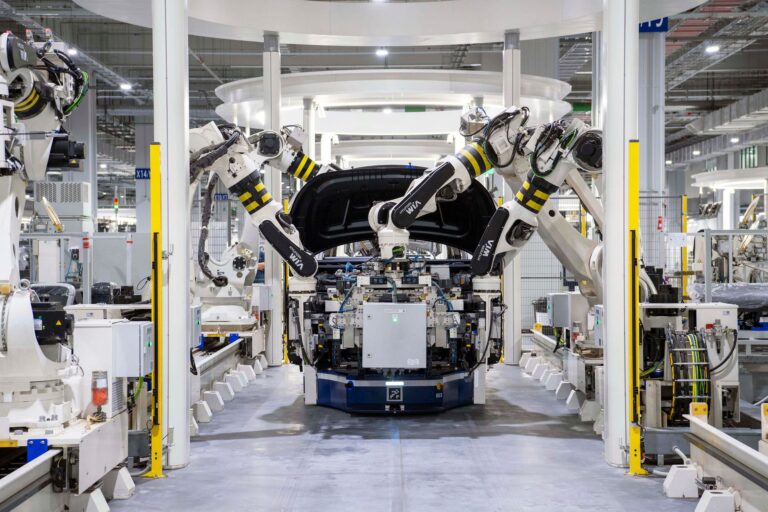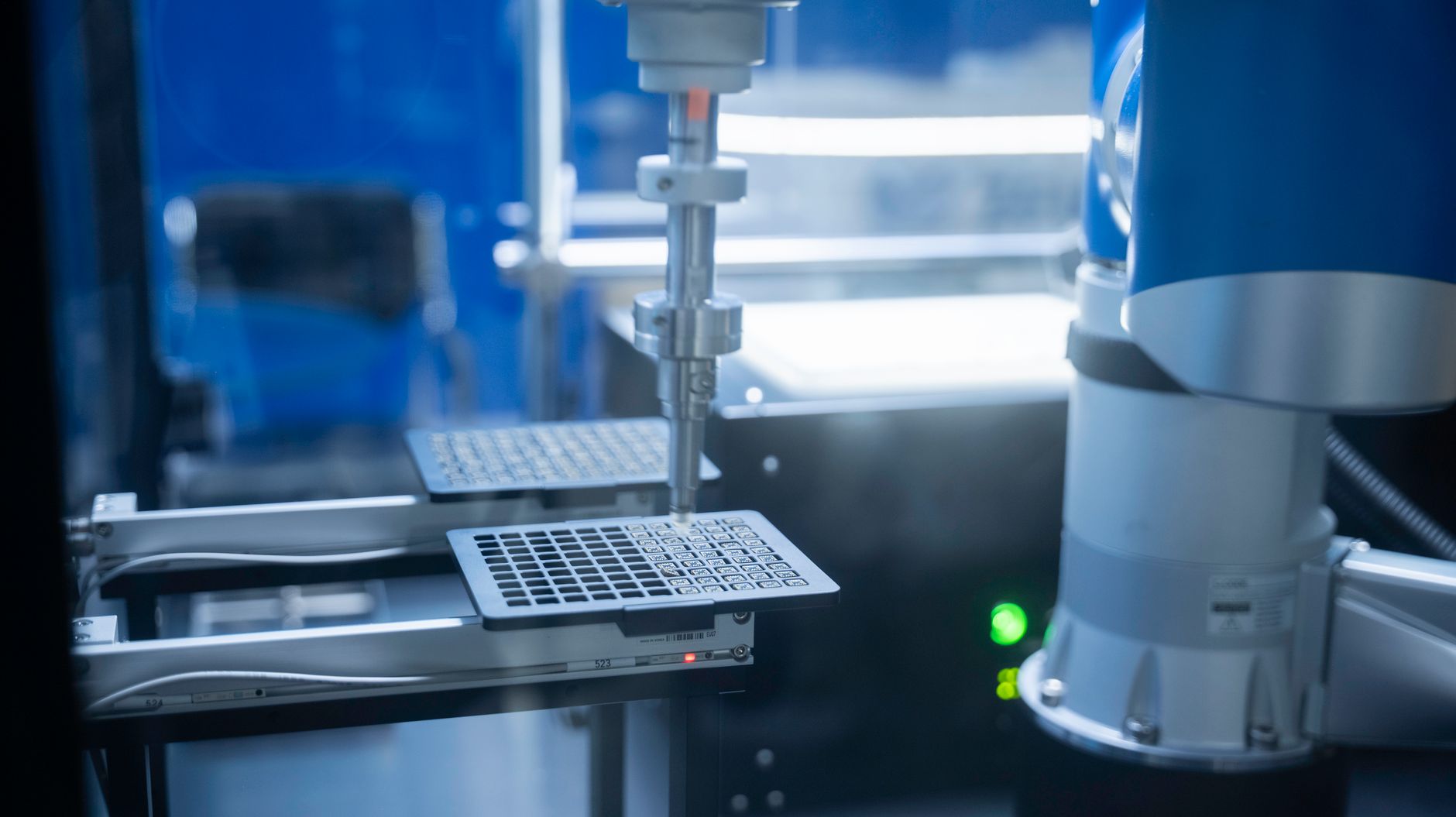

ABB leads the global industrial robotics market through a combination of technological innovation, unmatched scale, and decades of manufacturing expertise. The company controls approximately 13-15% of the worldwide industrial robot market, competing with KUKA, Fanuc, and Yaskawa, but distinguishes itself through vertically integrated production, a comprehensive software ecosystem, and robots that operate across more industries than any competitor. For example, ABB’s IRB 6700 collaborative arm is deployed not just in automotive assembly plants, but in pharmaceutical packaging, food processing, and semiconductor fabrication—sectors where rival robots often struggle with regulatory compliance or precision requirements.
ABB’s dominance stems from its early entry into industrial robotics through the 1988 acquisition and development of Asea Robotics, followed by systematic expansion into every major manufacturing vertical. Where other roboticists built strength in one or two sectors, ABB invested heavily in application-specific software, industry connectors, and certification pathways that made their robots qualify for high-stakes environments. This breadth meant that a food & beverage manufacturer could source vision systems, washdown enclosures, and sanitation workflows from a single vendor, rather than assembling a patchwork of specialized suppliers.
Table of Contents
- How Does ABB Maintain Market Leadership Across Industries?
- The Depth of ABB’s Robot Portfolio and Customization Capabilities
- ABB’s Software Ecosystem and Programming Advantage
- Collaboration Robots vs. Traditional Industrial Arms—ABB’s Dual Strategy
- Supply Chain Risk and Single-Vendor Dependency
- ABB’s Digital and AI Integration Initiatives
- Application-Specific Success: Automotive vs. Emerging Sectors
- Frequently Asked Questions
How Does ABB Maintain Market Leadership Across Industries?
ABB maintains leadership by operating a closed-loop advantage: the company manufactures its own components, controls its supply chain, and builds software that integrates seamlessly with proprietary hardware. This differs fundamentally from competitors who rely on external suppliers for motors, controllers, or sensing systems. When a global chip shortage disrupted component availability in 2021-2023, ABB’s in-house production and inventory flexibility allowed faster order fulfillment than competitors facing supplier delays. Companies like KUKA and Fanuc, by contrast, had to extend lead times significantly, losing market share to ABB in time-sensitive orders.
ABB also dominates through what it calls “connected services”—cloud-based monitoring, predictive maintenance, and digital twins that manufacturers pay for on a subscription basis. The IRB Cloud platform sends robot telemetry to customers’ dashboards, alerting them to wear patterns before failures occur. A typical automotive supplier using five ABB robots can reduce downtime by 12-18% through these insights. This recurring revenue stream also gives ABB deeper customer relationships and faster feedback loops for product development than competitors who sell robots and then have minimal contact until a replacement cycle begins.
The Depth of ABB’s Robot Portfolio and Customization Capabilities
abb‘s product line spans from small 4-axis delta robots for ultra-fast pick-and-place operations to massive 540-kilogram load-capacity arms designed for heavy die-casting and material handling. This breadth is an advantage, but it also introduces a risk that many customers underestimate: proliferation of legacy variants, spare parts fragmentation, and steeper training requirements. A manufacturer who relies on ABB robots from multiple generations—say, an IRB 6700 installed in 2018 alongside a newly ordered IRB 1600 in 2024—must train maintenance crews on different programming dialects and troubleshooting procedures. Competitors with narrower portfolios (KUKA’s strength in automotive, Fanuc’s dominance in electronics assembly) sometimes offer simpler standardization within their core markets.
ABB’s customization capability is genuine, but it comes with longer project timelines than off-the-shelf alternatives. Modifying an IRB 6700 for a chemical processing environment—adding washdown protection, corrosion-resistant coatings, and integrated chemical injection nozzles—typically requires 8-16 weeks of engineering. A company on a tight launch schedule might find it faster to adapt a process to a standard robot than to wait for ABB’s customization. This trade-off rarely appears in ABB marketing materials but routinely surfaces in customer interviews as a reason to choose smaller, more nimble roboticists for one-off projects.
ABB’s Software Ecosystem and Programming Advantage
ABB’s RobotStudio software simulates robot behavior offline before deployment, reducing commissioning risk and downtime. Engineers can test gripper configurations, collision detection, and cycle times in a virtual environment, meaning a production floor rarely encounters the “we built it wrong” discoveries that plague rapid deployments. Automotive OEMs like Volvo and BMW use RobotStudio extensively to prototype assembly lines before hardware arrives on site, cutting initial commissioning from weeks to days. The programming language, RAPID, has been ABB’s standard for over three decades.
This longevity is both a strength and a liability. Experienced ABB programmers are abundant, making it easier to find trained staff or transfer institutional knowledge across facilities. However, RAPID syntax is verbose compared to newer robotics languages like Python-based frameworks used by Universal Robots or emerging startups. A junior programmer transitioning from Python to RAPID often experiences culture shock at the amount of boilerplate code required for even simple tasks. This legacy weight means ABB must continually modernize its software stack while maintaining backward compatibility with thousands of installed systems still running 20-year-old code.
Collaboration Robots vs. Traditional Industrial Arms—ABB’s Dual Strategy
ABB competes in two distinct markets: traditional industrial robots for high-speed, high-volume manufacturing, and collaborative robots (cobots) designed to work alongside human workers with built-in safety limits. ABB’s collaborative IRB 1200 can exert only 150 joules of energy at its end-effector, making direct contact safer than traditional arms that could cause serious injury. The cobot segment is growing faster (15-20% annual growth) than traditional industrial robots (5-8%), and ABB is positioning itself as a player in both spaces.
The trade-off is clear: collaborative robots sacrifice speed and payload capacity for safety and flexibility. An IRB 1200 operating at maximum speed takes nearly 1.5 seconds per pick-and-place cycle, whereas a traditional IRB 6700 completes the same task in under 0.6 seconds. Manufacturers with legacy production lines running at full capacity cannot simply swap a traditional robot for a cobot without redesigning workflow. This means ABB’s cobot strategy, while strategically important for new market entrants and small manufacturers, does not cannibalize sales of its high-performance traditional arms where speed is non-negotiable.
Supply Chain Risk and Single-Vendor Dependency
One significant limitation of choosing ABB as a primary robotics partner is the risk concentration. Manufacturers that build their production lines primarily or exclusively around ABB robots face a single point of failure if the company experiences production disruptions, acquires another robotics business with integration headaches, or makes strategic shifts in product roadmap. The 2022 cyberattack on ABB’s digital infrastructure, while quickly contained, raised concerns about the company’s cybersecurity posture.
Customers whose production lines depend on ABB cloud connectivity found themselves vulnerable to service interruptions beyond their control. Additionally, ABB’s pricing power—derived from market leadership and brand loyalty—means customers locked into ABB infrastructure often face higher maintenance costs, spare parts pricing, and software license renewals than they would with smaller, more price-competitive competitors. A facility manager renewing a service contract with ABB may discover that annual support costs have increased 15-20% with minimal notice, with limited negotiating leverage because the installed base is already committed. Larger manufacturers sometimes hedge this risk by deliberately incorporating robots from multiple vendors, accepting some standardization and training costs to preserve negotiating flexibility.
ABB’s Digital and AI Integration Initiatives
ABB has invested heavily in embedding artificial intelligence into its robotics ecosystem, particularly in predictive maintenance and process optimization. The company’s Ability suite of digital offerings uses machine learning to detect anomalies in robot performance, such as vibration patterns that precede bearing failure. A typical AI-enabled predictive maintenance deployment reduces unplanned downtime by 20-30% compared to calendar-based maintenance schedules.
A semiconductor fab using ABB robots with Ability monitoring can avoid a single unexpected failure that might cost $50,000 in lost production time, making the subscription cost trivial. However, this AI integration also means customers are generating continuous telemetry data that ABB collects, analyzes, and stores. Data privacy and security become responsibilities shared between the customer and ABB, and smaller manufacturers often lack IT security staff sophisticated enough to audit this data flow. The transparency and liability boundaries around how ABB uses or protects this data remain murky in many customer agreements, creating a hidden compliance risk for organizations subject to GDPR or similar regulations.
Application-Specific Success: Automotive vs. Emerging Sectors
ABB’s robotics dominance was built initially on the automotive industry, where demand for high-speed, precision assembly is insatiable. Nearly 40% of all industrial robots sold globally work in automotive manufacturing, and ABB’s historical advantage in this space—tight integration with OEM workflows, certified safety protocols, proven reliability in high-volume environments—remains unmatched. A Volkswagen or General Motors facility with 500+ ABB robots represents decades of institutional knowledge, spare parts caches, and trained technicians that would make a wholesale switch to another vendor prohibitively expensive.
In emerging sectors like pharmaceutical packaging or semiconductor manufacturing, ABB’s dominance is less pronounced. Specialized roboticists like Stäubli (known for precision pharmaceutical applications) or smaller innovators offer vertical solutions that ABB’s generalist approach cannot match immediately. ABB is expanding into these niches through partnerships and targeted acquisitions, but the company’s traditional strength remains in high-volume, speed-critical manufacturing where the automotive playbook applies directly. A pharmaceutical manufacturer evaluating robotic automation for capsule filling should not automatically assume ABB is the best choice; application-specific vendors often deliver faster time-to-value and lower total cost of ownership for narrow use cases.
Frequently Asked Questions
Is ABB the largest industrial robotics company by revenue?
By revenue, ABB is among the top three globally, but market share varies by metric. By unit sales, ABB ships roughly 40,000-50,000 robots annually. By market value, ABB Robotics & Discrete Automation represents approximately $13-15 billion of ABB’s total $65 billion revenue. KUKA, Fanuc, and Yaskawa are comparable in scale.
What is the most common ABB robot used in manufacturing?
The IRB 6700 and IRB 1600 are the workhorse arms across automotive and general assembly. The IRB 6700 handles heavier payloads (up to 300kg), while the IRB 1600 is lighter and faster for precision tasks. The newer collaborative IRB 1200 is increasingly common in facilities prioritizing human-robot interaction.
How does ABB’s software compare to Universal Robots or KUKA?
ABB’s RobotStudio and RAPID language are mature and industry-standard, with a large pool of trained programmers. Universal Robots (cobots) use a more intuitive graphical interface optimized for non-experts. KUKA’s KRL language is comparable to RAPID. The choice depends on whether you need speed/performance (ABB, KUKA) or ease-of-use (Universal Robots).
Does ABB offer on-site training and support?
Yes. ABB provides commissioning support, operator training, and maintenance certification programs. However, service levels vary by geography and contract type. Facilities in developed markets typically receive faster response times than those in emerging regions.
What is the typical lifespan of an ABB industrial robot?
Industrial robots typically operate productively for 10-15 years with proper maintenance. Some installations exceed 20 years. Regular servo maintenance, gear inspections, and software updates are essential to longevity. Newer models tend to have better efficiency and fewer downtime risks than end-of-life units.