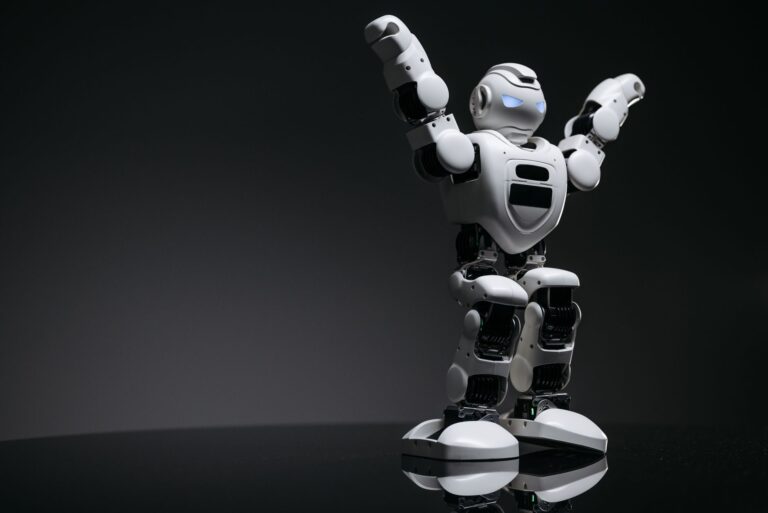

Serve Robotics is rising because autonomous sidewalk delivery robots have evolved from pilot programs into a proven, cost-effective logistics solution that addresses America’s last-mile delivery crisis. The company’s robots—small, wheeled vehicles designed to navigate pedestrian pathways—are expanding into major cities because they solve a specific problem: delivery companies cannot hire enough drivers for the final 1-3 miles from distribution centers to customer doorsteps, and labor costs for this segment now consume 40-60 percent of traditional delivery expenses. Serve Robotics, which operates robots for Uber Eats and has expanded into San Francisco, Los Angeles, and other metropolitan areas, is seeing demand accelerate because cities have stopped treating autonomous sidewalk delivery as an experiment and started treating it as standard logistics infrastructure.
The company is positioned differently than competitors because its robots have moved beyond small-scale pilots and demonstrated reliable autonomous operation in high-traffic urban environments. Serve Robotics robots handle temperature-controlled food and package delivery, navigate curbs and intersections, and operate during peak demand periods—conditions that earlier autonomous vehicle companies failed to manage economically. The national expansion reflects a shift: major logistics networks, payment processors, and e-commerce platforms now consider sidewalk robots a proven category rather than speculative technology.
Table of Contents
- Why Are Sidewalk Delivery Robots Moving From Pilots to Mainstream Deployment?
- How Do Autonomous Sidewalk Robots Handle Urban Navigation, and What Are the Limitations?
- What Do Real-World Deployments Tell Us About Market Viability?
- What Are the Economic Advantages, and Where Do the Trade-Offs Appear?
- What Operational and Safety Challenges Still Impede Wider Adoption?
- How Does Competition Shape Serve Robotics’ Market Position?
- How Are Autonomous Delivery Robots Integrating Into Last-Mile Logistics Networks?
Why Are Sidewalk Delivery Robots Moving From Pilots to Mainstream Deployment?
The regulatory environment has clarified significantly since 2019. California, Arizona, and Texas now have explicit permits for autonomous sidewalk delivery robots, meaning companies no longer waste years in legal gray zones waiting for approval. The California Public Utilities Commission established clear operational standards in 2022, and that precedent accelerated adoption elsewhere—other states copied the framework rather than requiring companies to rebuild compliance for each jurisdiction. Serve robotics operates under these established rules rather than pushing against undefined regulations, which reduces deployment timelines from 2-3 years to 6-9 months per new city. The second driver is density economics.
Sidewalk robots work only in dense urban and suburban neighborhoods where foot traffic, building proximity, and delivery density justify the infrastructure investment. Serve Robotics operates in areas where customers are concentrated enough that one robot completes 50-100 deliveries daily, which requires 10-15 human couriers on the same route. In San Francisco’s Mission District, for instance, a single Serve robot running 12 hours daily delivers approximately 300-400 orders per week, while comparable coverage via traditional delivery would need 3-4 full-time drivers plus benefits and vehicle costs. The labor market has not recovered. Even post-pandemic, gig delivery platforms struggle to staff delivery fleets consistently, particularly for food delivery during off-peak hours or in areas with high turnover. Serve Robotics robots operate 24 hours if needed and do not require breaks, sick days, or pay increases—a significant advantage when courier availability fluctuates seasonally.
How Do Autonomous Sidewalk Robots Handle Urban Navigation, and What Are the Limitations?
serve Robotics robots use LIDAR, computer vision, and pre-mapped routes to navigate crowded sidewalks. The technology handles pedestrians, parked cars, and minor obstacles reasonably well, but the system has documented limitations. Robots struggle in heavy snow, won’t reliably navigate stairs or steep ramps, and sometimes fail to recognize subtle obstacles like folded umbrellas or large potholes. In one documented incident in San Francisco, a Serve robot became stuck on a curb for 15 minutes before a human operator regained remote control—a failure mode that would not occur with a human courier but demonstrates the technology’s current boundary. Temperature control is built into the robots for food delivery, but this limits capacity and increases mechanical complexity. Serve’s current robots carry 5-8 items per trip, compared to a human courier’s 15-20.
This means multiple robot trips may be required for catering orders or bulk deliveries, offsetting some labor savings. The robots also operate only during daylight in many municipalities due to pedestrian safety regulations, even though technical capability exists for nighttime operation—a regulatory constraint that reduces utilization. Maintenance and repositioning add hidden costs. Robots get stuck, require charging, and occasionally need human intervention to extract from intersections or resolve navigation errors. Serve operates control centers with human supervisors who handle problem cases, which means labor is not eliminated but redistributed. A robot that gets wedged in heavy pedestrian traffic might require a technician to physically retrieve it, negating delivery efficiency for that period.
What Do Real-World Deployments Tell Us About Market Viability?
Serve Robotics’ partnership with Uber Eats demonstrates how major logistics platforms view the technology. Uber Eats began testing Serve robots in Los Angeles in 2019 and expanded to San Francisco by 2021 because the pilot data showed sustained reduction in delivery time and cost per trip. By 2023, Uber Eats claimed that Serve robots completed orders 5-10 minutes faster than human couriers for short-distance deliveries, primarily because robots follow fixed routes and avoid traffic-related delays. Uber’s expansion decision—committing capital and marketing integration rather than treating it as a novelty—signals that the technology crosses a threshold of reliability. However, the expansion is geographically concentrated, not national in the traditional sense. Serve robots operate primarily in San Francisco, Los Angeles, Phoenix, and a handful of other metros with dense, pedestrian-friendly infrastructure. They do not work in sprawling suburban areas where customers live 2-3 miles apart, nor in regions with harsh winters or frequent heavy rain.
This concentration contradicts claims of “national expansion”—more accurately, it is expansion within favorable markets. Serve Robotics has not scaled to Kansas City, Nashville, or other mid-size cities where pedestrian networks are less developed. Regulatory acceptance varies. San Francisco permits sidewalk robots under strict geofencing requirements and limits their operation to specific corridors. Other cities remain skeptical. Seattle and Portland have debated restrictions on sidewalk robots, citing concerns about pedestrian interference and cluttered public space. Serve’s actual national footprint reflects not universal acceptance but careful selection of regulatory-friendly jurisdictions.
What Are the Economic Advantages, and Where Do the Trade-Offs Appear?
Autonomous sidewalk robots reduce last-mile delivery cost to approximately $0.50-$1.00 per trip, compared to $3.00-$5.00 for human couriers. This is the primary driver of adoption. For a platform like Uber Eats, deploying robots in high-density neighborhoods allows subsidizing or eliminating delivery fees, which increases order volume and customer retention. The breakeven math is straightforward: if a robot makes 100 deliveries daily at $0.75 cost per delivery versus $4.00 per human courier, the robot needs to operate 300 days annually to justify purchase cost and maintenance. The downside is that this economics work only for high-volume corridors. A restaurant in a low-density area cannot justify robot delivery because the robot would spend most of its time traveling between locations.
This creates a two-tier delivery market: robot-served areas get cheap, fast delivery, while other areas continue paying premium prices for human couriers. Serve’s business model depends on density, which means profitable operation requires concentration in specific neighborhoods rather than comprehensive coverage. Capital intensity is also a limiting factor. Deploying 100 robots in a city requires $2-3 million in hardware, software, and infrastructure investment, plus ongoing operational costs. Venture-backed companies like Serve can absorb this, but traditional logistics companies hesitate because the return depends on achieving scale quickly. A single robot is not profitable; a fleet is. This creates a barrier for smaller delivery services and regional logistics providers.
What Operational and Safety Challenges Still Impede Wider Adoption?
Pedestrian interaction remains unpredictable. Robots are slow (3-4 mph on average), which creates frustration and sometimes leads pedestrians to block or kick robots as a prank or protest against automation. Serve has documented several instances of intentional robot abuse, and some cities now consider this a liability concern. If robots regularly encounter vandalism or require emergency retrieval, operational cost increases significantly. San Francisco saw a spike in incidents in 2023 when robots became targets for unhoused individuals, requiring additional monitoring and faster intervention protocols. Liability is unresolved in many jurisdictions.
If a robot strikes a pedestrian or damages property, is the company responsible, or the deploying merchant? If a robot stops functioning during a delivery and blocks pedestrian traffic, who pays for the disruption? These questions remain legally ambiguous in most states, which means companies carry higher insurance costs and risk exposure than would exist with human couriers. Serve operates under contingent liability frameworks that increase per-trip costs when factored into full risk accounting. Cybersecurity is a developing concern. Robots are networked devices that send location data, receive navigation updates, and communicate with control centers. A compromised robot could become a surveillance tool or could be hijacked for malicious routing. Serve’s architecture uses encrypted communication and geofencing controls, but the attack surface expands as robot networks grow. A single widespread vulnerability could disable dozens of robots simultaneously, as seen with other IoT fleets in the past.
How Does Competition Shape Serve Robotics’ Market Position?
Serve Robotics faces competition from Kiwibot, Starship, and smaller regional operators. Kiwibot focuses on college campus delivery, Starship has stronger European presence, and smaller competitors focus on niche markets. Serve’s advantage is its focus on food delivery integration—working directly with Uber Eats and restaurant partners means Serve robots fit into existing logistics workflows. Competitors that try to operate independently face the challenge of building merchant relationships and customer awareness simultaneously.
However, the market is not winner-take-all. Different robot designs optimize for different conditions: some robots are lighter and faster for dense neighborhoods, others are larger and handle weather better for suburban environments. Serve’s medium-sized design works well in San Francisco and Los Angeles but may not be ideal for all markets. As the category matures, there is likely room for multiple competitors rather than consolidation to a single dominant player.
How Are Autonomous Delivery Robots Integrating Into Last-Mile Logistics Networks?
Major logistics providers are building hybrid models where robots handle final blocks and human couriers handle earlier stages. In practice, a DoorDash or Uber Eats order might arrive at a local hub, be picked up by a robot for the last half-mile, and be placed in a customer’s building entrance or doorstep. This hybrid approach reduces human courier workload while maintaining reliability for complex scenarios—entering apartment buildings, handling signature verification, managing customer questions. Serve Robotics operates as a module within these networks rather than as a replacement for entire delivery systems.
The integration with micro-fulfillment centers is particularly significant. Companies are building small distribution facilities in neighborhoods to enable quick delivery, and autonomous robots allow these centers to serve 10+ blocks with minimal staff. An example is the “Uber Eats Local Hub” model in Los Angeles, where inventory is stocked at a small facility, robots deliver from the facility to homes, and one human manager oversees 40-50 robots. This structure is economically sustainable in ways that previous delivery models were not.