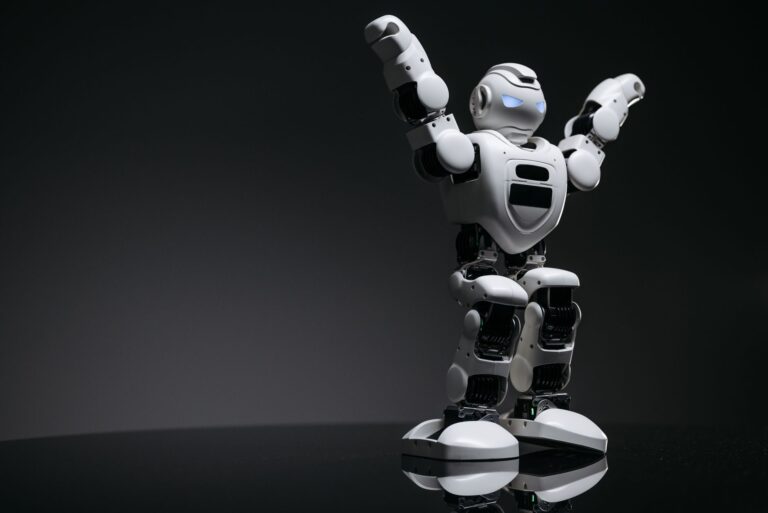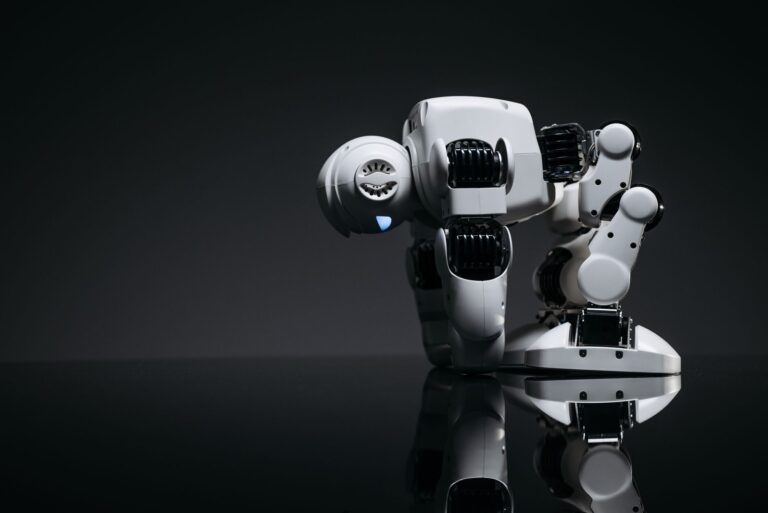

Robotics AI could create the next Nvidia because the convergence of three forces is creating an unprecedented hardware boom: an exploding market that’s projected to grow from $20.4 billion in 2025 to $182.7 billion by 2033, a hardware segment that already commands 56% of market share, and a clear ecosystem winner emerging to provide the software and chips powering it all. Just as Nvidia’s GPUs became the foundational layer that every AI company needed, whoever dominates the robotics AI infrastructure—the chips, software stacks, and foundation models that enable robots to see, think, and act—stands to capture a disproportionate share of trillions in future value. Nvidia itself seems to understand this better than anyone.
CEO Jensen Huang recently declared “the ChatGPT moment for robotics is here,” and in early 2026, the company released GR00T foundation models, Cosmos, Isaac Lab-Arena, and the OSMO framework at CES—a portfolio that mirrors their strategy in consumer AI. At the same time, investment is pouring in: global VC funding for AI robotics startups hit a record $13.9 billion in 2025, with companies like Figure AI raising over $1 billion in a single Series C round. The template for the next Nvidia is being written in real time, and the stakes are enormous.
Table of Contents
- How Robotics Demand is Reshaping the Hardware Market
- The Ecosystem Lock-In Strategy Already Unfolding
- Recent Momentum and the AI Robotics Gold Rush
- Investment and Valuation Signals
- Manufacturing and Physical Constraints
- The Humanoid Robotics Opportunity
- The Path to Nvidia-Scale Dominance
- Conclusion
How Robotics Demand is Reshaping the Hardware Market
The scale of robotics AI adoption is unlike anything the hardware industry has seen before outside of data centers. The AI robotics market isn’t just growing—it’s explosively expanding at a 32% compound annual growth rate through 2033. this means the market will roughly grow 9x in eight years. To put that in perspective, Nvidia’s revenue growth from the GPU era to the AI era took longer and followed a different trajectory, but the fundamental pattern is identical: a new category of work that requires specialized hardware, and no existing solutions designed for it. The hardware segment itself is the gold mine. With 56% of current market share and billions in accelerators like the new Nvidia Jetson T4000 (priced at $1,999 for 1,000-unit volumes with 1,200 FP4 TFLOPS and 64GB memory) being purchased by robotics companies globally, the infrastructure layer is where margins and volume intersect.
But here’s the reality: software is about to catch up. The software segment is expected to grow at 33% CAGR from 2026-2033—faster than hardware—which means platforms and frameworks that companies can’t avoid will become the next frontier. This is precisely what happened when CUDA became non-negotiable for deep learning. A critical limitation to watch: the robotics market is fragmented globally in a way that semiconductors aren’t. Asia-Pacific commands 41% of the AI-driven robotics market, and Chinese competitors like Horizon Robotics and Cambricon are emerging with homegrown solutions. While Nvidia has massive first-mover advantage in the West, the path to “next Nvidia” status requires global dominance—and that’s not guaranteed when facing state-backed competitors in major markets.
The Ecosystem Lock-In Strategy Already Unfolding
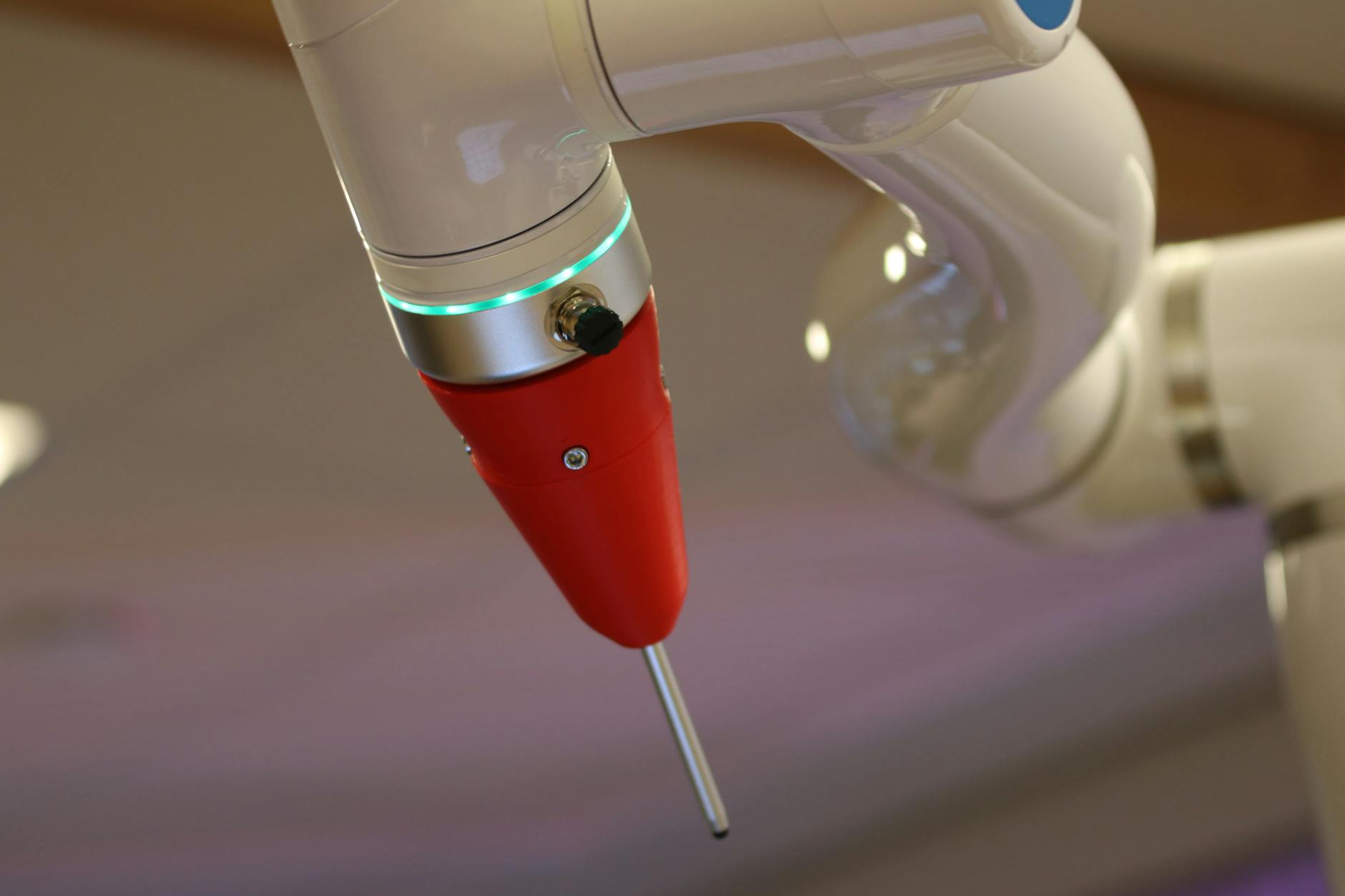
What separates a temporary market leader from a multi-decade dominant player is ecosystem lock-in. Nvidia isn’t just selling chips—it’s building an entire stack that makes it hard to switch. At CES 2026, Nvidia announced partnerships with global robotics leaders including Boston Dynamics, Caterpillar, Franka Robotics, Humanoid, LG Electronics, and NEURA Robotics. Each of these companies is betting their product roadmaps on Nvidia’s platform. Once they’ve integrated Nvidia’s CUDA-like tools, trained teams, and optimized hardware, switching costs become prohibitive. The GR00T foundation models and OSMO framework are particularly important because they’re not point solutions—they’re intended to be the standard plumbing that any robotics company uses.
Foundation models that work across multiple robot types, simulation environments, and manufacturing contexts create the kind of defensible moat that Nvidia enjoys in AI data centers. When a robot manufacturer uses GR00T, trains on Cosmos, develops in Isaac Lab-Arena, and runs inference on Jetson hardware, they’re locked into an ecosystem that benefits every layer: chip sales, software licensing, developer tools, and cloud services. However, there’s a significant caveat: robotics is harder than traditional AI because physical systems fail in ways that compute doesn’t. A software update that breaks a data center is costly; a software update that causes a robot to malfunction on a factory floor or in a hospital could be catastrophic. This means robotics companies may be more conservative about switching platforms than cloud AI companies were, but they may also be more resistant to lock-in if reliability and safety guarantees aren’t met. Ecosystem dominance in robotics is not automatic—it has to be earned through reliability, not just through technical elegance.
Recent Momentum and the AI Robotics Gold Rush
The timing is crucial. In January 2026, Figure AI raised over $1 billion in Series C funding, reaching a $39 billion valuation. A few months later, Meta acquired a robotics startup to bolster its humanoid AI ambitions. These aren’t isolated events—they’re signals that the robotics AI category has moved from speculative to inevitable. Every major tech company is racing to secure access to both the foundation models and the hardware pipeline. Nvidia’s GR00T models aren’t theoretical anymore. They’re being deployed by companies like Boston Dynamics, which means the infrastructure is proving itself in real-world applications.
Compare this to the state of AI training hardware just five years ago: there were multiple competing platforms, and CUDA was one of several options. Today, CUDA is so dominant that it’s nearly the default. Nvidia’s early moves in robotics AI—released in early 2026 while the category is still young—position them to achieve that same dominance before competition even fully materialized. But qualcomm is watching. At CES 2026, Qualcomm unveiled the Dragonwing Robotics Development Platform, explicitly targeting Nvidia’s Jetson market. This is important because it shows the category is real enough for competitors to enter, and they’re doing it with platforms specifically designed to compete. Qualcomm has advantages in mobile and edge computing, and if their platform gains traction with robotics companies that need distributed computing, they could capture meaningful share. The “next Nvidia” won’t be unchallenged—it will just be dominant despite competition.
Investment and Valuation Signals
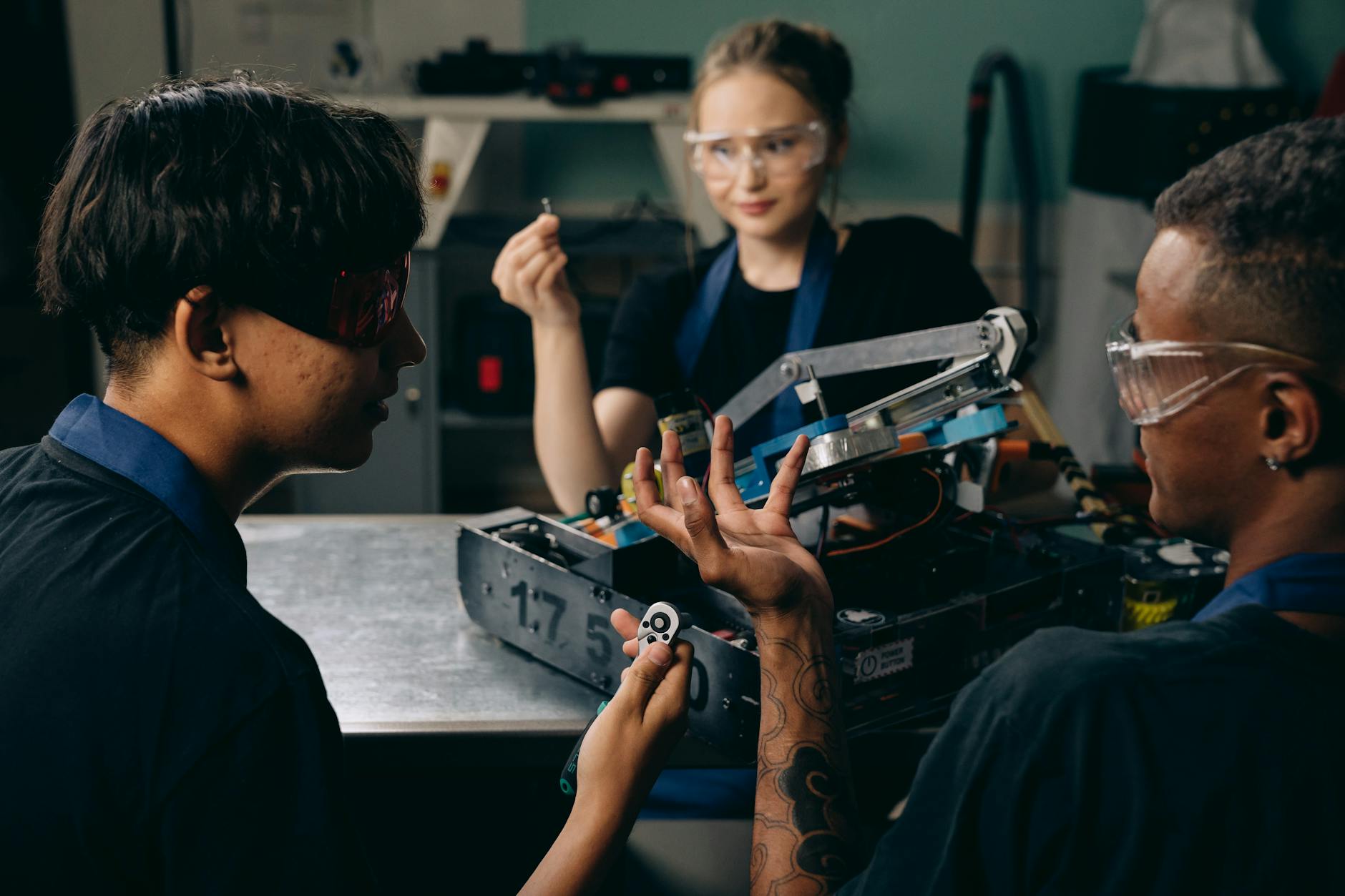
When capital starts flowing at record levels, market participants are signaling confidence. The $13.9 billion in VC investment to AI robotics startups in 2025 represents a structural shift: this isn’t venture money chasing a fad, it’s institutional capital betting that robotics AI is a multi-decade category. For context, that’s comparable to the scale of venture funding in cloud computing in the early 2010s, before AWS was obviously unstoppable. Figure AI’s $39 billion valuation at Series C is a particular signal. This is a company that builds hardware-software systems for robotics, and it’s being valued at startup multiples that suggest investors expect it to either become a massive standalone company or to be integrated into a larger player.
Either way, the capital commitment signals that robotics AI companies need to absorb massive R&D spend just to stay competitive—a barrier that favors well-capitalized incumbents like Nvidia. The tradeoff is important: startups are being funded at extraordinary valuations, which is great for innovation and speed. But it also means that companies without strong capital backing or distribution channels face an increasingly difficult path. Nvidia’s advantage isn’t just that they make good hardware—it’s that they can afford to give it away at close to cost if needed, run it at a loss to build the ecosystem, and extract value through software and services. Most robotics startups cannot compete on that axis.
Manufacturing and Physical Constraints
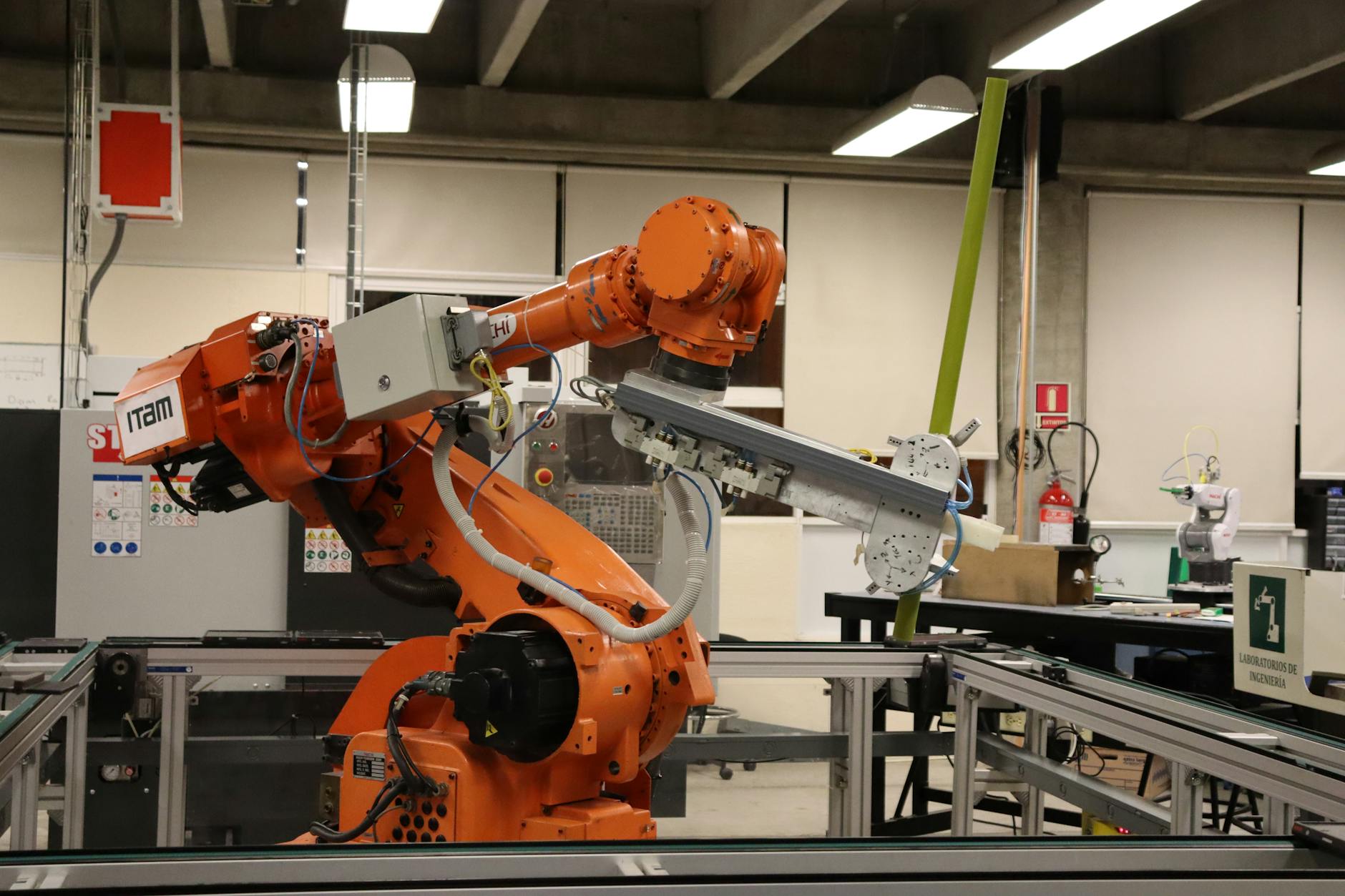
The robotics market isn’t purely a software and chip story—it’s constrained by manufacturing. The Jetson T4000 costs $1,999 at 1,000-unit volumes, but that’s enterprise pricing. As volumes scale to millions of units (which would happen if robotics deployment reaches the levels industry analysts project), manufacturing capacity becomes the bottleneck. Nvidia has learned this lesson through years of GPU shortage crises. The Unitree R1 humanoid robot launched in July 2025 at $5,900, which was remarkable because analysts expected humanoid robots wouldn’t hit that price point for roughly five years. This suggests either that manufacturing and supply chains are scaling faster than expected, or that Unitree is accepting lower margins to drive adoption.
Either way, it’s a sign that the hardware timeline is accelerating. But if demand for Nvidia chips outpaces supply, competitors will have openings to capture market share—just as AMD did when GPU supply was tight. A significant warning: robotics manufacturing is more complex than chip manufacturing alone. A robot integrates Nvidia’s hardware with mechanical systems, sensors, actuators, and proprietary control software. If manufacturing bottlenecks hit any of these components, the entire system slows. Nvidia’s ecosystem advantage is real, but it’s only as strong as the weakest link in the manufacturing chain.
The Humanoid Robotics Opportunity
Humanoid robots are where the real scale opportunity lives. Goldman Sachs projects the humanoid robotics market will be worth $38 billion by 2035, but Morgan Stanley’s estimate is more bullish: $5 trillion by 2050. These aren’t just academic disagreements—they reflect genuine uncertainty about adoption speed.
If humanoid robots move from specialized industrial applications to general-purpose deployment in manufacturing, logistics, healthcare, and hospitality, the market becomes enormous. Figure AI’s $39 billion valuation and Meta’s robotics acquisition are both bets on the humanoid opportunity. These companies understand that if humanoid robots become a standard tool in factories and warehouses—the same way forklifts and conveyor systems are today—the hardware and software that powers them becomes as essential as electricity.
The Path to Nvidia-Scale Dominance
Nvidia’s path to dominance in AI wasn’t inevitable—it required CUDA to become the standard, GPUs to prove essential for training large models, and the company to move quickly into software and services. The robotics AI market is following a similar path, but with compressed timelines. Nvidia is moving faster, being more proactive with partnerships, and establishing ecosystem standards earlier than they did in consumer AI.
The next five years will determine whether Nvidia captures robotics AI the way it captured GPU computing. If GR00T models and CUDA-equivalent tools become as standard as CUDA is today, and if Nvidia maintains manufacturing supply for robotics-grade hardware, the company could be in position to extract value from robotics growth at a scale comparable to what it’s done in data centers. CEO Jensen Huang’s statement that “every industrial company will become a robotics company” isn’t just optimism—it’s a direct articulation of the market TAM that Nvidia is targeting.
Conclusion
Robotics AI could create the next Nvidia because the structural conditions are nearly identical to what made Nvidia dominant in AI: explosive market growth (32% CAGR to 2033), a clear hardware bottleneck that requires specialized chips, an emerging software ecosystem with high switching costs, and a company (Nvidia) moving decisively to own the entire stack before competitors establish alternatives. The market is at an inflection point—record VC funding, major tech companies entering the space, and foundation models proving themselves in real applications all signal that robotics AI has transitioned from speculative to inevitable.
The next Nvidia won’t necessarily be Nvidia itself—competitors like Qualcomm are entering the market, and regional players in Asia could challenge dominance in their home markets. But whoever owns the foundation models, the hardware accelerators, and the development ecosystem will capture disproportionate returns, just as Nvidia has done in AI. For investors, engineers, and companies in robotics, the implications are clear: the infrastructure layer is where the economics concentrate, and the next wave of trillion-dollar value will flow through whichever platform becomes indispensable to building robots.