
Shopify benefits from fulfillment automation because it reduces the operational friction that limits the platform’s ability to scale. When merchants manually pick, pack, and ship orders—or rely on slow, error-prone third-party logistics—fulfillment becomes the bottleneck that stalls growth. Fulfillment automation lets Shopify merchants process orders faster, at lower per-unit costs, and with fewer misshipments. This directly improves customer retention (fewer refunds due to damaged goods or wrong items) and merchant profitability, which keeps more sellers on the platform longer.
The economics matter more for Shopify’s ecosystem than for its own operations. Shopify itself doesn’t hold inventory or handle physical logistics for most merchants—it’s a SaaS platform. But merchants that sell through Shopify must still fulfill orders themselves or hire third parties. When fulfillment becomes expensive or unreliable, those merchants lose margin, churn away, or move to competitors like Amazon or their own websites. Automation—whether in-house robotic systems, fulfillment-center partnerships, or third-party logistics integrations—makes Shopify merchants more competitive and profitable, which keeps them paying subscription fees and transaction commissions to Shopify.
Table of Contents
- How Fulfillment Automation Improves Shopify Merchant Economics
- The Technical Integration Challenge and Hidden Costs
- Real-World Example: Mid-Market Apparel Brand
- How Shopify Merchants Compare Automation vs. Outsourced Fulfillment
- Automation Failure Modes and Risk Management
- Integration with Shopify Plus and Enterprise Features
- The Role of Inventory Accuracy in Automation ROI
- Frequently Asked Questions
How Fulfillment Automation Improves Shopify Merchant Economics
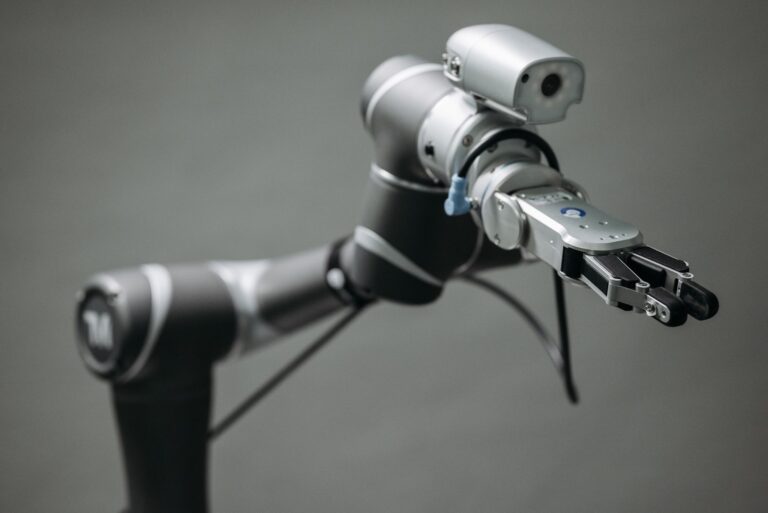
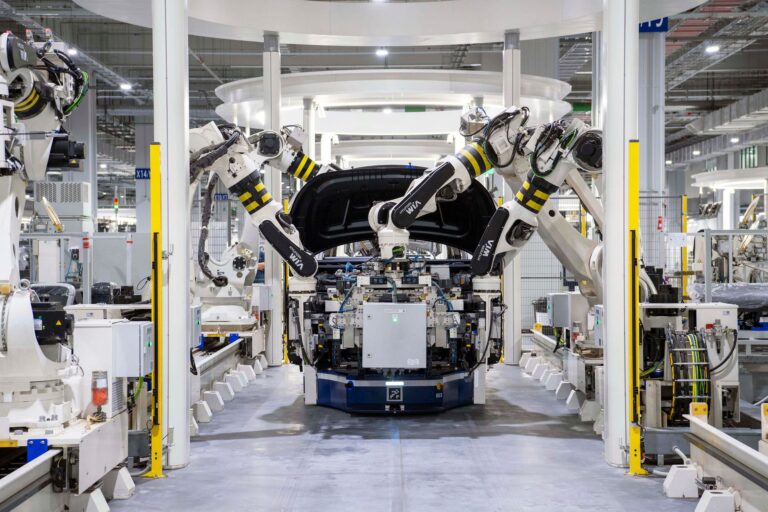
Fulfillment automation lets merchants handle order volume that would otherwise require hiring more warehouse staff. A manual picker in a warehouse might select and pack 80–120 items per hour; a collaborative robot (cobot) or automated conveyor system can process 400–600 items per hour in the same footprint, with fewer errors. For a growing Shopify merchant processing 1,000 orders per day, this difference between manual and automated picks means the difference between running a three-person warehouse or hiring eight people. With a fully loaded labor cost of $50,000 per employee per year, the automation ROI becomes clear within 18–24 months for mid-scale merchants. Shopify’s own analytics show that merchants struggle most with fulfillment in the $500K–$10M revenue range—exactly the cohort most likely to stay on Shopify if they can scale their operations without a wholesale shift to amazon Seller Central.
Automation unlocks that scaling. A merchant can add $2M in annual revenue without adding proportional warehouse headcount, which keeps profit margins from collapsing. However, automation is capital-intensive upfront: a warehouse robot system costs $100K–$500K to deploy, not counting integration labor. Smaller merchants below $500K revenue can’t justify this cost alone, which is why Shopify has invested in fulfillment partnerships (like Shopify Fulfillment Network, now winding down) to offer automation at a shared-cost model. Without some form of automation access—even as a shared service—those smaller merchants remain cost-constrained and can’t compete with larger, better-capitalized sellers.
The Technical Integration Challenge and Hidden Costs
Shopify’s platform architecture makes it relatively easy to connect to third-party fulfillment systems via REST APIs and webhooks. When an order is placed, Shopify can transmit order details (SKU, quantity, shipping address) to a warehouse management system (WMS) or logistics partner in real time. The merchant never has to re-enter data. But integration is not automatic: the merchant must configure API keys, map their Shopify product data to WMS codes, set up return flows, and test exception handling (what happens when the fulfillment center runs out of stock mid-day?).
Many Shopify merchants, especially those running lean operations, skip or botch this setup, leading to orders fulfilled incorrectly or not at all. Another hidden cost is the integration maintenance burden. Shopify updates its API regularly; third-party systems do the same. If a Shopify merchant integrates with a robot vendor that doesn’t keep pace with Shopify API changes, the integration can break silently—orders pile up, fulfillment stops, and the merchant doesn’t notice until customers start complaining about non-delivery. This risk scales: Shopify’s API surface is broad (orders, products, inventory, shipping, refunds, fulfillment), and a merchant using an older or neglected fulfillment system can suddenly find that inventory updates no longer sync, turning the automation investment into a liability.
Real-World Example: Mid-Market Apparel Brand
A Shopify merchant selling direct-to-consumer apparel (think online-only activewear) with $3M in annual revenue was filling orders out of a 2,500-square-foot warehouse using manual picking. At peak season, the operation hired temporary workers, and order accuracy dropped to 94% (5–6% wrong items or damaged goods). Refund and reshipping costs ran 2–3% of revenue annually. The merchant invested in a warehouse automation system—a combination of an automated conveyor loop and piece-pick stations—at a $280K upfront cost plus $8K per month in software licensing. Within eight months, order accuracy climbed to 99.2%, refund costs dropped to 0.7%, and throughput increased by 340%, allowing the merchant to handle $4.5M revenue with the same staff size.
But the merchant also discovered an unexpected problem: the automation system struggled with their 18% annual SKU churn. New styles were added monthly, old styles discontinued. Every time a product was discontinued, the WMS had to be manually updated to prevent the robot from trying to pick it. This created a two-day delay between product discontinuation and WMS update, during which orders for discontinued items could still be placed in Shopify, routed to the warehouse, and cause exceptions. The merchant eventually hired a part-time operations analyst ($45K annually) to manage SKU data hygiene—a cost that didn’t show up in the ROI analysis. The takeaway: automation unlocks scale, but it transfers complexity from physical labor to data management.
How Shopify Merchants Compare Automation vs. Outsourced Fulfillment
A Shopify merchant faces a build-vs.-buy decision. Build: invest in a warehouse system, hire an operations team, and own the fulfillment process. This is capital-intensive upfront but offers full control and can yield the best margins at scale (once ROI is achieved, per-unit fulfillment cost stays low). Buy: use a third-party fulfillment service (often called a 3PL—third-party logistics provider). The merchant pays per order fulfilled, typically $2–$8 per item depending on product size and handling complexity. No upfront capital, but higher per-unit costs that eat margin. For a merchant doing $1M annually with an average order value of $65 and gross margin of 55%, the math favors outsourcing initially.
They might pay a 3PL $3 per order in fulfillment fees ($45–50K annually), avoiding the $280K equipment investment. But once volume exceeds $3M annually (approximately 46,000 orders), the per-order fees flip: the fixed-cost equipment-and-operations model becomes cheaper. The tradeoff is operational complexity. A 3PL is a vendor relationship; if that vendor has problems (goes out of business, reduces service quality, raises prices), the merchant has limited recourse. An in-house system is the merchant’s responsibility, but also their competitive advantage. Most Shopify merchants stay with outsourced fulfillment through the $1–3M range, then invest in automation once they hit $3M+ revenue. However, this timeline assumes steady growth and access to capital; a seasonal or cyclical merchant (holiday pop-ups, limited-edition drops) may never reach the volume threshold where in-house automation makes sense.
Automation Failure Modes and Risk Management
One common failure mode is over-automation. A merchant invests in a flexible robotic arm designed to handle multiple product types, thinking this versatility is a feature. In practice, the robot takes 3–4 times longer to handle different item sizes, shapes, and weights than a conveyor-based system tuned for one product category. The merchant underutilizes the robot, pays high per-item costs, and the ROI timeline extends from 18 months to 4+ years. Simpler, less flexible automation systems (like conveyors with zone-based picking) often outperform expensive general-purpose robots for Shopify merchants because most merchants’ product portfolios are relatively uniform. Another risk is vendor lock-in.
A merchant implements a fulfillment automation system from a specific vendor, only to find that switching to a competitor would require retraining staff, re-mapping data, and potentially replacing physical equipment. If that vendor’s support quality degrades or pricing increases, the merchant has limited leverage. Shopify merchants in this position sometimes choose to live with suboptimal systems rather than bear the switching cost. To mitigate this, merchants should prioritize systems with open APIs and industry-standard data formats (like the GS1 standard for product identification). However, many smaller automation vendors sell proprietary systems with limited interoperability, betting that switching costs will keep customers locked in. This risk grows as Shopify’s ecosystem becomes more concentrated around a few dominant 3PLs and automation vendors.
Integration with Shopify Plus and Enterprise Features
Shopify Plus (the enterprise SaaS offering) includes deeper fulfillment APIs and pre-built connectors to major 3PLs and warehouse systems. A large DTC brand on Shopify Plus can integrate with multiple fulfillment facilities simultaneously, routing orders dynamically based on inventory levels and shipping distance. This level of sophistication is unavailable to standard Shopify merchants, widening the gap between mid-market and enterprise sellers.
Shopify Plus merchants can implement fulfillment automation at a more granular level, coordinating across multiple locations and systems in ways that standard Shopify merchants cannot. For example, a Shopify Plus brand selling shoes can configure the system to automatically split an order: ship size 8 from Warehouse A (East Coast) and size 10 from Warehouse B (West Coast), minimizing shipping costs and delivery time. A standard Shopify merchant would have to handle this manually or accept single-warehouse fulfillment and higher shipping costs. The automation gap between Plus and standard Shopify reinforces Shopify’s ability to upsell merchants as they scale.
The Role of Inventory Accuracy in Automation ROI
Fulfillment automation only works reliably if inventory data is accurate. If Shopify’s inventory counts don’t match physical warehouse stock, the system picks non-existent items or fails to pick items that are in stock. This creates order exceptions, manual interventions, and customer dissatisfaction. Shopify merchants using automation need real-time inventory visibility—ideally through barcode scanning at every step of the fulfillment process.
A single missed scan can cascade: the system thinks an item is still in bin A, but it’s actually been moved to bin B or sold. The automated picker then looks for it in the wrong location and creates an exception that requires human intervention. For a merchant processing 1,000 orders daily through a robot, even a 1% exception rate means 10 orders per day that need manual handling—large enough to justify a dedicated exception-handling team. Inventory accuracy, therefore, is as critical to automation ROI as the automation equipment itself, and many merchants underestimate this hidden dependency.
Frequently Asked Questions
At what revenue level does in-house fulfillment automation make financial sense for a Shopify merchant?
Generally $3M–5M in annual revenue. Below that, outsourced fulfillment to a 3PL is typically cheaper. A merchant doing $5M revenue with 75,000 orders annually could see payback within 18–24 months on a $250K–350K automation investment, assuming the system is well-matched to their product portfolio and operational discipline is strong.
Can Shopify merchants use the same warehouse robots as Amazon or Walmart?
Partially. The hardware (robotic arms, conveyors, vision systems) is often identical or similar across different retailers. The difference lies in the software layer: Amazon uses proprietary WMS and order-routing logic optimized for Amazon’s specific volume, SKU mix, and return policies. A Shopify merchant using a robot vendor like Automated Logistics or Grey Orange would need a different WMS configuration. The robot itself is compatible, but the entire system is tailored.
What happens to a Shopify merchant if their fulfillment automation vendor goes out of business?
This depends on whether the system uses proprietary or standard components. If the vendor supplies a custom robot with proprietary control software, the merchant faces a significant problem: they may need to replace the entire system or hire specialized engineers to maintain it. If the system uses industry-standard hardware (e.g., a standard conveyor belt with a standard barcode scanner), the merchant can more easily hire a different vendor to manage or replace it. This is why merchants should ask about system portability and source code escrow (guarantees that code will be released if the vendor fails) before purchasing.
Do Shopify merchants’ fulfillment times improve after implementing automation?
Often yes, but not always significantly. A merchant using a 3PL fulfillment center might ship orders the same or next day regardless of whether that center uses automation. Automation improves the merchant’s unit economics (cost per order, error rate) more than speed. However, in-house automation can improve fulfillment speed if the merchant was previously bottlenecked by manual picking labor. A merchant who once took 2 days to pick and pack orders might reduce this to same-day fulfillment with automation, which can improve customer satisfaction and reduce refunds.
Can Shopify merchants use fulfillment automation for returns and reverse logistics?
Yes, but this is less common and more complex. Automating returns requires scanning, inspection, refurbishment (for some product types), and restocking—all of which are harder to standardize than forward fulfillment. A merchant receiving 100 returns per day from 5,000 orders faces a sorting and inspection problem that many automation systems aren’t designed for. Some vendors (like Flexport) offer returns automation, but it typically costs more per item than forward fulfillment. Most Shopify merchants still handle returns manually or via lower-touch 3PL services.