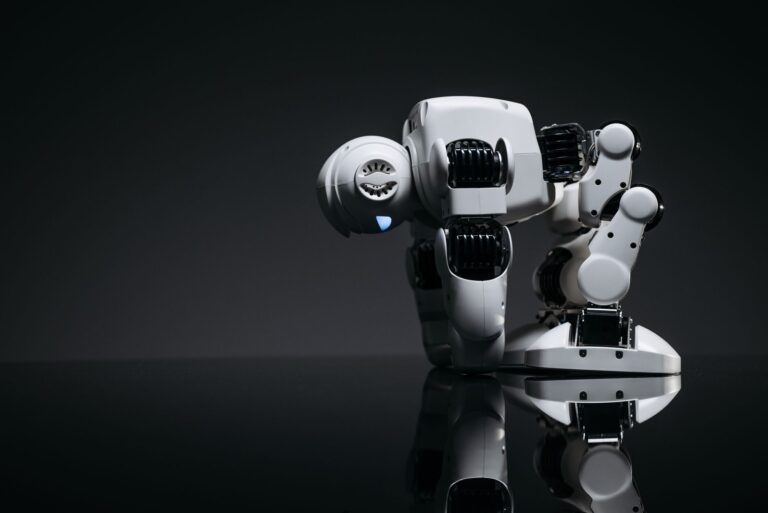

Nvidia’s bull case for sustained stock appreciation rests significantly on its positioning at the center of the robotics and AI acceleration wave. The semiconductor company’s GPU architectures—particularly the CUDA ecosystem and specialized AI chips—have become foundational to the computational demands of autonomous robotics, from warehouse automation systems to humanoid robots in development across major technology and automotive companies. When investors cite growth drivers for Nvidia beyond traditional data center and consumer gaming markets, robotics AI represents one of the few genuinely novel large-scale computational domains where adoption appears to be accelerating rather than maturing.
The argument hinges on a straightforward supply-chain reality: modern robotics applications require training, inference, and real-time decision-making capabilities that essentially demand GPU acceleration. Tesla’s Optimus program, Boston Dynamics’ mobile manipulation research, and the robotics initiatives of companies like Amazon and major automotive OEMs all depend on the kinds of parallel compute architectures that Nvidia has spent decades optimizing. If robotics deployment accelerates from research labs and pilot deployments into widespread industrial and commercial use, the hardware requirements—and by extension, Nvidia’s addressable market—would expand into a territory that has historically remained theoretical.
Table of Contents
- What Makes Robotics AI Different From Other Nvidia Growth Markets?
- The Hardware Acceleration Imperative in Robotics Development
- The Software Ecosystem and Vendor Lock-In Dynamics
- Comparing Robotics Revenue Potential to Existing Nvidia Markets
- The Manufacturing and Cost Scaling Challenge
- Real-World Robotics Deployments and Current Chip Usage
- The Investor Thesis and Why Robotics Matters to Valuation
- Frequently Asked Questions
What Makes Robotics AI Different From Other Nvidia Growth Markets?
robotics AI workloads differ from cloud data center inference or consumer AI applications in their computational constraints and distribution requirements. A warehouse robot operating in real time cannot rely solely on cloud connectivity for perception and decision-making; it requires on-device computation, often coupled with edge processing, which demands specialized chip designs that balance performance, power efficiency, and physical size. This is distinct from a data center GPU, which can tolerate higher power consumption and heat output because it sits in a controlled environment.
The bull case specifically values Nvidia’s ability to address this constraint profile. The company’s Jetson line of edge AI processors was designed for exactly this use case—mobile robots and embedded AI systems—though adoption has remained modest relative to the total addressable market. If major manufacturing and logistics companies shift significant portions of their operations to robotic systems, demand for these specialized processors could expand substantially. Alternatively, if robotics vendors and integrators adopt Nvidia’s full-stack approach (chip plus CUDA plus software libraries), lock-in effects could extend Nvidia’s pricing power into a new customer segment.
The Hardware Acceleration Imperative in Robotics Development
The computational challenge in robotics extends beyond raw processing speed. Modern robots performing unstructured tasks—picking objects of variable shapes, navigating dynamic environments, responding to human presence—require neural networks trained on vast multimodal datasets (vision, lidar, tactile sensors, spatial mapping). Training these models demands GPU clusters, placing early-stage robotics companies directly in competition for nvidia‘s existing data center GPU supply. Established players like Tesla, Amazon, and Boston Dynamics operate their own compute infrastructure, but smaller robotics startups often rely on cloud training services, which themselves depend on Nvidia GPUs.
A significant limitation to this bull case is that robotics adoption timelines remain uncertain. The industry has experienced repeated cycles of hype followed by slower-than-expected deployment, particularly in consumer-facing applications. Humanoid robots, for instance, remain in prototype or early commercialization stages, with production volumes still measured in hundreds or low thousands rather than hundreds of thousands. For Nvidia’s stock to benefit materially from a “robotics boom,” deployment would need to move beyond niche automation (warehouse picking, specific manufacturing tasks) into broader industrial and consumer applications—a transition that could take years longer than optimistic projections suggest.
The Software Ecosystem and Vendor Lock-In Dynamics
Nvidia’s advantage in robotics extends beyond the chip itself to the software layer. The CUDA ecosystem, ROS (Robot Operating System) integration, and specialized libraries for robotics development create a form of network effect where adoption of Nvidia hardware becomes more attractive when developers, integrators, and robot manufacturers have access to mature tooling. Companies like Kuka, ABB, and smaller integrators have begun incorporating NVIDIA AI frameworks into their automation stacks, which reinforces the hardware dependency.
However, competing approaches are emerging. ARM-based processors, specialized RISC-V designs, and custom silicon developed by large robotics players introduce technical alternatives that could limit Nvidia’s addressable market. Tesla, in particular, has signaled investment in its own compute hardware for autonomous vehicles and robotics applications. If dominant players in robotics (automotive OEMs, large systems integrators, major e-commerce firms) develop internal chip capabilities or standardize on non-Nvidia architectures, the anticipated hardware acceleration upside could fragment across multiple vendors rather than consolidate around Nvidia.
Comparing Robotics Revenue Potential to Existing Nvidia Markets
To understand why investors focus on robotics as a growth catalyst, comparing it to Nvidia’s current market composition is instructive. The company has historically derived revenue from data center GPUs (which grew substantially during the AI infrastructure buildout), gaming GPUs (a mature, competitive segment), and professional visualization (a niche but stable business). Robotics has not been a primary revenue category, suggesting significant room for expansion if adoption accelerates. The tradeoff here is visibility.
Nvidia’s data center business has clear revenue traction and quarterly results that confirm demand. Robotics, by contrast, remains nascent enough that near-term financial impact is difficult to forecast. A bull case for Nvidia based on robotics AI acceleration is inherently a bet on a transition from emerging demand to mainstream deployment—a transition that depends not just on Nvidia’s technology but on the robotics industry’s ability to overcome manufacturing, regulatory, and cost barriers. For investors comfortable with that uncertainty, the potential market size justifies the bull thesis; for more conservative investors, the hype may outpace the actual near-term revenue contribution.
The Manufacturing and Cost Scaling Challenge
One frequently overlooked limitation to the robotics AI acceleration narrative is the manufacturing bottleneck. Robotics companies operate at scales that are orders of magnitude smaller than consumer electronics or even enterprise software companies. If a major robotics vendor ships thousands or tens of thousands of units per year, that represents a fraction of the volume that sustains typical semiconductor manufacturing economics.
Nvidia benefits from the massive scale of cloud data centers and gaming markets, which amortize R&D and manufacturing costs across hundreds of millions of units annually. For robotics to become a material growth driver for Nvidia, the company would need to either see robotics volumes scale dramatically (which would require faster-than-expected market adoption) or operate at lower unit volumes with higher per-unit margins. The latter is possible—robotics systems are high-value applications where chip costs represent a small fraction of total system cost—but it assumes Nvidia can sustain premium pricing even in smaller markets. Historical precedent suggests this is achievable for specialized chips (medical imaging GPUs, for example), but it also exposes the bull case to competitive pricing pressure if alternative hardware becomes viable.
Real-World Robotics Deployments and Current Chip Usage
Examining existing robotics deployments reveals the gap between potential and current reality. Warehouse automation leaders like Amazon Robotics and Zebra Technologies have deployed robots at scale, but many of these systems rely on specialized hardware, field-programmable gate arrays (FPGAs), and traditional processors rather than advanced AI accelerators. As robotics applications shift toward more cognitive tasks—dynamic grasping, scene understanding, collaborative human-robot interaction—the computational demands increase, and GPU adoption becomes more central.
Tesla’s work on humanoid robotics (Optimus) represents one of the most ambitious use cases, combining computer vision, real-time motion planning, and object manipulation in unstructured environments. If Tesla successfully manufactures and deploys Optimus at even a fraction of the scale it achieved with vehicle production, the chip requirements would be substantial. However, Tesla has publicly committed to developing its own silicon, so the benefit to Nvidia would be indirect—through training compute, software tools, and ecosystem support rather than direct hardware sales into Tesla’s robots.
The Investor Thesis and Why Robotics Matters to Valuation
For equity analysts and institutional investors constructing bull cases for Nvidia, robotics AI acceleration matters because it represents a new, structurally large addressable market that is not yet saturated. The data center GPU market achieved rapid growth due to the generative AI boom, but it is also subject to competitive pressures and margin compression as the market matures. Robotics, by contrast, appears to be in an early inflection phase, with adoption barriers more related to robot capabilities and costs than to the availability of sufficient computing hardware.
The bull thesis does not require robotics to equal the revenue scale of data center GPUs; it requires only that robotics becomes a material incremental market, contributing perhaps 5-15% of revenue growth over a multi-year horizon while the core data center business either sustains or decelerates. Whether that actually occurs depends on factors largely outside Nvidia’s control—the pace of robotics technology maturation, the willingness of enterprises to invest in automation, the emergence of competing hardware platforms, and regulatory or workforce considerations that might slow adoption. Investors betting on the bull case are implicitly betting that these external variables will align favorably.
Frequently Asked Questions
Does Nvidia currently generate significant revenue from robotics applications?
Robotics represents a small fraction of Nvidia’s total revenue. The Jetson line of edge AI processors targets robotics and embedded applications, but overall robotics revenue is immaterial to quarterly results. The bull case assumes this changes if robotics adoption accelerates.
What is the primary computational bottleneck that makes robotics dependent on GPU acceleration?
Modern robots performing unstructured tasks require real-time processing of multimodal sensor data (vision, lidar, depth) and inference through trained neural networks, which demand parallel compute architectures that GPUs provide efficiently.
Could robotics vendors avoid Nvidia dependency by developing proprietary chips?
Yes. Large players like Tesla, Amazon, and automotive OEMs have signaled interest in developing internal silicon. This represents a significant downside risk to the bull case, as it could fragment the market rather than consolidate it around Nvidia.
What robotics applications are most likely to drive near-term GPU demand?
Warehouse automation, manufacturing quality control, collaborative industrial robots, and autonomous vehicle development are the most mature near-term applications. Consumer and humanoid robotics remain further from scale deployment.
Why don’t existing robotics deployments already rely heavily on GPU acceleration?
Many current deployments operate in structured environments with well-defined tasks, where specialized hardware (FPGAs, custom processors) or traditional CPUs suffice. GPU adoption accelerates as tasks become more complex and require real-time cognitive capabilities.
How does robotics AI compare to other emerging Nvidia markets in terms of near-term potential?
Robotics is speculative on timelines, whereas automotive AI (autonomous vehicles) and industrial IoT have clearer near-term deployment schedules. The bull case for robotics hinges on longer-term structural growth that has not yet proven out in revenue metrics.