
Ondas Inc. has become the Palantir of defense drone data by building an integrated intelligence platform that transforms raw intelligence, surveillance, and reconnaissance (ISR) data from autonomous aerial and ground systems into actionable real-time insights. The company’s partnership with Palantir Technologies and World View Enterprises, announced in March 2026, codifies this role—combining Ondas’ autonomous robotics and drone capabilities with Palantir’s Foundry platform to create an end-to-end ISR ecosystem that connects stratospheric aircraft, aerial drones, ground robots, and sensors into a single, unified intelligence network.
Rather than siloing data from different platforms, Ondas now offers defense organizations the ability to ingest, process, and act on drone intelligence in real time, much as Palantir has done for enterprise and intelligence community data for two decades. This capability matters because defense operations—particularly border security and mine clearance—generate enormous volumes of sensor data that becomes useless without rapid processing and integration. When Ondas received a $10 million initial order in April 2026 for a large-scale demining program on Israel’s Eastern Border Security Barrier, the contract didn’t just reflect demand for robotic systems; it validated demand for the intelligence platform tying those systems together. The company’s $80 million defense pipeline and timeline to deliver integrated solutions by Q4 2026 signal that the market is moving away from disconnected tools toward unified intelligence platforms—precisely where Ondas is positioned.
Table of Contents
- How Does the Palantir-Ondas Partnership Integrate Defense Drone Intelligence?
- What Makes Ondas’ Drone Data Platform Different From Standalone Systems?
- What Do the Demining Contracts Tell Us About Real-World Validation?
- How Does Real-Time Data Integration Change Defense Operations?
- What Are the Security and Scaling Challenges for Integrated Defense ISR?
- Why Are Stratospheric Aircraft Part of the ISR Puzzle?
- What’s the Broader Defense Implications and Future Outlook?
- Conclusion
How Does the Palantir-Ondas Partnership Integrate Defense Drone Intelligence?
The three-program framework announced in March 2026 reveals how Ondas is operationalizing the palantir comparison. Warp Speed focuses on production and mission readiness, ensuring systems can scale to operational tempo. AI Flight Director handles the planning and operational decision layer—the point where data becomes instruction. SkyWeaver provides on-vehicle edge intelligence, meaning drones and robots process information locally rather than waiting for cloud processing, critical for real-time threat response. Together, these programs don’t just connect different hardware; they create a workflow that moves data from collection to decision to action with minimal friction. The integration timeline matters operationally. Ondas expects full integration across its multi-domain portfolio—drones, ground robotics, and sensors—to begin in Q4 2026.
For context, that’s when the company also plans to deliver the first units of the $10 million demining system to Israel. This isn’t coincidental. The demining contract serves as a real-world testbed for the Palantir partnership. If border demining operations work smoothly with integrated ISR, the proof of concept transfers immediately to other defense missions: border patrol, perimeter security, counter-drone operations, and strategic reconnaissance. The limitation here is integration complexity. Palantir’s Foundry excels at connecting disparate data sources, but “connecting” systems built by different manufacturers with different communication protocols, sensors, and processing standards requires substantial engineering. Ondas must ensure that World View’s stratospheric aircraft, its own aerial and ground systems, and third-party sensors all speak the same intelligence language. A single point of failure in that architecture—whether a software integration bug or a security vulnerability—could degrade the entire system.

What Makes Ondas’ Drone Data Platform Different From Standalone Systems?
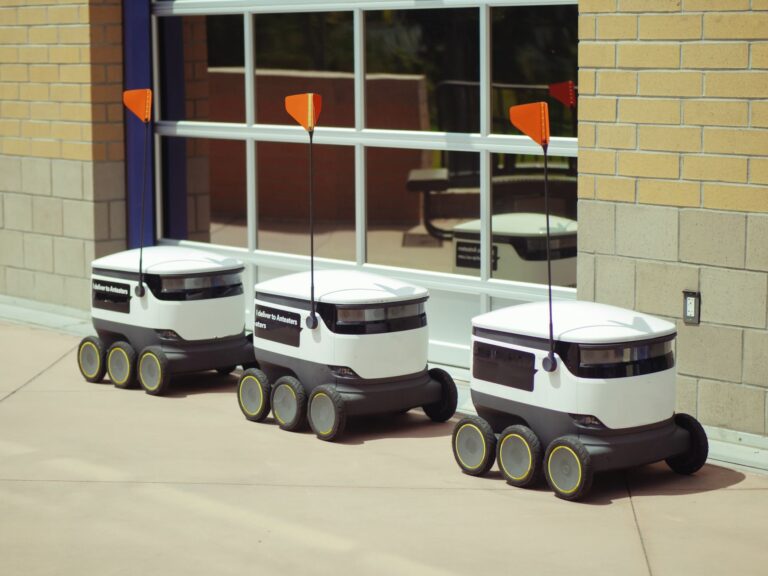
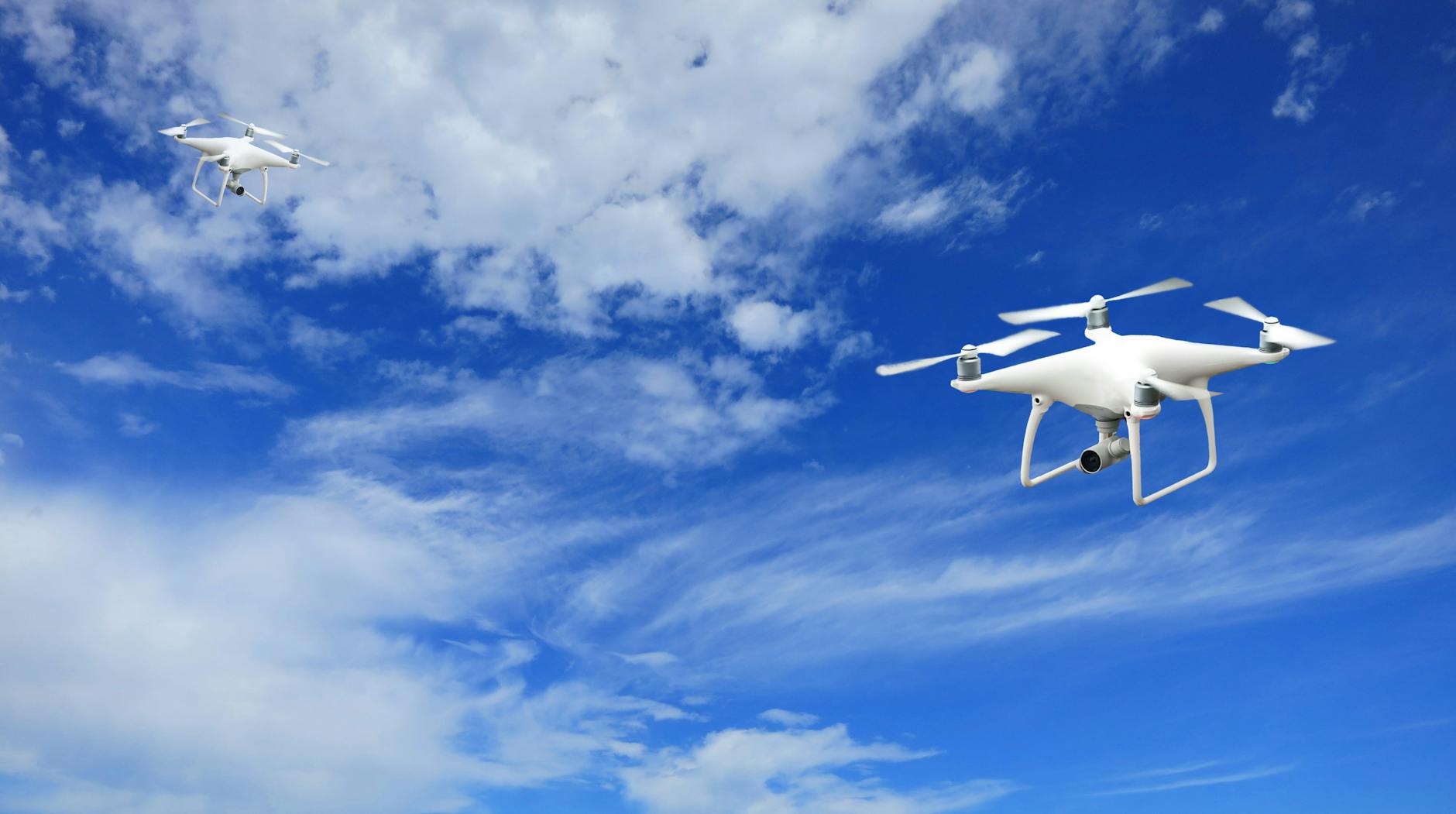
Ondas’ integrated intelligence platform combines three technical elements: autonomous ground robotics, aerial drone-based mapping, and AI-driven data processing. The ground robots handle hazardous tasks—in the demining use case, they identify and neutralize ordnance. Aerial drones provide persistent overhead coverage, mapping terrain and identifying threats. Sensors across both platforms collect imagery, thermal data, signal intelligence, and other feeds. Alone, each system is functional; together, they become an intelligence multiplier. The Palantir Foundry integration is the secret weapon. Foundry is designed to ingest siloed data and surface patterns humans would miss.
In the context of Ondas systems, this means an AI Flight Director can analyze overhead drone footage, correlate it with ground sensor data, identify likely minefields or threat zones, and route ground robots to investigate with minimal human intervention. A demining operation that once required extensive manual reconnaissance now becomes algorithmic. The system learns from each site, improving its predictive accuracy over time. The significant downside: this level of integration assumes high-quality data input, consistent system operation, and robust cybersecurity. If ground robots provide false positives or if aerial sensors malfunction, the AI system can propagate those errors across the entire decision chain. Additionally, the system’s reliance on real-time data processing means that network outages, latency spikes, or sensor failures have cascading effects. In environments where communications are disrupted—contested borders, conflict zones—the system degrades to a collection of disconnected tools, negating the integration advantage. Defense organizations deploying these systems must plan for graceful degradation, not assume integrated operations will always be available.
What Do the Demining Contracts Tell Us About Real-World Validation?
The $10 million initial order from 4M Defense (Ondas’ subsidiary) for Israel’s Eastern Border Security Barrier isn’t just a revenue win—it’s proof of concept. The broader program represents a $50 million award for demining across the Eastern Border region, with additional $30 million contracts for Israel-Syria border operations previously announced. These aren’t theoretical projects or pilot programs. They are large-scale, high-stakes operations where the failure of a system means unsecured borders or delayed mission completion. That Ondas secured these contracts reflects confidence in both its robotic platforms and its intelligence integration. Demining is one of the most unforgiving use cases: robots must identify threats with high accuracy, move through complex terrain reliably, and operate in environments where any single failure can be catastrophic. The fact that defense organizations in the Middle East have entrusted Ondas with $80 million in combined contract value suggests the company’s integrated approach delivers measurable advantages over traditional mine-clearing methods—faster operations, fewer false alarms, reduced operator risk.
The Q4 2026 delivery timeline also signals confidence; Ondas is committing to hardware and software maturity on a hard deadline. The comparison to competitors is revealing. Demining has historically relied on manual dog teams, trained personnel with detector wands, or less capable autonomous systems. Ondas’ offering—intelligent drones that map threat zones, ground robots that clear ordnance, and unified ISR that coordinates operations—is in a different category. However, the company also faces execution risk. Delivering integrated systems at scale is harder than delivering standalone platforms. If quality issues emerge, integration failures surface in the field, or timelines slip, the reputation damage extends beyond a single product line to the entire Palantir partnership narrative.

How Does Real-Time Data Integration Change Defense Operations?
Traditional defense drone operations separate intelligence collection from decision-making. Operators fly drones, collect footage, download the data, analyze it in post-processing, and then decide on next steps. This workflow, proven over decades, has a fatal flaw at scale: by the time analysis is complete, operational conditions have often changed. A mine field identified at 2 PM might have shifted due to weather or enemy action by 4 PM. Ondas’ integrated approach collapses this timeline. Aerial drones collect data in real time. The AI Flight Director processes that data as it arrives, correlates it with ground sensor data and historical intelligence, and surfaces actionable recommendations to operators within seconds rather than hours. Operators make faster decisions, ground robots move faster, operations complete faster.
In demining, this translates to more mines cleared per day, lower operator fatigue, reduced footprint for extended operations. In border security, it means faster threat detection and response. The time value of intelligence, a concept Palantir pioneered in the intelligence community, now applies to defense robotics. The tradeoff is operator autonomy. As the system becomes more intelligent, human operators may over-rely on AI recommendations, reducing their critical evaluation. There’s also the question of how to operate when integration fails. If the AI Flight Director goes offline, operators revert to manual control—but they’ve lost the muscle memory because they’ve been relying on automation. Defense organizations must retrain operators for both integrated and degraded modes, adding complexity to personnel development.
What Are the Security and Scaling Challenges for Integrated Defense ISR?
Integrating aerial drones, ground robots, and sensors into a unified intelligence platform creates a honeycomb of attack surfaces. Each component—the drones themselves, the ground control stations, the communications network, the Foundry backend—represents a potential vulnerability. If an adversary can intercept drone communication protocols, inject false data into the Foundry platform, or compromise ground robots, the entire integrated system becomes a liability rather than an asset. Ondas must implement military-grade cybersecurity: encrypted communications, zero-trust network architecture, continuous authentication, and automated threat detection. This isn’t optional for defense contracts. The recent demining order includes implicit requirements for security certification, likely to Israeli military standards. Any shortfall could trigger contract suspension, delay revenue recognition, or damage the partnership with Palantir.
Additionally, scaling the platform globally introduces regulatory complexity. Different nations have different classifications for ISR data, different requirements for foreign technology access, and different rules around autonomous systems in defense contexts. Ondas will need separate security and integration approaches for each major customer. The scaling limitation is also technical. Real-time ISR processing at the edge—on drones and ground robots—requires sophisticated embedded AI systems. Current generation hardware has limits on compute power, battery life, and thermal management. As the company adds more sensors, more autonomous behaviors, and more AI models to edge devices, it risks building systems that are power-hungry and unreliable. Ondas must navigate the tradeoff between feature richness and operational robustness, particularly for extended deployments in harsh environments.

Why Are Stratospheric Aircraft Part of the ISR Puzzle?
The partnership includes World View Enterprises, which operates stratospheric aircraft—planes that fly at the edge of space, at altitudes of 100,000 feet. These platforms offer persistent, wide-area coverage for days or weeks without landing. Unlike satellites, which are fixed in orbit, stratospheric aircraft can loiter over specific regions, collecting ISR data from a stable, persistent vantage point. The combination of stratospheric aircraft (strategic coverage), aerial drones (tactical coverage), and ground robots (operational coverage) creates a tiered ISR architecture that mirrors military doctrine.
In the demining context, a stratospheric aircraft could map an entire border region once a week, identifying likely threat zones through thermal or hyperspectral imaging. Ground drones would then focus on those zones, and ground robots would verify and clear. This hierarchy of coverage, coordinated through Foundry, multiplies the efficiency of each tier. Ondas doesn’t just provide drones; it provides an integrated approach to ISR that leverages platforms at different altitudes and timeframes, all feeding into a single decision-making system.
What’s the Broader Defense Implications and Future Outlook?
The Ondas-Palantir partnership signals a shift in how defense organizations acquire and deploy autonomous systems. Instead of buying standalone drones, robots, or sensors, they’re buying integrated intelligence platforms. This shift advantages companies like Ondas that can think system-wide and disadvantages point-solution providers. It also means that software—the AI models, the data architecture, the user interface—becomes as strategically important as the hardware. Looking forward, the Q4 2026 integration timeline and the demining contract delivery schedule will be critical tests.
If Ondas executes flawlessly, it will validate the Palantir partnership narrative and attract additional defense customers. If integration stumbles or delivery delays, the partnership’s credibility suffers. The $80 million defense pipeline represents near-term revenue, but it’s also a trial by fire. Successful deployment on Israel’s borders, with all the operational rigor and security requirements that implies, opens doors to other nations facing similar challenges. Unsuccessful deployment closes them. Ondas is betting that its integrated approach—drones, robots, sensors, and Foundry—creates a moat that standalone competitors cannot cross.
Conclusion
Ondas has positioned itself as the Palantir of defense drone data by integrating autonomous platforms, sensors, and real-time intelligence processing into a unified ISR ecosystem. The partnership announced in March 2026 formalizes this positioning, combining Ondas’ hardware expertise with Palantir’s data architecture leadership. The $80 million demining contract pipeline and Q4 2026 delivery timeline represent real-world validation of this model, not theoretical capability. The test ahead is execution at scale.
Integration complexity, cybersecurity requirements, and operational demands in contested environments will test whether Ondas can deliver on the promise of unified ISR. Success means a new category of defense capability—drones and robots that think collectively rather than independently. Failure means a cautionary tale about the gap between integrated architectures and operational reality. The industry is watching to see which path Ondas takes.