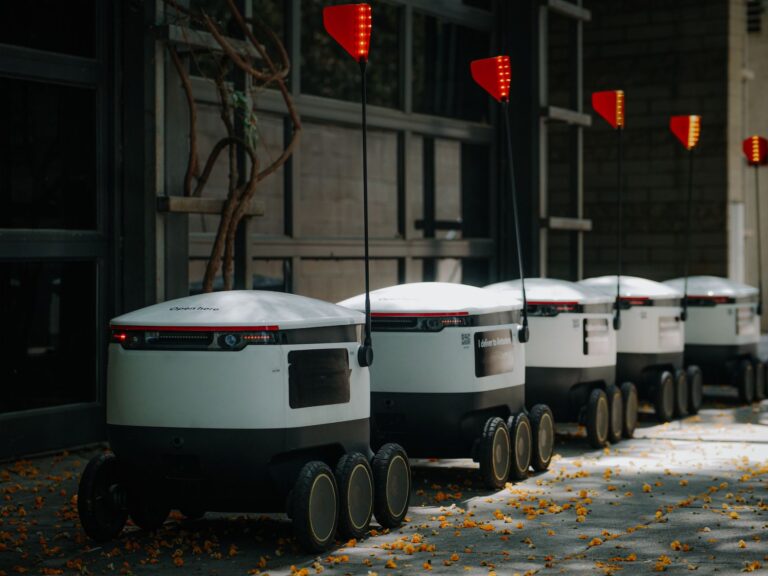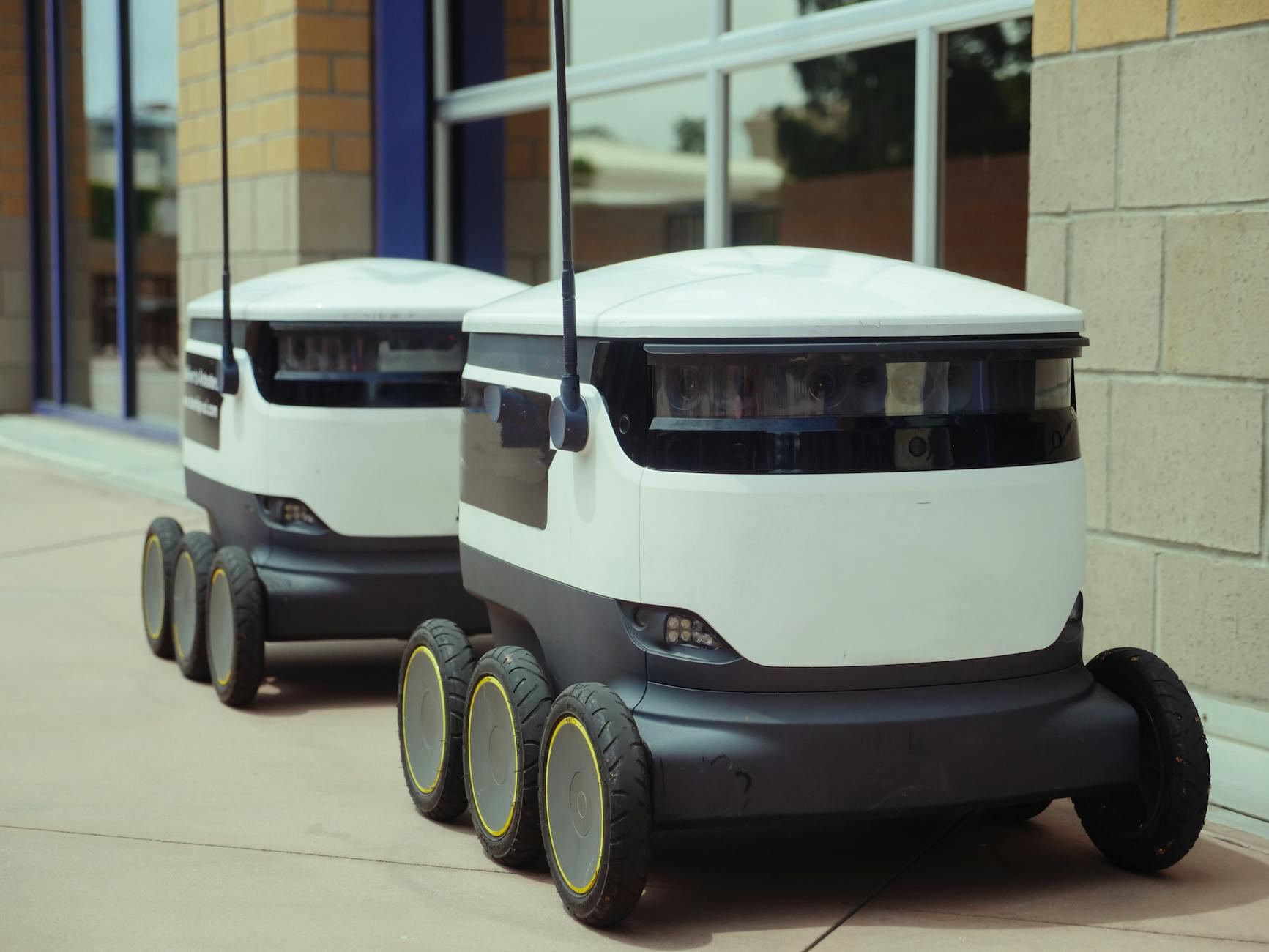

Knightscope operates as the dominant force in autonomous security robotics, much like Google shaped the search engine landscape—through relentless innovation, capital accumulation, and a service-based business model that scales. The company has built the most deployed autonomous security robot platform globally, positioning itself as the infrastructure layer for security forces transitioning to autonomous systems. Like Google’s approach to search, Knightscope’s strategy involves investing heavily in hardware and software, acquiring complementary capabilities, and establishing network effects that make competing increasingly difficult. For example, when Knightscope acquired Event Risk LLC in February 2026 and rebranded it as Knightscope Security Force, the move directly paralleled Google’s acquisition of companies to expand into adjacent markets—turning a robotics manufacturer into a full-service security provider.
The comparison runs deeper than market positioning. Google achieved dominance by solving a fundamental problem at scale; Knightscope is solving security deployment at a time when labor shortages and operational costs make autonomous alternatives economically compelling. With 2025 revenue hitting $11.3 million and cash reserves of $20.6 million, the company has the financial runway to pursue long-term platform consolidation rather than short-term profitability. The 2026 guidance of triple-digit revenue growth suggests the company is entering an acceleration phase where its early investments in robotics, AI, and operational infrastructure will begin generating compounding returns.
Table of Contents
- Why Knightscope Dominates the Autonomous Security Robot Market
- The K7 Launch and Autonomous Infrastructure Expansion
- Financial Strength as Competitive Moat
- The Service Model vs. Hardware-Only Approach
- Deployment Challenges and the Reality of Scale
- Market Opportunity and Addressable Demand
- The Autonomous Security Ecosystem and Long-Term Positioning
- Conclusion
Why Knightscope Dominates the Autonomous Security Robot Market
The dominance stems from a two-part advantage: first-mover presence in a nascent category and a revenue model that proves autonomous robots work in real deployments. Most robotics companies operate as hardware manufacturers with uncertain unit economics. Knightscope diverged from that path by building both products and recurring service revenue. In 2025, service revenue reached $8.0 million (70% of total revenue), up 7% year-over-year, while product revenue contributed $3.4 million. This mix mirrors google‘s combination of algorithmic innovation (products) and advertising services (recurring revenue), creating a flywheel where each robot deployment generates data, improves algorithms, and increases service stickiness.
When a customer deploys a K5 or K6 robot, they’re not just buying hardware—they’re subscribing to continuous AI improvements, security monitoring, and integration with broader security ecosystems. The acquisition of Event Risk LLC and rebranding as Knightscope Security Force signals a pivot toward owning the full customer relationship. Rather than selling robots to security companies, Knightscope can now directly employ autonomous systems as part of a managed security service, similar to how Google integrated hardware (Nexus phones) with services (Gmail, Maps, Android). This vertical integration addresses a critical market gap: traditional security firms lack the technical expertise to operate autonomous fleets, and most security customers want a single vendor responsible for outcomes, not components. The expansion targets a multi-billion-dollar security guarding market, where labor shortages make automation economically inevitable. By December 2025, the company had already accelerated past $1 million in new sales, renewals, and expansions in a single month, indicating momentum building behind this model.
The K7 Launch and Autonomous Infrastructure Expansion
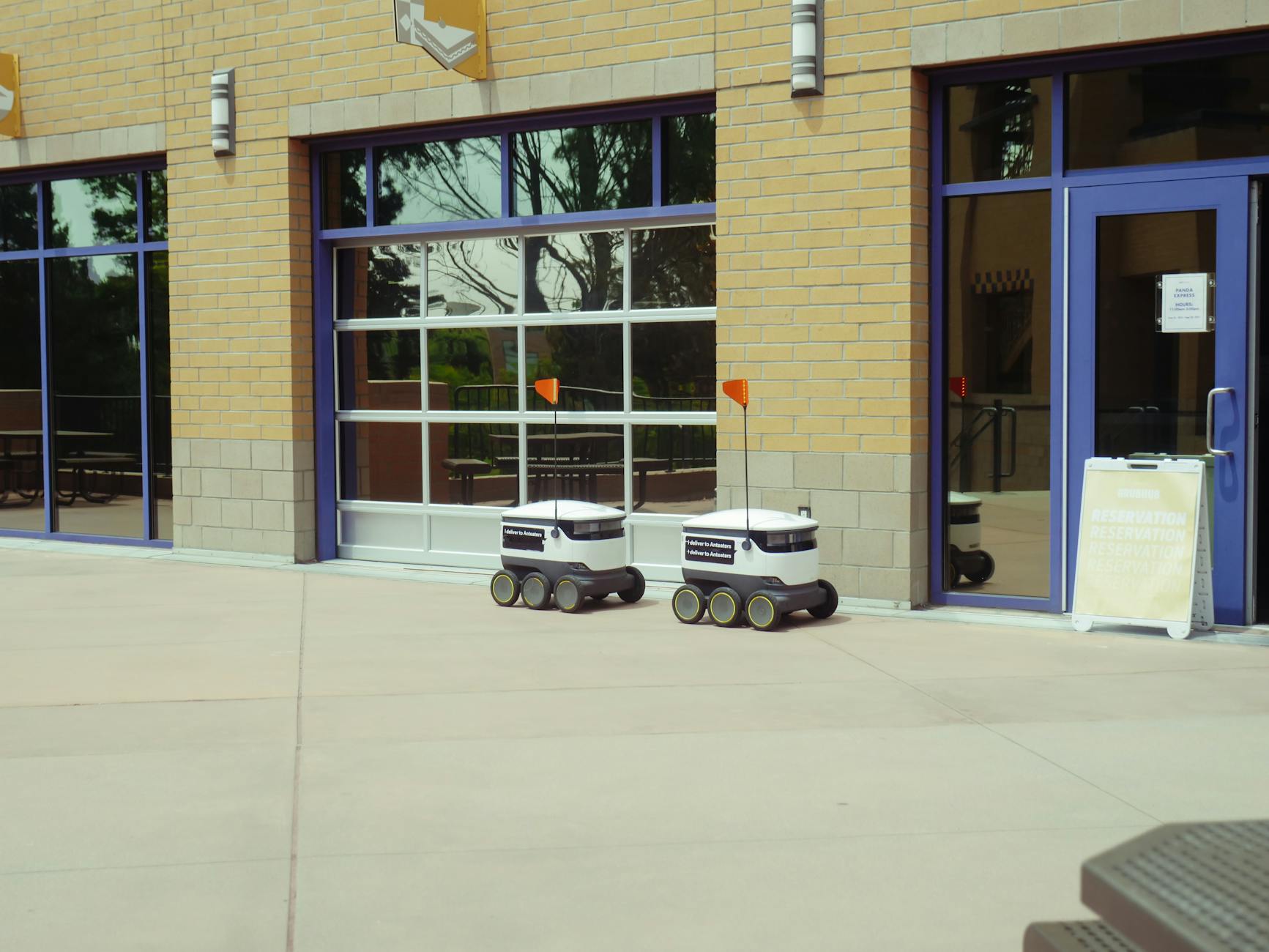
In November 2025, Knightscope unveiled the K7, its largest and most advanced autonomous security robot, designed for perimeter protection and critical infrastructure. The K7 represents the company’s answer to scaling beyond urban environments into outdoor and large-facility deployments where autonomous systems face far greater complexity—weather, terrain, detection algorithms that must work across miles of fence line rather than building interiors. The K7 features off-road performance, AI-powered object detection, and autonomous patrol capabilities, targeting markets like industrial facilities, data centers, and utility infrastructure where security is continuous, costly, and often inefficient with human guards. The risk here deserves emphasis: expanding from urban to outdoor deployments introduces technical and operational variables that have historically challenged autonomous systems.
Weather resistance, battery longevity in extreme conditions, and detection accuracy across diverse terrain remain partially unproven at scale. Knightscope’s limited series production timeline for H2 2026 deployment reflects this uncertainty—the company is moving cautiously rather than making grandiose claims. That restraint is worth noting, particularly in a robotics industry prone to overpromising and underdelivering. The K7 must perform reliably in real deployments, where a single failure undermines customer confidence far more than in urban security contexts. However, the product’s existence reflects real demand signals; major facility owners increasingly view autonomous outdoor security as a necessity rather than novelty, and Knightscope’s existing relationship with these customers (via K5 and K6 deployments) gives them distribution advantages competitors simply lack.
Financial Strength as Competitive Moat
Knightscope’s $20.6 million cash position as of end-2025 (up from $11.1 million in 2024) provides a crucial advantage in a market where most robotics companies operate on thin margins or require constant external capital. This cash reserve enables the company to absorb operational losses while scaling service revenue, invest in new product lines like the K7, and acquire strategic assets like Event Risk LLC without diluting shareholders or surrendering control. The comparison to Google remains apt: both companies built dominant positions partly through capital discipline and the ability to fund long-term initiatives while competitors struggled with quarterly earnings pressure. The 5% year-over-year growth in 2025 revenue might appear modest, but it masks an inflection point.
Service revenue growth of 7% is the leading indicator; it suggests customer retention is strong and expansion deals are closing. The total deployed fleet of Knightscope robots continues operating across hundreds of customer sites, generating recurring service revenue with higher margins than initial hardware sales. Once those deployments reach scale, the revenue curve accelerates sharply. The company’s guidance of triple-digit growth for 2026 implies management confidence that the combination of organic growth, Event Risk LLC integration, and new K7 deployments will produce exponential revenue expansion. Investors in Google experienced exactly this dynamic in the mid-2000s: years of steady but unspectacular growth followed by sudden, dramatic expansion once advertising volume reached critical mass.

The Service Model vs. Hardware-Only Approach
Knightscope’s strategic choice to emphasize service revenue rather than pure hardware sales reflects a fundamental lesson from the technology industry: sustainable competitive advantages come from recurring relationships, not one-time transactions. A customer who buys a security robot might choose a cheaper competitor for the next unit; a customer locked into a three-year service contract with Knightscope Security Force, with integrated monitoring, AI improvements, and performance guarantees, faces much higher switching costs. This mirrors Google’s evolution from a search engine (one query at a time) to a platform providing email, maps, and cloud services (all integrated, daily use). The tradeoff is operational complexity. Knightscope must now manage robot fleets on customer sites, ensuring uptime, responding to service issues, and employing technicians to support deployments.
This is fundamentally different from manufacturing and selling robots. The company is essentially becoming a security firm that deploys autonomous robots rather than a robotics company that sells hardware. That transition is risky—operational mistakes directly damage customer relationships and brand reputation. But it’s also defensible. Competitors can build robots; they cannot easily replicate Knightscope’s installed base, service infrastructure, and relationships with major customers. The company is building a services business with robots as the delivery mechanism, which is a far stronger position than being a hardware vendor.
Deployment Challenges and the Reality of Scale
As Knightscope scales deployments, the company faces challenges that most technology companies never encounter. A bug in Google’s search algorithm affects millions of users but causes no physical harm. A malfunction in an autonomous security robot can result in trespassing claims, failure to detect genuine threats, or security breaches at customer facilities. The regulatory environment for autonomous systems in critical infrastructure remains immature, and customers in regulated industries face uncertainty about liability when autonomous systems replace human guards. Knightscope must navigate these expectations while maintaining the financial discipline required to achieve triple-digit growth.
Weather, infrastructure variance across customer sites, and the sheer diversity of deployment environments introduce complexity that pure software companies avoid. A K7 robot that performs flawlessly in California data centers might fail in Midwest humidity or Texas heat. Knightscope’s revenue growth depends on successful scaling, which means each deployment must work reliably or customers will abandon the service. This is why the company’s limited series production approach for the K7 makes sense—rushing to scale before technology maturity would be catastrophic. The downside is that competitors have time to catch up and potentially leapfrog Knightscope’s current product line. The company must execute deployments perfectly while maintaining aggressive growth targets, a balancing act that even well-capitalized companies struggle with.
Market Opportunity and Addressable Demand
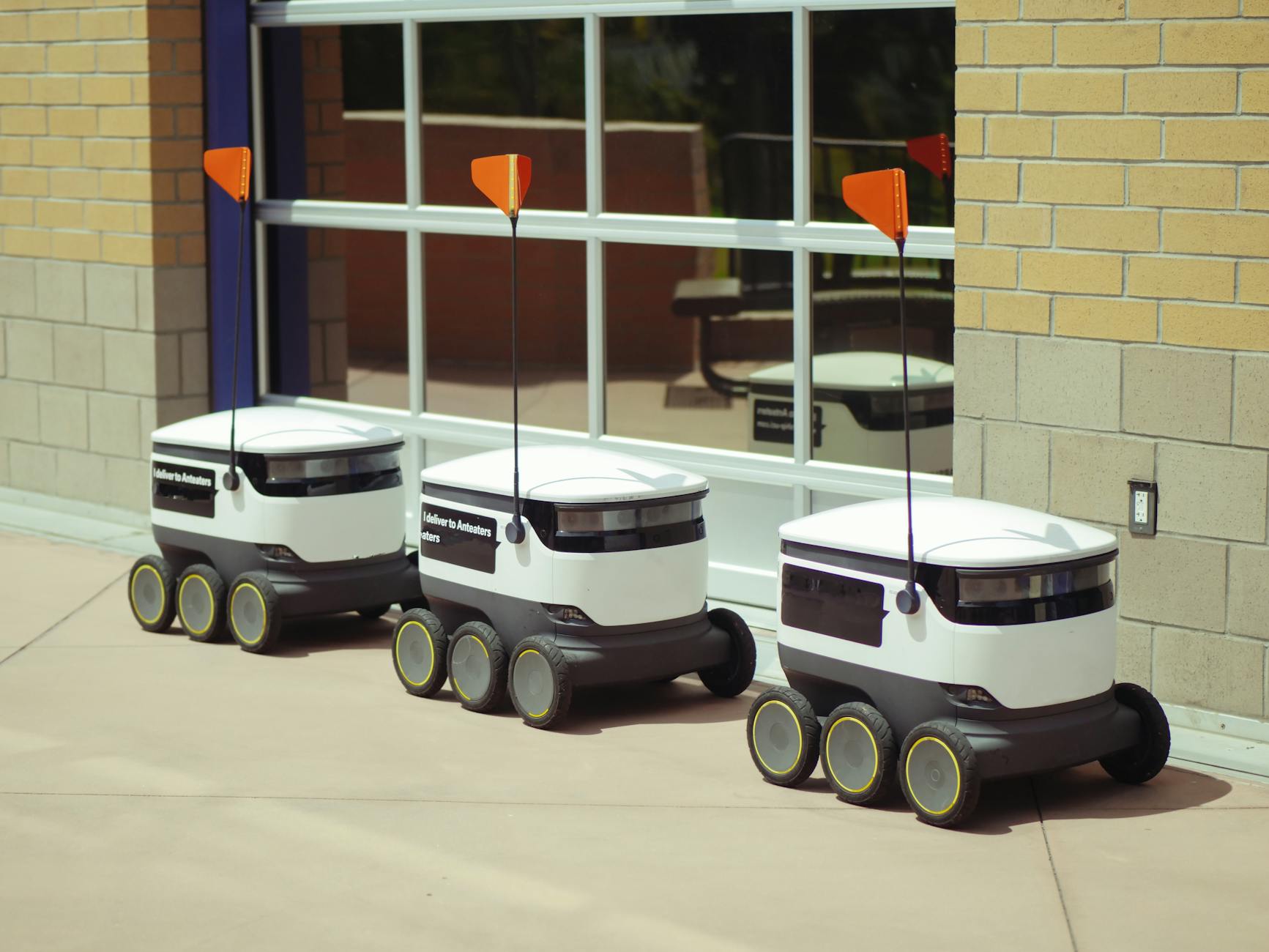
The security services market is estimated in the billions of dollars globally, with a significant portion still delivered by human guards working fixed hours at high cost. Labor shortages across developed economies make human security increasingly expensive and difficult to recruit, creating tailwinds for autonomous alternatives. Knightscope operates in this dynamic where demand for security is inelastic—customers need it regardless of cost—but the supply of qualified human guards is constrained. The company is not competing against cheaper security vendors but against the fundamental labor shortage driving security costs upward.
This market reality explains why Knightscope can project triple-digit growth for 2026. The company is not taking share from existing competitors; it’s capturing demand that was previously unmet or served at unsustainable cost levels. When a major logistics facility chooses Knightscope’s autonomous fleet instead of doubling its security staff, that’s not a zero-sum market share win—it’s a new category adoption that aligns with broader economic forces. The scale of this opportunity is what allows Knightscope to justify significant investments in new products like the K7 and the strategic pivot into managed security services.
The Autonomous Security Ecosystem and Long-Term Positioning
Knightscope’s long-term positioning depends on establishing autonomous robots as infrastructure—the way Google established search and advertising as the economic foundation of the internet. The company is building an ecosystem where its robots, software, and service operations become too deeply integrated into customer operations to easily replace. Each deployment generates data that improves detection algorithms, making future robots smarter and more valuable. Each service contract creates operational dependencies and switching costs.
Over time, this compounding advantage becomes formidable. Looking ahead, Knightscope’s trajectory suggests a company transitioning from startup to established infrastructure provider. The triple-digit growth guidance for 2026, combined with strong cash reserves and the Event Risk LLC acquisition, indicates the company is moving past the “will autonomous security work?” question into the “how do we serve the entire market?” phase. Competitors will emerge, but the combination of installed base, service relationships, and continuous product innovation positions Knightscope similarly to how Google’s ecosystem positioned it—not invulnerable, but extraordinarily difficult to displace once customers depend on the service.
Conclusion
Knightscope has earned its positioning as the Google of autonomous security robots not through a single breakthrough but through disciplined execution, capital accumulation, and a business model that creates recurring revenue and durable customer relationships. The company’s 2025 results—with service revenue growing faster than product revenue, cash reserves doubling, and strategic acquisitions expanding the addressable market—reveal a company moving from unproven startup into a foundational infrastructure role. The K7 launch and the pivot into managed security services signal confidence that autonomous robots are no longer experimental but essential to modern security operations.
The path forward requires flawless execution on deployments, continued innovation in AI detection capabilities, and disciplined capital allocation during the aggressive growth phase. If Knightscope succeeds, the company will have built the dominant platform in autonomous security, with network effects and customer lock-in that justify its valuation and growth guidance. The next 18 months of K7 deployments and Knightscope Security Force integration will reveal whether that future is achievable or aspirational.