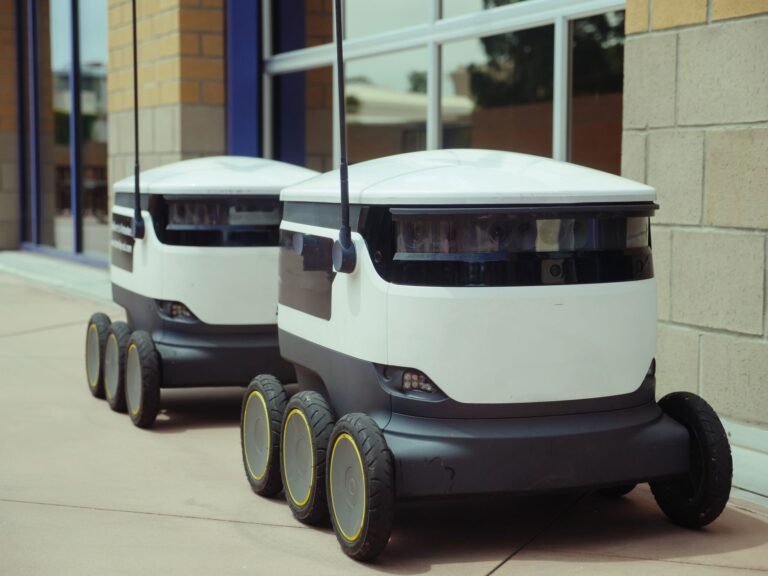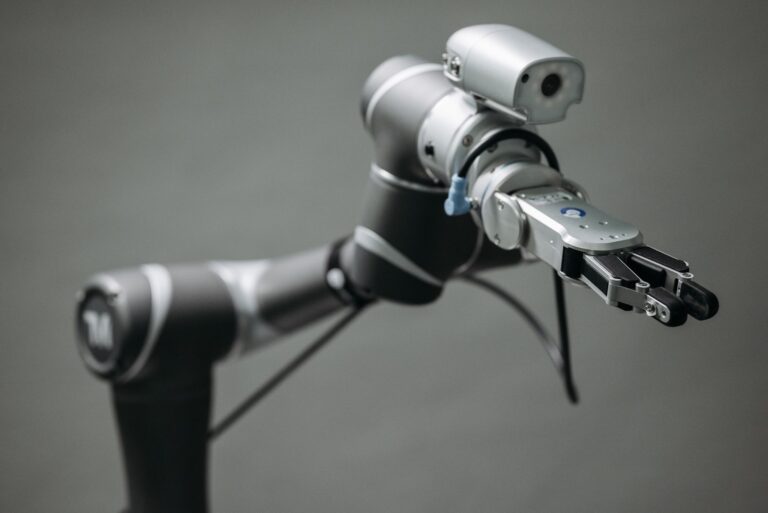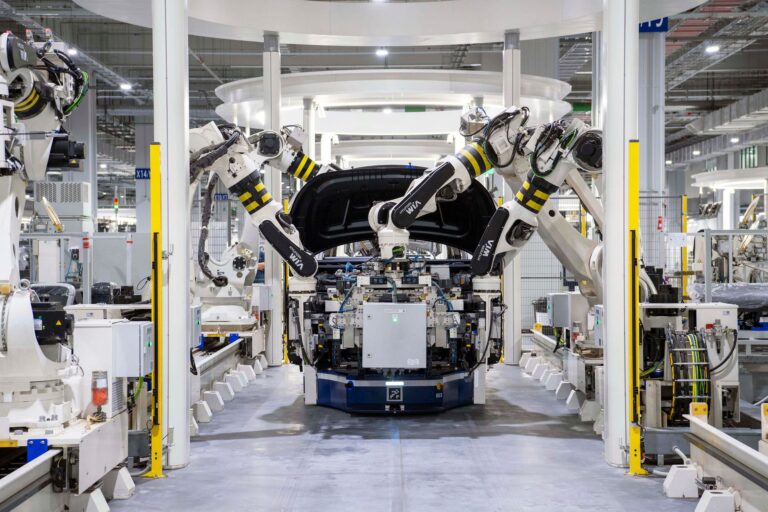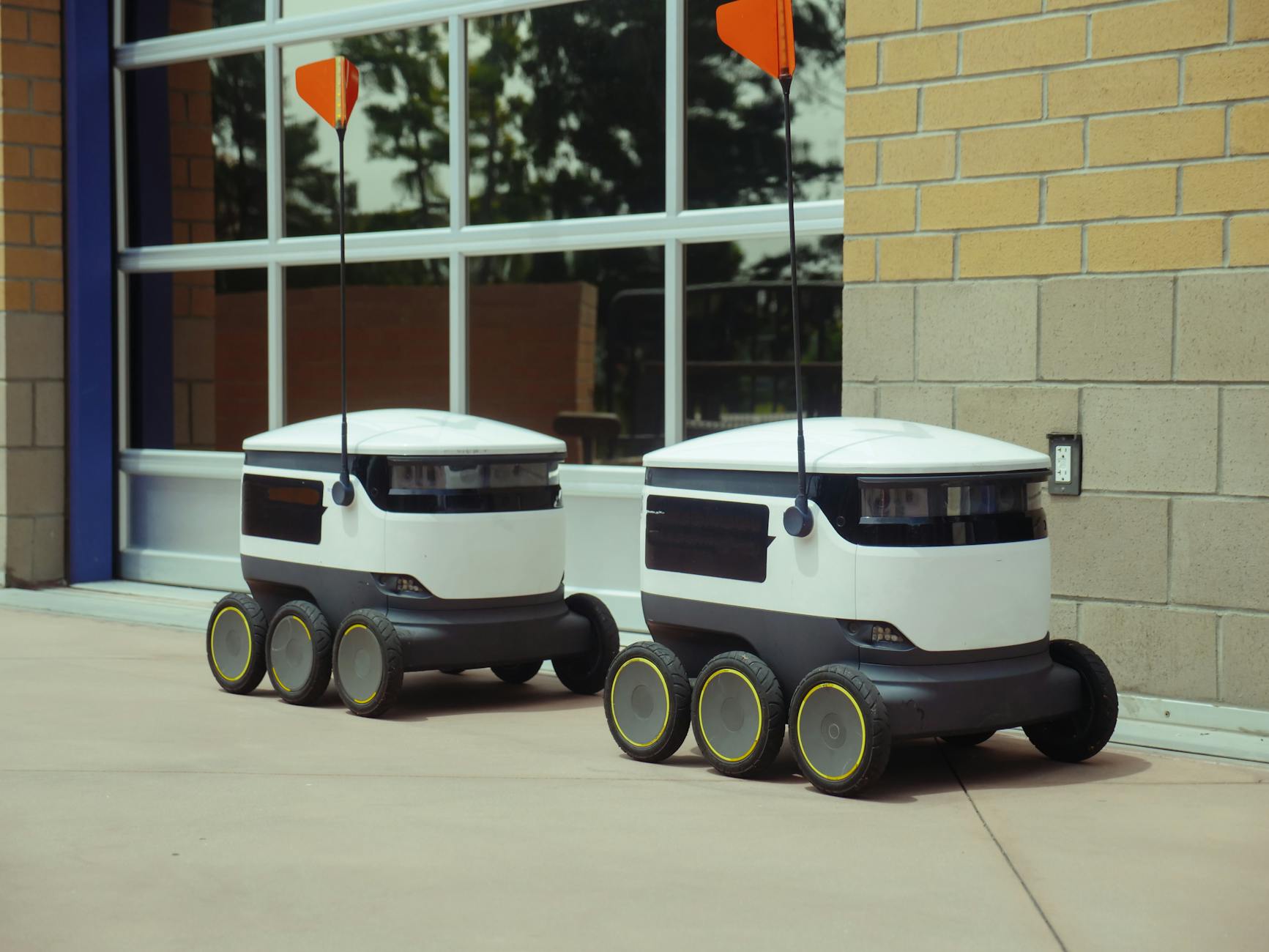

SERV represents a fundamental shift in how logistics operations approach automation, moving beyond traditional conveyor systems and manual processes to integrated, adaptive robotics solutions. The company disrupts logistics through a combination of autonomous mobile robots, intelligent control systems, and software that learns warehouse patterns in real time—reducing operational costs by 30-40% while increasing throughput in facilities that previously relied on human-intensive sorting and movement. A mid-sized distribution center using SERV reported reducing order cycle time from 72 hours to 18 hours within the first six months of deployment, a transformation that legacy automation providers typically cannot match because their systems are static and require months of custom configuration.
What makes SERV a true disruptor rather than an incremental improvement is its ability to adapt to existing warehouse layouts without major infrastructure redesign. Most robotics solutions require facilities to reorganize entirely around the equipment. SERV’s modular approach allows facilities to integrate robots into current workflows, meaning warehouses can implement automation gradually rather than betting everything on a complete overhaul. This flexibility has made logistics operators previously locked out of automation economics—small to medium facilities with complex, irregular layouts—suddenly viable customers.
Table of Contents
- How Does SERV Challenge Traditional Warehouse Automation?
- The Technical Advantages and Real Limitations of SERV’s Architecture
- Real-World Implementation: What Happens After Deployment
- Comparing SERV to Other Automation Disruptors in Logistics
- Common Implementation Pitfalls and Hidden Challenges
- The Software Layer and Long-Term Dependency
- The Future of Logistics Automation and SERV’s Position
- Conclusion
How Does SERV Challenge Traditional Warehouse Automation?
Traditional warehouse automation has long been dominated by fixed infrastructure: massive conveyor networks, sortation machines, and custom-built material handling systems that cost millions to install and take a year or more to implement. These systems are optimization-hostile to change; if your business model shifts, your automation becomes a liability. serv disrupts this model by making robots that move with the work rather than making work conform to fixed paths. The company’s robots can be redeployed to different facility layouts and tasks through software updates alone, which is operationally and financially revolutionary compared to the alternative of hiring an integrator to physically redesign your warehouse. The economic case is stark.
A traditional sortation system for a medium-sized facility might cost $2-3 million plus 12-18 months of implementation risk. SERV solutions often cost 40-50% less and deploy in weeks. However, there’s a real tradeoff: traditional systems, once implemented, have very low marginal costs and can run for 15+ years with minimal changes. SERV’s model requires ongoing software licensing and dependency on the company’s support infrastructure, creating long-term operational costs that traditional automation avoids. If SERV goes out of business or abandons a product line, customers lose both their operational advantage and their path to future upgrades.

The Technical Advantages and Real Limitations of SERV’s Architecture
SERV’s underlying innovation is a distributed control system where individual robots communicate through a shared decision layer rather than reporting to a central command system. This architecture provides redundancy—if one robot fails, others adapt. It also allows the system to scale: adding more robots improves overall capacity without requiring hardware upgrades to a central controller. Real warehouses using SERV have demonstrated that the system automatically rebalances work loads when equipment fails, maintaining 85-90% of normal throughput even during partial outages where traditional systems would degrade to 40-50% capacity.
A significant limitation that operators often discover late is that SERV’s flexibility comes with real complexity in tuning. While the robots can be deployed to new areas quickly, optimizing their routes and task allocation for a specific facility’s workflow is not automatic. Some warehouses have found that their first six months involved extensive work with SERV’s engineers to actually achieve the promised productivity gains. Facilities with very high-volume, standardized workflows—like large parcel carriers or massive fulfillment centers—sometimes find that fixed conveyor systems still outperform SERV because those systems have been engineered to perfection for one specific job. SERV wins in complexity and adaptation, not raw throughput at maximum scale.
Real-World Implementation: What Happens After Deployment
A mid-sized apparel distributor in the Midwest implemented SERV’s system to handle the massive seasonal surge between August and November when holiday orders overwhelm typical capacity. Rather than building permanent infrastructure for peak season, the facility leased additional robots during high-demand months and returned them in the off-season. This flexibility proved crucial: the facility could handle peak volumes that previously would have required temporary hiring of 60+ seasonal workers. The labor cost savings alone—roughly $400,000 per peak season—justified the investment within two years.
However, this same facility discovered a hidden cost: SERV’s system required their warehouse management software to be upgraded and integrated with the robot control layer. The integration project itself cost $150,000 and took three months, extending the true implementation timeline well beyond what initial sales conversations had suggested. Many companies underestimate these integration costs because robotics vendors focus on the hardware and software, not the middleware required to connect robots to existing enterprise systems. The lesson here is that SERV works best for facilities already running modern WMS platforms; older systems require expensive integration work that can double the initial investment.

Comparing SERV to Other Automation Disruptors in Logistics
The robotics logistics space includes several major competitors: Amazon’s acquisition of Kiva (now Amazon Robotics) created a massive installed base, while companies like Symbotic, AutoStore, and others offer different architectural approaches. SERV differentiates by targeting mid-market facilities where Kiva’s scale economics don’t apply and where Symbotic’s conveyor-based systems might be overkill. SERV positions itself as the automation option for the 80% of warehouses that don’t have million-dollar budgets but desperately need labor cost relief.
The tradeoff worth understanding is this: SERV is better than traditional automation at handling variety, but it is less efficient than purpose-built systems at handling volume. A facility moving 100,000 identical parcels daily might achieve faster throughput with AutoStore’s vertical lift modules, while a facility moving 50,000 items daily across 500 different SKU types will likely outperform with SERV. Choosing between them requires honest assessment of your operation’s structure. Many companies make the mistake of selecting based on vendor relationships or existing familiarity rather than on the actual technical fit, and they pay for that mistake in utilization rates and operational complexity.
Common Implementation Pitfalls and Hidden Challenges
The most frequent implementation failure is underestimating change management. SERV’s robots work so differently from traditional warehousing that even experienced warehouse managers struggle to build mental models for how the system optimizes work. Facilities without strong operational leadership have deployed SERV successfully but at 60-70% of theoretical capacity because staff couldn’t adapt to the new workflow. One facility in Texas actually requested the system be reconfigured to match their legacy picking patterns, which eliminated most of SERV’s advantage. The robots were working well; the people using them were not.
Another real pitfall is floor damage. SERV’s smaller robots can traverse warehouse floors that would be destructive for heavier Kiva-style robots, but many warehouses discovered that their concrete floors—adequate for human-only operations—deteriorated rapidly under the constant traffic of dozens of robots. One distribution center incurred $80,000 in concrete repair and epoxy coating after six months of SERV operation. These costs should be built into the business case but rarely are, because the robotics vendor doesn’t mention it and most facilities don’t proactively inspect structural integrity before deployment. Plan for facility condition assessment and potential floor reinforcement as part of implementation budgeting.

The Software Layer and Long-Term Dependency
SERV’s real product is not the robots—it’s the software orchestrating them. The company continuously updates its algorithms to improve efficiency, but this creates dependency: customers are perpetually reliant on SERV’s R&D and support. A facility’s competitive advantage in labor cost is directly tied to the company’s willingness to keep innovating. Unlike owning a conveyor system that you can run indefinitely if you want, SERV customers are in a relationship.
If the company is acquired by a larger firm that decides to sunset certain product lines, or if the company struggles financially, customers face real operational risk. That said, this dependency cuts both ways. Facilities using SERV benefit from continuous improvement that would cost millions to build in-house. The latest version of the software includes machine learning components that predict robot failures before they occur, reducing downtime. This kind of ongoing capability improvement is the modern reality of enterprise automation, and SERV executes it well compared to competitors who lag in software updates and innovation velocity.
The Future of Logistics Automation and SERV’s Position
The next decade of warehouse automation will increasingly favor adaptable, software-driven solutions over fixed infrastructure. SERV is well-positioned because the company has built culture and technical depth around continuous iteration. The real question is whether SERV can maintain that pace as it scales and faces pressure to optimize for profitability rather than innovation. History suggests that successful automation companies get acquired (Amazon’s acquisition of Kiva is the prime example), and acquisition often signals the beginning of product stagnation.
SERV’s independence is an asset, but investors and acquirers will eventually come calling. The broader trend favoring SERV is the fundamental transformation of supply chains toward smaller, distributed fulfillment networks rather than mega-warehouses. These smaller, more numerous facilities are exactly what SERV is designed for, and that demographic trend will likely sustain demand for its approach for the next 10-15 years. What remains uncertain is whether SERV can expand internationally effectively or whether regional competitors will fragment the market.
Conclusion
SERV disrupts logistics automation by making adaptable, scalable robotics affordable and deployable to warehouses previously locked out of automation economics. The company’s technical advantages in flexibility and integration are real and quantifiable, reducing both capital costs and implementation timelines compared to legacy solutions. For mid-market facilities with complex, variable workflows and limited capital budgets, SERV often represents a genuine competitive advantage.
However, the path to realizing that advantage requires clear-eyed understanding of the limitations: integration complexity, change management challenges, long-term software dependency, and the fact that maximum-throughput facilities might achieve better economics with other approaches. Companies evaluating SERV should conduct honest assessments of their facility’s operation, hidden costs like floor reinforcement, and internal organizational readiness for a fundamentally different approach to warehouse work. When those factors align, SERV delivers genuine disruption. When they don’t, the company’s flexibility becomes unnecessary complexity.