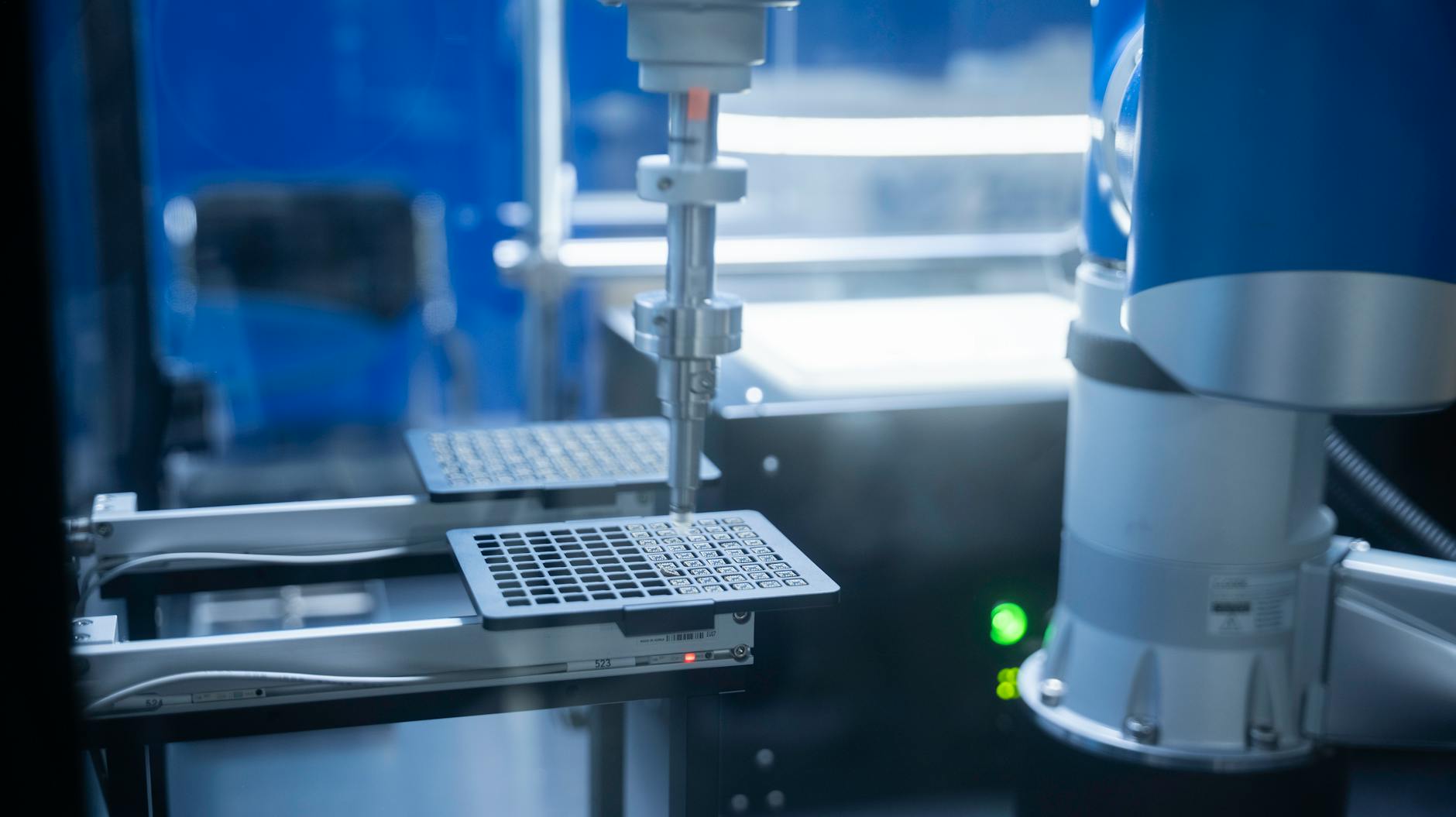

SYM is a specialized robotics operating system designed to coordinate autonomous systems and automated machinery across logistics operations, functioning as the central control layer that enables warehouse robots, autonomous vehicles, and sorting systems to work together seamlessly. Unlike general-purpose operating systems, SYM prioritizes real-time task scheduling, inter-robot communication, and deterministic performance—the critical factors that keep packages moving and deadlines met in facilities processing thousands of shipments daily.
For example, when a robot completes a picking task in a warehouse, SYM immediately assigns it to the next job while simultaneously communicating with conveyor systems and package sorters to ensure smooth handoff without bottlenecks. The logistics industry has long struggled with the fragmentation problem: robots from different manufacturers, conveyor systems from various vendors, and custom automation hardware all speaking different languages. SYM solves this by providing a unified operating environment that abstracts away hardware differences, allowing facility managers to mix equipment from multiple suppliers without investing in custom integration work.
Table of Contents
- Why Do Logistics Operations Need a Dedicated Robotics Operating System?
- Core Architecture and Runtime Constraints of Robotics Operating Systems for Logistics
- Inter-Robot Communication and Fleet Coordination
- Integration with Warehouse Management and Execution Systems
- Failure Modes and Safety Constraints in Real-Time Logistics Systems
- Scalability and Performance Across Facility Sizes
- Future Evolution and Emerging Capabilities
- Conclusion
- Frequently Asked Questions
Why Do Logistics Operations Need a Dedicated Robotics Operating System?
Traditional warehouse management systems were built to track inventory and manage orders, not to coordinate physical robots in real-time. When a modern logistics facility deploys autonomous mobile robots (AMRs), robotic arms, and automated conveyor systems, the WMS alone cannot handle the microsecond-level scheduling and spatial coordination these systems require. A robot that grabs a package 100 milliseconds too late misses a conveyor belt, creating cascading delays across an entire sorting line. sym provides the execution layer below the WMS, handling motion planning, collision avoidance, and task prioritization at the speed machines actually operate.
Different robot manufacturers use different control protocols and communication standards. A Kiva system from amazon Robotics, an UR cobot, and a custom-built conveyor controller might all use proprietary APIs. SYM normalizes these interfaces, allowing facility operators to manage their entire fleet through one system. This reduces the engineering burden and makes it possible to scale facilities without proportionally scaling the number of custom integrations required.
Core Architecture and Runtime Constraints of Robotics Operating Systems for Logistics
SYM operates under strict real-time requirements that differ fundamentally from enterprise software. A logistics facility processing 100,000 packages per day cannot tolerate 5-second response delays or garbage collection pauses that freeze execution—those delays translate directly to idle equipment and missed shipment windows. The operating system must guarantee that high-priority tasks execute within predictable timeframes, which is why SYM uses deterministic scheduling algorithms rather than the dynamic, load-balancing approaches common in cloud systems.
One limitation to understand: real-time guarantees come with tradeoffs. Ensuring that a robot’s motion planner responds within 10 milliseconds means the system cannot use unlimited memory for pathfinding algorithms or spawn unlimited concurrent tasks. Facility planners must carefully size hardware and software configurations to match their throughput demands. A facility attempting to run 500 robots on undersized hardware will hit performance cliffs where the operating system simply cannot schedule all tasks within required response windows, causing robotic collisions or bottlenecks—this is not a problem that software updates alone can fix.
Inter-Robot Communication and Fleet Coordination
SYM provides a distributed message-passing system that allows robots to negotiate access to shared resources—doorways, charging stations, or staging areas—without requiring every action to be coordinated by a central planner. When Robot A and Robot B are both approaching the same narrow corridor, they exchange messages to determine priority, with SYM arbitrating based on task urgency and system-wide optimization goals. This decentralized approach prevents the single point of failure that would occur if all coordination required constant communication with a central server.
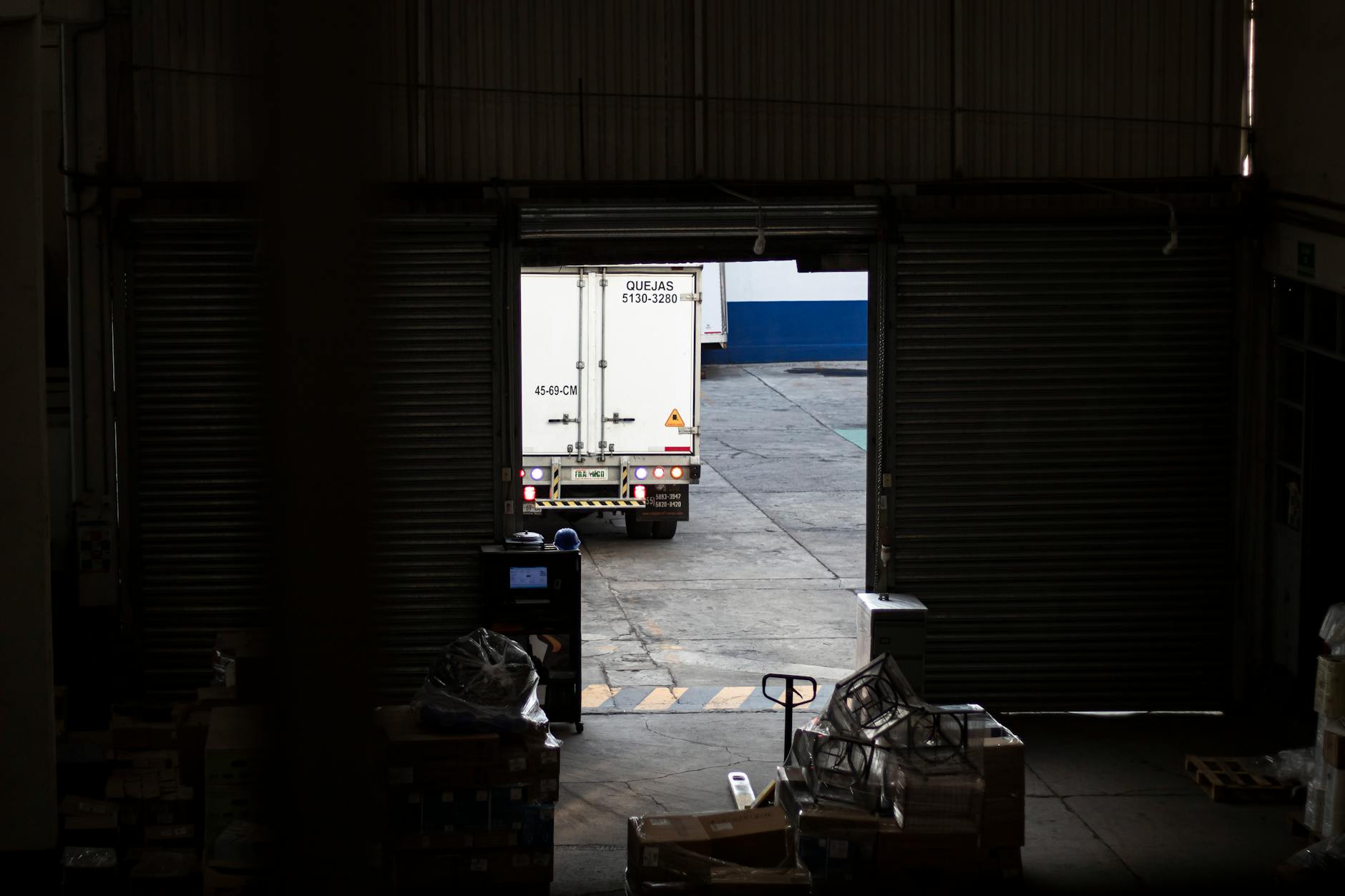
In a practical scenario, consider a cross-dock facility where inbound trailers are unloaded by robotic arms while conveyor systems sort packages by destination. SYM coordinates the rate at which packages flow onto each conveyor, prevents robots from blocking each other during pick operations, and instructs the system to pause inbound flow if storage staging areas fill up. This happens continuously and automatically without human intervention, responding to real-time conditions that change minute by minute.

Integration with Warehouse Management and Execution Systems
The relationship between SYM and the facility’s WMS is hierarchical but carefully bounded. The WMS generates high-level tasks (“move 50 units of SKU X from location A to staging area B”), and SYM breaks these into concrete robot movements and conveyor timing, handling all the real-time execution details. This separation allows WMS vendors and robotics vendors to innovate independently—a facility can upgrade its WMS without touching robot firmware, or add new robot models without redeploying the entire WMS.
However, this integration model requires careful API design and testing. A poorly designed interface between WMS and SYM can create latency bottlenecks where the WMS cannot generate tasks fast enough to keep robots fully utilized, or where SYM cannot report completion status quickly enough for the WMS to maintain accurate inventory. Facilities must commission integrations carefully and monitor for these coupling issues, as they can eliminate 20-30% of potential productivity gains.
Failure Modes and Safety Constraints in Real-Time Logistics Systems
One critical limitation: SYM cannot guarantee safe operation if the underlying hardware is miscalibrated or degraded. If a robot’s position sensor drifts by 5 centimeters but the motion planning system assumes 1-centimeter accuracy, SYM will continue generating movement commands that appear safe according to its internal model but are actually unsafe. Facilities must implement hardware validation procedures and sensor health monitoring as part of their operations, not delegating all safety logic to the software layer.
Recovery from partial failures also poses challenges. If a robot becomes unresponsive during a task, SYM must quickly reassign its work to other robots while ensuring that no duplicate work occurs. This requires careful state management and logging; if the logging system has latency or data loss, the facility may end up picking the same item twice or abandoning items in the system. Mission-critical facilities implement redundant logging infrastructure and regular consistency checks to catch these issues.

Scalability and Performance Across Facility Sizes
SYM’s performance characteristics are not linear with the number of robots. A facility running 50 robots might achieve 95% utilization, but adding 50 more robots does not simply double output—the overhead of inter-robot coordination and collision avoidance grows quadratically. A well-tuned deployment with 100 robots might achieve 80% utilization, a 20-point drop.
Facility designers must model these tradeoffs and sometimes choose to split a single large facility into multiple smaller systems rather than attempt to run all robots under one coordinator. For example, a regional logistics hub processing 500,000 packages daily might run two independent SYM instances—one managing the inbound sort line and another managing the outbound network. Each instance optimizes within its domain, and hand-off points between systems are coordinated at the facility management layer rather than attempting real-time coordination across 200+ robots in a single system.
Future Evolution and Emerging Capabilities
The next wave of logistics robotics operating systems will integrate machine learning for predictive task scheduling and anomaly detection. Rather than simply reacting to immediate bottlenecks, future systems will anticipate congestion patterns based on historical data and adjust robot routing and task priorities preemptively. This will require advances in real-time inference—running neural networks within strict latency bounds, which is an active area of research.
The industry is also moving toward greater standardization around operating system interfaces. Open standards for robot communication, similar to how the Linux kernel abstracted hardware for general computing, would lower barriers to entry for new robotics manufacturers and reduce integration costs. SYM and competing systems will increasingly compete on optimization quality, reliability, and ecosystem richness rather than on proprietary lock-in.
Conclusion
SYM and similar robotics operating systems represent a critical infrastructure layer for modern logistics, enabling facilities to coordinate diverse equipment at the speed required for high-volume commerce. They solve a genuine problem—the fragmentation and coordination challenges that emerge when you deploy hundreds of automated machines in a single facility—but they require careful integration, thoughtful capacity planning, and ongoing operational discipline to realize their benefits.
Facilities evaluating robotics operating systems should focus not on feature checklists but on three fundamentals: demonstrated reliability in similar-scale deployments, transparent performance characteristics and their hardware prerequisites, and the integrator ecosystem available to commission and maintain the system. The technology is mature enough to deliver real productivity gains, but it remains an infrastructure decision with substantial operational implications, not a plug-and-play upgrade.
Frequently Asked Questions
Can SYM work with robots from different manufacturers?
Yes, that’s a core design principle. SYM provides standard interfaces that allow robots from different vendors to operate together, though integration still requires engineering work to map each robot’s specific capabilities into the SYM framework.
What happens if the SYM system fails?
Facilities typically design for graceful degradation—robots can continue operating in safe local modes with limited functionality, allowing manual intervention or restart without emergency shutdown of the entire facility.
How is SYM different from a warehouse management system?
The WMS tracks inventory and generates work orders; SYM executes those orders in real-time by coordinating physical robots. The WMS operates on second or minute timescales, while SYM operates on millisecond timescales.
Can SYM be upgraded without stopping operations?
This depends on the specific facility setup. Some deployments support rolling updates where portions of the system restart sequentially, while others require facility-wide restarts. This is a critical design consideration when evaluating systems.
What are the hardware requirements for running SYM?
SYM requires dedicated computing hardware with real-time capabilities, typically specialized industrial computers with hard real-time kernels rather than standard IT infrastructure. The exact requirements depend on the number of robots and complexity of coordination.
How does SYM handle security and prevent unauthorized robot access?
Industrial robotics systems typically operate on isolated networks with physical access controls rather than relying on network security alone. SYM includes authentication and authorization mechanisms, but security is layered with facility-level controls.