
ARBE is an Israeli automotive sensor company that operates as a “picks and shovels” supplier for the autonomous vehicle industry, providing the foundational technology that autonomous vehicle developers depend on rather than competing with them as a full autonomous solution. The company specializes in 4D imaging radar technology, which creates a three-dimensional view of a vehicle’s surroundings while capturing velocity information in real time—the critical sensory system that allows autonomous systems to perceive and navigate their environment safely. Like the miners during a gold rush who profit by selling mining equipment to prospectors, ARBE profits by selling the essential sensor technology to the companies building self-driving vehicles, delivery robots, and industrial autonomous equipment.
The significance of ARBE’s approach lies in the fundamental physics of autonomous vehicle sensing. While camera systems struggle in poor weather and lidar systems can be expensive and create privacy concerns, ARBE’s 4D imaging radar penetrates fog, rain, and snow while maintaining a long detection range—making it particularly valuable for commercial autonomous vehicles that operate in diverse weather conditions. The company’s business model positions it in the supply chain between the component manufacturers and the vehicle integrators, capturing value from the critical sensing layer that every autonomous system requires.
Table of Contents
- Why Autonomous Vehicles Need Purpose-Built Radar Technology
- The Technology Behind 4D Imaging Radar
- ARBE’s Market Position in the Autonomous Vehicle Supply Chain
- How Autonomous Vehicle Developers Integrate ARBE Sensors
- The Limitations and Challenges of 4D Radar Technology
- Commercialization Challenges and Production Scaling
- The Future of Radar in Autonomous Mobility
- Conclusion
- Frequently Asked Questions
Why Autonomous Vehicles Need Purpose-Built Radar Technology
The autonomous vehicle industry faces a fundamental hardware challenge: existing automotive radar was designed for collision avoidance at highway speeds, not for the complex environmental perception that fully autonomous systems require. Standard radar produces a sparse, two-dimensional image of the surrounding environment with limited angular resolution, making it difficult for autonomous systems to reliably detect and classify obstacles, particularly at lower speeds where commercial autonomous vehicles often operate. ARBE’s 4D radar solves this by using advanced signal processing to create high-resolution, three-dimensional images that include velocity information, essentially giving autonomous systems a much clearer “view” of their environment than traditional radar could provide. The competitive advantage of this approach becomes apparent when comparing different sensor modalities.
A camera system can identify objects with high accuracy in clear daylight but becomes unreliable in rain or fog. Lidar creates exceptionally detailed 3D images but at a cost of $5,000 to $15,000 per unit and has been criticized for privacy concerns. Radar historically offered robustness but poor image quality. ARBE’s 4D radar combines the robustness of radar with the image clarity previously associated with lidar, while remaining significantly cheaper than lidar systems. A robotaxi company considering sensor options might choose ARBE’s radar as a primary sensor to reduce cost, with lidar as a secondary sensor for redundancy, rather than relying on lidar alone.

The Technology Behind 4D Imaging Radar
arbe‘s 4D imaging radar technology relies on MIMO (multiple-input multiple-output) antenna arrays and sophisticated signal processing algorithms to achieve its higher resolution. The system transmits microwave signals that bounce off objects in the environment and analyzes the returning signals across multiple dimensions: x-position, y-position, altitude, and velocity. The processing power required to convert raw radar data into usable 3D images is substantial, which is why ARBE has invested heavily in proprietary software and algorithms rather than simply scaling up traditional radar hardware. However, integrating 4D radar into autonomous vehicle systems presents genuine technical challenges that the industry is still working through.
The radar’s performance can degrade in certain edge cases—for example, when multiple radar units operate in close proximity, they can interfere with each other’s signals, requiring careful frequency coordination. Additionally, radar reflection can behave unpredictably with certain materials and angles, creating “blind spots” that require compensation through sensor fusion with cameras and lidar. An autonomous delivery startup might deploy ARBE’s radar as a primary sensor but discover that their algorithm needed retraining to handle the specific false-positive patterns that their local environment generates, requiring engineering resources they didn’t initially budget for. This means ARBE’s technology is not a drop-in replacement for other sensors but rather a component that requires careful system-level integration.
ARBE’s Market Position in the Autonomous Vehicle Supply Chain
ARBE operates in a crowded market alongside other automotive sensor suppliers like Continental, Bosch, and Valeo, who have deep relationships with established automotive manufacturers and massive capital resources. However, ARBE has focused on the emerging autonomous vehicle and robotics market where established suppliers have been slower to innovate, competing instead on traditional automotive radar rather than 4D imaging. The company has secured partnerships with companies like Baidu for autonomous driving development and has been involved in various autonomous vehicle projects, positioning itself as the specialized supplier for companies willing to adopt new sensor technology.
The comparison between ARBE and competing approaches reveals important tradeoffs. A large established automotive supplier like Bosch has the manufacturing scale and quality certifications to serve traditional automotive markets, but their engineering focus has historically been on incremental improvements to existing radar technology. ARBE, as a newer company, brings innovation in 4D imaging but lacks the historical certifications and production scale that automotive OEMs traditionally demand. This means ARBE’s primary market has been autonomous vehicle startups and tier-one robotics companies rather than the legacy automotive manufacturers—a strategic position that limits market size but reduces competition from much larger companies.
How Autonomous Vehicle Developers Integrate ARBE Sensors
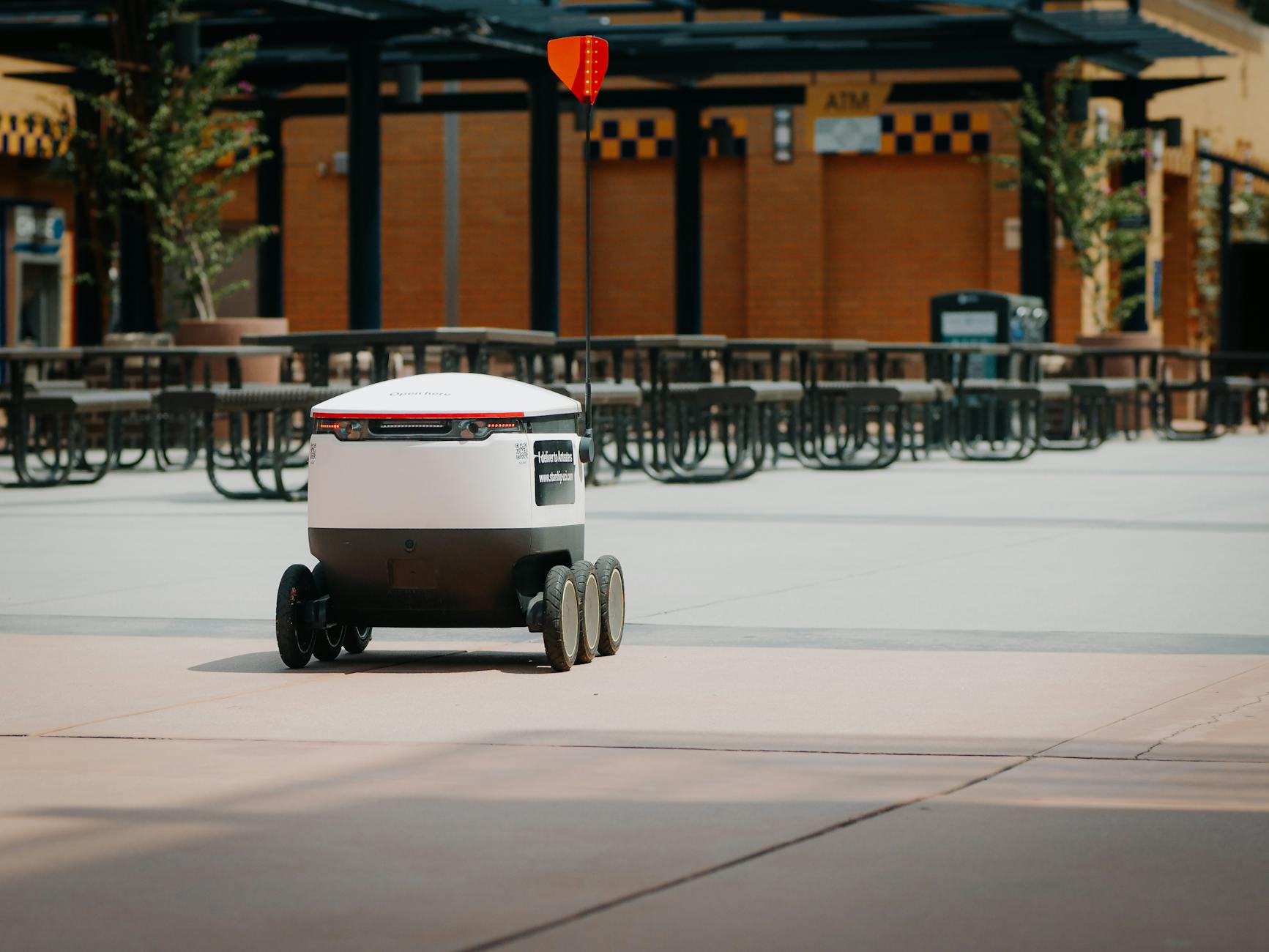
Integration of ARBE’s sensors into an autonomous vehicle platform requires more than simply mounting hardware. The vehicle’s perception pipeline must be redesigned to process and interpret 4D radar data, a task that demands sophisticated software engineering and machine learning expertise. Autonomous vehicle teams need to collect training data specific to their operating environment, train neural networks to interpret the radar’s output, and validate that their systems perform safely across diverse weather and lighting conditions. A delivery robot company might spend six months of engineering work adapting ARBE’s sensor to their specific platform and operational domain.
The practical advantage of ARBE’s approach becomes apparent in real-world testing. A vehicle equipped with ARBE’s radar can continue operating and perceiving its environment during heavy rain or fog where a camera-only system would degrade and a single-lidar system might create dangerous blind spots. However, this advantage comes with the tradeoff of greater system complexity. The autonomous vehicle team must validate not only the radar hardware itself but also the software integration, which means longer development cycles and higher engineering costs. A company deploying autonomous vehicles in northern climates with frequent snow and fog conditions might find ARBE’s all-weather capability worth the integration investment, while a company operating primarily in clear-weather urban environments might find the added complexity unnecessary.
The Limitations and Challenges of 4D Radar Technology
While 4D radar addresses many limitations of traditional sensors, it introduces its own set of constraints that developers must understand. Radar creates images through signal reflection, which means different materials reflect microwave signals differently—the effectiveness against a stationary metal surface is very different from effectiveness against a cloth or foam material. This can create classification errors where the system misidentifies objects or fails to detect materials that don’t reflect radar well. Additionally, radar operates at a relatively short range compared to lidar, typically effective to around 100-150 meters, which is adequate for urban autonomous vehicle speeds but may be limiting for highway applications where longer detection range is valuable.
The weather advantage of radar comes with a hidden limitation: heavy precipitation itself can create false signals and reflections. Radar waves scatter off water droplets in the air during extreme rain or snow, creating noise in the sensor data that the system must distinguish from actual objects. In extremely adverse conditions, even 4D radar performance degrades, which is why autonomous vehicle designers typically use sensor fusion—combining 4D radar with lidar and cameras to ensure robust perception. A developer relying on 4D radar as their primary sensor without adequate redundancy could face unexpected failures in extreme weather, making multi-sensor systems a practical necessity despite the added cost and complexity. This means the marketing narrative of 4D radar as the sole solution for all-weather autonomous driving is overstated—comprehensive autonomous systems still require backup sensors and carefully designed safety protocols.

Commercialization Challenges and Production Scaling
Taking a sensor technology from successful lab demonstrations to mass manufacturing at automotive scale requires solving problems far beyond the technical performance of the sensor itself. ARBE must achieve the quality certifications required by automotive manufacturers, establish manufacturing partnerships or build production capacity, and demonstrate reliability across millions of units. The company also faces competitive pressure from well-capitalized competitors who are investing in 4D radar and other advanced sensing technologies. Bringing a new sensor to production typically requires $50 million to $200 million in capital, which has shaped ARBE’s growth trajectory and partnership strategy.
The path to profitability for sensor suppliers in autonomous vehicles is unproven territory. Unlike traditional automotive suppliers that sell components to established OEMs on multi-year contracts, ARBE operates in a market where most of its potential customers (autonomous vehicle startups) are not yet profitable themselves. If the autonomous vehicle industry faces a broader market downturn—as it did in 2022-2023 when investment funding dried up—suppliers like ARBE face challenges because their customers have no revenue and limited working capital to purchase components. This market risk has required ARBE to diversify beyond passenger autonomous vehicles into robotics and industrial applications, where demand patterns are less dependent on venture funding cycles.
The Future of Radar in Autonomous Mobility
The role of 4D imaging radar in the future autonomous vehicle architecture remains uncertain. Some industry researchers believe that advances in lidar technology will eventually reduce costs to the point where 4D radar becomes less necessary, while others contend that the fundamental physics advantages of radar ensure its role in any comprehensive autonomous system. The industry trend toward multi-sensor fusion suggests a middle path—autonomous vehicles of the coming decade will likely use multiple sensor types simultaneously, with radar playing a supporting role rather than being the dominant sensor.
Emerging applications beyond passenger autonomous vehicles may prove more important for companies like ARBE’s growth trajectory. Industrial robotics, agricultural equipment, mining vehicles, and port automation applications all operate in environments where weather robustness matters but where the stringent safety requirements of passenger vehicles don’t apply. These applications have shorter development cycles and faster commercialization paths, suggesting that the autonomous vehicle sensor supply chain may evolve into specialized companies serving specific industries rather than generalist sensor suppliers serving all autonomous mobility applications.
Conclusion
ARBE represents a specific approach to the autonomous vehicle supply chain: developing highly specialized sensor technology for a niche market that values its particular performance characteristics. The company’s 4D imaging radar technology addresses real technical limitations of existing sensor modalities, particularly the challenge of all-weather perception in adverse conditions. However, the technology is not a complete solution independent of other sensors and integration challenges, and the company faces both technical obstacles and market risks that are common to suppliers operating in the emerging autonomous vehicle industry.
For autonomous vehicle developers and robotics companies evaluating sensor technologies, ARBE’s 4D radar warrants serious consideration, particularly for applications that operate in diverse weather conditions or require cost-effective 3D perception capabilities. Understanding the technology’s actual capabilities—and its real limitations in edge cases and integration complexity—is essential for making procurement decisions. The company’s long-term viability depends not only on technical performance but on the broader commercialization trajectory of autonomous vehicles and the willingness of that industry to invest in specialized sensor infrastructure for their platforms.
Frequently Asked Questions
How does ARBE’s 4D radar compare to lidar for autonomous vehicle applications?
ARBE’s 4D radar provides better all-weather performance and lower cost than most lidar systems, but typically with shorter detection range and lower spatial resolution. Lidar excels in clear conditions with exceptional 3D imaging detail. Most autonomous vehicle designers consider them complementary technologies rather than direct replacements for each other.
What is the “picks and shovels” business model in autonomous vehicles?
The metaphor refers to supplying the tools that autonomous vehicle developers use to build their systems, rather than building the vehicles themselves. ARBE supplies sensors; other picks-and-shovels companies supply compute platforms, operating system software, or simulation tools—capturing value from the enabling infrastructure rather than the finished product.
Can ARBE’s radar alone handle all perception needs for an autonomous vehicle?
No. While 4D radar is a powerful perception tool, comprehensive autonomous vehicles require sensor fusion with cameras and lidar for safety-critical applications. Radar handles certain scenarios exceptionally well, but other scenarios require visual information or lidar’s detailed 3D imaging that radar cannot provide alone.
What are the main technical challenges in integrating ARBE sensors into a vehicle platform?
Integration requires developing perception algorithms specifically trained on radar data, collecting training datasets from the target operating environment, validating performance in diverse weather conditions, and managing interference when multiple radars operate in proximity. This typically represents 6-12 months of engineering work for a new platform.
How does weather affect ARBE’s 4D radar performance?
The radar’s all-weather advantage is real but not unlimited. Heavy rain and snow create signal scatter that generates false detections. Extreme conditions can degrade performance significantly, which is why redundant sensors remain essential rather than radar being a replacement for all-weather autonomy.
What market opportunities exist beyond autonomous passenger vehicles?
Agricultural equipment, port automation, industrial robotics, mining vehicles, and last-mile delivery platforms all represent growth opportunities that may develop faster than passenger autonomous vehicles due to different regulatory requirements and faster commercialization timelines.