
Yes, Zebra Technologies (ZBRA) is quietly dominating the artificial intelligence and automation space much like Nvidia dominates AI chips—but in the physical, industrial world. While Nvidia powers the computational infrastructure behind AI, Zebra powers the visibility and intelligence across supply chains, warehouses, manufacturing floors, and logistics networks. The comparison isn’t hyperbole: Zebra’s Asset Intelligence & Tracking segment grew 29 percent year-over-year in 2024, reaching $448 million in quarterly revenue, driven by enterprises’ urgent need to automate workflows, track assets in real-time, and make intelligent operational decisions. Over 80 percent of Fortune 500 companies rely on Zebra’s solutions, making the company indispensable infrastructure for industries that cannot afford visibility gaps or operational friction.
The parallel to Nvidia extends beyond growth rates. Just as companies cannot build modern AI systems without Nvidia’s chips, enterprises cannot execute intelligent operations at scale without Zebra’s integrated suite of mobile computing, machine vision, tracking, and workflow automation tools. When a major retailer needs to optimize inventory across thousands of stores, when an automotive manufacturer must track components through production, or when a logistics provider must route packages with split-second decisions, they turn to Zebra. The market is giving Zebra a valuation and analyst consensus that reflects this position: a Moderate Buy rating with average price targets between $334 and $345 per share, indicating confidence in sustained growth even as the broader technology sector navigates uncertainty.
Table of Contents
- How Zebra Became the Invisible Backbone of Global Enterprise Operations
- The Technological Moat Behind Zebra’s Market Dominance
- Strategic Acquisitions and the Push into Next-Generation Robotics
- The Nvidia Parallel: Comparing Market Dominance in Different Infrastructure Layers
- Financial Growth and the Question of Sustained Expansion
- Global Reach and the Network Effects of Dominance
- The Future of Intelligent Operations and Zebra’s Positioning
- Conclusion
How Zebra Became the Invisible Backbone of Global Enterprise Operations
Zebra’s dominance isn’t the result of consumer-facing marketing or overnight innovation. It’s built on three decades of solving the unglamorous but mission-critical problem: helping organizations see what they own, where it is, and what happens to it. The company started in barcodes and mobile devices, then evolved into a platform play—adding machine vision, real-time location systems, software, and artificial intelligence. This progression matters because each layer reinforced the others. A company using Zebra’s mobile devices generates data that feeds into Zebra’s analytics; that data informs machine vision solutions that optimize workflows; those optimized workflows generate more valuable data. The result is a sticky ecosystem where switching costs are prohibitively high.
The Fortune 500 adoption figure—over 80 percent—reveals the scale of this entrenchment. That’s not niche market dominance; that’s essential infrastructure. These companies use Zebra across manufacturing, retail, healthcare, logistics, and government sectors. A single large retailer might deploy tens of thousands of Zebra devices across stores and distribution centers. A hospital system might use Zebra’s solutions to track patient safety, medication, and equipment. A shipping company relies on Zebra’s real-time tracking to monitor packages and optimize routes. Each deployment creates institutional knowledge, integrations, and dependencies that make alternatives increasingly expensive to evaluate or implement.

The Technological Moat Behind Zebra’s Market Dominance
Zebra’s competitive advantage rests on an integrated technology stack that competitors struggle to replicate. The Asset Intelligence & Tracking segment—Zebra’s fastest-growing division—combines mobile computers, fixed readers, software platforms, and artificial intelligence to create what the company calls “intelligent operations.” Unlike point solutions that solve a single problem, Zebra’s ecosystem solves multiple problems in concert. A manufacturing operation using Zebra doesn’t just track parts; it uses machine vision to inspect them, mobile devices to route workers, software to optimize sequences, and AI to predict issues before they occur. This integration is harder to build than any single component and harder to replace once embedded in operations. However, this dominance comes with real limitations and risks worth acknowledging.
First, Zebra’s growth is tightly coupled to enterprise capital expenditure and technology investment cycles. When recessions hit or corporations freeze budgets, Zebra’s customers delay upgrades and new deployments. Second, the company faces emerging competition from cloud-native startups that can offer specialized solutions at lower price points for specific verticals. Third, Zebra’s business model—centered on hardware devices, infrastructure, and recurring software—faces margin pressure from manufacturing costs, supply chain disruptions, and tariff exposure. The company itself warned that Mexico and China import tariffs will create approximately $20 million in gross profit headwinds in 2025, a non-trivial impact on margins already pressured by growth investments.
Strategic Acquisitions and the Push into Next-Generation Robotics
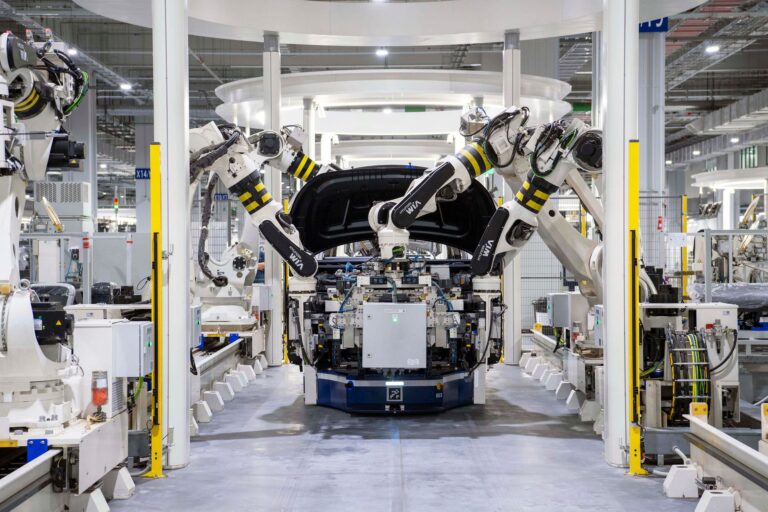
Zebra’s acquisition of Photoneo marks a significant strategic shift toward 3D machine vision and AI-driven automation for robotics and smart factories. Photoneo’s technology enables robots to see, understand, and manipulate objects with human-like dexterity—critical for tasks like picking and placing items in warehouses, sorting packages, or assembling products. For Zebra, the acquisition accomplishes two objectives: it deepens the company’s position in machine vision (where competitors like Cognex hold strong positions) and it positions Zebra as a platform provider for the emerging robotic automation wave. A warehouse operator deploying collaborative robots can now source the vision system, the mobile computing layer, the tracking infrastructure, and the workflow software from a single vendor—reducing integration complexity and increasing vendor lock-in. The Photoneo acquisition also signals confidence that Zebra’s installed base is ready to upgrade into higher-value automation solutions.
A company running manual picking operations with Zebra’s mobile devices might graduate to robotic picking with Photoneo’s vision systems. That progression increases customer lifetime value and deepens Zebra’s relationship with enterprise accounts. However, acquisitions carry execution risk. Photoneo’s technology must integrate smoothly with Zebra’s existing platforms, Photoneo’s customer base must be retained, and the team and culture must mesh. Integrating machine vision—a technically sophisticated, specialized field—into an enterprise infrastructure company is not trivial, and Zebra’s past acquisitions (like the Xplor acquisition for point-of-sale retail) have faced integration challenges.

The Nvidia Parallel: Comparing Market Dominance in Different Infrastructure Layers
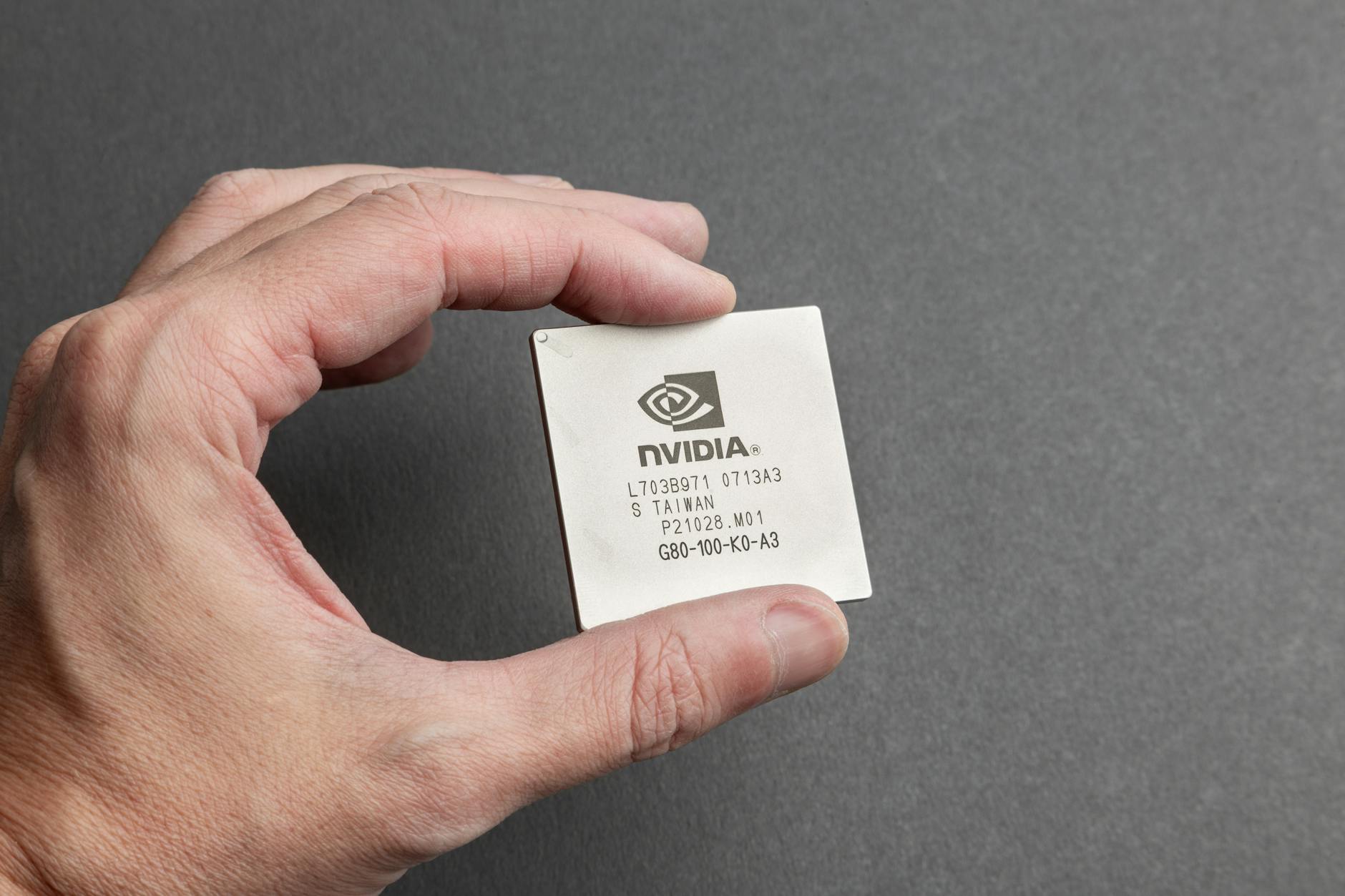
The comparison between Zebra and Nvidia illuminates both similarities and crucial differences. Both companies own essential infrastructure layers that enterprises cannot bypass. Nvidia owns the computational substrate for AI; Zebra owns the visibility and workflow substrate for physical operations. Both have built deep moats through switching costs and ecosystem lock-in. Both have benefited from macroeconomic waves—Nvidia from the AI boom, Zebra from automation and supply chain digitalization. Both command premium valuations because they serve growing, critical markets with limited alternatives.
But the markets differ fundamentally. Nvidia’s addressable market expands faster because AI adoption is still in early innings—almost every industry is racing to deploy machine learning. Zebra’s market is more mature; most Fortune 500 companies are already Zebra customers, so growth comes from deeper penetration, new use cases, and efficiency gains rather than market expansion. Additionally, Nvidia faces more competition—from AMD, Intel, and specialized chips for specific AI workloads. Zebra’s competitive landscape is more fragmented; it competes with point-solution vendors (Cognex in vision, Zebra’s mobile device competitors, custom automation firms) rather than an integrated alternative. This fragmentation is both a strength (no single competitor can displace Zebra entirely) and a limitation (continuous pressure from specialized alternatives). Investors betting on Zebra are betting that integrated platforms will win over best-of-breed point solutions, a thesis that has held for 20 years but is not guaranteed to hold forever.
Financial Growth and the Question of Sustained Expansion
Zebra’s financial performance in 2024 demonstrates the strength of current momentum. The Asset Intelligence & Tracking segment grew 29 percent year-over-year while consolidated organic net sales increased 31.6 percent, signaling broad-based demand rather than concentration in a single product line. These growth rates are impressive for a company Zebra’s size—$5 billion-plus in annual revenue—where single-digit growth would be respectable. For 2025, management guided to 3-7 percent net sales growth compared to 2024, with adjusted EBITDA margins between 21 and 22 percent. On the surface, this guidance looks conservative relative to 2024 performance, reflecting anticipated headwinds: tariff impacts, a tougher economic environment, and the inevitable deceleration that occurs when a company scales. The tariff warning deserves emphasis.
Approximately $20 million in gross profit impact from Mexico and China tariffs is material but manageable; it’s roughly 2-3 percent of quarterly revenue in the AIT segment. However, tariffs can cascade unpredictably. If the tariff environment worsens, if customers slow purchasing in anticipation of price increases, or if Zebra cannot pass tariff costs through to customers without losing volume, the margin guidance could prove optimistic. Additionally, Zebra’s guidance assumes economic conditions remain stable. A significant recession would likely compress enterprise technology spending and force Zebra to revise guidance downward. The analyst consensus—a Moderate Buy rating with price targets between $334 and $345—reflects this mixed outlook: confidence in the business but acknowledgment that growth will decelerate and risks are present.

Global Reach and the Network Effects of Dominance
Zebra operates in more than 100 countries and serves enterprises across every major industry vertical. This global presence creates powerful network effects. When Zebra develops a new feature—say, an AI-powered optimization engine for warehouse operations—the company can deploy it instantly to its entire customer base, gather performance data from thousands of real-world deployments, refine the algorithm, and redeploy improvements. A regional competitor or startup cannot match this learning velocity. Furthermore, Zebra’s global scale allows it to invest in R&D and sales infrastructure that smaller competitors cannot afford. The company can support customers in Tokyo, São Paulo, and Frankfurt simultaneously; it can hire specialized talent from anywhere; it can invest in emerging technologies without betting the company.
However, global reach also means global complexity. Operating in 100-plus countries requires navigating different regulatory regimes, tax systems, labor laws, and supply chains. Tariff changes in one region can cascade across operations. Currency fluctuations can impact margins. Political risk can disrupt business in key markets. Zebra’s international operations are a strength in normal times but a vulnerability when geopolitical stability frays. The company’s heavy exposure to China (both as a manufacturing hub and as a market) creates concentration risk that investors should monitor.
The Future of Intelligent Operations and Zebra’s Positioning
Zebra is positioning itself at the center of what the company calls “the era of intelligent operations”—a vision where organizations use real-time data, artificial intelligence, and automation to optimize every operational decision. This positioning is not merely marketing. The trends driving this vision are real: enterprises are drowning in data but starving for actionable intelligence; labor shortages are forcing automation; supply chain disruptions have made visibility a competitive advantage; and cloud computing and edge AI are making real-time analytics feasible at industrial scales. Zebra, as the largest vendor of real-time visibility and decision-making infrastructure, benefits from all of these trends. The question for investors is whether Zebra can maintain leadership as this market evolves.
The company’s next wave of growth likely depends on three factors: successful integration of Photoneo into the broader platform, penetration of robotic automation solutions into Zebra’s existing customer base, and expansion of artificial intelligence and software offerings (which carry higher margins than hardware). All three are achievable but not guaranteed. The competitive landscape is also shifting. Cloud giants like Amazon and Microsoft are building industrial operations solutions; specialized robotics companies are adding software; system integrators are bundling point solutions into pseudo-integrated platforms. None of these competitors has Zebra’s installed base, but the proliferation of alternatives suggests that Zebra’s dominance, while strong, is not immutable.
Conclusion
Zebra Technologies deserves comparison to Nvidia for its commanding position in industrial tracking, machine vision, and AI-driven automation. Like Nvidia, Zebra has built an essential infrastructure layer that enterprises depend on, created switching costs through ecosystem lock-in, and positioned itself to benefit from macroeconomic waves—in Zebra’s case, automation and supply chain digitalization. The 29 percent year-over-year growth in its fastest-growing segment, adoption across over 80 percent of Fortune 500 companies, and presence in more than 100 countries demonstrate the scale and stickiness of its business. However, the parallel to Nvidia has limits.
Zebra’s addressable market is more mature, its competitive landscape more fragmented, and its growth trajectory more likely to decelerate as the company scales. Tariff exposure, economic cyclicality, and execution risk around acquisitions like Photoneo present real hazards. For companies in manufacturing, logistics, retail, or healthcare, Zebra’s solutions are not optional—they are the foundation upon which intelligent operations are built. For investors, Zebra represents a proven platform with strong network effects and global scale, but one that must execute flawlessly to justify premium valuations and justify the “Nvidia of industrial tracking” comparison. Watching how the company integrates Photoneo, expands its AI capabilities, and navigates the 2025 tariff environment will determine whether Zebra’s dominance continues or begins to fragment under competitive pressure.