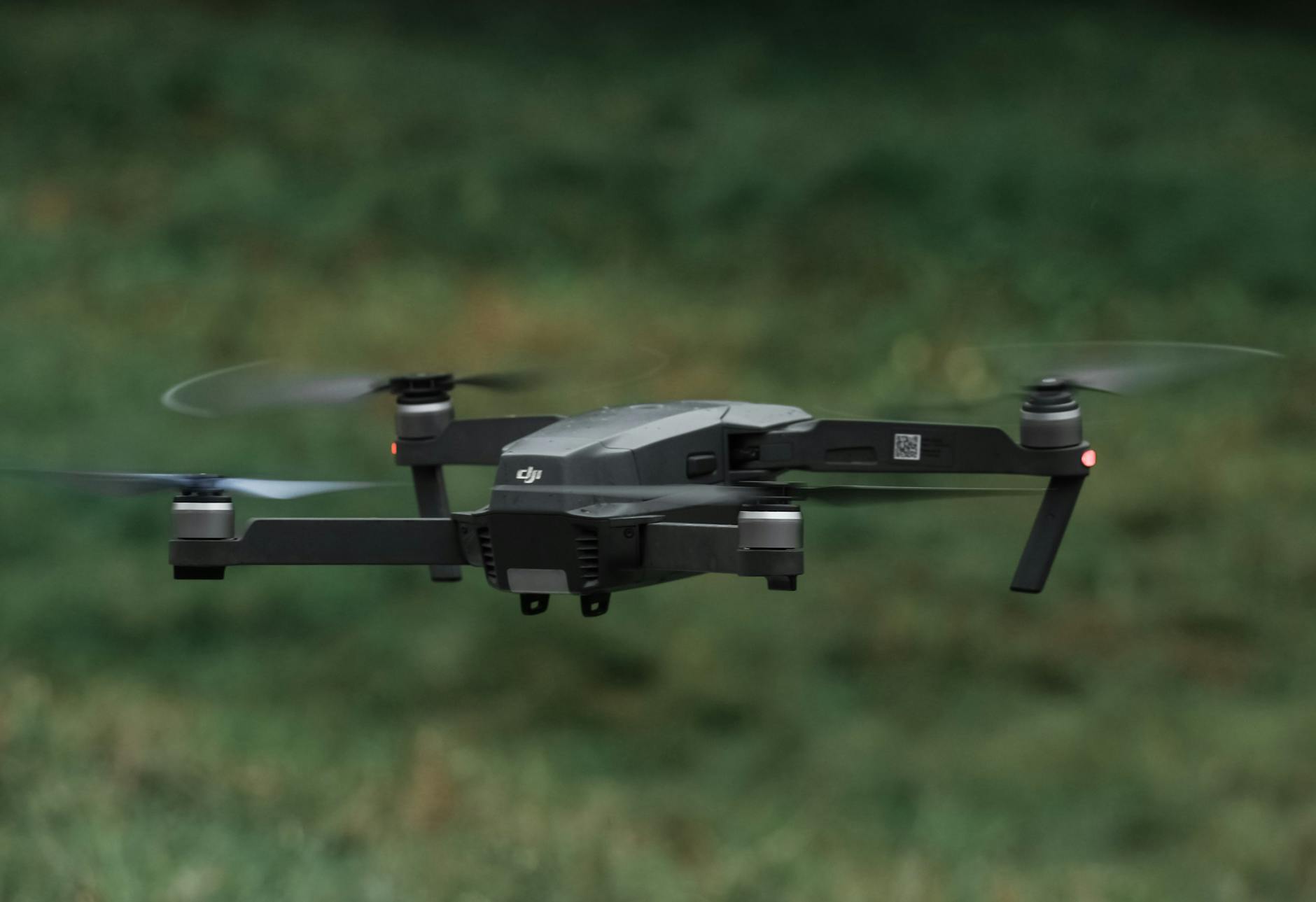

Guardforce AI Co., Limited (GFAI) is an AI-driven security and surveillance company trading on NASDAQ that has positioned itself at the intersection of robotics, intelligent surveillance, and managed security services. However, calling GFAI “the Nvidia of autonomous surveillance” requires significant qualification. While Nvidia dominates the computing infrastructure that powers AI systems globally, GFAI operates as an end-to-end solutions provider focused on deployed surveillance and security automation rather than as a foundational chip and platform vendor. The comparison captures the aspirational positioning of GFAI as a leader in autonomous systems, but the company’s actual market role and scale remain considerably smaller and more specialized. GFAI’s core business centers on deploying AI-powered surveillance cameras, robotic systems, and cloud-based intelligence platforms into retail, logistics, and cash management environments, primarily across the Asia-Pacific region.
The company operates through its Intelligent Cloud Platform (ICP) and a Robot-as-a-Service (RaaS) model, delivering sector-specific autonomous surveillance solutions rather than manufacturing the underlying processors or silicon that enable the technology. This operational model makes GFAI a vertical application player rather than an infrastructure heavyweight like Nvidia. As of April 2026, GFAI trades at approximately $0.53 to $0.89 per share following a recent 2.54% decline, with analysts maintaining a “Strong Buy” rating and a 12-month price target of $4.50. However, the company faces a Nasdaq compliance issue related to minimum bid prices, with a cure period deadline of June 10, 2026. These financial realities underscore that GFAI, while genuinely innovative in autonomous surveillance deployment, operates within different market dynamics and scale than semiconductor giants.
Table of Contents
- HOW DOES GFAI’S SURVEILLANCE TECHNOLOGY COMPARE TO NVIDIA’S MARKET POSITION?
- GFAI’S AUTONOMOUS SURVEILLANCE OPERATIONS AND TECHNOLOGY DEPLOYMENT
- GFAI’S ASIA-PACIFIC MARKET FOOTPRINT AND EXPANSION STRATEGY
- THE ROBOT-AS-A-SERVICE MODEL VERSUS TRADITIONAL SURVEILLANCE HARDWARE
- THE NASDAQ COMPLIANCE DEADLINE AND FINANCIAL PRESSURES
- GFAI’S INTELLIGENT CLOUD PLATFORM AND SECTOR-SPECIFIC CUSTOMIZATION
- THE BROADER AUTONOMOUS SURVEILLANCE MARKET AND GFAI’S TRAJECTORY
- Conclusion
HOW DOES GFAI’S SURVEILLANCE TECHNOLOGY COMPARE TO NVIDIA’S MARKET POSITION?
The Nvidia comparison, while compelling in ambition, conflates two distinct market layers. Nvidia provides the GPUs and tensor processors that power machine learning inference in autonomous surveillance systems—the fundamental computing layer. gfai, by contrast, builds the surveillance applications, camera systems, and cloud orchestration platforms that sit atop this infrastructure and sell directly to enterprises seeking automated security solutions. When GFAI deploys an AI camera in a retail store in Thailand, it relies on computing processors from suppliers like Nvidia or other vendors; it does not manufacture them. This makes GFAI a systems integrator and software company rather than an infrastructure provider.
The comparison gains some traction in the context of specialized surveillance silicon and edge AI deployment. Nvidia has pushed aggressively into autonomous systems through its NVIDIA Jetson platform and edge AI initiatives, competing directly in the kind of robotics and embedded intelligence that GFAI develops. In this narrower context, both companies are racing to own the autonomous surveillance and robotics application stack. However, Nvidia’s scale—with a market capitalization in the hundreds of billions—and its foundational position in AI computing infrastructure give it asymmetric advantages that GFAI simply does not possess. GFAI’s real opportunity lies in niche vertical expertise and regional market penetration rather than broader computational dominance.

GFAI’S AUTONOMOUS SURVEILLANCE OPERATIONS AND TECHNOLOGY DEPLOYMENT
GFAI operates an Intelligent Cloud Platform (ICP) that integrates data from multiple surveillance sources, applies machine learning models to detect anomalies and behavioral patterns, and automates responses through both software alerts and physical robotic systems. The company has recently expanded this offering into advanced AI cameras and inventory management technology, allowing retailers to monitor stock levels, detect theft, and optimize layouts autonomously. In 2026, GFAI announced an extension of its smart retail partnership with a global sportswear brand in Thailand, with plans to deploy five additional retail locations during the year and one more in 2027. This progressive deployment model shows the company testing and validating its technology at scale in real customer environments before broader rollout. The Robot-as-a-Service model is central to GFAI’s approach and represents a meaningful departure from traditional security hardware sales.
Rather than selling surveillance systems outright, GFAI leases autonomous robots and cloud services on a subscription basis, aligning its revenue with customer value extraction. This model has significant advantages for customers reducing capital expenditure and for GFAI ensuring recurring revenue. However, a critical limitation exists: the RaaS model depends on achieving sufficient scale and operational efficiency to turn profitable at large volumes. If deployment rates slow or operational costs per unit remain elevated, the financial model becomes strained. Early-stage surveillance automation companies have historically struggled to scale RaaS profitably due to logistics, maintenance, and support overhead.
GFAI’S ASIA-PACIFIC MARKET FOOTPRINT AND EXPANSION STRATEGY
GFAI’s current strength lies in its established presence across Asia-Pacific, where it has built relationships in retail, travel, and cash management sectors. The region’s rapid adoption of automation, rising labor costs, and regulatory pressure on loss prevention have created a receptive market for autonomous surveillance. The Thailand retail partnership exemplifies this regional strategy—a foothold in a specific market segment with a recognized international brand, serving as a reference customer for further expansion. The progressiveness of the deployment plan (5 locations in 2026, 1 in 2027) also suggests GFAI is managing scope and financial risk carefully, validating the technology and partnership before scaling aggressively.
The Asia-Pacific focus provides GFAI with both advantages and constraints. The region’s distinct regulatory environment, labor market conditions, and business practices mean solutions developed there may not directly translate to North American or European markets without significant adaptation. GFAI has not yet announced major deployments or partnerships in these larger developed markets, where margins are potentially higher but competition from established security firms and tech giants is more intense. Expanding beyond Asia-Pacific will require either acquiring regional expertise, forming strategic partnerships, or rebuilding trust and regulatory compliance from scratch in unfamiliar jurisdictions.

THE ROBOT-AS-A-SERVICE MODEL VERSUS TRADITIONAL SURVEILLANCE HARDWARE
GFAI’s RaaS approach contrasts with the traditional model where security integrators sell surveillance systems and charge for installation and support. In a traditional model, a customer purchases cameras, servers, storage, and management software upfront, taking on capital expense and operational risk. GFAI instead offers a leased service bundling hardware, software, cloud compute, and ongoing maintenance into a monthly fee. The customer benefits from predictability, reduced upfront capital, and the ability to scale up or down more flexibly. GFAI captures recurring revenue and a direct relationship with each deployment.
The tradeoff is operational complexity and capital intensity for GFAI. The company must manage logistics, field service, hardware maintenance, and cloud infrastructure for each deployed system globally. If a customer’s retail location closes or cancels the service, GFAI must retrieve and redeploy the hardware, absorbing the cost. In contrast, traditional hardware vendors bear no post-sale operational cost. GFAI’s path to profitability requires very high utilization rates and very low churn. The company’s 12-month price target of $4.50 from analysts suggests confidence in this model, yet the stock’s current trading near $0.53 reflects genuine doubts about execution and the time horizon to profitability.
THE NASDAQ COMPLIANCE DEADLINE AND FINANCIAL PRESSURES
GFAI faces a material deadline: Nasdaq notified the company in December 2025 that it did not meet the minimum $1.00 closing bid price requirement, imposing a 180-day cure period ending June 10, 2026. If the stock does not close above $1.00 for at least 10 consecutive trading days by that deadline, GFAI risks delisting from Nasdaq. While delisting does not directly indicate business failure—the company can continue operating and trading on over-the-counter markets—it substantially impacts liquidity, investor perception, and access to capital. A delisting would be a significant setback for a company that is simultaneously trying to expand internationally and scale revenue.
This compliance pressure underscores the real financial stress GFAI operates under. The gap between the current stock price and the 12-month analyst target of $4.50 represents either market skepticism about the timeline to profitability and revenue growth, broader investor caution about emerging robotics companies, or both. Investors must recognize that GFAI’s long-term success depends not only on technology quality but on achieving positive cash flow and demonstrating the scalability of its RaaS model within the next 12-18 months. The June 10, 2026 deadline is not merely a regulatory nuisance—it is a reminder of how fragile a startup’s financial position can be regardless of the quality of its technology.

GFAI’S INTELLIGENT CLOUD PLATFORM AND SECTOR-SPECIFIC CUSTOMIZATION
GFAI’s ICP serves as the operational core of its autonomous surveillance ecosystem, ingesting video streams from distributed cameras, running inference models to detect specific behaviors and objects, and triggering automated responses. The platform is designed to support sector-specific use cases: in retail, detecting inventory shrinkage and unusual customer behavior; in cash management, monitoring secure areas and tracking personnel; in travel, managing crowd flow and identifying security threats. This vertical specialization differentiates GFAI from generalized video analytics providers. A retail partner like the Thai sportswear brand can deploy GFAI’s system knowing it has been tuned for retail-specific threats and workflows, not adapted from a horizontal platform.
The limitation here is that sector specialization creates switching costs for customers but also locks GFAI into specific verticals. If retail autonomous surveillance becomes commoditized or competitive pressures compress margins, GFAI cannot easily pivot to other sectors without rearchitecting the platform. The company’s early focus on retail, travel, and logistics reflects rational market selection, but long-term growth may require either dominating these verticals or successfully expanding into new ones. The 2026 retail expansion in Thailand and planned 2027 deployment suggest GFAI is confident in its retail specialization, but the company has not yet announced major expansion into other sectors.
THE BROADER AUTONOMOUS SURVEILLANCE MARKET AND GFAI’S TRAJECTORY
The global autonomous surveillance and robotics market is expanding rapidly as organizations seek to reduce labor costs, improve security consistency, and extract value from video data through AI. Estimates suggest the market will grow at 15-25% annually over the next five years. This tailwind benefits GFAI but also attracts competition from larger security firms integrating AI capabilities, cloud providers building managed surveillance services, and other robotics startups. The question for GFAI is not whether the market will grow—it will—but whether GFAI can defend its position and capture meaningful market share before better-capitalized competitors move in.
GFAI’s realistic pathway to justifying the “Nvidia of autonomous surveillance” label is not to become a foundational infrastructure player like Nvidia itself, but to become the dominant vertical platform for autonomous surveillance in key markets, particularly Asia-Pacific and potentially spreading to other regions. This would mean GFAI’s technology and RaaS model become the standard that customers and integrators expect and build around. Achievement of that position would require proven profitability, substantial reductions in customer acquisition cost, and successful international expansion. The current stock price and compliance deadline suggest that critical transition is still to come.
Conclusion
GFAI is a genuine innovator in autonomous surveillance and robotics deployment, with real technology, real customer relationships, and real expansion plans. The company’s positioning as “the Nvidia of autonomous surveillance” is more aspiration than current reality—GFAI operates as a specialized systems integrator and RaaS provider rather than a foundational infrastructure vendor like Nvidia. The comparison is meaningful in highlighting GFAI’s ambitions to lead the autonomous surveillance market, but it should not obscure the company’s current scale, financial challenges, and execution risks.
For investors and industry observers, the next 12-18 months are critical for GFAI. The Nasdaq compliance deadline, the success of the retail expansion in Thailand, and the path to positive cash flow will determine whether the company emerges as a genuine market leader or remains a promising but niche player. The technology is sound and the market is real, but GFAI must prove it can scale profitably and defend its position against larger competitors entering the space. Watch for quarterly revenue growth, customer churn rates, and gross margin expansion as key indicators of whether GFAI’s RaaS model is working as intended.