
YASKY positions itself as a core motion systems provider by designing and manufacturing integrated motion control solutions that power industrial automation, robotics, and precision machinery. The company specializes in creating the foundational motion components—stepper motors, servo systems, motor controllers, and integrated motion platforms—that enable machines to perform repetitive tasks with accuracy and consistency. For example, a beverage bottling line relying on YASKY stepper motors and control systems can achieve throughput rates above 400 bottles per minute while maintaining micron-level positioning accuracy, which directly impacts both production efficiency and product quality.
The robotics and automation industry increasingly demands motion systems that go beyond simple motor-and-controller combinations. YASKY addresses this by bundling hardware, firmware, and software integration tools into cohesive solutions that reduce engineering time and system complexity for integrators. Rather than sourcing motors from one vendor, drivers from another, and then custom-writing control logic, manufacturers can purchase a pre-engineered motion ecosystem designed to work together from the start.
Table of Contents
- What Types of Motion Systems Does YASKY Provide?
- Integration Capabilities and System Complexity
- Real-World Applications Across Industries
- Cost, Performance, and Integration Tradeoffs
- Supply Chain and Long-Term Component Availability
- Software Ecosystem and Developer Experience
- Future Trajectory and Industry Evolution
- Conclusion
What Types of Motion Systems Does YASKY Provide?
yasky‘s product portfolio centers on stepper motor systems, brushless servo systems, and integrated motion controllers that serve different automation requirements. Stepper motors provide open-loop control suitable for applications where load variation is predictable—such as 3D printers, laser cutters, and CNC routers—where missing a step is rare and corrective action isn’t needed in real time. Conversely, brushless servo systems used in collaborative robots, automated guided vehicles, and industrial assembly lines deliver closed-loop feedback, enabling the system to detect and correct for unexpected load changes or positioning errors instantly.
The distinction matters in practice. A pick-and-place robot in a semiconductor assembly facility running YASKY brushless servos can detect if a component jams during placement and halt the motion within milliseconds, preventing product damage. The same task attempted with open-loop steppers could result in lost synchronization and misaligned placements, discovered only after the fact. YASKY positions its stepper offerings for cost-sensitive, moderate-accuracy applications, while its servo systems target high-reliability, high-speed environments where real-time feedback justifies the additional cost.

Integration Capabilities and System Complexity
YASKY’s competitive advantage extends beyond individual components into the software and control architecture that unifies them. The company provides motion control platforms that can orchestrate multiple motors, synchronize motion across multiple axes, and communicate with higher-level automation systems via standard industrial protocols like EtherCAT, PROFINET, or CANopen. This integration layer eliminates a common pain point: the weeks of custom firmware development that custom-integrators would otherwise need to synchronize a gantry motion system or a multi-axis robot.
However, deeper integration also introduces dependencies. A manufacturer fully committed to YASKY’s integrated platform gains efficiency and shortened development cycles, but becomes more reliant on YASKY’s roadmap for updates, compatibility with emerging standards, and long-term support. If YASKY discontinues a product line or shifts priorities, migrating to a competitor’s system can involve substantial re-engineering. Smaller integrators sometimes prefer a modular approach—combining best-in-class motors, drives, and controllers from different vendors—even if it requires more upfront integration work, because it avoids vendor lock-in and provides flexibility if one component becomes obsolete.
Real-World Applications Across Industries
YASKY motion systems appear across diverse applications, from textile manufacturing to food processing to electronics assembly. In textile mills, YASKY stepper motors control the precise winding and unwinding of fabric rolls, ensuring even tension and preventing tears or wrinkles that would waste material. In automated food packaging lines, YASKY systems coordinate the timing between product conveyors, fill heads, and wrapping mechanisms—a coordination failure could jam the entire line and cost thousands of dollars per minute in lost production.
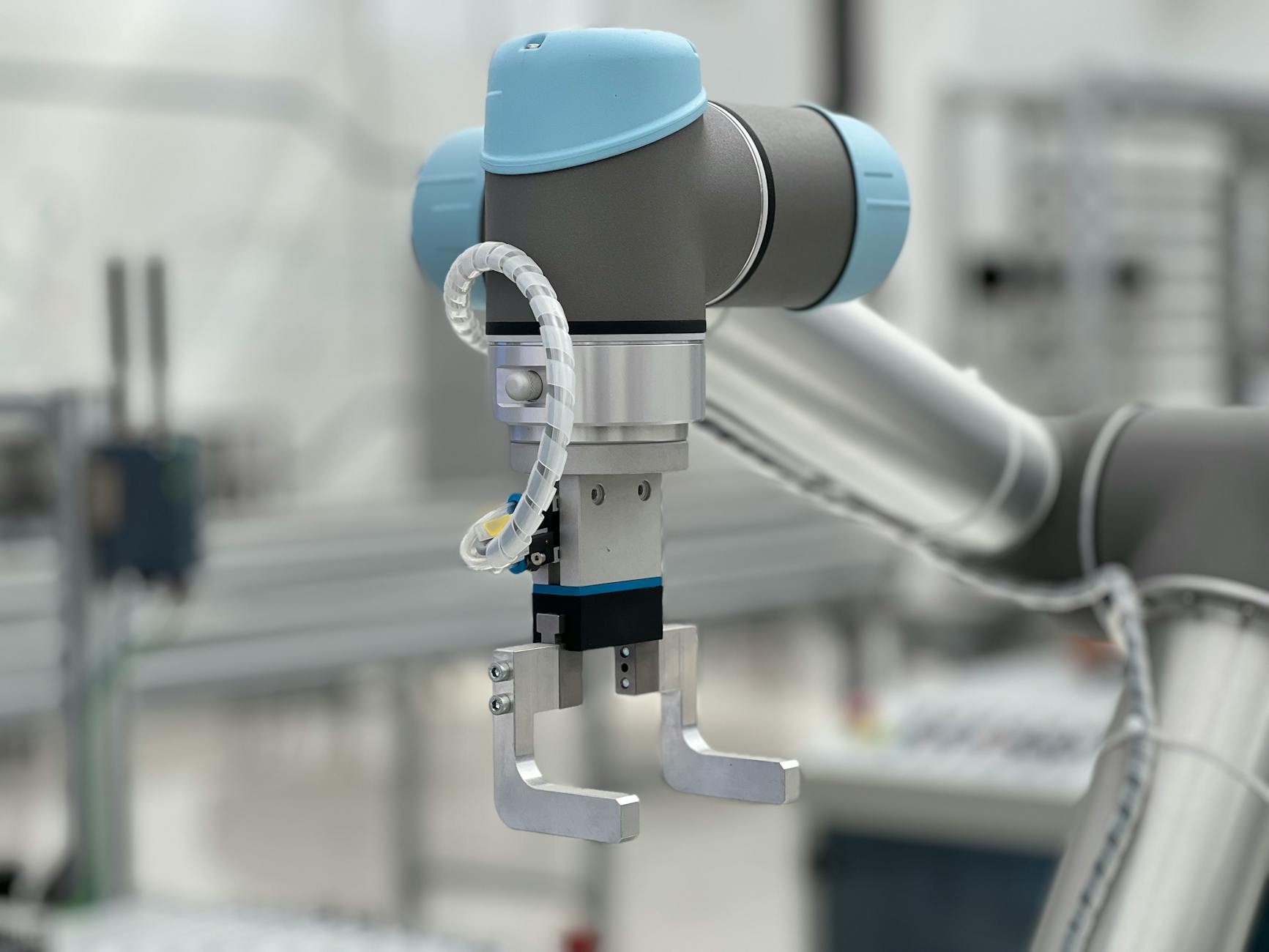
Collaborative robots (cobots) increasingly rely on motion systems similar to those YASKY manufactures, where smooth, predictable torque profiles and responsive braking are essential for safe human-robot interaction. When a cobot’s arm detects unexpected contact with a worker, it must decelerate within strict force limits; poor motion control would cause jerky movements that damage both safety credibility and product quality. YASKY’s emphasis on tuned feedback loops and integrated safety functions aligns well with cobot manufacturers’ requirements, positioning the company as a preferred supplier for this high-growth segment.
Cost, Performance, and Integration Tradeoffs
Choosing YASKY systems versus alternative motion providers involves clear tradeoffs. YASKY generally occupies the middle market: more sophisticated than low-cost commodity stepper packages available from Asian suppliers, but often at a lower per-unit cost than specialized motion systems from companies focused on high-precision aerospace or semiconductor applications. An integrator building ten assembly lines might choose YASKY to save engineering time and achieve acceptable accuracy; an integrator building one high-precision optical alignment system might invest in a specialized provider offering superior repeatability, even if the cost per axis is higher.
Integration effort represents another tradeoff. YASKY’s bundled approach reduces integration time by weeks if your application matches their standard use cases—conveyor synchronization, gantry motion, robotic arm control. If your application falls outside typical parameters—say, controlling motion through a complex series of conditional branches based on vision system feedback—you may find YASKY’s standard platform limiting and revert to custom integration regardless. The time savings are real but conditional on application fit.
Supply Chain and Long-Term Component Availability
Motion system integrators must consider component longevity. Automation equipment often runs for 10-20 years, and replacement parts become critical when hardware fails. YASKY, like other motion providers, periodically discontinues product lines as technology advances.
An integrator who designs equipment using a YASKY motor drive that enters end-of-life status might face challenges obtaining replacements five years later if the newer replacement isn’t backward-compatible. This isn’t unique to YASKY—it affects every motion systems provider—but it’s worth flagging as a risk. Integrators sometimes purchase spare components in bulk during a product’s lifecycle, or design interfaces flexible enough to swap in substitute components from other vendors if YASKY parts become unavailable. Additionally, YASKY’s supply chain exposure during global component shortages mirrors that of the broader industry; semiconductor lead times, rare-earth material availability for permanent-magnet motors, and logistics delays can all impact delivery schedules regardless of product quality.
Software Ecosystem and Developer Experience
YASKY provides software tools—often free or bundled—that reduce custom development. Configuration software allows integrators to set parameters without writing code, while application programming interfaces (APIs) and firmware source code enable deeper customization when needed.
For integrators with software engineers on staff, this balance between out-of-the-box convenience and custom flexibility is valuable. Consider an integrator developing a materials handling robot: using YASKY’s provided motion planning library, they can generate smooth trajectories in days rather than weeks. The same integrator might later need to interface YASKY motion outputs with vision-guided placement logic; having access to firmware APIs rather than being locked into a closed system enables this extension without abandoning their base platform.
Future Trajectory and Industry Evolution
The motion systems industry is shifting toward higher integration, artificial intelligence-driven optimization, and tighter safety certification. YASKY’s positioning as an integrator-friendly provider of configurable, software-forward motion systems aligns with these trends. Expect greater emphasis on connectivity—motion systems that log performance data, enable predictive maintenance, and communicate across factory networks.
YASKY’s existing software infrastructure positions the company well for these evolution but also faces competition from larger automation companies (Siemens, ABB) that bundle motion systems into broader platforms, and from emerging startups applying machine learning to motion optimization. For integrators, this evolution means that choosing a motion partner increasingly entails evaluating their long-term capability to evolve alongside industry standards, not just their current product performance. YASKY’s track record of frequent firmware updates and responsiveness to customer requests—areas where smaller, focused vendors often outpace larger incumbents—will likely prove as important as raw specifications.
Conclusion
YASKY’s role as a core motion systems provider reflects a specific market position: delivering integrated, software-configurable motion solutions that balance sophistication with accessibility. The company excels when applications align with its standard use cases—multi-axis coordination, predictable load profiles, standard industrial protocols—and when time-to-market matters more than squeezing every ounce of performance.
For integrators in food processing, textiles, assembly, and collaborative robotics, YASKY systems offer a practical path to reliable automation without extensive custom engineering. Moving forward, the decision to standardize on YASKY motion systems should factor in long-term support, integration flexibility, and application fit alongside price and performance. The motion systems market continues to consolidate and evolve, with increasing emphasis on data connectivity and AI-driven optimization; evaluating YASKY’s position on these dimensions ensures that today’s motion platform choice remains relevant to tomorrow’s manufacturing challenges.