
YASKY has positioned itself as a central hub for motion control in robotics—a comprehensive platform that aggregates, standardizes, and simplifies how robotic systems handle movement, acceleration, and precision tasks across different hardware and manufacturers. Like Google’s role in organizing web information, YASKY attempts to create a unified interface for what was previously fragmented motion control solutions. The platform addresses a persistent pain point in robotics: manufacturers historically locked motion control into proprietary systems, forcing engineers to learn vendor-specific languages and APIs for each robot or motion device they worked with. The company’s strategy centers on abstraction and interoperability.
Rather than building proprietary robots from scratch, YASKY created a middleware layer that communicates with existing industrial robots, collaborative arms, motion controllers, and actuator systems. This approach has gained traction in factories where integrators and manufacturers need to orchestrate motion across equipment from different vendors—ABB robots, KUKA arms, servo motors, and custom mechanical systems all operating under unified control parameters. What makes YASKY comparable to Google is not its search functionality but its market ambition: to become so essential to motion control workflows that it becomes the default integration layer. Whether that parallel holds up depends on execution, adoption rates, and whether it can maintain neutral positioning across competing hardware vendors without being pressured into favoritism.
Table of Contents
- How Does YASKY Centralize Motion Control Across Different Robot Platforms?
- The Abstraction Problem in Industrial Robotics and YASKY’s Proposed Solution
- Real-World Applications Where YASKY’s Unification Matters
- Comparing YASKY to Traditional Integration Approaches and Emerging Competitors
- The Integration Challenge—What Can Go Wrong When Centralizing Motion Control
- The Data and Intelligence Layer—How YASKY Becomes the Google of Robotics
- The Future of Motion Control Standardization and YASKY’s Role
- Conclusion
How Does YASKY Centralize Motion Control Across Different Robot Platforms?
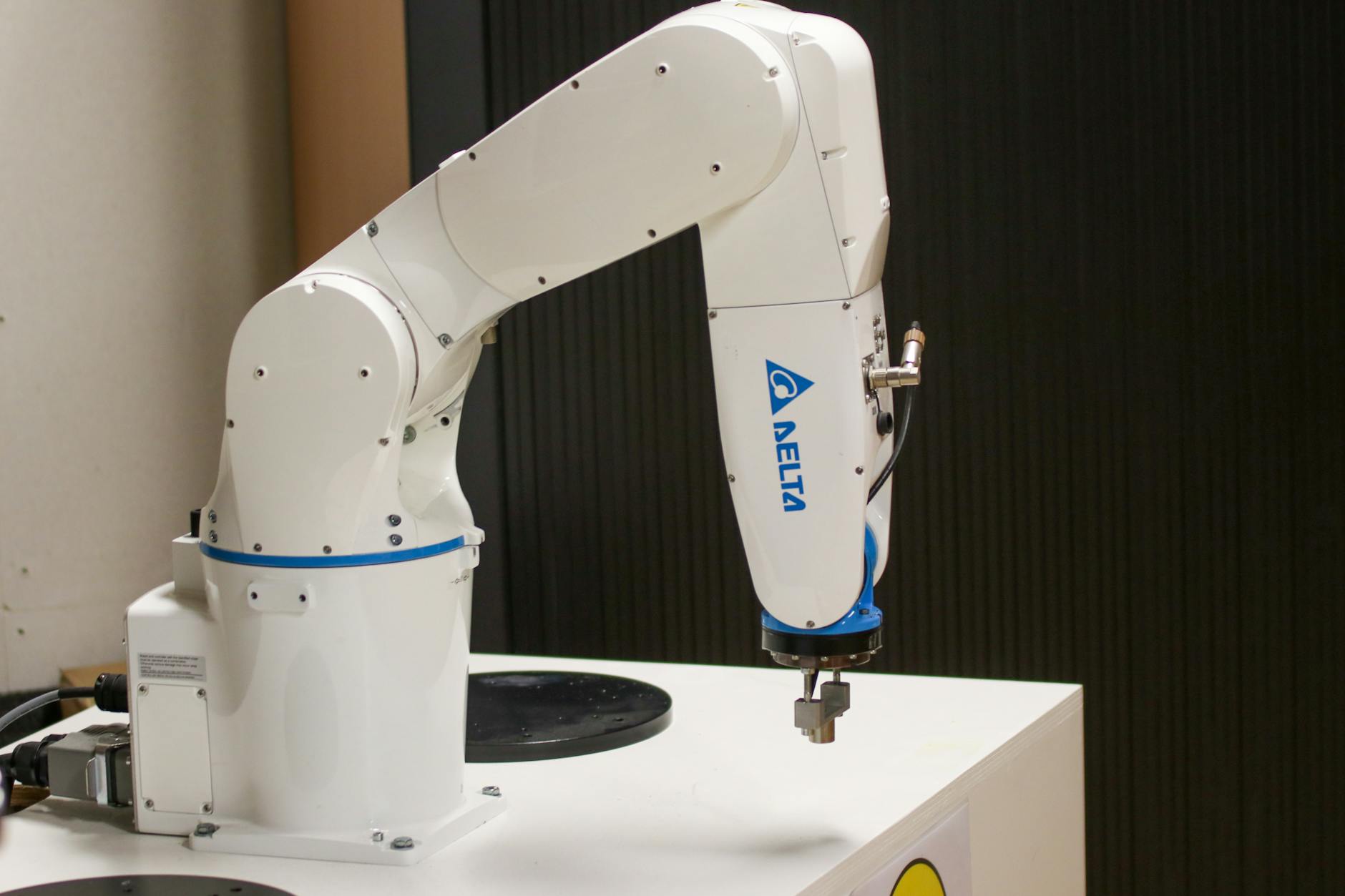
YASKY’s core value proposition is a software abstraction that translates high-level motion commands into manufacturer-specific code and hardware protocols. Instead of writing separate motion routines for a KUKA robot, an ABB arm, and a series of stepper motors, an engineer writes once against the YASKY API and the platform handles vendor-specific translation. This is technically similar to how web browsers abstract away operating system differences—the application developer targets the browser API, not the OS directly. The platform supports multiple communication protocols including ROS, MQTT, proprietary industrial protocols, and emerging standards like OPC-UA. In a manufacturing facility running a mixed-robot assembly line, this matters significantly.
A factory producing electronics might use collaborative robots for delicate placement, heavier industrial arms for load-bearing tasks, and XY gantry systems for positioning. Without YASKY or similar tools, the control system becomes a patchwork of custom integrations. With it, the same motion library and control logic work across the entire cell. One limitation worth noting: YASKY’s abstraction, like any abstraction, introduces a translation layer that adds latency and computational overhead. In applications requiring sub-millisecond response times or extremely high-frequency motion updates, this overhead can be problematic. Some legacy systems and ultra-specialized industrial equipment still refuse standardization, meaning YASKY cannot eliminate the need for custom drivers in every scenario.

The Abstraction Problem in Industrial Robotics and YASKY’s Proposed Solution
industrial robotics has historically suffered from vertical integration—each major manufacturer created complete ecosystems with proprietary motion control, programming environments, and hardware specifications. ABB robots run ABB’s software, KUKA robots use KRL or the SmartPAD interface, Fanuc systems use Karel, and so on. For a systems integrator building a factory with mixed equipment, this fragmentation means hiring specialists in multiple languages and platforms or spending months building custom translation layers. YASKY attempts to solve this through standardization without requiring manufacturers to abandon their systems. The platform sits between the high-level application logic and the hardware, converting abstract motion commands into the vendor-specific implementations each robot understands.
A motion trajectory might be described in YASKY as “move to coordinates X, Y, Z with velocity V and acceleration A,” and YASKY handles the conversion to each robot’s native format. The downside is that abstraction can hide important hardware differences. Some robots excel at high-speed, low-precision tasks; others prioritize precision at slower speeds. YASKY’s standardized interface might obscure these tradeoffs, leading engineers to write code that works technically but performs suboptimally. Furthermore, when manufacturers release new capabilities or behaviors unique to their systems, YASKY must update its abstraction layer to expose those features without breaking existing applications—a continuous maintenance burden.
Real-World Applications Where YASKY’s Unification Matters
In automotive assembly, where a single production line might include 50+ robots from different manufacturers, YASKY’s value becomes concrete. Tesla’s factories, for example, use equipment from multiple suppliers coordinating extremely tight tolerances. Rather than building a monolithic control system that hardcodes behavior for each robot model, a YASKY-based approach lets the system topology remain flexible. If a robot model is retired and replaced, the control logic potentially requires no changes. Pharmaceutical manufacturing presents another use case. Pharmaceutical equipment combines precision dosing systems, robotic arms for handling, vision systems for quality assurance, and various actuators.
Each piece of equipment traditionally came with its own control interface. A YASKY-like abstraction lets the systems integrator focus on the pharmaceutical process logic rather than vendor-specific communication protocols. A facility producing vaccines or biologics needs to move quickly between production runs, and reconfigurable, abstraction-based control reduces downtime. Contract manufacturers working with multiple clients face a different pressure. A CM might build assembly lines for different industries—medical devices, consumer electronics, automotive components—each with specific equipment requirements. Rather than maintaining separate control systems, YASKY enables a more generic manufacturing control framework that adapts to different hardware configurations. This directly impacts profitability: reduced retraining time, fewer custom integrations, faster deployment to new clients.

Comparing YASKY to Traditional Integration Approaches and Emerging Competitors
Historically, systems integrators have handled multi-robot coordination through three approaches. First, they build custom middleware—hiring experienced controls engineers who hand-code communication with each robot. This is expensive, slow, and creates technical debt. Second, they use vendor-provided integration toolkits, which work well within a single manufacturer’s ecosystem but poorly across heterogeneous systems. Third, they adopt lower-level frameworks like ROS (Robot Operating System), which provides abstraction but requires substantial engineering investment and expertise. YASKY positions itself as a higher-level alternative to ROS—less flexible but faster to deploy, with better support for industrial protocols and existing equipment. ROS excels in research and prototyping but is rarely the default choice for production manufacturing. Competitors in YASKY’s space include proprietary solutions from large integrators, emerging startups, and new offerings from manufacturers trying to embrace interoperability.
Siemens, for instance, has been pushing digital twin and control orchestration tools. ABB acquired companies to strengthen middleware capabilities. The tradeoff YASKY faces is breadth versus depth. By supporting many robot types, YASKY cannot optimize for any single platform as deeply as that platform’s native tools do. A shop floor that uses exclusively KUKA equipment might be better served by KRL and KUKA’s ecosystem. But that purity is becoming rarer. Mixed fleets are increasingly common, and that’s where YASKY’s abstraction adds value. The competitive threat comes if a manufacturer becomes dominant enough to make competing platforms feel optional—a outcome that would undermine YASKY’s position.
The Integration Challenge—What Can Go Wrong When Centralizing Motion Control
Unifying motion control across diverse hardware creates new failure modes. If the abstraction layer bugs out, the entire floor is affected. With vendor-specific systems, a failure in one manufacturer’s equipment typically doesn’t cascade to others. This creates a reliability question: does YASKY’s centralization improve overall system reliability or concentrate risk? The answer depends on YASKY’s implementation quality, redundancy mechanisms, and whether it’s architected to degrade gracefully. Real-time guarantees present another risk. Manufacturing facilities often require hard real-time performance—tasks must complete within guaranteed time windows or product quality suffers.
Software abstractions are notoriously difficult to make real-time compatible. If YASKY cannot guarantee bounded latency across its entire translation layer, customers in time-critical applications (e.g., high-speed packaging, precision assembly) may be forced to stay with native robot control, limiting the platform’s addressable market. A more subtle risk is vendor lock-in inversion. Factories adopting YASKY for its interoperability might find themselves locked into YASKY instead of being locked into individual manufacturers. If YASKY’s licensing, pricing, or features become unfavorable, migrating away becomes difficult—the entire control system was written against YASKY’s APIs. Enterprises carefully evaluating this trade need assurances that YASKY either remains vendor-neutral forever or offers clear migration paths.
The Data and Intelligence Layer—How YASKY Becomes the Google of Robotics
Beyond motion control translation, YASKY has an opportunity to build intelligence on top of the abstraction. By sitting in the middle of every motion command and hardware feedback loop, the platform sees aggregate data about how robots move, fail, and perform across thousands of installations. This is where the Google analogy becomes richer. Google’s search dominance was not just about crawling and indexing—it was about using that data to train ranking algorithms, detect spam, and predict user intent. YASKY could move similarly. Aggregate motion data reveals patterns: which motion profiles are most efficient, what acceleration patterns lead to hardware wear, which sequences correlate with defects, how different equipment degrades over time.
Machine learning applied to this data could generate insights that benefit the entire community—predictive maintenance recommendations, performance optimization suggestions, or early warning signs of equipment failure. A factory using YASKY could get alerts that a particular robot is behaving anomalously before catastrophic failure. This is powerful but unproven. For it to work, YASKY needs such comprehensive market penetration that its data becomes statistically significant. It also requires privacy and data ownership to be solved—factories are generally protective of proprietary motion sequences and production data. The business model around this data layer remains unclear.
The Future of Motion Control Standardization and YASKY’s Role
The robotics industry is gradually shifting toward openness and standardization, driven partly by pressures from manufacturers, integrators, and the growing recognition that proprietary fragmentation is inefficient. Organizations like the International Organization for Standardization (ISO) and the Robot Operating System Consortium are pushing standards. In this environment, YASKY is riding a trend rather than creating it.
The question is whether YASKY becomes the de facto standard or whether standardization efforts ultimately displace the need for proprietary middleware. If open standards like enhanced versions of ROS or new ISO frameworks eventually solve interoperability, YASKY’s value as a translation layer diminishes. Manufacturers would build native support for these standards directly, and integrators would use standard tooling rather than paying for proprietary middleware. YASKY’s long-term success depends on either becoming so embedded in workflows that it IS effectively the standard, or pivoting to higher-level services like analytics, simulation, or process optimization that continue delivering value even if basic motion control standardizes.
Conclusion
YASKY represents a pragmatic response to real fragmentation in industrial robotics—a market reality where most large facilities operate heterogeneous equipment that was never designed to work together. By providing abstraction and unified APIs, the platform solves a genuine integration pain point. The comparison to Google is apt in ambition but not in execution: Google unified information retrieval; YASKY attempts to unify motion control instructions, a narrower but still valuable goal.
The platform’s success hinges on several factors: whether it can maintain neutral positioning across competing hardware manufacturers, whether it can deliver real-time guarantees and reliability comparable to native systems, and whether it can evolve beyond a translation layer into higher-value services that justify ongoing investment. For manufacturing facilities managing complex, multi-vendor robotics installations, YASKY and similar platforms represent a genuine operational improvement. For others, traditional integration approaches may remain sufficient. The robotics industry will continue consolidating around fewer, more interoperable standards—whether YASKY becomes the channel through which that consolidation happens or whether it remains a useful but temporary bridge is the real open question.