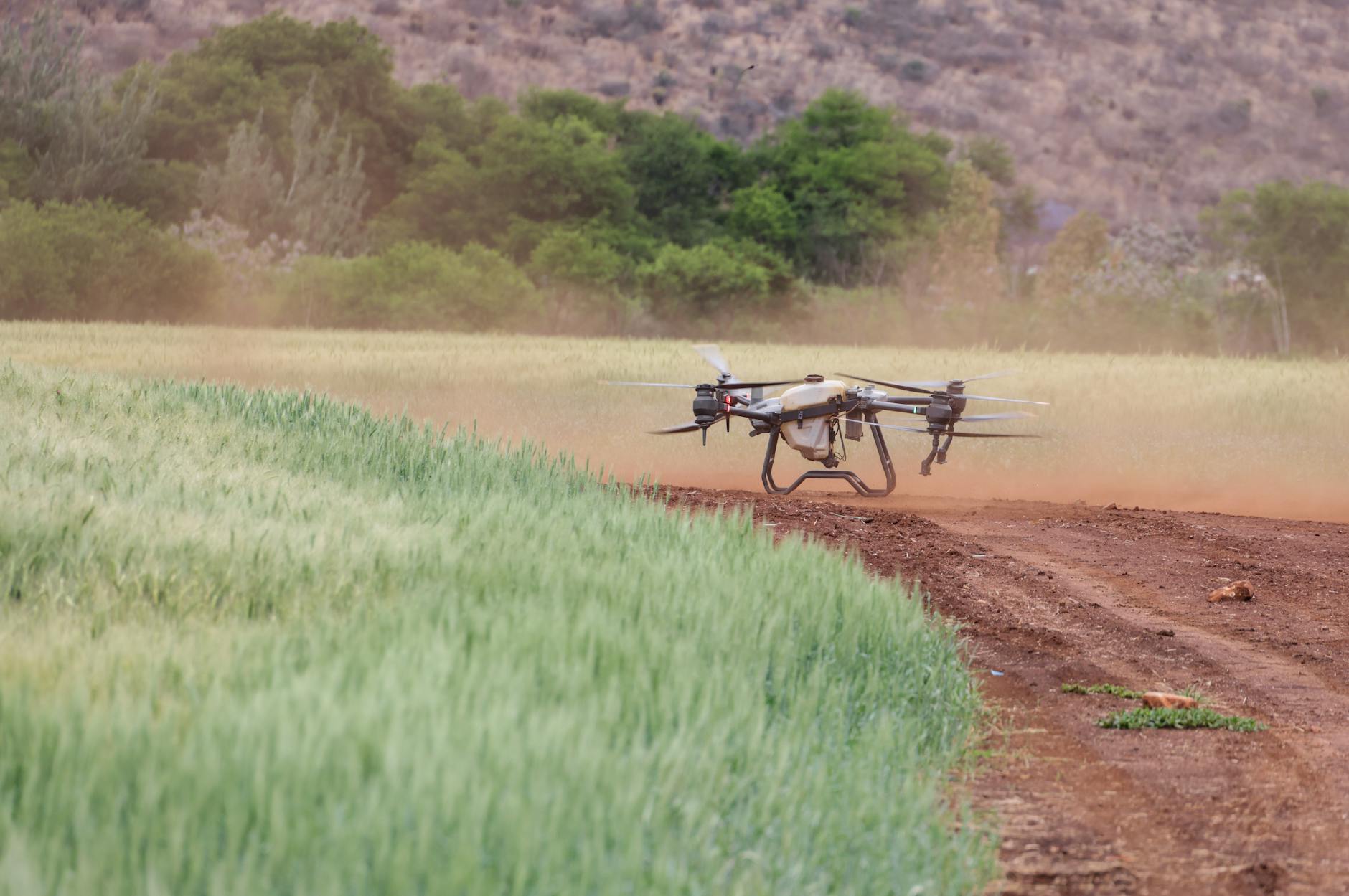

UAVS, the ticker symbol for AgEagle Aerial Systems, Inc. (trading as EagleNXT), is often compared to Tesla in agricultural robotics circles—but not because of celebrity founders or viral marketing. The comparison centers on disruption: the company is fundamentally changing how farmers collect crop data and how military and commercial operations deploy uncrewed systems at scale. Founded in Wichita, Kansas, and now headquartered as EagleNXT, the company has positioned itself at the intersection of drone hardware, multispectral sensors, and software-as-a-service platforms. However, calling UAVS “the Tesla of crop robotics” requires understanding what that actually means in practice.
The Tesla parallel holds in one specific way: UAVS is attempting to reshape an entire workflow rather than simply selling equipment. Like Tesla’s approach to electric vehicles, EagleNXT combines hardware (fixed-wing drones), sensors (multispectral imaging), and software (SaaS platforms) into an integrated system. In April 2026, the company demonstrated this integration when it delivered nine eBee VISION ISR UAS kits to the U.S. Army National Training Center at Fort Irwin—compact 4.1-pound fixed-wing drones that can be deployed by a single operator in under three minutes and operate beyond visual line of sight. These weren’t just drones being sold; they represented the company’s full ecosystem in action. Yet the comparison also breaks down: Tesla faced a market hungry for electric cars, while UAVS operates in a fragmented agricultural and defense sector with lower margins, fierce competition, and significant regulatory hurdles that have nothing to do with innovation.
Table of Contents
- How UAVS Disrupted Conventional Agricultural Surveillance
- The Technical Architecture Behind Agricultural Precision
- Military Adoption as Validation and Roadmap
- The Software-as-a-Service Model and Ecosystem Lock-in
- The Investment Reality and Compliance Challenges
- Strategic Investments and Diversification
- The Broader Context of Precision Agriculture and Technology Adoption
- Conclusion
How UAVS Disrupted Conventional Agricultural Surveillance
The conventional approach to crop monitoring involved hiring aerial surveys, purchasing expensive satellite imagery, or flying manned aircraft—each option slow, expensive, and inflexible. uavs entered a market where farmers needed rapid, detailed multispectral data but couldn’t afford the traditional routes. The company’s integration of MicaSense RedEdge-P multispectral cameras with Ascent AeroSystems’ SPIRIT and SPARTAN UAV platforms (announced in September 2025) exemplifies this disruption. The RedEdge-P captures five narrow multispectral bands plus high-resolution panchromatic imaging—essentially giving farmers and researchers the ability to see plant stress, nutrient deficiencies, and disease patterns that human eyes cannot detect. It’s NDAA-compliant and IP56-rated for all-weather operation, meaning it functions in conditions where previous generations of sensors would fail.
What separates UAVS from drone vendors is the SaaS layer—the company doesn’t just sell hardware; it sells ongoing access to data processing, analytics, and decision-support software. This mirrors Tesla’s software-update ecosystem. However, there’s a critical difference: Tesla achieved margins that allow rapid reinvestment. UAVS trades at $1.31 per share (as of 2026) and recently faced a non-compliance notification regarding stockholders’ equity from the NYSE American exchange, with a remediation deadline of October 23, 2026. The comparison to Tesla only works if you ignore the financial reality that many disruptive companies face before achieving profitability.
The Technical Architecture Behind Agricultural Precision
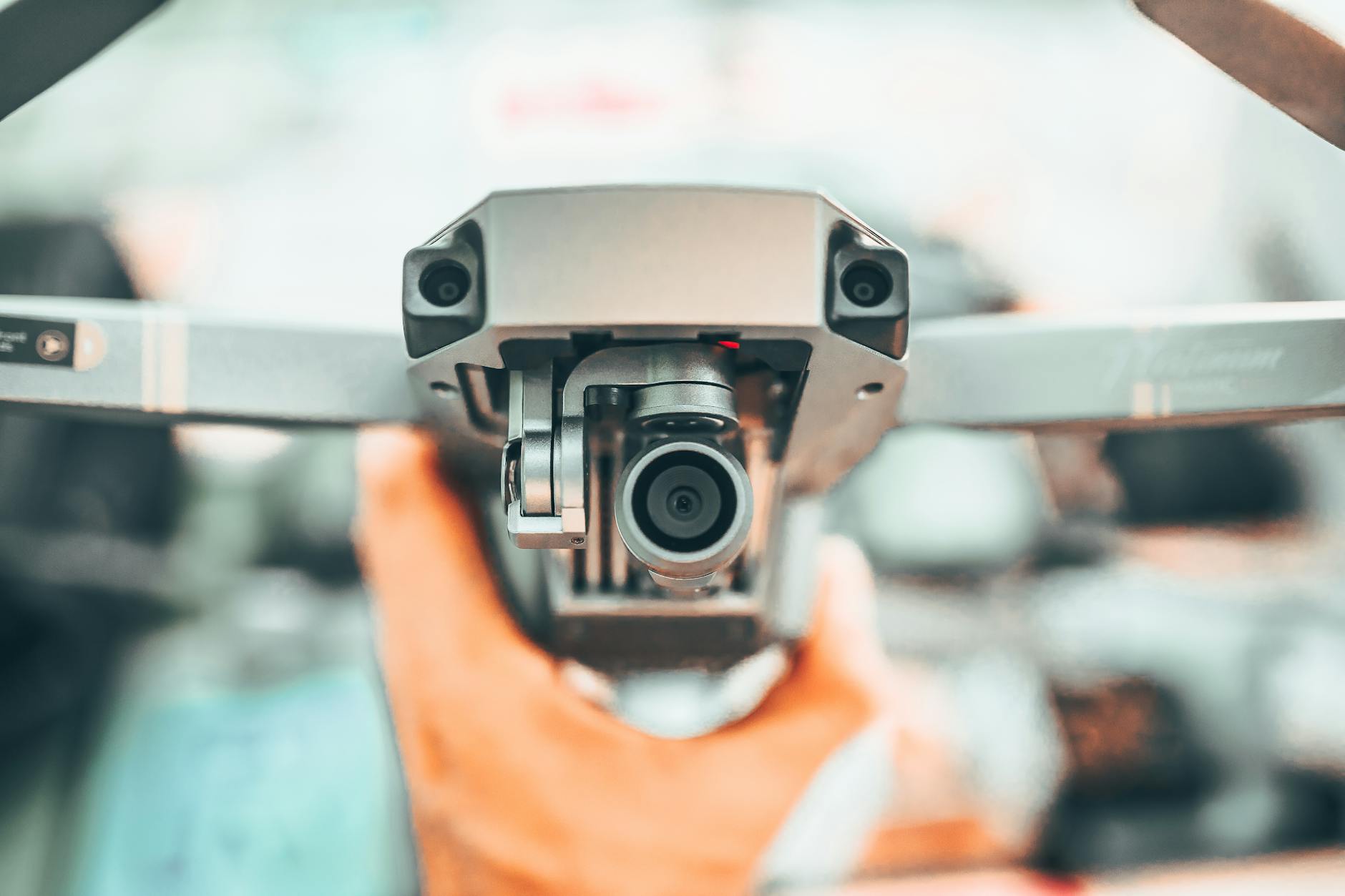
The eBee VISION ISR kit that UAVS delivered to Fort Irwin in April 2026 represents the company’s current flagship approach. The aircraft is fixed-wing, not a rotorcraft—a deliberate engineering choice that sacrifices hovering capability for range, speed, and efficiency. At 4.1 pounds, it’s light enough to deploy without special permissions in many scenarios, yet capable of BVLOS operation, meaning it can fly beyond the operator’s visual range using GPS waypoints and automated flight plans. This matters for agriculture because a farmer can program a drone to survey 1,000 acres in a single battery cycle, something a quadcopter simply cannot do. The first production units of this kit were built at EagleNXT’s manufacturing facility in Allen, Texas—a significant detail because manufacturing location affects supply chain resilience, cost structure, and compliance with regulations like NDAA requirements. However, the technology comes with real constraints.
Fixed-wing drones require more space to land than multirotors and are harder to recover if something goes wrong in tight terrain. The single-operator setup time of under three minutes assumes the operator has been trained and the aircraft is in good condition—something not always guaranteed in field situations. Weather limits are also real: while the system is IP56-rated for rain and dust, high winds can prevent safe operation. For farmers comparing UAVS to hiring a professional aerial survey service, the question becomes whether the upfront cost of hardware, training, and software subscriptions makes economic sense for their specific operation. For large-scale commodity farmers, the math often works. For small farms, it frequently doesn’t.
Military Adoption as Validation and Roadmap
In April 2026, UAVS received an order from the U.S. Army National Training Center for nine eBee VISION ISR UAS kits. This isn’t a massive order—nine units at typical drone prices might represent $300,000 to $500,000 in revenue, depending on bundled services—but the significance lies in validation. The Army National Training Center trains units in realistic combat scenarios; accepting UAVS equipment means the military has tested it against alternatives and believes it meets operational requirements. Military adoption also creates a proof point for civilian markets.
Farmers and commercial operators see that a system trusted by the U.S. military is likely to be reliable and supported long-term. The military pathway also reveals something important about UAVS’ strategy: the company is not attempting to win the consumer drone market (where DJI dominates) or compete with established defense contractors. Instead, UAVS is carving a niche in the middle—specialized platforms for intelligence, surveillance, and reconnaissance (ISR) that integrate with existing military and commercial workflows. This is arguably smarter than chasing volume in saturated markets, but it also means slower revenue growth and smaller addressable markets than the Tesla comparison might suggest.
The Software-as-a-Service Model and Ecosystem Lock-in
Where UAVS mirrors Tesla most clearly is in the integration of hardware and recurring software revenue. Selling a drone is a one-time transaction; selling drone data, analytics, and decision support software creates ongoing customer relationships and predictable revenue. EagleNXT’s SaaS platform processes the multispectral imagery collected by its drones, applies machine learning models to detect crop stress, estimates yield, and identifies areas requiring intervention. For a farmer, this transforms raw data into actionable intelligence—the difference between a technical tool and a business solution. The tradeoff is lock-in.
Once a farmer has invested in UAVS drones, trained operators, integrated the SaaS platform into their workflow, and built historical data sets on the system, switching to a competitor becomes expensive and disruptive. This creates customer stickiness, which is good for UAVS shareholders but requires the company to continuously deliver value. If the SaaS platform becomes outdated, too expensive, or unreliable, customers have strong incentives to replace the entire system rather than tolerate mediocrity. This is where the Tesla comparison breaks down again: Tesla’s software advantage (autonomous driving capability, over-the-air updates) is genuinely difficult for competitors to replicate. UAVS’ software advantage, while real, is more vulnerable to competition from well-funded agricultural technology companies or even simple integration of UAVS hardware with third-party analytics platforms.
The Investment Reality and Compliance Challenges
It’s essential to address the gap between the “Tesla of crop robotics” narrative and the actual financial situation. UAVS trades at $1.31 per share, representing a market capitalization well below $100 million—a valuation that reflects not excitement about the company’s potential, but skepticism about its path to profitability and survival. In 2025, the company received a non-compliance notification from the NYSE American regarding stockholders’ equity standards. While UAVS submitted a remediation plan with a compliance period extending through October 23, 2026, this situation indicates that the company has limited financial runway and significant pressure to achieve profitability or secure additional capital.
For investors considering UAVS as a growth story, the warning is clear: this is a speculative investment, not an established technology leader. The company operates in competitive markets (agricultural drones, military UAVs, multispectral sensors) where larger, better-capitalized competitors exist. Tesla, by contrast, had sufficient capital, visionary leadership, and market tailwinds to reach profitability despite early losses. UAVS has faced multiple business restructurings, changes in strategy, and financial pressures that suggest execution challenges beyond product innovation. The disruption narrative is appealing, but it should not obscure the fundamental business risks.
Strategic Investments and Diversification
In addition to crop robotics and military UAVs, EagleNXT announced a $10 million investment in Israel’s ThirdEye Systems in April 2026, forming a joint venture called ThirdEye USA, LLC to manufacture counter-drone systems at the Allen, Texas facility. Counter-drone technology—systems that can detect, track, and disable unauthorized unmanned aircraft—represents an entirely different market from agriculture: defense, public safety, and protection of critical infrastructure. This investment suggests that UAVS is hedging its bets, reducing dependence on any single market segment.
The strategic rationale is sound: counter-drone systems serve government and enterprise customers with different buying cycles and price sensitivities than farmers. However, spreading resources across multiple markets (agricultural drones, military ISR, counter-drone systems, multispectral sensors) also diffuses focus. Tesla succeeded partly by maintaining laser focus on electric vehicles and energy storage. UAVS is attempting to serve many masters simultaneously, which increases execution risk.
The Broader Context of Precision Agriculture and Technology Adoption
The crop robotics market is expanding because precision agriculture delivers measurable returns. A farmer who can identify that 2% of their field is experiencing drought stress and needs irrigation can save thousands in water costs while improving yield. A farmer who detects disease early can prevent crop loss. The economic logic is compelling, and it explains why companies like UAVS have attracted investment despite competitive pressures.
However, adoption rates in agriculture remain slower than technology advocates expect because farmers are risk-averse, capital-constrained, and skeptical of technology vendors. Looking forward, UAVS faces a critical juncture. If the company can achieve profitability, maintain NYSE listing compliance, and continue delivering integrated solutions that farmers and government agencies prefer to fragmented alternatives, it could become a significant player in precision agriculture. If financial pressures force asset sales, strategy shifts, or management instability, it could become acquired, acquired at a discount, or fail. The “Tesla of crop robotics” comparison captures an important truth—that UAVS is attempting systemic disruption rather than incremental improvement—but should never override careful analysis of the company’s finances, competitive position, and execution track record.
Conclusion
UAVS is not the Tesla of crop robotics in the sense of being a dominant market leader with overwhelming advantages and margin expansion potential. Rather, it reflects the Tesla template in its attempt to integrate hardware, sensors, and software into an ecosystem designed to replace incumbent approaches to a workflow. The April 2026 delivery of eBee VISION ISR kits to the U.S. Army National Training Center, combined with the MicaSense sensor integration and SaaS platform capabilities, demonstrates genuine technical achievement.
However, the company’s low stock price, recent NYSE compliance challenges, and operation in fragmented, competitive markets suggest that disruption alone is insufficient. Success in precision agriculture and defense robotics requires sustained execution, adequate capitalization, and the ability to scale manufacturing and support operations. For farmers and organizations evaluating UAVS systems, the question should not be whether the company is the next Tesla, but whether the integrated platform delivers measurable value for their specific use case—and whether the company is likely to remain solvent and supportive over the technology’s lifetime. For investors, UAVS represents a speculative position in an emerging market, not a growth narrative with clear visibility to profitability. The disruption is real, the technology works, but the business remains unproven at scale.