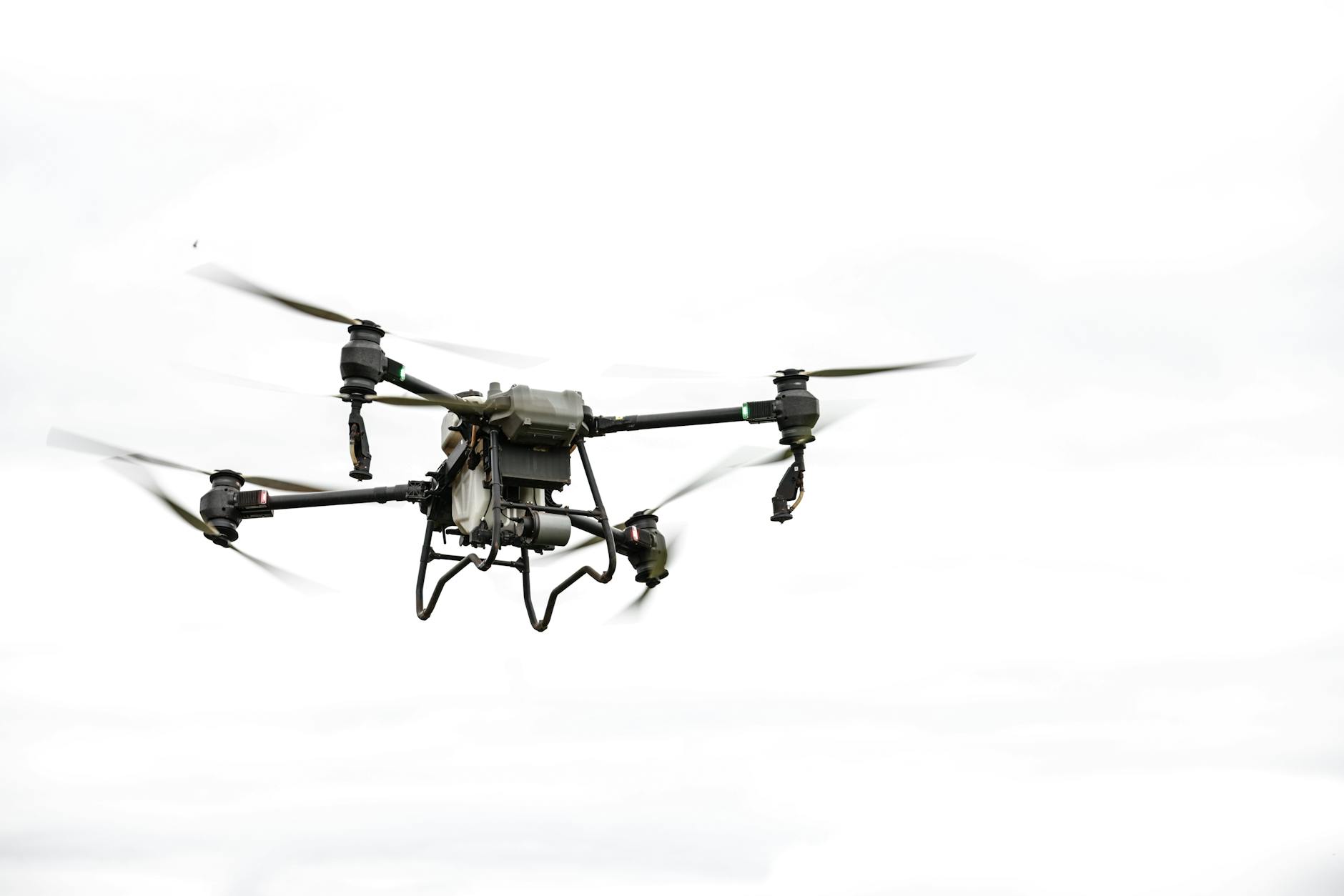

UAVS represents a compelling early-stage opportunity within the drone robotics sector, targeting investors and industry observers interested in companies scaling autonomous flight technology and industrial drone applications. These early-stage players differentiate themselves through specialized hardware, proprietary flight control software, or focused vertical applications—rather than competing directly with DJI’s dominance in consumer drones. A concrete example: companies developing thermal imaging payloads for infrastructure inspection or LiDAR-equipped platforms for autonomous surveying address specific industrial needs where reliability and specialized sensors matter more than consumer price competition.
The “early stage” designation reflects both the maturity of individual companies and the broader drone industry’s evolution. While consumer drones are now mainstream, industrial and enterprise drone applications remain in expansion phases, with regulatory frameworks still being formalized and use cases still being validated. This creates opportunity windows for focused competitors, but also means revenue bases remain unproven and technology roadmaps frequently shift.
Table of Contents
- What Makes Early-Stage Drone Companies Different From Consumer Drone Giants?
- The Technical Barriers and Development Risks in Early-Stage Drone Robotics
- Market Adoption Patterns in Industrial Drone Applications
- Capital Requirements and Funding Challenges for Growth
- Regulatory Complexity and the Risk of Rules Changing Mid-Development
- Example Vertical: Agricultural Drones and Precision Farming Applications
- Future Outlook: Autonomous Swarms, AI Integration, and Beyond
- Conclusion
What Makes Early-Stage Drone Companies Different From Consumer Drone Giants?
Early-stage drone robotics companies typically avoid the consumer mass-market competition where DJI holds 70%+ market share and price pressure is relentless. Instead, they target verticals where specialized capabilities command premium pricing: precision agriculture using multispectral sensors, pipeline inspection with autonomous waypoint navigation, or search-and-rescue operations requiring extended flight times and rugged design. This vertical focus allows smaller teams to build deeper domain expertise and customer relationships than a horizontal competitor could.
The technology differentiation often lies in autonomy—specifically, the ability for drones to operate independently with minimal operator input. A commercial roofing inspection drone, for instance, might use computer vision to identify specific roof damage automatically, whereas a consumer drone requires a human operator to manually fly and photograph. This autonomy requires substantial software engineering investment that many consumer drone makers haven’t prioritized. The tradeoff is that these niche solutions have much smaller addressable markets, making growth slower and unit volumes lower than consumer alternatives.

The Technical Barriers and Development Risks in Early-Stage Drone Robotics
Building reliable drone hardware at early stages means dealing with substantial engineering challenges that aren’t apparent in reviews or marketing materials. Battery thermal management, propeller efficiency optimization, and electromagnetic compatibility across industrial sensors all require iterative testing and expensive failure cases. A startup’s first generation might achieve 20-minute flight times in controlled conditions but only 12 minutes in actual customer deployments with full sensor loads, requiring another product cycle to address.
Software maturity presents an equally significant risk. Autonomous flight control software must handle wind disturbances, GPS loss scenarios, and sensor failures gracefully—failures that in consumer drones are annoying but in industrial applications could damage expensive infrastructure or create liability. Early-stage companies often underestimate the engineering effort required to achieve “enterprise-grade” reliability, discovering midway through a product development cycle that their initial architecture can’t meet customer uptime or safety requirements without major rework.
Market Adoption Patterns in Industrial Drone Applications
Industrial buyers adopt drone technology more cautiously than consumers, requiring proof of concept periods, pilot programs, and lengthy procurement cycles. A construction company evaluating drones for site surveying typically spends 3-6 months testing a solution before committing to purchase, and another 3-6 months training staff and integrating it into existing workflows. This extended sales cycle means early-stage companies burn capital for longer before seeing revenue, creating pressure to find bridge financing or partnerships with larger defense or aerospace contractors.
A practical example illustrates this: precision agriculture companies targeting row crop farmers initially struggled with adoption until combining drone imagery with agronomic decision support software. Farmers wanted actionable insights, not raw thermal data. Companies that recognized this and partnered with agricultural software providers saw faster adoption, while those selling hardware-only solutions faced much slower revenue growth. This pattern repeats across verticals—success often depends on solving the entire customer problem, not just the drone piece.

Capital Requirements and Funding Challenges for Growth
Early-stage drone companies require significant capital for hardware design iteration, regulatory certifications (FAA Part 107 compliance in the US, equivalent regulations globally), and field pilot programs to validate market demand. A typical progression might be: seed funding ($1-3M) to build prototypes and initial team, Series A ($5-15M) to scale manufacturing and sales, and Series B ($15-50M) to enter adjacent verticals or geographic markets. The challenge is that industrial drone markets grow steadily but not explosively—a company with $15M in Series A funding might take 3-4 years to show the growth rates that venture investors expect.
The tradeoff between profitability and growth is stark. Some early-stage drone companies have chosen to remain bootstrap-funded and profitable, serving a niche vertical at modest scale rather than raising venture capital and pursuing explosive growth. Others raise venture money but face pressure to reach venture-scale outcomes, requiring them to either expand into adjacent markets aggressively or risk disappointing investors. Neither path is guaranteed to work.
Regulatory Complexity and the Risk of Rules Changing Mid-Development
Drone regulations were still in active development in 2024-2025 and continue to evolve. The FAA’s push toward remote ID requirements, airspace coordination systems, and expanded beyond-visual-line-of-sight operations creates both opportunity and risk for early-stage companies. A startup that designs a drone optimized for current regulations might face costly redesigns if new rules mandate different hardware or safety features.
International regulation adds another layer of complexity. A drone designed and certified for US operations requires separate certification in Europe, Canada, China, and other markets, each with different technical requirements and certification bodies. Early-stage companies with limited resources often focus on one or two markets initially, constraining their addressable market. Companies operating globally must either accept lower margins due to regulatory compliance costs or maintain separate product lines for different regions.

Example Vertical: Agricultural Drones and Precision Farming Applications
Precision agriculture has emerged as one of the strongest markets for industrial drones, with farmers using aerial imaging to monitor crop health, optimize irrigation, and time pesticide application. Early-stage companies in this space differentiate through sensor integration (multispectral cameras, thermal sensors, soil moisture probes), flight time optimization, and software that translates raw imagery into actionable farm management decisions. A farmer can use a drone to identify irrigation problems in a 500-acre field in two hours, whereas walking the entire field takes two days.
However, consolidation pressure is real. Larger agricultural equipment manufacturers like John Deere and AGCO are integrating drone capabilities into their platforms, and established drone companies are expanding into agriculture. This squeezes out standalone early-stage competitors who lack either the customer relationships or the resources to integrate tightly with existing farm management systems.
Future Outlook: Autonomous Swarms, AI Integration, and Beyond
The next evolution in drone robotics centers on autonomous swarm operations—multiple drones coordinating without human intervention—and AI-enabled perception that allows drones to understand and respond to complex scenes in real time. Early-stage companies pursuing these technologies face the challenge that the underlying research is still advancing, creating moving targets for product development.
A startup building swarm algorithms in 2025 is betting that by 2027-2028, when the product reaches market, the competitive landscape for swarm solutions won’t have been dominated by larger defense contractors or tech platforms. Longer term, regulations permitting autonomous operation beyond visual line of sight will unlock massive new use cases, but that regulatory approval remains years away in most jurisdictions. Early-stage companies investing in these capabilities are essentially placing multi-year bets that regulation and market demand will align by the time their products mature.
Conclusion
UAVS as an early-stage drone robotics investment reflects genuine long-term opportunity in industrial automation and a market that’s expanding beyond consumer applications. However, success in this space requires both technical execution in hardware and software, market validation through extended sales cycles, and sufficient capital to navigate regulatory complexity and competitive consolidation.
The companies that survive typically either find a specific vertical where they build defensible expertise, or they raise significant capital and expand aggressively before larger players consolidate the market. Investors and industry observers should watch for companies demonstrating proof of concept in commercial applications, growing customer bases despite lengthy sales cycles, and clear paths to profitability or venture-scale growth. The industry remains unsettled, with winners and losers still being determined.