
Open source software has become the backbone of modern robotics systems, yet it operates largely in the background where few people notice its critical role. From the ROS (Robot Operating System) framework that powers everything from autonomous vehicles to industrial manipulators, to libraries for computer vision, motion planning, and sensor integration, OSS provides the foundational tools that would be impossibly expensive and time-consuming for roboticists to build from scratch. The “quiet” nature of this enablement comes from the fact that when robotics companies and researchers deploy sophisticated autonomous systems, the OSS underpinnings rarely receive public credit—the spotlight goes to the robot itself, the completed application, or the commercial outcome.
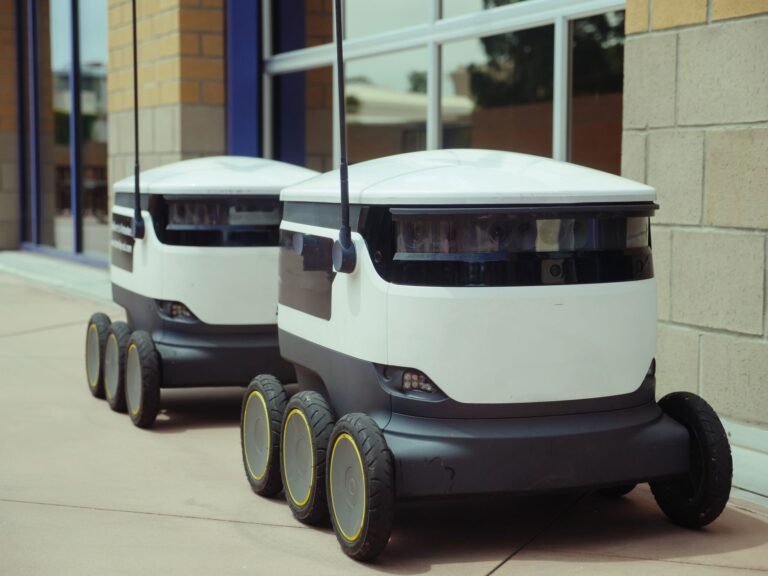
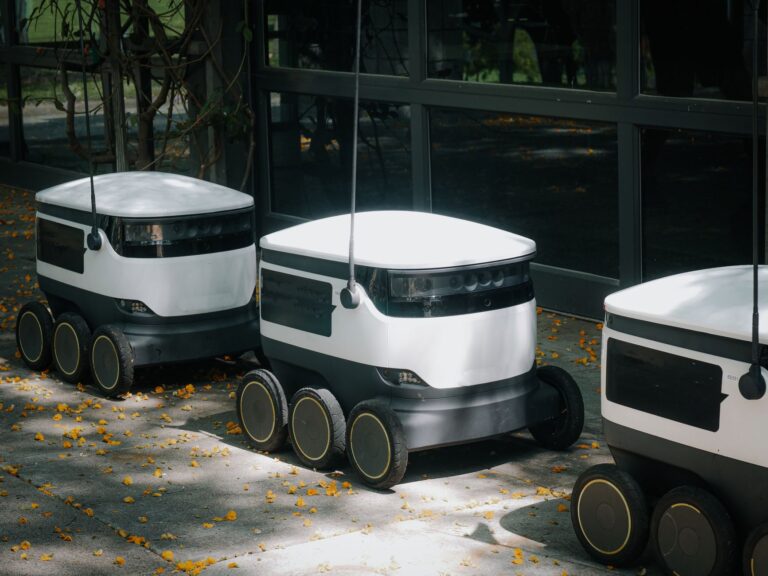
The reason OSS has become so essential in robotics is straightforward: the field inherently requires solving dozens of complex technical problems simultaneously, and these problems don’t require proprietary competitive advantage to be valuable. A company building a delivery robot needs reliable computer vision, real-time operating system capabilities, and communication protocols, but these aren’t the source of competitive differentiation. OSS provides vetted, battle-tested solutions to these fundamental challenges, allowing teams to focus engineering resources on what actually makes their product unique. Without this ecosystem, robotics development would remain confined to well-funded institutions and corporations, rather than the diverse and innovative landscape we see today.
Table of Contents
- How Does Open Source Software Solve Robotics’ Fundamental Engineering Challenges?
- The Hidden Complexity OSS Solves in Real-Time Robotics Systems
- The Sensor Integration Ecosystem That Makes Robotics Accessible
- Building and Simulation Tools That Lower Development Risk
- The Maintenance and Security Challenge of Relying on Volunteer-Driven Projects
- The Role of OSS in Standardization and Ecosystem Development
- The Future of OSS in Robotics and Emerging Dependencies
- Conclusion
How Does Open Source Software Solve Robotics’ Fundamental Engineering Challenges?
robotics presents a uniquely complex engineering problem because a functional system must integrate hardware control, sensor processing, decision-making algorithms, and real-time execution all at once. oss projects have systematized solutions to each layer. ROS, created at Willow Garage in 2007, established a middleware architecture that handles inter-process communication between components—a problem that previously required each roboticist to reinvent.
When a team at a university lab or startup needs to integrate a LIDAR sensor, a motor controller, and a path-planning algorithm, they don’t write these from first principles; they leverage existing OSS packages that have already solved these integration challenges across dozens of implementations. Consider Boston Dynamics’ work on quadruped and bipedal robots: while their control algorithms and mechanical design are proprietary, the underlying software infrastructure relies heavily on open source tools for simulation (Gazebo), motion planning (MoveIt), and systems integration. Similarly, the autonomous vehicle industry—from Waymo’s early research to current level 4 autonomous systems—builds on OSS foundations like Apollo (Baidu’s open source autonomous driving platform) and components from OpenDRIVE for road representation. These examples illustrate that even when a company develops proprietary advantages, those advantages sit on top of a solid OSS foundation that handles the generic, difficult-to-differentiate engineering work.
The Hidden Complexity OSS Solves in Real-Time Robotics Systems
One of the most underappreciated challenges in robotics is real-time performance—the system must execute its computational tasks within predictable time bounds, or the physical system becomes unstable or unsafe. This isn’t just about speed; it’s about determinism. An algorithm that runs in 50 milliseconds on average is useless for controlling a robot arm if it occasionally takes 500 milliseconds. OSS projects like the Robot Operating System 2 (ROS 2) introduced dedicated real-time communication patterns and support for QoS guarantees, solving a problem that individual robotics groups would struggle with independently.
However, this real-time requirement also reveals a limitation of OSS in robotics: not all open source projects are created equal in terms of real-time safety certification or formal verification. When a medical surgical robot or an autonomous vehicle in production use needs to guarantee safety properties, teams often must implement verification layers on top of OSS components, or in some cases, create critical control loops in proprietary, hardened software. The OSS provides the scaffolding, but safety-critical systems require additional engineering investment that can’t be entirely outsourced to community projects. This tradeoff means that OSS is most applicable in research, development, and non-critical production systems, while safety-critical components typically receive additional proprietary hardening.
The Sensor Integration Ecosystem That Makes Robotics Accessible
One of the most transformative roles of OSS in robotics is reducing the barrier to integrating new sensors and devices. Before standardized OSS sensor drivers and libraries emerged, adding a new type of camera, IMU, or ultrasonic sensor to a robot meant writing low-level hardware communication code. OpenCV, originally developed by Intel, has become the de facto standard for computer vision in robotics, providing everything from basic image processing to advanced feature detection and tracking. When a startup decides to build a new robot, they can plug in a standard camera and immediately have access to years of optimized vision algorithms.
Lidar processing illustrates this advantage concretely: the PCL (Point Cloud Library) is an OSS project that provides industrial-strength tools for processing the massive point cloud data that lidar sensors generate. A team integrating a Velodyne lidar sensor into a new platform would use PCL for segmentation, registration, and filtering—tasks that would otherwise require months of development. The broader implication is that OSS has democratized robotics hardware integration. Companies like Clearpath, iRobot, and even industrial automation providers can focus on mechanical and algorithmic innovation because the sensor communication layer is already solved by mature open source libraries.
Building and Simulation Tools That Lower Development Risk
Roboticists need to test algorithms and behaviors before deploying them on expensive hardware, and simulation has become the standard approach. Gazebo, an OSS physics simulator maintained by the Open Robotics Foundation, allows engineers to design, visualize, and test robots in a virtual environment before any real hardware exists. This reduces development risk dramatically—a bug in a control algorithm discovered in simulation costs nothing to fix; the same bug on a real robot might result in damaged equipment or, worse, a safety incident. The tradeoff here is that simulation-to-reality transfer remains imperfect.
Physics engines make approximations, sensors in simulation don’t perfectly replicate sensor noise and artifacts, and friction and wear characteristics are simplified. Teams building production systems must bridge this gap through careful calibration, real-world testing phases, and sometimes learning-based approaches that adapt to real conditions. Nevertheless, OSS simulation environments have become standard development infrastructure. The fact that a researcher at a university can use the same simulation environment (Gazebo) and middleware (ROS) that Amazon uses for their robot development creates a level playing field that would be impossible if these tools were proprietary.
The Maintenance and Security Challenge of Relying on Volunteer-Driven Projects
While OSS provides tremendous value, it introduces a hidden risk that the robotics industry is only beginning to address seriously: dependency on community-maintained software. Many critical robotics OSS projects rely on volunteers or small teams who may lack the resources to provide rapid security patches or long-term maintenance guarantees. A vulnerability discovered in a core library like OpenCV or ROS could affect thousands of deployed systems, and the timeline for patches may not match the urgency needed in production environments. This challenge manifests differently across the robotics ecosystem.
Large commercial projects like autonomous vehicles have the resources to maintain forks of critical OSS components and apply their own patches, but smaller companies and research labs often can’t. A startup deploying robots in the field may discover that a security vulnerability in a core dependency requires immediate remediation, but the upstream project maintainers take weeks to respond. The best mitigation is careful dependency management, security auditing of critical OSS components, and building internal expertise to patch and maintain key libraries when necessary. This is an often-underestimated cost of OSS adoption in production robotics systems.
The Role of OSS in Standardization and Ecosystem Development
One of the most valuable but least visible contributions of OSS to robotics is standardization. The URDF (Unified Robot Description Format), developed as part of the ROS ecosystem, has become the standard way to represent robot geometry and dynamics. Before this, every robotics company used different description formats, making it nearly impossible to share robot models or simulation scenarios. By establishing open standards through OSS projects, the community has created interoperability that accelerates development across different teams and organizations.
The MoveIt motion planning framework exemplifies this ecosystem effect. MoveIt is an OSS toolkit for manipulation planning and control that integrates with ROS, providing standardized approaches to solving the notoriously difficult problem of planning collision-free paths for multi-jointed arms. Because MoveIt is open source and has become the industry standard, robotic arm manufacturers can build on it, integrators can rely on it, and researchers can extend it. This creates a virtuous cycle where improvements to the core library benefit the entire ecosystem.
The Future of OSS in Robotics and Emerging Dependencies
As robotics systems become more sophisticated, the role of OSS is evolving. Machine learning frameworks like PyTorch and TensorFlow (both open source) have become critical for perception and decision-making in modern robots. This represents a shift: while traditional robotics OSS (ROS, OpenCV, PCL) focused on classic algorithms and systems engineering, newer OSS projects are increasingly about enabling learning-based approaches. A robot today might use ROS for real-time control, OpenCV for classical vision preprocessing, and a PyTorch model for semantic understanding—all open source, all from different communities.
Looking forward, the challenge for the robotics industry is managing the complexity of increasingly deep OSS dependency chains while maintaining safety and security guarantees. The future likely involves more commercial support for critical robotics OSS projects, similar to how Red Hat professionalized Linux development. We’re already seeing this with the Open Robotics Foundation providing stewardship of ROS and with companies like DJI contributing significantly to open source perception and control libraries. The “quiet” nature of OSS in robotics won’t change, but its strategic importance—and the need for proper governance and maintenance—will only increase.
Conclusion
Open source software is the quiet foundation upon which modern robotics has been built. From the fundamental middleware that connects robot components, to the sensor drivers that integrate hardware, to the simulation environments that de-risk development, OSS has made robotics accessible to researchers, startups, and enterprises that would otherwise face prohibitive development costs. The success of companies ranging from Amazon to small robotics startups demonstrates that competitive advantage in robotics comes from what you build on top of OSS, not from reimplementing the solved problems that those projects address.
As the robotics industry matures, the role of OSS will continue to evolve from being simply a convenient set of tools to becoming part of the professional infrastructure that ensures safety, security, and interoperability. Roboticists and managers building systems today should recognize OSS not as a cost-saving measure but as a strategic foundation that enables innovation. The future of robotics depends on the continued health, maintenance, and evolution of these open source ecosystems, along with the practical commitment from industry to support and contribute back to the projects they depend on.