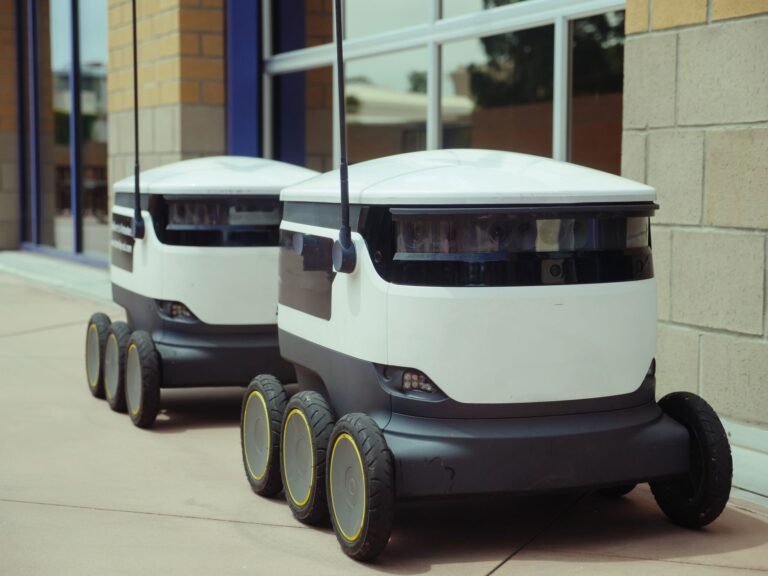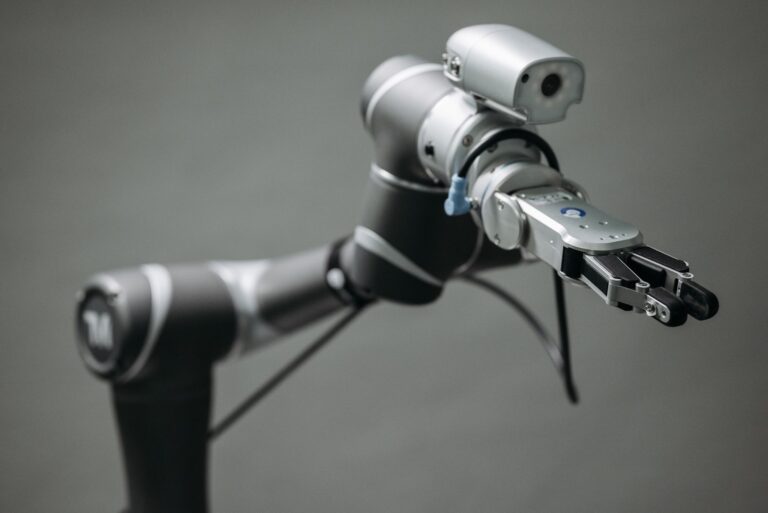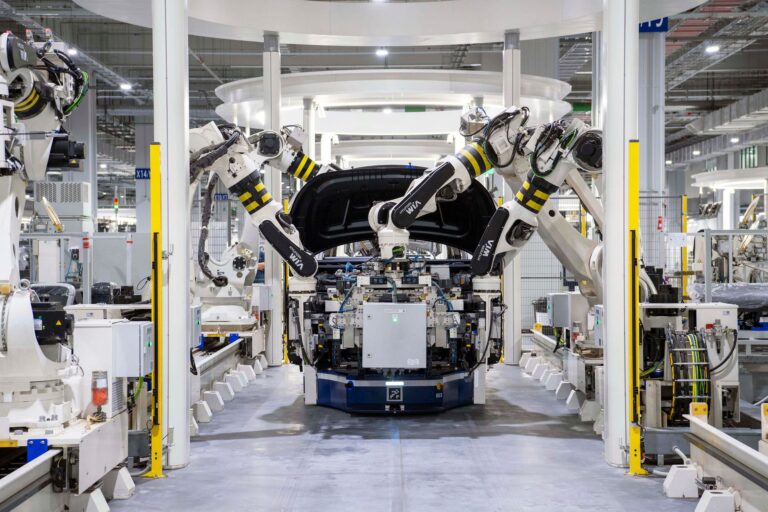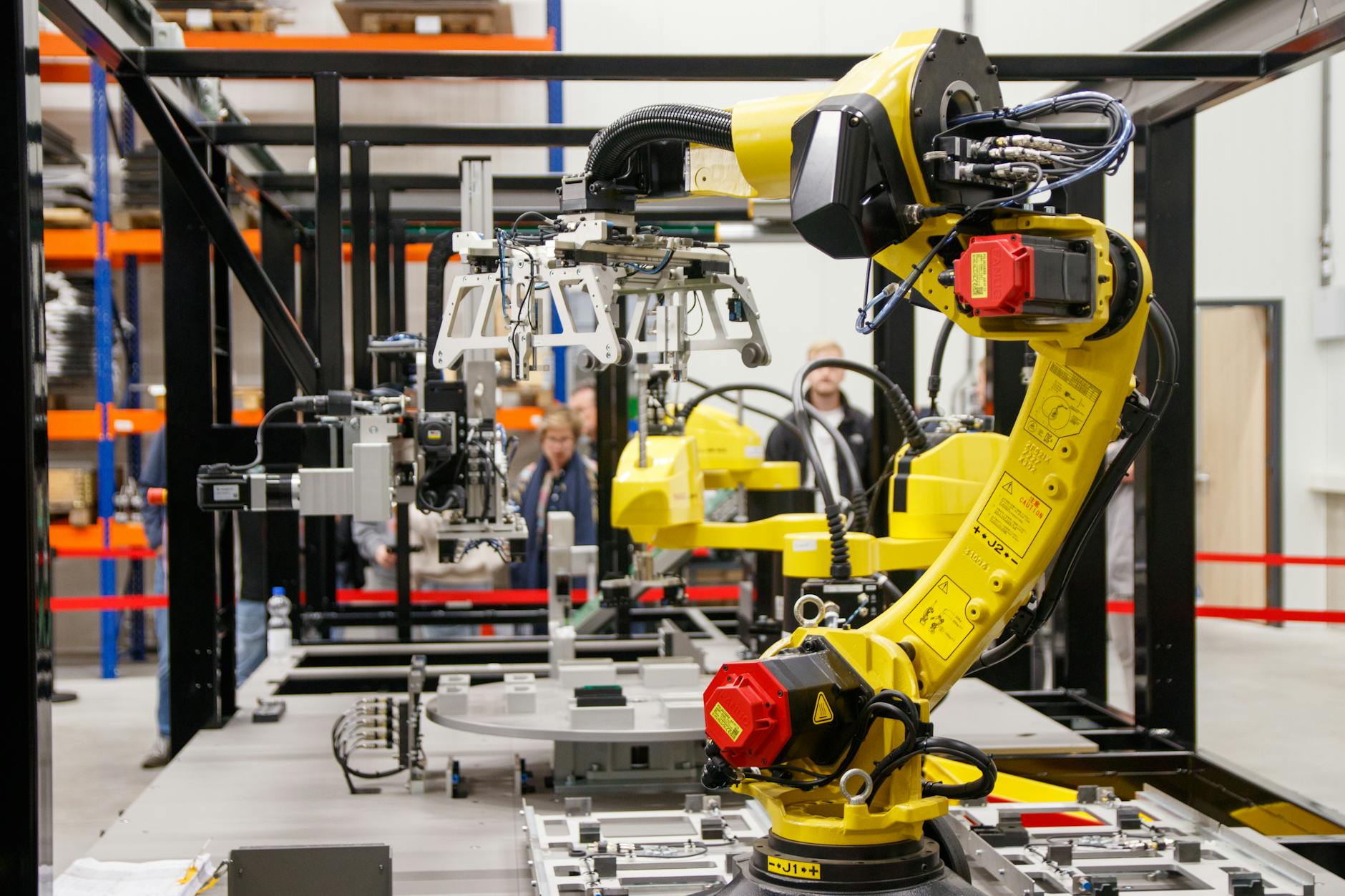

Warehouse robotics could produce the next Nvidia because it sits at the convergence of three unstoppable forces: exploding e-commerce demand that no amount of human labor can satisfy, an artificial intelligence infrastructure layer that’s becoming indispensable, and a capital-saturated market desperate for the next mega-growth story. Nvidia’s dominance came from being the essential foundation—the chips everything else runs on. Warehouse robotics is following the same pattern, with companies now racing to own the software platforms, simulation frameworks, and AI models that every robot system will need. Just as data center operators couldn’t avoid Nvidia’s GPUs, warehouse operators are increasingly unable to avoid automated systems, and whoever controls the underlying technology stack will capture the economic value.
The numbers back this up: the warehouse robotics market alone is projected to grow from $6.51 to $14.7 billion today to over $105 billion by 2035—a 15.69% compound annual growth rate. But that’s just the robotics hardware and software. The broader physical AI industry (robots making real-world decisions autonomously) is expanding even faster at 47.2% CAGR, projected to reach $15.24 billion by 2032 from just $1.50 billion in 2026. When a market is growing that fast, the infrastructure layer—the software, platforms, and AI models that power thousands of different robots—becomes more valuable than any single robotics company.
Table of Contents
- How a Market Shortage Creates Platform Monopolies
- The Infrastructure Trap That Makes Winner-Take-Most Markets
- Where The Real Capital Is Flowing
- The Regional Dominance That Locks In Market Share
- The Profitability Question Nobody’s Asking
- Why Timing Matters More Than Technology
- The Companies Most Likely to Achieve Nvidia Status
- Conclusion
How a Market Shortage Creates Platform Monopolies
The global robotics market is projected to reach $218.56 billion by 2031, up from $73.64 billion in 2025, but this obscures what’s really happening. The shortage isn’t in robotics demand—it’s in the ability to deploy and manage them at scale. Unlike GPUs, which are discrete, swappable components, robotics systems are deeply integrated. A warehouse with 5,000 robots from five different manufacturers doesn’t just need hardware; it needs a unified control layer, fleet management software, predictive maintenance, and AI models that can make real-time decisions. This is where nvidia found its stranglehold: not as a robot maker, but as the indispensable platform.
Locus Robotics has deployed over 13,000 robots across North American warehouses, but even at that scale, it hasn’t solved the fragmentation problem. Different robots use different navigation systems, different sensor suites, and different communication protocols. Someone needs to abstract away that complexity. Nvidia is already making this move through partnerships with Agility Robotics (warehouse automation) and Diligent Robotics (hospital logistics), positioning its GPU architecture and simulation frameworks (like Isaac Sim) as the standard. The parallel is direct: just as machine learning researchers couldn’t choose their compute infrastructure, logistics managers increasingly can’t choose to ignore Nvidia-powered robotics platforms.

The Infrastructure Trap That Makes Winner-Take-Most Markets
Here’s the hidden advantage that Nvidia leveraged and that the next Nvidia in robotics will too: switching costs. Once a warehouse has invested in a particular robotics platform—training operators, integrating software, building processes around it—switching to a competitor becomes prohibitively expensive. Microsoft learned this with Windows, and Nvidia learned it with CUDA. The robotics company that first becomes essential to 30-40% of the market’s operations essentially locks in decades of growth. But there’s a catch that separates winners from bankruptcies in this space: the infrastructure layer must be platform-agnostic enough to handle multiple hardware vendors, or it will die when the hardware market commoditizes. Nvidia survived and thrived because its GPUs worked with CUDA but were useful across any neural network architecture. A robotics software platform that only works with one brand of robot is doomed.
This is why the recent funding rounds are so revealing—Sereact raised $110 million in Series B funding (April 2026) specifically to expand its warehouse robotics platform for multi-hardware environments. Tutor Intelligence raised $34 million Series A to build AI-powered warehouse robot worker fleets that can coordinate different robot types. These are infrastructure plays, not hardware plays. The warning here is execution risk. Symbotic has a market cap of $31.3 billion as an AI-powered robotics company, but it owns specific hardware. Its valuation assumes it can maintain pricing power in a market where specialized robotics solutions are being commoditized. The next Nvidia won’t be a robotics hardware specialist—it will be the software or chip layer that everyone has to use.
Where The Real Capital Is Flowing
The funding patterns in warehouse robotics show where sophisticated investors believe the value will concentrate. Mytra announced $120 million in Series C funding in January 2026, with total funding reaching $545 million and backing from Mithril and Blackstone. That’s not venture capital chasing innovation; that’s growth capital backing proven business models. Dexory, a London-based warehouse robotics startup, raised $165 million in Series C in October 2025, including $65 million in growth debt, suggesting it’s already cash-flow positive or nearly there. The funding also reveals what isn’t working: pure hardware plays are getting slower funding growth.
Gather AI raised $40 million in Series B (led by Smith Point Capital with Bain Capital Ventures), which is good, but compare it to the pace of funding for software-first plays. Sereact’s $110 million Series B and Tutor Intelligence’s $34 million Series A (also known as AI worker fleet funding) came just months after each other, both focused on the software and AI layer that coordinates physical robots. This mirrors Nvidia’s rise almost exactly. In 2015, when deep learning was exploding, Nvidia didn’t chase funding as hard as startups building specific AI applications. Instead, it quietly built CUDA, making sure every researcher and engineer who wanted to do deep learning needed Nvidia’s infrastructure. The capital flowing into warehouse robotics is now doing the same thing: it’s chasing the companies building the platforms that thousands of different robotics operators will standardize on.

The Regional Dominance That Locks In Market Share
Asia Pacific accounts for 51.70% of the warehouse robotics market share as of 2025, driven by the region’s aggressive e-commerce expansion and acute labor shortages from demographic aging. This is a crucial detail that maps to how Nvidia won too: dominance in the largest market segment early creates a feedback loop. More installations in Asia Pacific mean more data generated by those systems, which trains better AI models, which attracts more customers in that region. But here’s the limitation: Asia Pacific’s dominance creates political and geopolitical risk that Nvidia didn’t face as purely a chip company. A warehouse robotics platform that controls 40-50% of Asian warehouses also becomes a national security concern, making regulatory intervention more likely.
China’s already developed its own robotics ecosystem (companies like Make Robotics), so the next Nvidia in warehouse robotics can’t become a universal standard the way Nvidia did—at least not globally. Instead, we’re likely to see regional winners: a Nvidia-equivalent in the U.S., another in China, another in Europe. The comparison to Nvidia breaks down here. Nvidia’s GPUs were too technically sophisticated for any single country to replicate quickly. Robotics software, by contrast, is more vulnerable to localization and government-mandated alternatives. That doesn’t kill the opportunity, but it does fragment it.
The Profitability Question Nobody’s Asking
Revenue growth doesn’t guarantee the kind of margin expansion that made Nvidia worth $3 trillion. When Nvidia’s GPU revenue grew, the gross margins came with it because the technology was hard to replicate. Warehouse robotics faces a different problem: when margins get too attractive, well-funded competitors (Amazon, with its existing fulfillment infrastructure, could decide to build standardized robotics software) can enter the market. Nvidia automotive and robotics segment revenue hit $586 million in Q2 fiscal 2026, with projected full-year fiscal 2026 revenues of $2.41 billion (representing 42.2% year-over-year growth). That’s impressive, but these aren’t yet Nvidia’s core margins—they’re still building infrastructure and ecosystem.
The profitability question is whether the warehouse robotics software that eventually emerges will have a similar moat. If it’s open-source or if multiple companies can build equally good versions, margins will compress toward software-as-a-service norms (30-40% gross margin) rather than Nvidia’s current levels (75%+). The leading indicator here is pricing power. Companies like Symbotic ($31.3 billion market cap) are betting they can maintain premium pricing because their solution is proprietary. But if Mytra or Sereact or the dozens of other well-funded startups all offer acceptable alternatives, the market becomes more competitive. The next Nvidia needs something that competitors can’t easily replicate—whether that’s a chip (like Nvidia), a fundamental software patent, or such a large installed base that switching costs are prohibitive.
Why Timing Matters More Than Technology
Nvidia wasn’t the first company to make good GPUs. It was the first to make good GPUs when the market suddenly needed millions of them (thanks to deep learning). Warehouse robotics is in a similar moment: the technology isn’t new, but the market need is suddenly acute. E-commerce companies need to move more packages faster. Labor shortages mean the wage cost of a human picker keeps rising.
Supply chain disruptions have made automation a strategic priority, not a nice-to-have. This acceleration is what separates a successful infrastructure play from a failed one. The next Nvidia will be the company that captures 30-40% of installed systems during the period when the technology is becoming essential but not yet commoditized. That window is probably the next 3-5 years. After that, either the technology becomes standard (commoditized margins) or there’s a clear winner (Nvidia-like consolidation). The recent funding rounds suggest investors believe we’re still in the early part of that window.
The Companies Most Likely to Achieve Nvidia Status
The most Nvidia-like play in warehouse robotics right now is probably whoever wins the software orchestration layer. Locus Robotics with 13,000+ bots deployed has the installed base, but it’s still seen as a robotics company, not an infrastructure layer. Sereact, with its $110 million Series B focus on multi-vendor warehouse robotics platforms, is thinking more like an infrastructure company.
Tutor Intelligence’s approach to building an AI model that manages robot worker fleets could become the next CUDA—a standard that every warehouse operator licenses. The wildcard is Nvidia itself. The company is already moving into this space through ecosystem partnerships, and it has the credibility, capital, and technology stack to become the standard platform layer for warehouse robotics. If Nvidia manages to make its robotics software (built on top of Isaac Sim and other platforms) essential to 30%+ of installations, we’d see a repeat of its GPU dominance in a completely new market.
Conclusion
Warehouse robotics could produce the next Nvidia because the market is moving faster than the supply of solutions can keep up, capital is flowing toward infrastructure plays rather than hardware, and the winner will almost certainly control a software or silicon layer that becomes standard across multiple vendors. The projected growth from $6.51 billion in 2025 to $105 billion by 2035 is real, and the profit opportunity is genuine—but only for whoever controls the platform that thousands of different operators standardize on.
The key insight is that Nvidia’s dominance didn’t come from making the best GPUs—it came from making the infrastructure that every neural network researcher had to use. The next Nvidia in warehouse robotics will follow the same pattern: capture the software orchestration layer, the AI decision-making framework, or the simulation platform that every warehouse operator eventually depends on. The funding patterns and market timing suggest that winner is probably emerging right now, sometime in the next 3-5 years, during the window when automation is becoming essential but not yet commoditized.