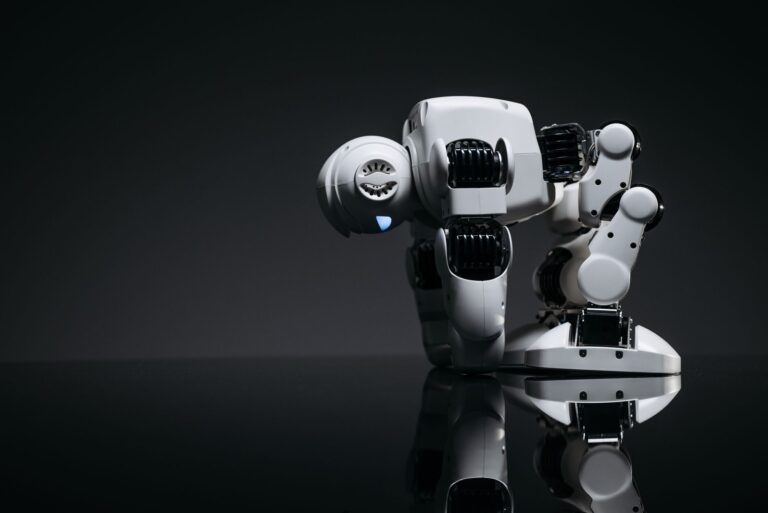

The next generational winner in robotics might not be the company building the most impressive humanoid robots or the most capable autonomous machines. It could instead be the unsexy supplier sitting in the infrastructure layer—the company providing the power systems, chips, networking hardware, or manufacturing equipment that dozens of robotics makers depend on. This “picks and shovels” dynamic has already proven itself in AI: while generative AI companies grabbed headlines in 2024 and 2025, companies like ASML (the only supplier of extreme ultraviolet lithography machines for advanced chip manufacturing), TSMC (the sole manufacturer of the world’s most advanced processors), and Micron (the primary supplier of high bandwidth memory inside AI processors) saw their valuations climb steadily. The robotics boom of 2026 and beyond will likely follow the same pattern—infrastructure suppliers will capture disproportionate value while robot makers compete on applications.
The robotics industry is entering a phase where physical AI—machines that understand and adapt to real-world environments—will require massive computational support, specialized hardware, and reliable power delivery at scales we’ve never attempted before. A single data center supporting robotics training and deployment now consumes power equivalent to a small city. Boston Dynamics’ Spot robot, for example, operates in industrial environments that require constant cloud connectivity and edge computing support. That infrastructure doesn’t build itself, and companies that own critical chokepoints in the supply chain stand to benefit enormously as robot manufacturers scale. This shift toward physical AI infrastructure creates a clear investment thesis: the companies that supply the foundational technologies to robotics will likely see more stable demand and higher margins than the robot makers themselves, who will face intense competition and margin pressure as the field matures.
Table of Contents
- Why Infrastructure Suppliers Win in an AI-Powered Robotics Race
- The Power Infrastructure Bottleneck That Will Define Robotics Scale
- Semiconductor Supply Chain Bottlenecks in the Robotics Era
- Data Center Networking as a Strategic Advantage for Infrastructure Players
- The GPU and AI Chip Competition That Actually Strengthens Infrastructure Suppliers
- Real-World Example—The Spot Robotics Supply Chain
- The 2026 Physical AI Shift and Its Infrastructure Implications
- Conclusion
Why Infrastructure Suppliers Win in an AI-Powered Robotics Race
The robotics revolution of 2026 isn’t just about better algorithms or more capable machines—it’s fundamentally a story about scale. Data centers supporting robotics training and inference now consume approximately ten times the energy of a single Google search as of 2026. That’s not a marginal increase; it’s a structural shift in power demand that requires entirely new power infrastructure. Constellation Energy’s twenty-year power purchase agreement with Microsoft to restart Three Mile Island Unit 1 represents exactly this kind of chokepoint dependency. No robotics startup can train models at scale without power, and with data center construction budgets climbing from over $500 billion in 2025 toward $700 billion in 2026, the power infrastructure suppliers face exploding demand they literally cannot avoid.
The GPU and custom chip markets tell a similar story. Nvidia’s dominance in robotics and AI training won’t prevent the rise of competitive chips—Intel’s Gaudi 3 GPU trains models 1.5 times faster and outputs results 1.5 times faster while using less power than Nvidia’s H100, and Qualcomm’s Cloud AI 100 achieves 227 server queries per watt compared to the H100’s 108 queries per watt. Yet as these competing chips proliferate, companies that supply the foundational building blocks—semiconductor manufacturing capacity, chipmaking equipment, and memory systems—benefit regardless of whose logo is on the die. TSMC manufactures nearly all advanced AI processors, regardless of design. ASML controls the only technology capable of producing the 3-nanometer and smaller chips that power robotics acceleration. These companies face growing demand from every chipmaker seeking to compete.
The Power Infrastructure Bottleneck That Will Define Robotics Scale
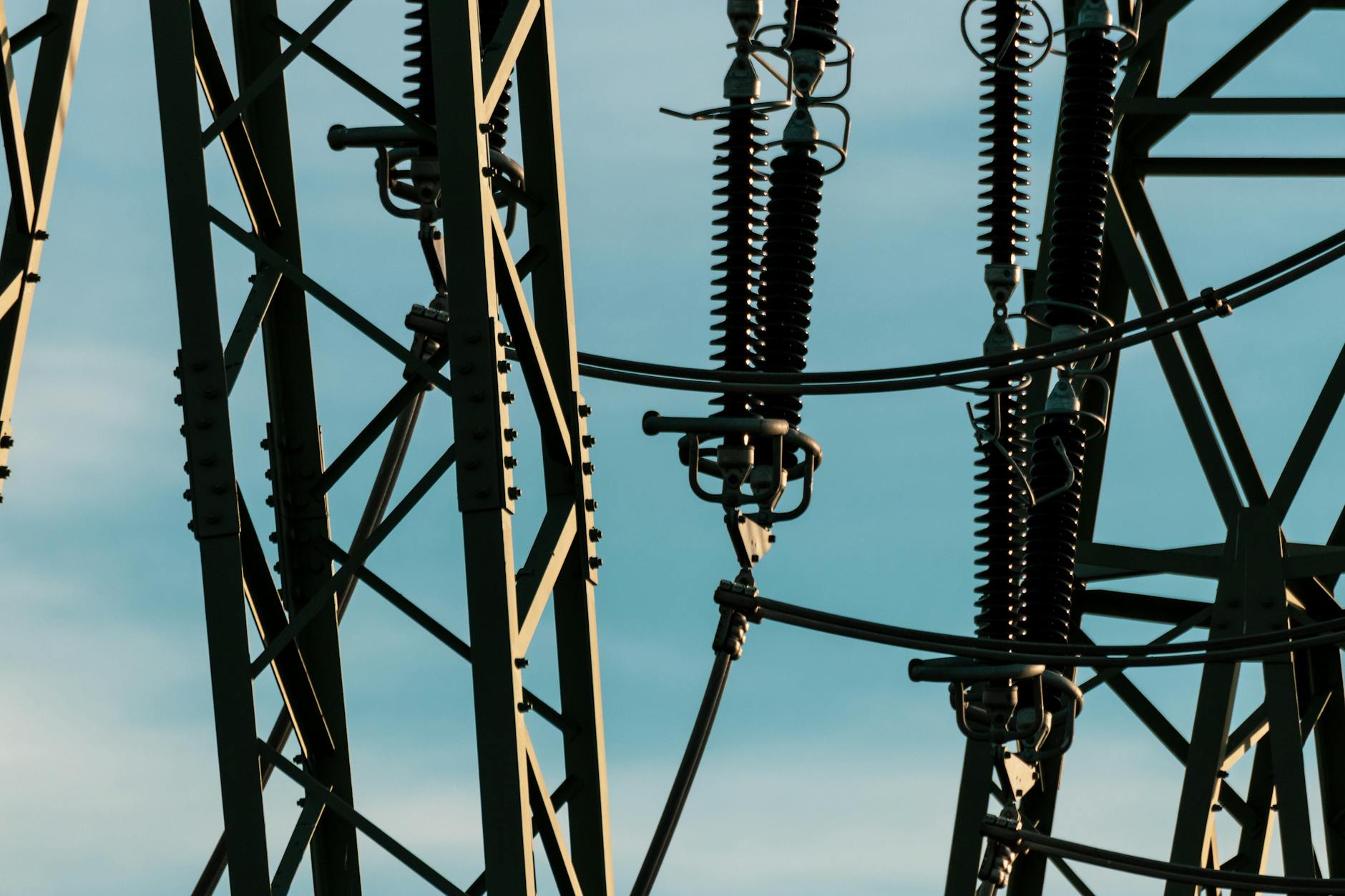
Robotics companies can build better algorithms and more sophisticated robots, but they cannot build or operate them without reliable, baseload power at unprecedented scales. This creates a hard constraint on how fast the robotics industry can grow. Before 2026, many people assumed the AI power crisis was temporary—a problem that cloud providers would solve through efficiency gains and renewable energy. The reality is harsher: data center power consumption is growing faster than efficiency improvements, and renewable energy alone cannot supply the baseload power that training robotics models requires. Constellation Energy’s deal to restart a nuclear reactor specifically to support Microsoft’s AI and robotics infrastructure is not an outlier—it’s the blueprint for the next phase. Nuclear power provides the reliability and scale required for physical AI development. Coal and natural gas plants are being repurposed for data centers across North America.
Companies that own or control power generation assets, or that have invested in reliable power infrastructure, will become critical partners for robotics manufacturers. Tesla Optimus, for example, is reportedly nearing production, but the computational requirements for training and deploying millions of humanoid robots at scale will create power demands that exceed current infrastructure by orders of magnitude. That gap creates opportunity for power infrastructure investors. The limitation here is political and regulatory risk. Nuclear plant restarts face environmental review and public opposition. Power generation companies betting on data center demand face long-term contracts tied to companies that may not survive. The infrastructure suppliers are not insulated from business risk; they’re exposed to entirely new dependencies on end customers that didn’t exist in their traditional utility business models.
Semiconductor Supply Chain Bottlenecks in the Robotics Era
As robotics applications diversify beyond humanoid platforms, the chip ecosystem will fracture into specialized components, each with its own supply constraints. Boston Dynamics’ Spot robot represents one end of the spectrum—high-end, compute-intensive machines requiring premium processors. But the real volume growth will come from lower-cost, specialized robotics designed for specific tasks: manufacturing floor robots, medical delivery systems, warehouse automation, and dozens of niches where robotics offer productivity gains. Each of these verticals requires different chipsets, and companies that own multiple points in the supply chain will benefit. Qualcomm’s CES 2026 announcement of Dragonwing 1Q10 as a robotics platform to compete with Nvidia’s Jetson illustrates this fragmentation. Rather than winner-take-all, the market is consolidating around multiple architectural approaches.
TSMC manufactures both Nvidia and Qualcomm chips. Micron supplies memory for systems from every designer. Credo supplies the active electrical cables that connect AI servers and switches inside data centers—a component that has zero visibility to robot manufacturers but represents critical infrastructure. Corning supplies the fiber optic cables connecting AI data centers to the internet, enabling robots to access training models and cloud-based decision-making systems. This fragmentation means infrastructure suppliers capture value at multiple levels of the supply chain. When Tesla Optimus scales production, TSMC benefits from manufacturing the chips, Micron benefits from memory demand, Credo benefits from data center connectivity, and Corning benefits from backbone networking. Each of these suppliers sees revenue growth regardless of whether Optimus or Boston Dynamics’ next-generation robot becomes the market leader.

Data Center Networking as a Strategic Advantage for Infrastructure Players
The 2026 data center buildout includes a major upgrade in networking infrastructure. Next-generation 115.2-terabit coherent pluggable optics (CPO) switches are expected to arrive in 2026, with supply acceleration through 2027. These switches represent a major shift in how data centers interconnect, enabling faster, more reliable communication between servers training robotics models and the edge devices running those models in the field. Companies like Lumentum benefit directly from the surge in optical component demand. This is a concrete example of how infrastructure suppliers capture value from robotics scaling without directly competing in robotics. Lumentum doesn’t build robots, and it doesn’t compete with Nvidia on processors.
Instead, it manufactures the optical components that enable data centers to run at the speeds and scales required by robotics training. As data center construction climbs toward $700 billion annually, companies focused on networking infrastructure see order-flow visibility that robot makers can only dream about. A networking supplier can sign multiyear contracts with hyperscalers committing to purchase specific volumes of optical components regardless of which robotics application proves most commercially successful. The tradeoff is that these infrastructure companies face pressure to innovate and maintain technological leadership. Lumentum’s optical switches must remain at the cutting edge of performance, or competitors may displace them. Unlike robotics makers, which enjoy some protection from network effects and brand loyalty, infrastructure suppliers operate in winner-take-most dynamics where being second-best is economically devastating.
The GPU and AI Chip Competition That Actually Strengthens Infrastructure Suppliers
will likely see continued GPU market share battles between Nvidia, AMD, Intel, and newer entrants. This looks like a competitive threat to chipmakers, but it’s actually a tailwind for infrastructure suppliers. When multiple companies are developing competing products, aggregate demand for manufacturing capacity, design software, and chip-testing services increases. More companies are ordering chips from TSMC, not fewer. More organizations are building data centers, not fewer. The competitive energy in the GPU market drives up total spending on infrastructure. Intel’s Gaudi 3 GPU offers meaningful performance advantages over Nvidia’s H100 in specific workloads, particularly in robotics training where energy efficiency and model training speed matter. Qualcomm’s Cloud AI 100 excels in inference workloads, which are increasingly important as deployed robots make real-time decisions in the field.
This fragmentation means no single company can vertically integrate everything—each needs to source specialized components. Qualcomm cannot manufacture its own chips at scale, so it depends on TSMC. Intel cannot manufacture high-bandwidth memory internally, so it depends on Micron. Competition in the final product layer drives consolidation in the infrastructure layer. The warning here is overcapacity risk. If chip competition drives down GPU and processor prices faster than expected, it could pressure prices throughout the supply chain. Infrastructure suppliers might see margin compression even as volumes grow. Companies that have invested aggressively in capacity based on optimistic growth forecasts may face underutilization and write-downs.
Real-World Example—The Spot Robotics Supply Chain
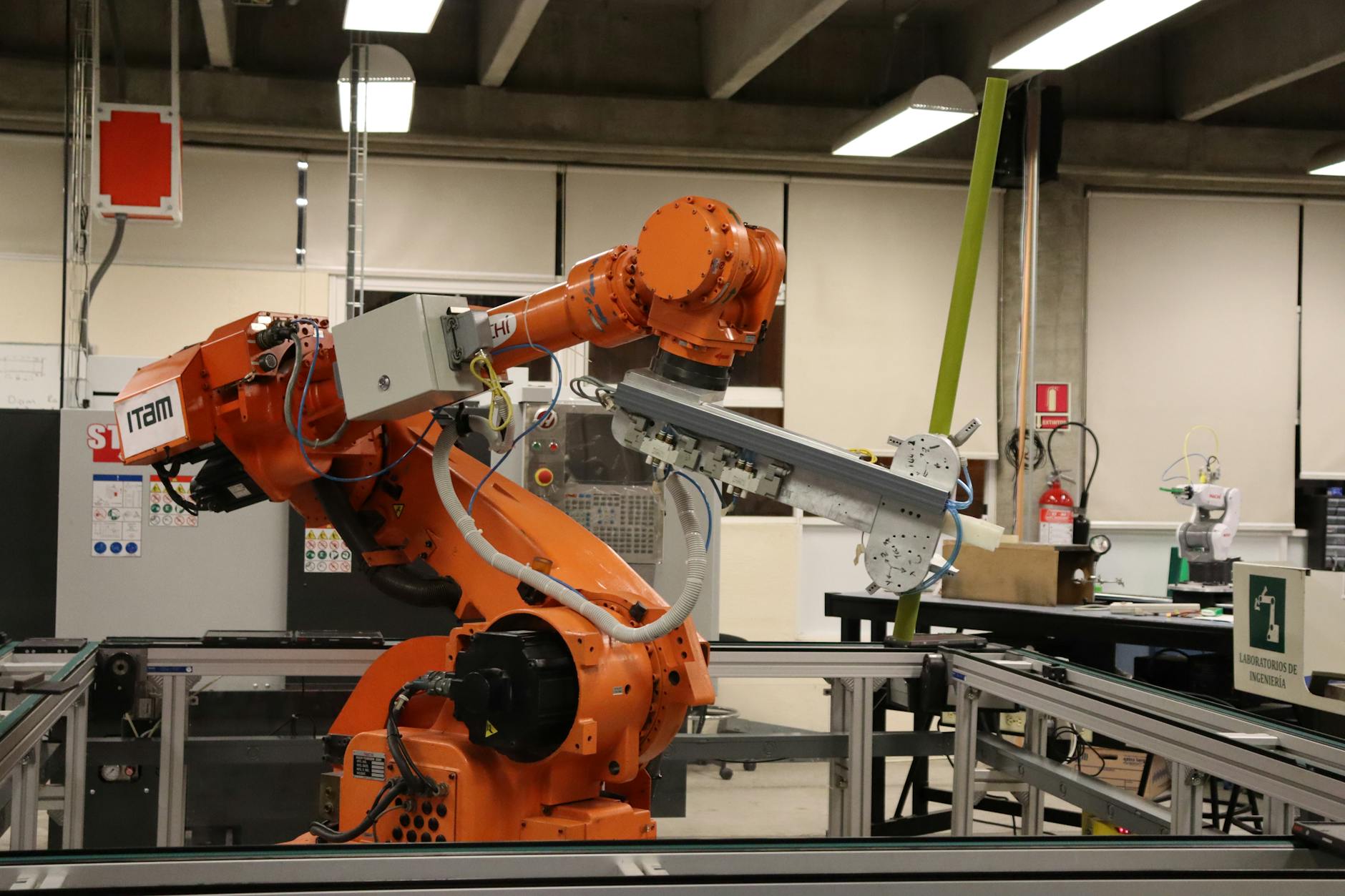
Boston Dynamics’ Spot robot provides a useful case study in how many infrastructure suppliers are embedded in even a single robotics application. Spot operates using high-performance processors for on-device vision and decision-making, plus cloud connectivity for advanced reasoning and learning. That means Spot depends on TSMC for manufacturing its on-device processors, Micron for memory systems, Qualcomm for wireless connectivity, Corning for the fiber optic networks that connect to cloud infrastructure, and ultimately on power infrastructure to run the cloud systems that support its operation. If Spot scales to thousands of units operating in industrial environments, each of these suppliers sees incremental demand with low friction and high visibility.
The same applies to Tesla Optimus. As Tesla scales Optimus from prototype to production, demand for custom chips, memory, power systems, and data center infrastructure accelerates. Infrastructure suppliers benefit from Optimus scaling even if they have no contractual relationship with Tesla directly. They benefit because Tesla’s success creates downstream demand for semiconductors, power, and networking that flows through industry suppliers.
The 2026 Physical AI Shift and Its Infrastructure Implications
The robotics boom of 2026 is inseparable from the shift from language-based generative AI toward physical AI—models designed for spatial awareness and real-time 3D environmental processing. This transition requires far more computing power and far more sophisticated training infrastructure than previous AI eras. Language models can be trained on static text. Physical AI models require constant access to video, sensor data, and real-world feedback loops. That means more data streaming into training systems, more servers processing that data, and more power required to run everything continuously.
This shift structurally favors infrastructure suppliers over application companies. The companies building the models and robots will face intense competition and margin pressure. The companies supplying the foundational infrastructure—power, semiconductors, networking, manufacturing capacity—face structural demand growth that exceeds any individual competitor’s ability to impact through superior product design. That’s the picks and shovels thesis: not every robotics company will survive, but nearly every successful one will depend on the same infrastructure suppliers. That dependency creates value for the infrastructure layer that no individual robotics competitor can claim.
Conclusion
The next “Nvidia” of robotics could be a company most people have never heard of—a semiconductor manufacturing equipment supplier, a nuclear power plant operator, a networking equipment maker, or a memory manufacturer. The robots everyone will talk about—Tesla Optimus, Boston Dynamics’ next platform, competitors from Toyota and Honda—will depend on infrastructure that they cannot control. ASML, TSMC, Micron, Corning, and Credo represent just the visible layer of that infrastructure.
As robotics scales from proof of concept to mass deployment, the companies providing the foundational technologies will capture outsized value relative to the glamorous robot makers. For investors and builders, the lesson is clear: the robotics opportunity is not only about which robot wins, but about which infrastructure companies can scale to meet demand without creating new bottlenecks. The picks and shovels play in robotics will likely deliver better risk-adjusted returns than betting on any single robot maker, because infrastructure suppliers serve the entire industry regardless of which companies and applications ultimately dominate the market.