
The next NVIDIA in robotics may not be another chip manufacturer—it could be the company that creates the operating system. NVIDIA itself is positioning for this role with its ambitious full-stack robotics platform announced at CES 2026, explicitly marketing itself as “the Android of generalist robotics.” Rather than just selling components, NVIDIA is building an entire ecosystem designed to commoditize the underlying hardware and create an insurmountable moat around software. This mirrors the mobile industry, where Android’s dominance came not from inventing the best phones but from providing the foundation on which phones are built. The robotics industry is at an inflection point similar to mobile computing in the mid-2000s.
Hardware manufacturers are proliferating—humanoids from Figure and Agility, industrial arms from FANUC and KUKA, and countless startups building specialized machines. What’s missing is the connective tissue. NVIDIA recognized this gap and is moving aggressively to fill it. By connecting 2 million robotics developers with Hugging Face’s 13 million AI builders through its Isaac and GR00T integration into the LeRobot framework, NVIDIA is creating network effects that could make alternative platforms increasingly difficult to build on.
Table of Contents
- Why Software Platforms, Not Hardware, Define Dominance in Robotics
- NVIDIA’s Multi-Layered Platform Strategy for Physical AI
- The Android Comparison—Why Platform Dominance Wins
- Developer Ecosystem and the Role of Hugging Face Integration
- Real-World Industry Adoption and Near-Term Deployments
- Challenges and Limitations to Platform Dominance
- What Emerges as Robotics Matures
- Conclusion
Why Software Platforms, Not Hardware, Define Dominance in Robotics
In mature technology categories, the winner is rarely the hardware maker. Microsoft didn’t dominate computing because of excellent processors—it won because Windows became the standard platform. Google didn’t win search because of superior server chips; it won because its algorithm and ecosystem became the default. The pattern repeats: once a platform reaches critical mass, developers build for it, users expect it, and competitors struggle to catch up. robotics is following this trajectory. Individual robot manufacturers like Universal Robots, ABB Robotics, and KUKA have built exceptional hardware, but each operates in relative isolation. When a developer wants to write code for a manipulator arm, they face dozens of proprietary interfaces, programming languages, and vendor-specific workflows.
This fragmentation makes the entire market less efficient. A dominant software platform solves this problem by providing a single target for developers to build toward, regardless of which physical hardware they’re using. NVIDIA’s approach—offering unified foundation models, simulation tools, and orchestration frameworks—abstracts away these differences. The advantage compounds over time. As more developers target the platform, more applications and tools emerge. More applications make the platform more valuable. More valuable platforms attract more developers. This is precisely how Android went from a startup acquisition to owning 70% of the global mobile market.

NVIDIA’s Multi-Layered Platform Strategy for Physical AI
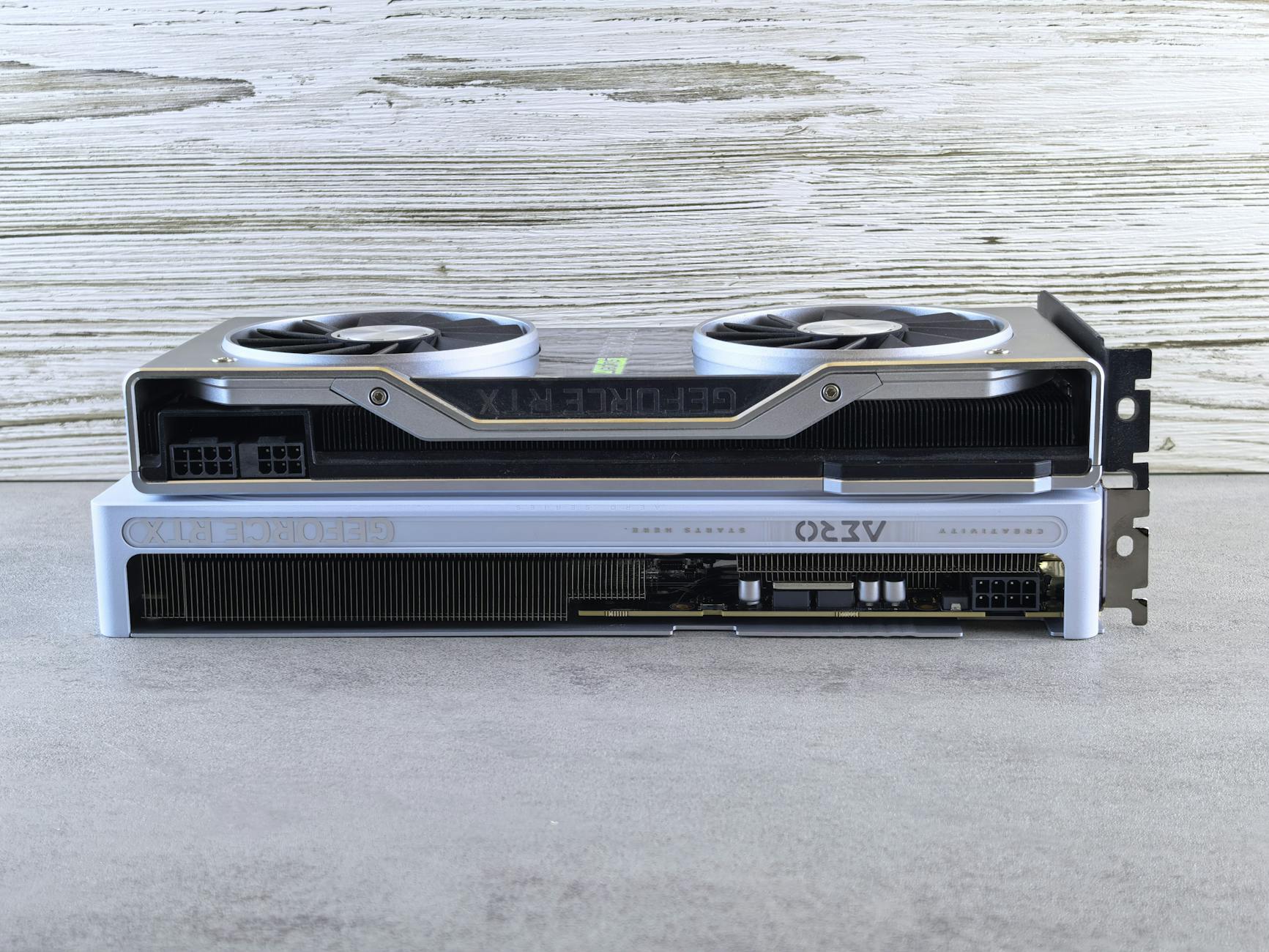
nvidia‘s robotics platform isn’t a single product—it’s a stack. At the foundation are the new foundation models released at CES 2026: Cosmos Transfer 2.5 and Cosmos Predict 2.5 for generating synthetic training data and predicting robot behavior, Cosmos Reason 2 as a visual language model for robot perception, and Isaac GR00T N1.6 specifically designed for humanoid robots. These models allow developers to train and deploy AI systems without requiring massive labeled datasets or years of research. Above the models sits the Jetson T4000, the new inference module powered by Blackwell architecture that delivers 4x greater energy efficiency than previous generations. This is critical—robotics is moving toward edge AI, where robots need to run AI models on-device rather than constantly communicating with cloud servers. A 4x efficiency improvement means robots can operate longer on battery, fit AI compute in smaller form factors, and reduce latency. A logistics robot at a warehouse can process camera feed and make decisions locally, without waiting for cloud responses.
The orchestration layer includes NVIDIA OSMO, an open-source command center that integrates workflows from data generation through training to deployment. Think of it as an IDE for robotics, combining project management, simulation, model training, and deployment into one system. Isaac Lab-Arena, the open-source simulation framework released at CES 2026, allows developers to test robot behaviors in virtual environments before trying them in the real world. This is essential—physical testing is expensive and dangerous. A developer can iterate in simulation at digital speed. The limitation here is that this stack remains nascent. While impressive, it’s still early. Teams adopting it now are essentially beta testers for the broader ecosystem.
The Android Comparison—Why Platform Dominance Wins
When Android launched in 2008, it was a reasonable bet that the market would consolidate around a single mobile operating system. The question was which one. At the time, Apple’s iOS had a head start, better hardware integration, and the prestige of being first. But Android won not because it was technologically superior in every dimension, but because it made an explicit bet on openness, developer-friendliness, and ecosystem breadth. Google freely licensed Android to any manufacturer. Developers could build once and target hundreds of devices. The software became the center of gravity. Robotics is following the same trajectory.
Today, a developer training a model for robot manipulation has to decide: build for a humanoid from Figure, an industrial arm from FANUC, a mobile manipulator from Agility, or something else? Each choice locks you into a particular ecosystem. NVIDIA’s strategy is to become the layer above these hardware choices. Train a model on NVIDIA’s platform, and it can theoretically run on any NVIDIA-accelerated robot. This abstraction is powerful. The difference from Android is that robotics is not just about software running on generic hardware. It’s about software coordinating with hardware-specific capabilities. A model trained for Figure’s humanoid may not work perfectly on Agility’s legged machine. This is a real constraint that could prevent NVIDIA from achieving the kind of absolute dominance Android did. Robotics may support multiple platforms at the software layer, similar to how multiple Linux distributions coexist, while still maintaining NVIDIA as the underlying engine.
Developer Ecosystem and the Role of Hugging Face Integration
The practical measure of any platform’s power is how many developers are building on it. NVIDIA’s integration with Hugging Face—which hosts 13 million active AI builders—represents a calculated move to tap existing AI talent. Rather than trying to create robotics developers from scratch, NVIDIA is bridging the AI and robotics communities. A machine learning engineer with no robotics experience can now download a pre-trained model from Hugging Face, use the Isaac framework to integrate it with physical hardware, and start building. The LeRobot framework, which combines NVIDIA’s hardware with Hugging Face’s distribution network, lowers the barrier to entry dramatically. Previously, a small team building a specialized robot might invest months just setting up the compute pipeline and training infrastructure.
Now they can focus on their differentiation—the novel mechanism, the specific application, or the unique data they’ve collected. The 110+ global partnerships NVIDIA has announced include robot brain developers, industrial automation leaders, and humanoid pioneers, all committing to build on NVIDIA’s platform. These partnerships create positive feedback: as more partners commit, the ecosystem becomes more valuable, attracting more partners. The tradeoff is that centralization around NVIDIA creates dependency. Companies building on NVIDIA’s platform are making a bet on NVIDIA’s long-term commitment to robotics. If NVIDIA’s priorities shift—or if the company decides to favor certain types of hardware or applications over others—the entire ecosystem feels the ripple effects. This is similar to Apple’s app store policies or Google’s search ranking changes: the platform owner has tremendous power to shape incentives.
Real-World Industry Adoption and Near-Term Deployments
The measure of a platform isn’t potential—it’s deployment. NVIDIA’s partnerships with companies like ABB Robotics, FANUC, KUKA, Universal Robots, Figure, and Agility indicate that major players are betting on this stack. These aren’t small startups; these are the companies already shipping robots to factories and warehouses. ABB and FANUC collectively have thousands of robots in the field worldwide. If they integrate NVIDIA’s platform into their next generation of products, adoption could accelerate rapidly. Figure’s partnership is particularly significant because Figure is building general-purpose humanoids.
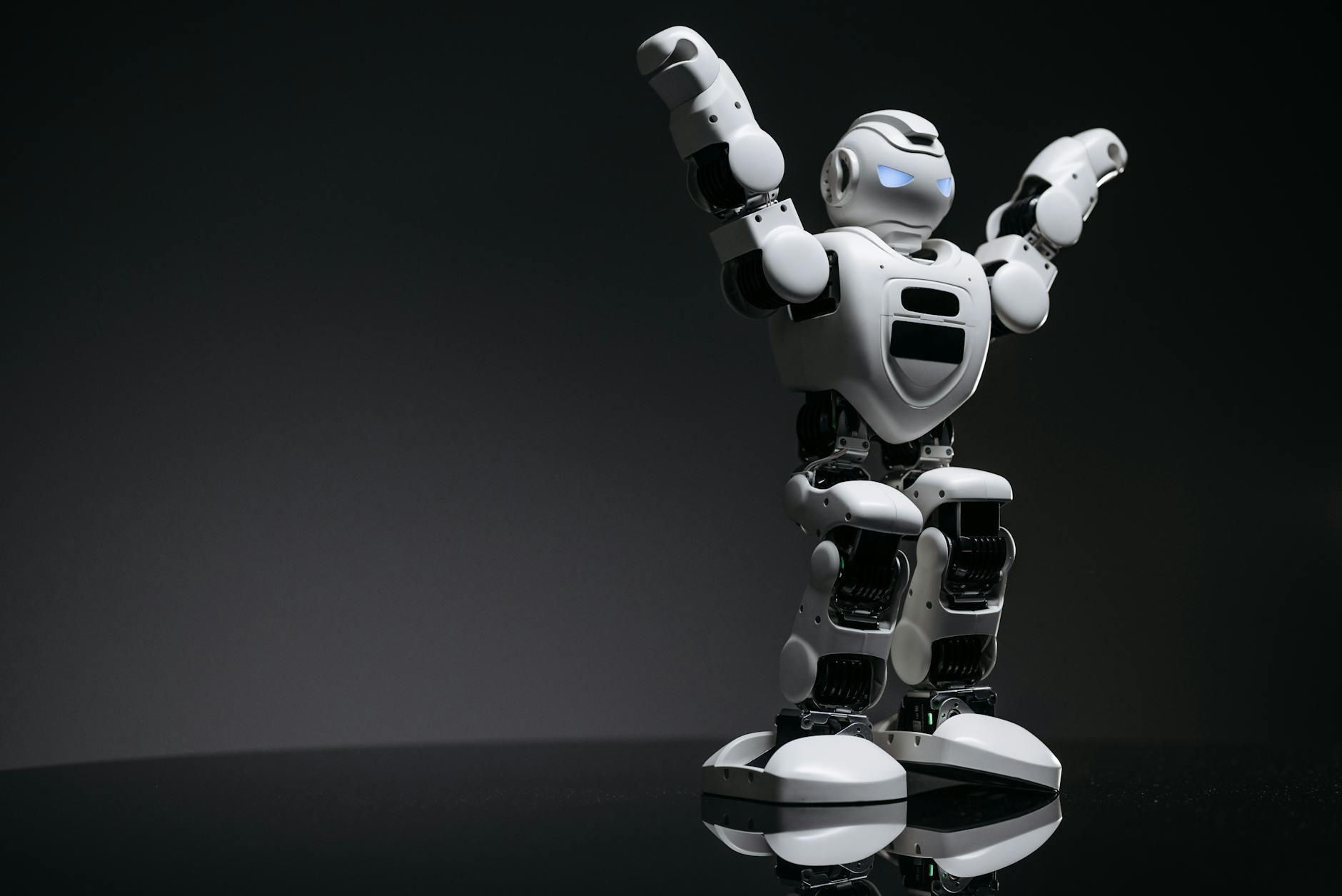
Humanoids are notoriously difficult to control—they have 30+ degrees of freedom and must balance, walk, manipulate objects, and interact with human environments simultaneously. Using Isaac GR00T N1.6, Figure can accelerate the development of the control and perception systems that make humanoids practical. The company recently demonstrated a prototype performing warehouse tasks, and NVIDIA’s platform could enable the next leap in capability. Similarly, Agility’s legged robots face similar control challenges, making NVIDIA’s foundation models valuable for translating high-level goals into motor commands. The warning here is realistic: most of these partnerships are still in early stages. Claims of platform dominance often precede actual large-scale deployment by years. Mobile operating systems were heavily fragmented for many years even after Android’s release.
Challenges and Limitations to Platform Dominance
Not every company wants to build on NVIDIA’s platform. Some have competing interests or different visions. Tesla has invested heavily in its own robotics compute and neural network infrastructure. Boston Dynamics (now owned by Hyundai) has historically built proprietary solutions. Smaller robotics firms may lack the engineering resources to integrate with NVIDIA’s stack, or they may prefer to keep their AI algorithms proprietary. There’s also the question of whether robotics is even ready for platform consolidation.
Unlike smartphones—where all phones have touch screens, run applications, and perform similar tasks—robots are wildly diverse. A surgical robot has nothing in common with a warehouse picker. A humanoid has different control problems than a drone. A self-driving car needs different perception than a grasping arm. Android won because phones are fundamentally similar. Robotics may remain bifurcated into multiple platforms, each serving different domains. NVIDIA could dominate the industrial and humanoid segments while other platforms win in specialized areas like medical robotics or autonomous vehicles.
What Emerges as Robotics Matures
Robotics is already the fastest-growing category on Hugging Face, with NVIDIA’s open models leading downloads. This suggests momentum, but momentum isn’t destiny. The history of technology is littered with platforms that seemed dominant but ultimately fragmented—see the various attempts at unified mobile platforms before iOS and Android, or the multiple AI frameworks (TensorFlow, PyTorch, JAX) that coexist rather than consolidating. What seems more likely is that NVIDIA becomes the dominant *infrastructure layer*, similar to how Linux dominates server infrastructure even though many companies run proprietary systems on top.
NVIDIA provides the chips, the simulation tools, the foundation models, and the orchestration framework. But companies building consumer-facing robotics products will still develop proprietary behaviors, applications, and interfaces. The underlying engine is NVIDIA; the visible layer is company-specific. This is less dramatic than becoming the Android of robotics, but it’s also more realistic and likely more enduring.
Conclusion
The next NVIDIA in robotics probably is NVIDIA—or at least, whoever builds the software platform that all robots are expected to run on. NVIDIA has correctly identified that robotics’ bottleneck isn’t hardware; it’s the fragmentation of software stacks. By creating a unified platform with foundation models, edge compute, simulation tools, and developer integrations, NVIDIA is playing the long game that created Android’s dominance. However, robotics is more heterogeneous than mobile phones, and multiple platforms may coexist.
The real winner will be whoever solves the hardest problem: not the code itself, but the economics and incentives that get diverse hardware makers and software developers to commit to a single standard. NVIDIA’s 110+ partnerships and $2 trillion market cap suggest they have the resources to win that game. But watch for competitors, open-source alternatives, and specialized platforms that outflank NVIDIA in specific domains. The next decade will show whether robotics truly is ready for platform consolidation or whether it follows a messier path.