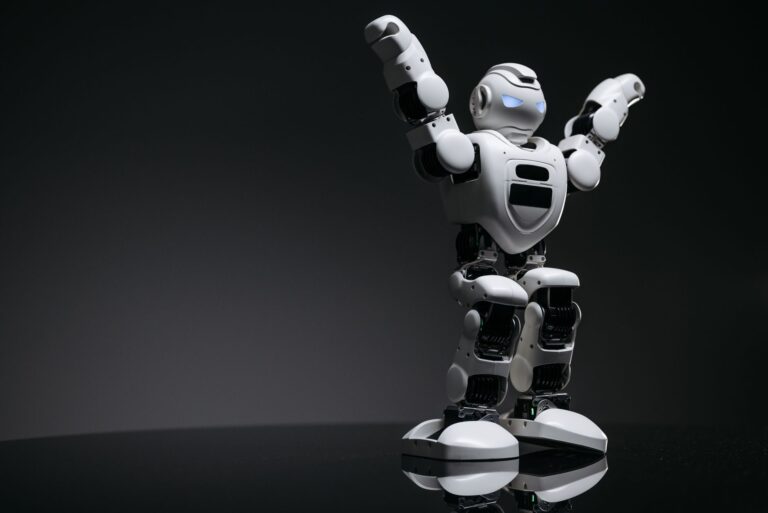

Figure AI exemplifies the strategy that made Nvidia dominant in AI chips during the early 2020s, and now robotics companies are copying the playbook directly. The $39 billion post-money valuation Figure achieved in its Series C funding round—backed by Nvidia, Brookfield Asset Management, Intel Capital, and others—demonstrates that robotics startups aren’t just adopting Nvidia’s hardware, but replicating the entire go-to-market model that turned chip sales into ecosystem dominance. They’re building on Nvidia’s Jetson modules, Isaac Sim simulation software, and GR00T foundation models, creating a dependency that mirrors the relationship between Nvidia and AI cloud providers just a few years ago. The parallel is striking because Nvidia’s early playbook involved three steps: invest heavily in ecosystem companies, provide technical and financial backing to ensure adoption of your hardware, and position your tools as the standard layer that everything else builds on top of. Serve Robotics offers the clearest proof this works. Since Nvidia disclosed its 10% ownership stake in July 2024 (worth $3.7 million at the time), Serve’s stock has surged 233%.
Nvidia has invested approximately $12 million total and has been a technical partner since 2018. Serve now guides 2026 revenue to approximately $26 million—roughly 10x growth over the previous fiscal year. This isn’t happening in isolation. Nvidia has committed over $40 billion to equity investments in 2026 specifically to ensure the entire AI supply chain runs on Nvidia hardware. Major robotics players including ABB Robotics, FANUC, YASKAWA, KUKA, Agility Robotics, and others are all building on Nvidia’s technology stack. The robotics industry is essentially following the same consolidation and standardization path that GPU computing followed.
Table of Contents
- Why Robotics Companies Are Adopting Nvidia’s Hardware-First Model
- The Technology Stack Behind the Strategy – Jetson, Isaac Sim, and Beyond
- Serve Robotics—The Clearest Proof That the Playbook Works
- The Ecosystem Lock-in Strategy—Why Nvidia Benefits From Backing Robotics Companies
- Risks of Over-Reliance on Nvidia’s Ecosystem and Hardware Costs
- The Broader Robotics Industry Shift—ABB, FANUC, and Legacy Manufacturers Adopting Nvidia
- The Long-Term Market Dynamics and Nvidia’s Vision for Physical AI
- Conclusion
Why Robotics Companies Are Adopting Nvidia’s Hardware-First Model
The attraction is straightforward: robotics companies historically struggled with edge computing, simulation, and training infrastructure. Each company had to solve these problems independently, which meant long development cycles and expensive engineering overhead. nvidia solved this by packaging solutions—Jetson for edge hardware, Isaac Sim for simulation, Cosmos for world models, and GR00T for foundation models—into a unified stack that robotics companies could adopt immediately. Figure AI’s approach illustrates this perfectly. The company raised over $1 billion in Series C funding and immediately integrated Nvidia’s Jetson modules and Isaac Sim into its development pipeline. Instead of spending years building proprietary simulation tools or training infrastructure from scratch, Figure could focus on robot design and real-world deployment. This acceleration is worth billions in time-to-market value.
Companies that build on Nvidia’s stack rather than building everything in-house can launch products 2-3 years faster than competitors using alternative platforms. The model works because it mirrors how Nvidia built its AI dominance. In the early days of machine learning, Nvidia didn’t just sell GPUs—it provided CUDA software, neural network libraries, and training frameworks that made using Nvidia hardware the path of least resistance. Robotics companies are making the same calculation. Using Nvidia’s tools reduces engineering complexity and financial risk. The downside, however, is vendor lock-in. Once a company’s entire robot stack is built on Nvidia hardware and software, switching to a competitor becomes prohibitively expensive.

The Technology Stack Behind the Strategy – Jetson, Isaac Sim, and Beyond
Nvidia’s robotics software stack solves three critical problems: real-time processing at the edge, safe training through simulation, and AI foundation models that can understand physical space. Jetson modules run on the robot itself, handling real-time inference and control without needing a connection to cloud servers. Isaac Sim allows engineers to train robot behaviors in simulation thousands of times faster than learning in the physical world, where mistakes destroy expensive hardware. GR00T foundation models provide base reasoning capabilities that robotics companies can fine-tune for specific tasks. The combination creates a complete workflow: design a robot behavior in Isaac Sim, train it with GR00T as the foundation model, optimize for real-time inference on Jetson hardware, and deploy to production. this is the same “software stack as competitive moat” strategy that worked for Nvidia in AI.
Companies like ABB Robotics and FANUC have both announced plans to integrate Nvidia’s Jetson and Isaac technology into their next-generation robots. They aren’t replacing proprietary systems entirely, but layering Nvidia’s technology on top as the edge AI and simulation foundation. The limitation here is that Nvidia’s stack still requires significant engineering work to customize for specific robotic applications. Cosmos world models and GR00T foundation models are general-purpose tools, not plug-and-play solutions. Companies still need experienced AI engineers to fine-tune these models, integrate them with robotics hardware, and handle edge cases. The stack removes generic infrastructure work but doesn’t eliminate domain expertise requirements. Additionally, Jetson hardware costs money—a high-end Jetson GPU module can cost thousands of dollars per unit, which matters when robotics margins are thin and production volume is low.
Serve Robotics—The Clearest Proof That the Playbook Works
Serve Robotics’ trajectory provides the most concrete evidence that Nvidia’s investment-first model translates to financial success in robotics. The company existed for years with modest growth until Nvidia became a strategic partner and investor in 2018. For six years, growth was slow. Then in July 2024, Nvidia formally disclosed a 10% ownership stake, and the market’s perception shifted overnight. Serve’s stock moved from $3.50 to $12.97 in the months following the announcement—a 270% gain that stabilized around $10.89. The stock surge reflects investor confidence that Nvidia’s backing provides both technical validation and distribution advantage. Nvidia doesn’t just invest capital; it connects portfolio companies to enterprise customers, provides engineering resources, and ensures adoption of Nvidia hardware in production systems.
For Serve, this translated into 2026 revenue guidance of approximately $26 million, a 10x jump from prior-year performance. This kind of acceleration is difficult to achieve organically in robotics—it typically requires either a transformative product innovation or a major customer contract. Serve achieved it partly through both, but largely through becoming an Nvidia portfolio company. Comparison is instructive. Figure AI raised a larger absolute amount ($1 billion in Series C) and achieved a higher valuation ($39 billion) because it operates in a hotter category (humanoid robotics) and has more high-profile backing. Serve raised less capital ($12 million from Nvidia plus prior funding) but still achieved accelerated growth because the Nvidia partnership solved a specific problem: Serve needed edge computing and simulation credibility, which Nvidia provided. The lesson is that Nvidia’s playbook isn’t about size—it’s about strategic dependency. Serve needed Nvidia’s hardware, Nvidia needed a customer success story in autonomous delivery, and the alignment created value for both.
The Ecosystem Lock-in Strategy—Why Nvidia Benefits From Backing Robotics Companies
Nvidia’s $40+ billion equity investment strategy in 2026 appears generous, but it’s deeply self-interested. Every robotics company that standardizes on Jetson hardware, Isaac Sim, and GR00T models represents guaranteed long-term revenue for Nvidia. These aren’t one-time chip sales; they’re recurring commitments. Isaac Sim requires subscription licensing. Jetson hardware needs to be replaced and upgraded. GR00T foundation models will likely have premium versions requiring licensing fees. Nvidia is essentially prepaying for market development. This mirrors Nvidia’s early AI strategy exactly. In 2016-2018, Nvidia invested in and backed AI startups partly out of ecosystem enthusiasm, but primarily because every AI startup that standardized on CUDA and GPUs represented predictable future revenue.
Companies that built on Nvidia’s stack became loyal customers. When competitors tried to offer cheaper alternatives (AMD GPUs, TPUs), these companies had too much sunk cost in Nvidia infrastructure to switch. The same dynamic is now unfolding in robotics. The tradeoff is real, though, and matters for robotics companies deciding whether to adopt Nvidia’s stack. Lock-in provides security and resources but reduces strategic flexibility. If Nvidia raises hardware prices, decreases software support, or shifts strategy, robotics companies have limited alternatives. Companies like Figure AI accepted this tradeoff because the speed and capital advantages outweighed the risk. Smaller companies like Serve Robotics had even less choice—without Nvidia’s backing, capital and engineering resources would be scarcer. For investors, this creates a structural advantage for the Nvidia-backed robotics players versus those pursuing independent infrastructure strategies.
Risks of Over-Reliance on Nvidia’s Ecosystem and Hardware Costs
The robotics industry is now replicating one of the central risks that AI companies faced after betting heavily on Nvidia’s monopoly: vendor lock-in at a critical juncture. In AI, this manifested as Nvidia raising GPU prices in 2022-2023, knowing companies had no feasible alternatives. Companies like OpenAI paid premium prices for scarce H100 inventory partly because the cost of rewriting everything for AMD or another competitor was prohibitively high. Robotics companies face the same risk. If Nvidia’s Jetson hardware becomes a bottleneck or if Nvidia raises licensing costs for Isaac Sim or GR00T, robotics companies will face difficult choices. Hardware costs are a related but distinct concern. Jetson modules cost $500-5,000+ per unit depending on performance tier. For a robotics company selling robots at $10,000-50,000 each, Nvidia hardware might represent 10-20% of bill-of-materials cost.
As production scales, this becomes significant. Figure AI and Serve Robotics can absorb these costs because they have sufficient funding and can spread hardware costs over large production volumes. Smaller robotics startups have less flexibility. A competitor using lower-cost edge processors from Qualcomm or building custom silicon could potentially undercut on price, though this would mean sacrificing the speed-to-market advantage of Nvidia’s integrated stack. The final risk is commoditization. As more robotics companies standardize on Jetson, Isaac Sim, and GR00T, these become baseline expectations rather than competitive advantages. The initial wave of Nvidia-backed robotics companies (Figure, Serve, Agility) capture first-mover advantage. Later entrants get the same technology but without the investment capital or strategic partnership benefits. This is exactly what happened in AI: early adopters of CUDA enjoyed competitive advantages until CUDA became the baseline and differentiation shifted to model architecture and training data rather than hardware choices.

The Broader Robotics Industry Shift—ABB, FANUC, and Legacy Manufacturers Adopting Nvidia
Major industrial robotics manufacturers didn’t wait for startups to prove the model. ABB Robotics, FANUC, YASKAWA, and KUKA have all announced integration plans with Nvidia’s technology stack. These are conservative companies with deep engineering expertise and existing customer bases. Their adoption signals that Nvidia’s robotics stack isn’t a startup fad but an industry-standard direction. For example, ABB and FANUC announced they would integrate Nvidia Jetson and Isaac technology into their next-generation collaborative robots.
This means billions of dollars worth of industrial robotics hardware are adopting Nvidia’s edge computing and simulation standards. The scale is massive. Unlike Figure or Serve, which are measured in hundreds or thousands of robots, ABB and FANUC each sell tens of thousands of robots annually. If each of those robots includes Nvidia hardware, the revenue implications for Nvidia are enormous. This also validates the playbook: Nvidia’s strategy works at both startup (Figure, Serve) and enterprise scale (ABB, FANUC).
The Long-Term Market Dynamics and Nvidia’s Vision for Physical AI
Nvidia frames robotics investment through the lens of “physical AI”—AI systems that perceive and act in the physical world rather than just processing data. The company released a vision paper positioning physical AI as the next major computing frontier, comparable to the mobile Internet transition or the GPU AI wave. By backing robotics companies and embedding its technology stack into the industry, Nvidia is attempting to shape this frontier before competitors establish alternative standards. This is Nvidia’s 10-year strategy.
Today’s investments ($40+ billion in 2026) look expensive until you consider the market-shaping value. If Nvidia successfully makes Jetson, Isaac, and GR00T the default standards for robotics, the company has a 15-20 year revenue stream from hardware sales, software licensing, and ecosystem licensing fees. Competitors would face the same obstacles Nvidia encountered in GPU computing: a deeply entrenched technology stack, ecosystem lock-in, and the inertia of thousands of companies optimized around Nvidia’s architecture. For robotics companies, the bet is whether Nvidia maintains technological leadership, keeps pricing reasonable, and continues investing in the ecosystem. If those conditions hold, the first-mover advantage is substantial.
Conclusion
Robotics companies following Nvidia’s playbook are making a calculated bet that speed and access to capital matter more than long-term strategic independence. Figure AI’s $39 billion valuation and Serve Robotics’ 233% stock surge suggest the bet is paying off, at least in the short term. Companies that adopt Nvidia’s integrated stack (Jetson, Isaac Sim, GR00T) ship products faster, access better simulation tools, and gain partnership benefits that would take years to replicate independently.
Nvidia’s $40+ billion investment commitment in 2026 shows the company is serious about making this the industry standard. The long-term success of this strategy depends on whether Nvidia continues to deliver technological leadership, whether robotics companies avoid over-reliance on a single vendor, and whether the physical AI market grows large enough to justify both the investment and the consolidation around Nvidia’s stack. For investors, the robotics companies showing the most promise are those with strong Nvidia backing but also developing proprietary capabilities (like Figure’s robot design or Serve’s autonomy algorithms) that create defensible advantages beyond hardware and simulation tools. The companies at highest risk are those that adopt Nvidia’s stack wholesale without building differentiated capabilities on top of it—they risk becoming interchangeable suppliers dependent on Nvidia’s continued generosity and technological leadership.