
Yes, a global automation supplier has the potential to become the next Nvidia of robotics—a company that controls the foundational infrastructure upon which the entire ecosystem builds. Unlike Nvidia’s dominance in AI chips through specialized hardware and software ecosystems, this supplier would command the market through breadth of reach, control over industrial standards, and the ability to integrate hardware, software, and intelligence across manufacturing floors worldwide. ABB, with 14% global market share and over 400,000 robots already installed globally, is arguably closest to this position today, but the race remains wide open as the robotics market explodes from approximately $50 billion in 2025 to over $150 billion by 2030. The comparison matters because it reveals what true dominance looks like in automation.
Nvidia succeeded not just by making fast GPUs, but by creating an ecosystem that made it nearly impossible for competitors to offer customers alternatives. A dominant global automation supplier would need to do the same: own the integration layer, control software standards, and become the default choice across industries. The stakes are enormous. The global robotics market is projected to exceed $200 billion by decade’s end, and industrial robot installations just hit an all-time record of $16.7 billion in market value. Whoever consolidates that market will define how manufacturing happens for the next generation.
Table of Contents
- Why Global Automation Suppliers Are Positioned to Win the Robotics Market
- The Software and Integration Layer Will Determine the Winner
- Market Leadership and Recent Strategic Moves Signal the Race Heating Up
- Investment Returns and the Financial Case for Dominance
- The Hidden Risk: Modularization Could Prevent Any Single Company from Dominating
- The Physical AI Battlefield
- The Consolidation Timeline and What Comes Next
- Conclusion
Why Global Automation Suppliers Are Positioned to Win the Robotics Market
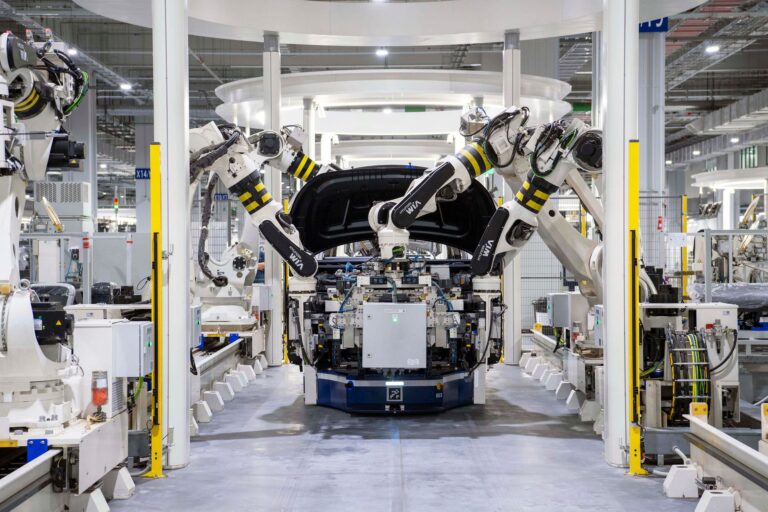
The incumbents have advantages that pure robotics startups cannot replicate in a reasonable timeframe. ABB, FANUC, Yaskawa Electric, and KUKA didn’t just build robots—they spent decades building relationships with the world’s largest manufacturers, integrating into production lines, and becoming irreplaceable parts of industrial operations. FANUC, founded in 1958, and Yaskawa Electric, which introduced Japan’s first industrial robot in 1977, have installed infrastructure across every major manufacturing region. These aren’t flashy companies, but they are everywhere.
The market dynamics favor consolidation around these players precisely because replacing a robotics supplier is tremendously disruptive. A manufacturer that has trained workers on ABB systems, integrated them into production logic, and built decades of operational experience cannot easily switch to a competitor. this switching cost is ABB’s moat, and it grows stronger the more factories they touch. As industrial automation accelerates, this installed base becomes a compounding advantage rather than legacy baggage. The risk for these incumbents is not that they will lose their dominance, but that they fail to adapt their business models quickly enough to capture software and AI value rather than just hardware value.
The Software and Integration Layer Will Determine the Winner
Here lies the critical difference between controlling a robotics market and becoming a true platform company like nvidia. Nvidia won because GPUs became the mandatory foundation for AI development—developers built for Nvidia first, and alternatives second. For global automation suppliers, the equivalent prize is the software and intelligence layer that ties robots together into coherent production systems. This is where the competitive game is actually being decided right now, and the incumbents are not running away with it. Consider the NVIDIA Physical AI Initiative, which partners with Boston Dynamics, Caterpillar, Franka Robotics, LG Electronics, and others to build generalized robot intelligence.
This is Nvidia’s way of ensuring that the software layer—the thinking part of robotics—becomes tied to Nvidia’s computing platforms, not to any single robot manufacturer. Separately, ABB and Universal Robots partnered with Skild AI to deploy a shared intelligence layer for generalized robot understanding. The limitation here is clear: whichever supplier controls the software layer becomes the Nvidia of robotics, but controlling hardware alone is not enough. ABB has the installed base, but if customers can achieve superior results using non-ABB robots running Nvidia-powered intelligence, the value shifts away from ABB’s core business. This is the real battlefield, and the advantage is not yet settled.
Market Leadership and Recent Strategic Moves Signal the Race Heating Up
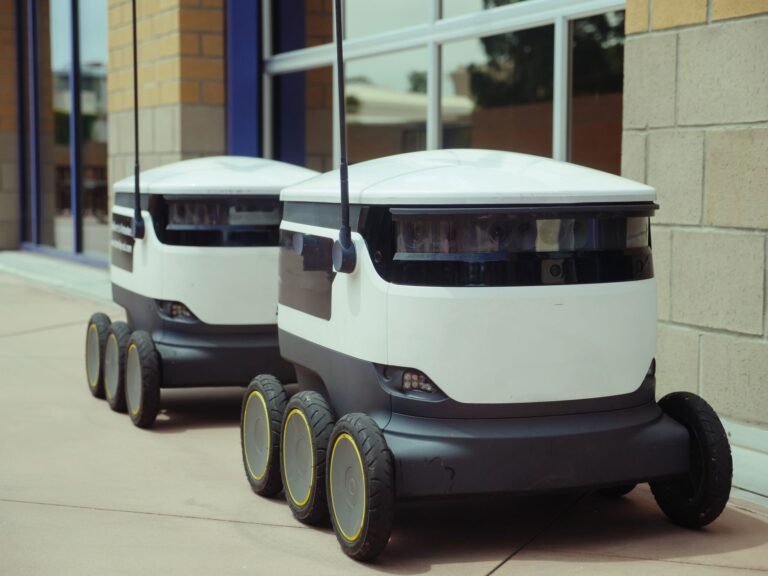
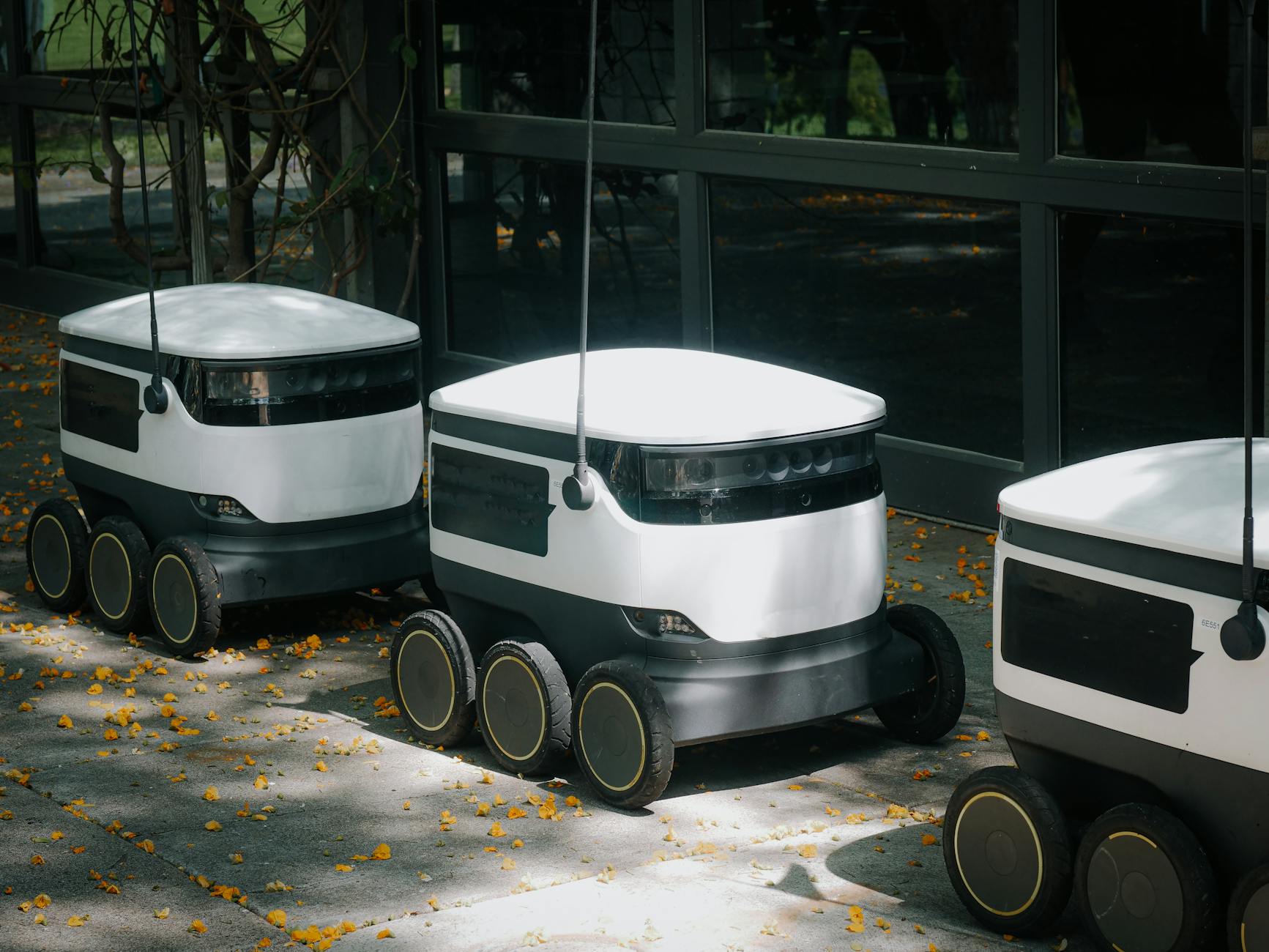
The concrete moves by major players reveal how seriously they are taking this opportunity. In February 2025, Doosan Robotics appointed Kim Min-pyo as CEO with an explicit focus on North America and Europe expansion—this is a challenger making clear bets to grow beyond its traditional Korean base. Meanwhile, partnerships like the RoboSense and Coco Robotics collaboration formed in January 2025 for last-mile logistics show that smaller players are finding niches and building ecosystems faster than incumbents can move. In Q1 2026 alone, robotics startups secured $2.26 billion in funding, with 70% directed to warehouse and industrial automation—the exact areas where the biggest dollars are made.
What this capital deployment reveals is that the market is fragmenting before it consolidates. Rather than a single winner across all domains, we may see different suppliers dominating different niches: ABB and KUKA in traditional manufacturing, newer players in logistics and last-mile delivery, and Boston Dynamics or Figure in humanoid applications. The Nvidia analogy breaks down if robotics bifurcates into multiple domain-specific competitions rather than a unified market. Each of these segments is large enough to support a multi-billion dollar company, but the winner of the entire market will be whoever can bridge across these domains with a unified software platform—the true foundation layer.

Investment Returns and the Financial Case for Dominance
Nvidia’s stock added 30% over the past year despite recent momentum loss, and it commands an extraordinary valuation multiple because investors believe it controls the keys to the AI economy. Smaller robotics-focused companies like NBIS have climbed more than 200% over the past year, signaling that investors are betting on outsized winners in automation. The question is whether those returns will flow to established suppliers like ABB and FANUC, or to newer companies that can move faster and integrate AI more naturally into their product stacks. Here is the tradeoff: the incumbent global suppliers have cash flow, customers, and infrastructure that new entrants cannot replicate. But they also have legacy business models, sales processes built around hardware margins, and organizational cultures optimized for stability rather than speed.
A company like ABB could theoretically dominate robotics for the next 20 years by leveraging its installed base and extending into software, or it could lose market share by moving too slowly while faster companies capture the software and AI layers. The stock market is pricing in uncertainty about this transition. Young robotics companies get higher multiples because they have the optionality to win, but most will fail. Established suppliers have lower uncertainty but also lower expected growth. In this environment, the true winner will be whoever executes the transition most successfully, not whoever has the most robots installed today.
The Hidden Risk: Modularization Could Prevent Any Single Company from Dominating
One scenario that investors often overlook is that the robotics market might modularize rather than consolidate around a single dominant player. If the software layer becomes truly open—if a customer can run robots from five different manufacturers using the same intelligence platform and control software—then no single company controls the market, even if one company’s robots are the most popular. This is what happened in semiconductors with ARM architecture: the design layer became decoupled from the manufacturing layer, and no single company became the “Nvidia” of chips. The warning here is that dominance requires not just market share, but control over a critical and proprietary layer.
Nvidia owns this through CUDA and the entire software ecosystem it built around GPUs. For global automation suppliers, this means they cannot simply rest on installed robot bases; they must build software and AI ecosystems that become as mandatory as CUDA. ABB could stumble if it fails to deliver superior software, or if the industry agrees on open standards that commoditize the software layer. Conversely, a smaller player like Universal Robots or a new entrant could theoretically win by shipping software so superior that it becomes the default choice across multiple hardware platforms. The risk for incumbents is not being replaced by a single competitor, but being bypassed entirely by a modular industry structure.

The Physical AI Battlefield
The emergence of Physical AI as a distinct category is reshaping competition. NVIDIA’s investments in generalized robot intelligence, deployed through partnerships with robot makers and academic researchers, represent a bet that the software layer will be decoupled from hardware. If this bet wins, then robot hardware becomes more commoditized, and the value shifts to whoever can deliver the best AI models and software platforms.
For incumbent suppliers like ABB and KUKA, the counter-move is to invest in their own AI capabilities and integrate them tightly into their robot offerings, making the combination so valuable that customers accept them as a bundled package. Skild AI’s deployment with ABB and Universal Robots is exactly this play: bundling proprietary software with hardware to create a complete package that competitors cannot match. The question is whether this bundled approach will hold up, or whether customers will eventually demand the freedom to mix hardware and software. Early indications suggest customers value seamless integration, which favors bundled approaches, but as the market matures and software standards emerge, this advantage may erode.
The Consolidation Timeline and What Comes Next
Expect significant consolidation in robotics over the next three to five years. We have already seen this pattern in semiconductors, software, and previous industrial revolutions: the market grows rapidly, attracting massive capital, until the dust settles and a few major players emerge as dominant. The question is not whether consolidation will happen, but which companies will acquire which, and whether current incumbents will be acquirers or targets. A company like FANUC, with its long history and technical expertise, is unlikely to be acquired—it could be the acquirer.
Smaller startups that win in specific niches could be absorbed into larger players seeking to fill gaps in their portfolios. The timeline matters because the market is moving fast. Global industrial robot installations just hit record levels, and the installed base continues to grow. Whatever company achieves software dominance in the next 18 to 24 months is likely to retain that advantage as new factories are built and new customers make their first robotics purchases. For investors, this is the critical window to watch which suppliers are shipping software that customers actually prefer, not just which companies are growing their hardware sales fastest.
Conclusion
A global automation supplier can become the next Nvidia of robotics, but only if it controls not just hardware, but the software and intelligence layers that tie the ecosystem together. ABB and FANUC have the installed base and customer relationships to win, but they face real competition from newer companies and from Nvidia itself, which is positioned to become the intelligence layer that all robot makers depend on. The market is large enough to support multiple winners and different layers of the stack, but the company that builds a defensible moat around software will capture disproportionate value.
The next three years will determine the outcome. Watch which companies are shipping superior software, attracting the best AI talent, and building ecosystems that customers prefer to use. The eventual winner might not be the company with the most robots installed today, but the company that owns the intelligence platform everyone depends on tomorrow.