
The next dominant player in robotics won’t necessarily be a robot manufacturer or even a specialized hardware company—it could be the company that owns the software platform that every robotics developer builds on. Much like NVIDIA became the de facto infrastructure layer for artificial intelligence by providing the chips and software frameworks that power AI development globally, a robotics platform company could achieve similar dominance by becoming the operating system of industrial and consumer robotics. NVIDIA itself is positioning for exactly this outcome, but the winner in robotics platforms isn’t yet determined, and the opportunity remains wide open. The robotics industry is experiencing an inflection point that mirrors the AI boom.
Global robotics funding reached $27.6 billion in 2025, more than doubling from $13.7 billion in 2024—a 101 percent increase in a single year. Major funding rounds are hitting historic heights: Skild AI announced a $1.4 billion growth-stage funding round in January 2026, while Figure AI raised $1 billion in 2025, marking the first-ever billion-dollar funding round for a robotics startup. These numbers reflect something deeper than hype: investors are betting that robotics is transitioning from vertical, single-purpose systems into a horizontal market where platforms will matter more than individual products. The company that provides the infrastructure—the training models, the software frameworks, the hardware-software integration layers—will likely capture more value than any single robot manufacturer.
Table of Contents
- Why Robotics Platforms Are More Valuable Than Individual Robots
- The Infrastructure Layer Is Where Defensibility Lives
- How Humanoid Robots Are Driving Platform Standardization
- North America vs. China: A Platform Warfare Beginning
- The Open Model Risk and the Linux Question
- How Foundation Models Are Changing the Economics
- The Next Five Years of Robotics Infrastructure
- Conclusion
Why Robotics Platforms Are More Valuable Than Individual Robots
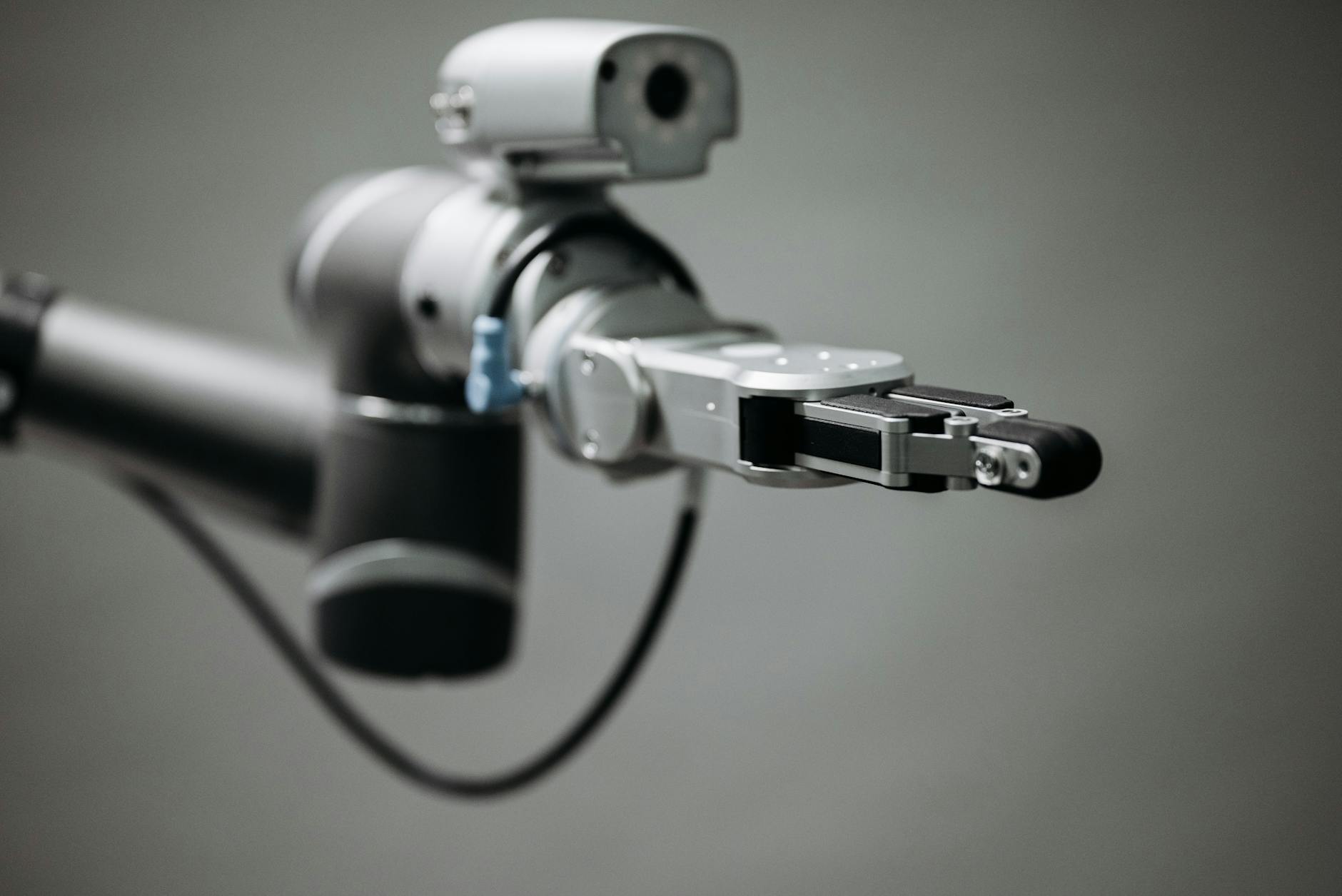
Hardware is increasingly becoming commoditized in robotics. A humanoid robot or an industrial manipulator is essentially a package of actuators, sensors, and mechanical design. The real scarcity and defensibility comes from the software layer: the algorithms that teach robots to understand tasks, adapt to new environments, and operate reliably in the real world. This mirrors how nvidia didn’t win by building the best graphics cards—they won by building CUDA and the ecosystem around GPU computing that made every developer want to use their hardware. In robotics, NVIDIA is already making this move. The company released Isaac GR00T, an open foundation model for robotics that enables developers to train and deploy intelligent robots at scale, and introduced Jetson Thor, powered by a Blackwell GPU, allowing robots to run multi-AI workflows simultaneously. These aren’t products; they’re platforms.
The shift in investment patterns supports this thesis. A decade ago, autonomous vehicle platforms dominated robotics funding, capturing 70 percent of all robotics capital in 2019. Today, that number has dropped to just 30 percent as of 2023, with investors pivoting toward vertical robotics—systems solving specific problems in warehouses, manufacturing, healthcare, and agriculture. But within this vertical shift, humanoid and general-purpose robots represent the fastest-growing and most heavily funded sub-sector in 2025 and 2026. This is crucial: investors are no longer betting on specialized solutions. They’re betting on general-purpose robots that can be reprogrammed and adapted across industries. That shift makes platform software the critical chokepoint. A general-purpose robot is worthless without the software that tells it what to do.
The Infrastructure Layer Is Where Defensibility Lives
Physical Intelligence raised $400 million at a $2 billion valuation for building foundation models for robotics, and Chinese humanoid robot startup Vbot raised $73 million in Pre-A funding. These are not anomalies—they represent a consistent pattern where funding is flowing to companies building the training frameworks and models that other roboticists will build on top of. But there’s a critical difference: building a platform that gains industry adoption is exponentially harder than building a point solution. NVIDIA spent decades building CUDA ecosystems, developer relationships, and lock-in effects. A robotics platform founder cannot simply declare their framework standard; it must solve real problems better than alternatives, it must remain open enough that companies don’t feel locked in, and it must build momentum through adoption by the best robotics companies in the world. The limitation here is adoption risk.
NVIDIA succeeded because graphics computing had a clear, universally understood need. Robotics is messier. A warehouse robot company has different needs than a manufacturing robot company, which has different needs than a humanoid robot startup. A platform that tries to serve all of them may end up serving none well. NVIDIA is aware of this and is addressing it through partnerships with major robotics companies—Agility, FANUC, Figure, Hexagon Robotics, KUKA, Skild AI, Universal Robots, World Labs, and YASKAWA are all building on NVIDIA’s platform. This partnership strategy reduces the risk of building a platform for a fragmented market, but it also signals that NVIDIA understands the platform must be truly open and flexible. If NVIDIA’s platform becomes too heavy-handed in enforcing its vision, these partners will either fork the technology or invest in competing platforms.
How Humanoid Robots Are Driving Platform Standardization
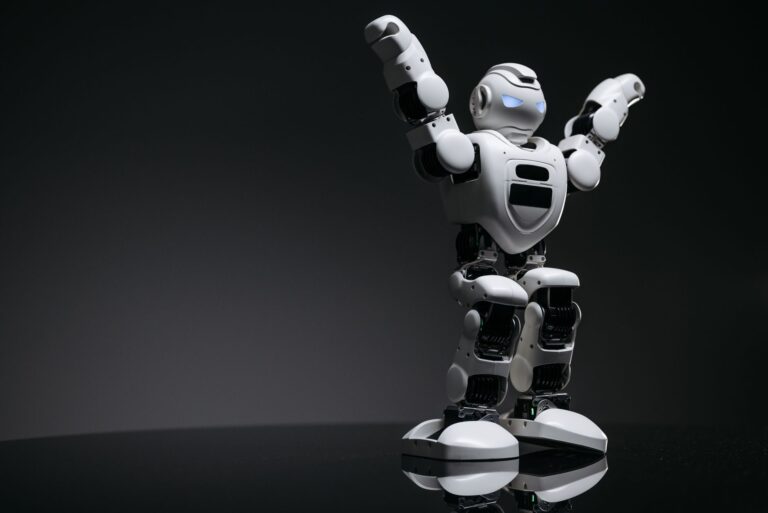
Humanoid robots are the rallying point for platform thinking in robotics. Boston Dynamics’ Atlas, now owned by Hyundai Motors, is entering production with plans to manufacture 30,000 robots annually by 2028. That scale of production requires standardized software, training methodologies, and deployment frameworks. You cannot manufacture 30,000 unique robots with custom software—the economics don’t work. NVIDIA’s Isaac GR00T and similar foundation models are designed to solve exactly this problem. A manufacturer can deploy the same foundation model across a fleet of robots, customize it for specific tasks, and push updates across the entire fleet.
This is the platform play in its purest form. The March 2026 unicorn wave reinforces this. Robotics led unicorn creation in March 2026, with six new billion-dollar robotics startups—three from China alone. These startups are not pursuing unique hardware designs; many are pursuing software advantages and platform positioning. Robotics is no longer about building better mechanical systems; it’s about building better intelligence systems that can run on existing hardware. This shift fundamentally changes the game for investors and founders. A startup that builds a superior training framework for humanoid robots can potentially serve every humanoid robot manufacturer in the world, whereas a startup that builds a superior humanoid robot itself is competing in a capital-intensive, hardware-focused category where Hyundai, Boston Dynamics, and other established manufacturers have enormous advantages.
North America vs. China: A Platform Warfare Beginning
North America captured 82.4 percent of disclosed robotics capital and 17 of 23 disclosed deals over the past 12 months, with an average round size of $109 million. This dominance in funding gives North American companies—particularly NVIDIA, which has the scale and resources to invest more than $40 billion in AI equity investments in the first four months of 2026—a significant head start in building robotics platforms. Yet the emergence of three Chinese unicorns in robotics in March 2026 signals that China is moving quickly to develop competing platforms. The tradeoff is speed versus sustainability. North American companies have deeper funding and more established partnerships with global companies, but they also face more regulatory scrutiny and must operate in a more competitive marketplace.
Chinese companies can move faster in domestic markets and can benefit from government support, but they face challenges in gaining international adoption and may struggle with fragmentation as they try to serve multiple customers with incompatible requirements. The geographic split matters because platform wars typically result in regional dominance rather than global winners. Android and iOS both succeeded globally because mobile phones were truly global products. Robotics is more fragmented—a robot for a Chinese warehouse is fundamentally different from a robot for an American factory due to different labor costs, safety regulations, and operational practices. This could result in a world where NVIDIA’s platform dominates in developed Western markets, Chinese platforms dominate in Asia, and specialized vertical platforms continue to thrive in specific industries. The winner is not necessarily a single company; it could be a consortium of complementary platforms.
The Open Model Risk and the Linux Question
NVIDIA is pursuing an open-source strategy with Isaac GR00T, similar to how it supports open-source GPU frameworks alongside proprietary offerings. The reasoning is clear: open-source adoption drives hardware sales and ecosystem lock-in. But there’s a cautionary note embedded in computing history. Linux became the dominant server operating system not because it was the best operating system, but because it was free and nobody owned it. If a completely independent robotics platform emerges that is truly open, vendor-neutral, and owned by a neutral foundation (analogous to the Linux Foundation), it could erode NVIDIA’s advantage. NVIDIA understands this risk, which is why they’re pushing Isaac GR00T rather than keeping core capabilities proprietary.
Another limitation is the talent problem. Building a credible robotics platform requires world-class roboticists, AI researchers, and systems engineers. NVIDIA can attract this talent with capital and prestige, but so can well-funded startups and research labs. The team building a competing robotics platform doesn’t need to be bigger than NVIDIA’s robotics team; they just need to be better focused and more innovative. This is why startups remain dangerous competitors despite NVIDIA’s advantages. A small team with better ideas about how robots should be trained and deployed could build a platform that gains rapid adoption if it solves real problems that NVIDIA’s more general-purpose offering doesn’t address well.
How Foundation Models Are Changing the Economics
Robotics is the fastest-growing category on Hugging Face, with NVIDIA’s models leading downloads. This is significant because it means developers are actively adopting and customizing existing foundation models for robotics applications rather than building from scratch. Physical Intelligence’s $400 million funding reflects investor confidence that foundation models specifically designed for robotics—trained on robot trajectories, joint angles, and sensorimotor tasks—will unlock rapid innovation. A foundation model designed for robotics can reduce the training time and data requirements for new robot capabilities, which translates directly to faster product development cycles for manufacturers.
The economics are profound. A company building a point-solution robot could spend hundreds of millions on R&D. A company building on a strong robotics foundation model can focus capital on mechanical design and integration rather than core AI development. This shifts the advantage dramatically toward the company that owns the foundation model. It also creates a powerful feedback loop: as more companies build on a platform, they generate more real-world robot interaction data, which can be used to further improve the foundation model, which attracts even more developers.
The Next Five Years of Robotics Infrastructure
The trajectory suggests that by 2030, we’ll see clear winners and losers in robotics platforms. Companies that can demonstrate rapid capability improvements across diverse robot morphologies (humanoids, manipulators, mobile bases) and industries will consolidate significant market share. The companies that lose will be those that either remain too specialized, fail to attract developer ecosystems, or attempt to lock customers into proprietary systems when open alternatives exist. NVIDIA’s scale, existing AI infrastructure, and partnership strategy position it well, but it is not inevitable that NVIDIA wins. The robotics industry is large enough and diverse enough that multiple platforms could coexist successfully, much like GPUs and TPUs both serve the AI market despite some overlap in use cases.
The next NVIDIA in robotics may not be NVIDIA at all—it could be a company that doesn’t yet exist or a consortium of companies that jointly build an open standard. What is certain is that the hardware manufacturers alone will not own the future. The companies that control the software infrastructure, the training frameworks, and the developer ecosystems will capture more value than those that merely manufacture robots. This mirrors the evolution of computing, where infrastructure companies like Intel, Microsoft, and NVIDIA ultimately captured more value than individual PC manufacturers. Robotics is following the same path, just with a few years’ lag.
Conclusion
The premise of the question—whether the next NVIDIA in robotics will be a robotics platform—is likely correct in principle, even if the specific form the winner takes remains unclear. Robotics is transitioning from a collection of vertical, specialized solutions toward a more horizontal, platform-driven market. Funding flows, investor sentiment, and the emergence of general-purpose robots all point toward this direction. The company that owns the infrastructure layer—the foundation models, the software frameworks, the hardware integration standards—will likely capture more value than any single robot manufacturer.
The opportunity is real and the timeline is accelerating. With $27.6 billion in robotics funding in 2025 and humanoid robots entering production at scale, the race to own robotics infrastructure is underway. NVIDIA has early advantages through Isaac GR00T, Jetson Thor, and strategic partnerships, but the market is large enough that competitors—whether startups like Physical Intelligence, established AI companies, or even consortia of robotics manufacturers—could also succeed. The winner in robotics platforms will be determined not by who moves fastest, but by who builds the most valuable and most widely adopted infrastructure that robotics companies of all sizes and types choose to build on.