
Robotics platforms, not individual robotic products, will produce the next trillion-dollar technology company because they control the entire ecosystem—software stacks, developer networks, simulation infrastructure, and AI model integration—while commoditized hardware becomes increasingly interchangeable. NVIDIA has already positioned itself as “the Android of generalist robotics,” explicitly following Apple’s smartphone OS strategy by announcing this vision at CES 2026. The data confirms this shift: software platforms in robotics grew at 21.60% compound annual growth rate through 2026, while overall robotic products grew only 13.39% CAGR, demonstrating that software-centric platforms are the value driver. With 14 different manufacturers already producing sub-$10,000 robotic arms and 12 commercial humanoid platforms available, the hardware commodity boundary has arrived.
Whoever controls the software platform that orchestrates these interchangeable machines—managing AI models, training data, developer tools, and deployment workflows—will extract value at the scale NVIDIA achieved in GPUs. This mirrors NVIDIA’s GPU dominance precisely. In 2010, competitors made graphics processors; by 2024, NVIDIA controlled AI infrastructure because they built CUDA, the developer ecosystem, the optimization pipeline, and the data center stack. Robotics is following the identical path, just two years behind. The global robotics market reached $38 billion in 2026 with 34% year-over-year growth—the fastest rate in a decade—but this growth is driven by platform consolidation, not product proliferation.
Table of Contents
- How Software Platforms Outpace Hardware in the Robotics Race
- The Collapse in Data Costs Proves Platform Economics Are Winning
- Hardware Commoditization Is Already Complete
- Developer Ecosystems Determine Platform Winners
- The Platform Lock-In Trap for Traditional Robotics Companies
- Subscription and RaaS Models Lock in Platform Control
- What Comes Next: The Platform Wars Begin
- Conclusion
How Software Platforms Outpace Hardware in the Robotics Race
The market data is unambiguous: software comprises 52% of the total component value in robotic platforms as of 2026, a structural shift away from hardware dominance. this 52% figure reflects reality: companies deploying robots don’t primarily care which arm they buy if three vendors offer equivalent specs at sub-$10K prices. They care about the software stack that lets them deploy, train, simulate, and iterate. This is why the industrial robotics intelligence software market alone is projected to add $49.17 billion in value by 2031—driven by AI, digital twins, and physical AI systems that make robots adaptive rather than programmed. The market research firm projecting this growth identified the core driver: factories don’t need faster hardware; they need software that lets robots learn new tasks, interact with AI systems, and integrate with enterprise infrastructure.
Compare this to the hardware squeeze: a robotic arm manufacturer selling a $15,000 unit at 20% margin captures $3,000 per robot. A software platform extracting value from that robot through model licensing, simulation credits, and developer tools can generate recurring revenue streams that dwarf hardware margins over the robot’s five-year operational life. NVIDIA’s Jetson T4000 module, released at $1,999 for 1,000-unit volumes, exemplifies this: the hardware is the entry point, but the real value lies in the Rubin platform ecosystem announced at the same event. The trap for pure product companies: they sell hardware once and compete on price. Platform companies sell the same hardware integration points to every manufacturer (like CUDA works across Nvidia, AMD, and Intel chips) while controlling the software layer where margins expand and switching costs appear.

The Collapse in Data Costs Proves Platform Economics Are Winning
One of the clearest indicators of platform emergence is infrastructure cost collapse. Teleoperation data—the human-supervised recordings used to train robot learning models—cost approximately $340 per hour to collect in early 2024. By Q4 2025, that cost had fallen 60% to $136 per hour. This collapse didn’t happen because individual product companies got better at data collection; it happened because platforms began amortizing data infrastructure across entire ecosystems. When NVIDIA integrates GR00T models and Isaac simulation into Hugging Face’s LeRobot framework—connecting 2 million robotics developers and 13 million AI builders—the cost structure for data collection, model training, and deployment infrastructure shifts from individual company burden to platform utility.
This infrastructure sharing creates a moat that pure product companies cannot replicate. If Company A manufactures a robotic arm and invests $50 million in building proprietary training infrastructure, they amortize that cost across their product sales. If NVIDIA builds the same infrastructure once and sells access to 50 robotics companies, the per-unit amortization becomes microscopic, and switching to a competitor’s hardware becomes less attractive because the software ecosystem is so deeply embedded. NVIDIA’s ecosystem already reaches 2 million robotics developers plus 13 million AI builders, following the same network-effect playbook that made CUDA irreplaceable in AI workloads. The warning for hardware manufacturers: as data infrastructure costs continue to fall, the value gap between commodity hardware and proprietary software only widens. A manufacturer betting on hardware differentiation in 2026 is building on shifting sand; the next five years will see software and platform access become the primary purchase decision, not robotic arm kinematics.
Hardware Commoditization Is Already Complete
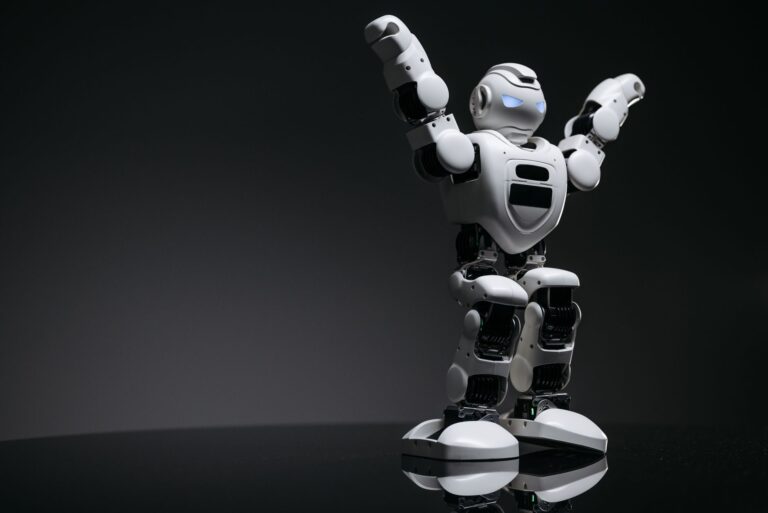
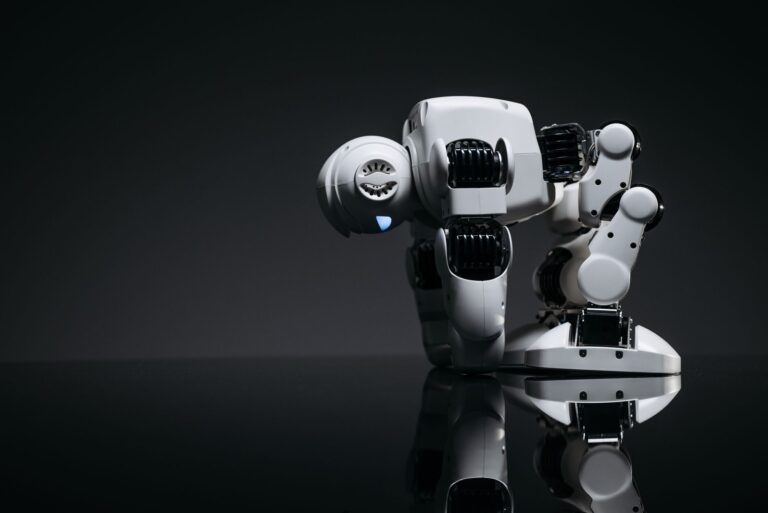
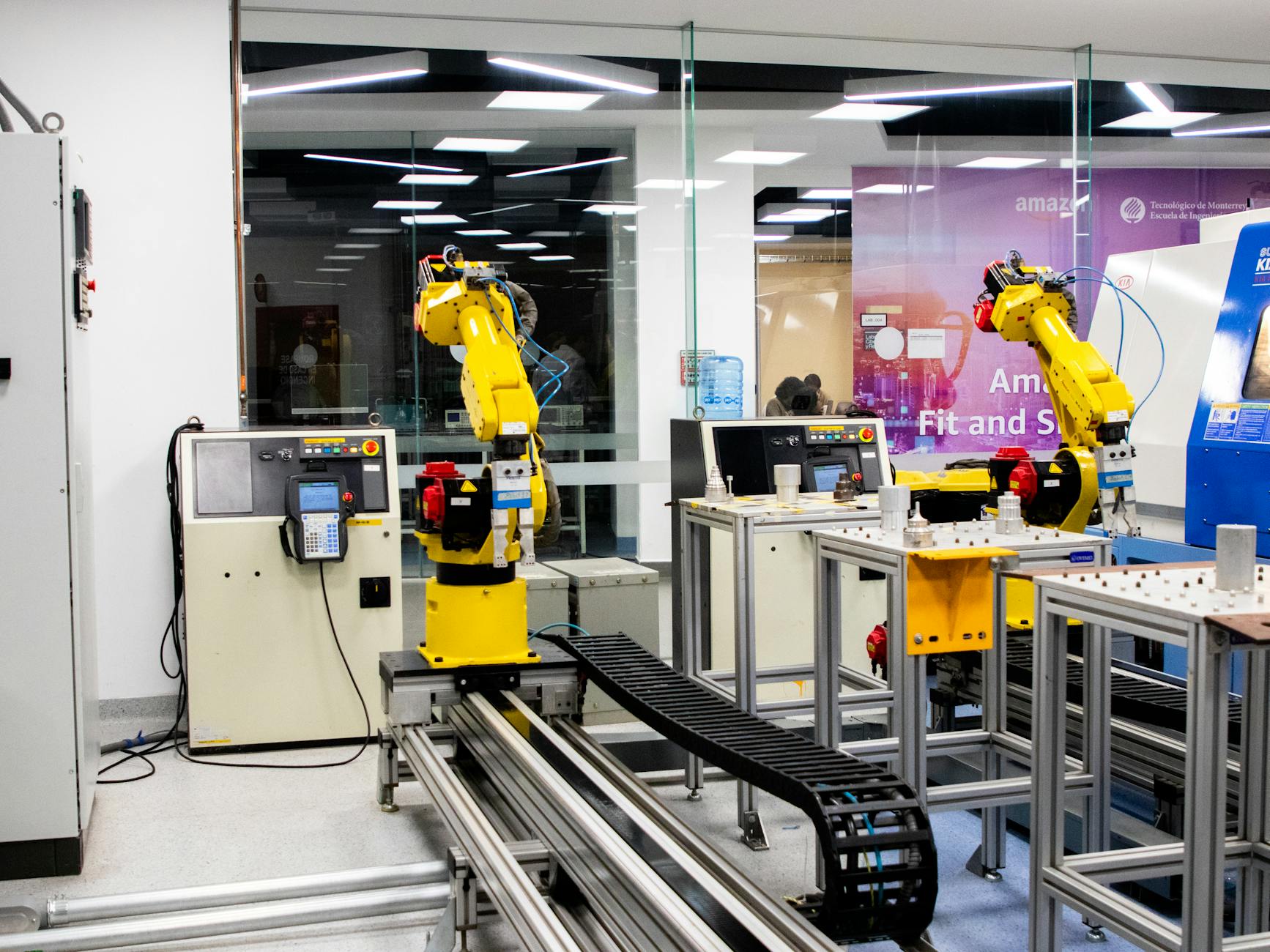
The robotics industry has reached the hardware commoditization boundary. Fourteen manufacturers produce sub-$10,000 collaborative robotic arms with nearly identical specifications: six-axis articulation, two to three kilograms payload, safety certifications, and modular end-effector interfaces. Twelve commercial humanoid robot platforms are available or in pre-production. The specifications matter less each year; buyers evaluate based on software ecosystem compatibility, training pipeline efficiency, and integration with existing automation platforms. This is the exact moment NVIDIA’s GPU business model became inevitable in AI: once commodity silicon became sufficient for most workloads, value shifted to the software layer that coordinated compute, memory, and optimization. Consider the robotic arm market segmentation circa 2026: ABB, KUKA, Universal Robots, and Techman all produce capable six-axis arms in the $10-25K range.
A small manufacturer entering this market cannot compete on hardware specifications; the physics of motor control and kinematics are solved problems. But NVIDIA doesn’t need to build a better arm—they need to integrate all compatible arms into a platform where software, simulation, and AI models work seamlessly across any hardware underneath. This is precisely what the Rubin platform announcements indicate: hardware becomes pluggable, software becomes the lock-in. Robotics-as-a-Service (RaaS) models emerging across the industry reflect this hardware commoditization. Organizations deploying robotics increasingly avoid large capital expenditure on hardware and instead lease access through subscription services that bundle software, training, and support. This shift accelerates platform consolidation because RaaS providers gain pricing power through software efficiency, not hardware cost reductions.

Developer Ecosystems Determine Platform Winners
The platform that attracts and retains the largest developer ecosystem wins because robotics is ultimately a software problem: defining task specifications, training models, integrating with factory systems, and iterating based on real-world performance. NVIDIA’s integration of GR00T (physical AI models) and Isaac simulation into Hugging Face’s LeRobot framework is the decisive move in this category. Hugging Face hosts over 13 million active users in AI and machine learning; LeRobot provides a robotics-specific framework that lets those developers apply generalist AI techniques to robotic control tasks. This single integration adds legitimacy, tooling, and network effects that no individual robotics company can replicate. Compare this to a pure product-focused competitor: a robotics manufacturer might build an equivalent simulation tool and publish documentation, but attracting developer mindshare when NVIDIA’s ecosystem is integrated into the platform developers already use daily is nearly impossible.
The cost advantage is also structural. A platform company can afford to offer simulation credits, training hours, and model weights at marginal-cost pricing to early adopters because they amortize infrastructure across the entire ecosystem. A product company building the same tools must charge rates that recover their engineering costs—and immediately becomes less attractive. The strategic implication: the next five years will determine whether secondary platforms (competitors to NVIDIA’s Rubin) can build sufficient developer traction to establish themselves as alternatives. The window is still open—robotics is less mature than AI infrastructure—but it closes rapidly as developers build applications, expertise, and dependencies on whichever platform they choose first.
The Platform Lock-In Trap for Traditional Robotics Companies
Legacy robotics manufacturers face a difficult structural problem: they built their business models on selling hardware, and their installed base creates both an opportunity and a prison. They own relationships with thousands of companies running their arms, which sounds like a platform advantage until you realize those customers are comparing software ecosystems, not buying new arms. ABB or KUKA could theoretically build an equivalent software platform to NVIDIA’s Rubin, but they would have to charge rates that justify their hardware profit targets—creating pricing pressure that loses to a pure software company unburdened by hardware margin requirements. The trap deepens with developer talent. Top software engineers building robotics systems increasingly want to work on platform infrastructure (reusable, scalable, affects thousands of deployments) rather than product optimization (incremental efficiency improvements to a single robotic arm model).
Hardware companies offering software engineering roles attract less experienced candidates who haven’t yet built platform intuition; pure software companies attract top talent. Over a five-year horizon, this talent accumulation compounds into a structural advantage that no amount of capital acquisition can overcome quickly. There is also the customer switching cost paradox: while a manufacturing facility running ABB arms has high switching costs in the short term (replacing hardware, retraining), software switching costs work in the opposite direction. If the NVIDIA platform makes deploying new tasks 40% faster because simulation and AI training are optimized end-to-end, the customer saves money despite hardware replacement capex. Traditional manufacturers betting on lock-in through hardware relationships are misreading the direction of technological leverage.
Subscription and RaaS Models Lock in Platform Control
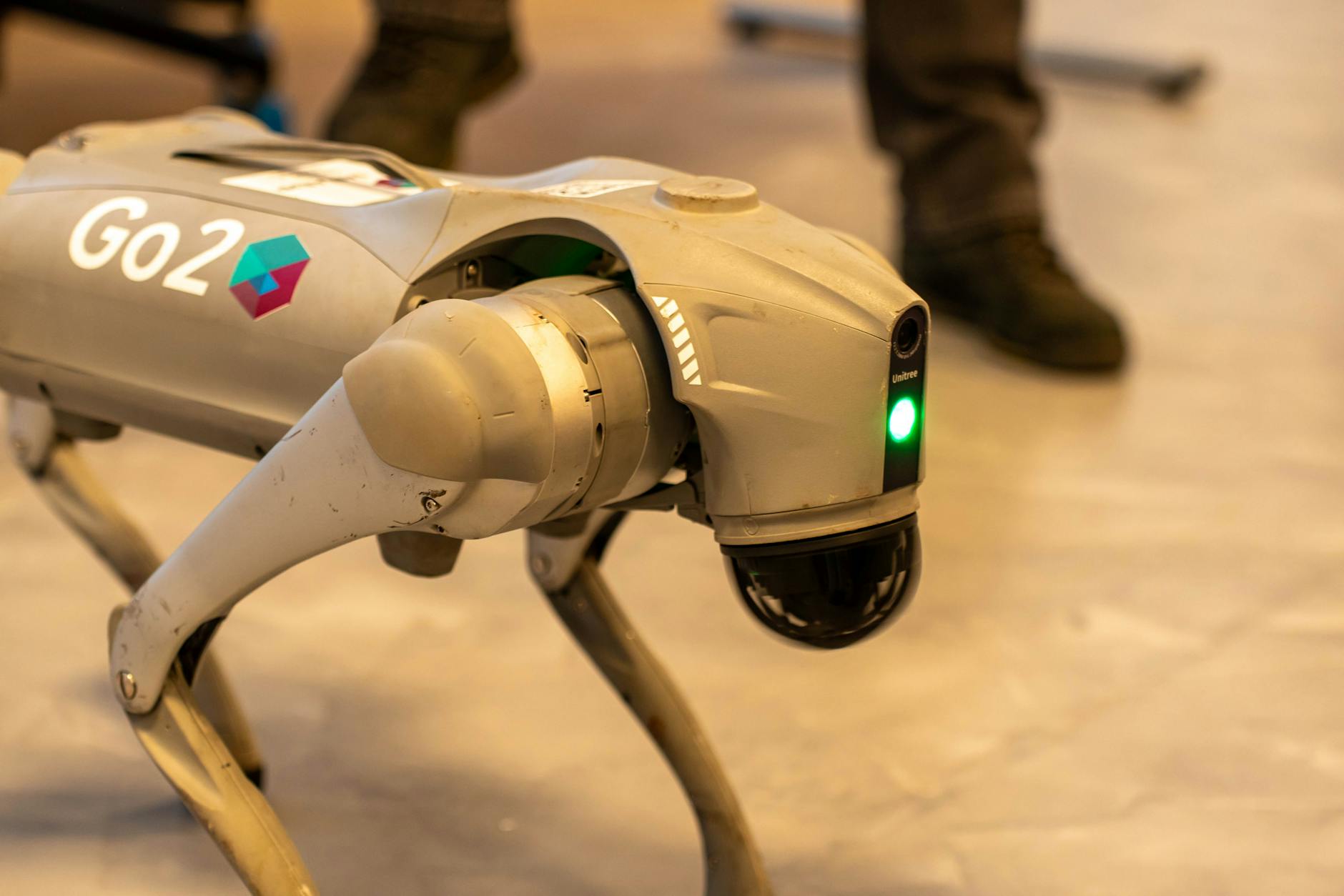
The shift from capital expenditure (buying robots) to operational expenditure (subscribing to robot deployment services) consolidates platform power because it transforms the business model from product sales to recurring revenue streams where software efficiency drives profitability. A manufacturer leasing three robotic arms to a factory over a five-year period must ensure those arms integrate seamlessly with the customer’s existing systems, run training efficiently, and adapt to task changes—all through software. The customer stops caring whether the arm was manufactured by ABB or Universal Robots and starts measuring cost-per-task on the software side.
NVIDIA doesn’t need to become a robotics manufacturer; they become a Platform-as-a-Service provider that charges by GPU utilization, simulation hours, and model training cycles. This pricing model expands margins while removing the company from hardware cost competition entirely. Several robotics startups and integrators are already moving this direction: offering “automation subscriptions” that bundle hardware (sourced from whoever offers best commodity pricing), software (usually NVIDIA, or increasingly competitors), and optimization services. The platform provider—the software company—captures the margin expansion as they scale because their costs grow sublinearly with customer count.
What Comes Next: The Platform Wars Begin
The robotics platform consolidation is in its early innings—analogous to where GPU-accelerated AI was around 2015, before CUDA became synonymous with parallel computing. The next three to five years will determine whether NVIDIA sustains its Android-of-robotics dominance or whether alternative platforms (potentially from robotics-native companies or new software entrants) establish sufficient differentiation. The outcome depends less on raw technology capability—competitors can match NVIDIA’s tensor cores and simulation tools—and more on developer network effects and ecosystem integration.
If NVIDIA successfully integrates robotics into the broader AI ecosystem (positioning robots as nodes in multi-modal AI systems rather than standalone machines), the moat becomes insurmountable. For investors and strategists, the lesson is clear: robotics companies will stratify into two tiers. Platform companies with integrated software, simulation, developer ecosystems, and vendor partnerships will capture exponential value growth; hardware and software specialists will compete on integration depth and niche optimization. A robotic arm manufacturer cannot become a platform company overnight, but a software company can become the default platform if it moves quickly to consolidate the ecosystem before lock-in completes.
Conclusion
Robotics platforms win over individual products because hardware is becoming commoditized while software complexity is accelerating. With 14 different manufacturers making sub-$10,000 arms, 12 commercial humanoid platforms, and data infrastructure costs collapsing 60% toward commodity pricing, the competitive differentiation between hardware products has compressed. Software platforms that coordinate these interchangeable machines—providing AI models, simulation, developer tools, and deployment infrastructure—capture the expanding value.
NVIDIA’s explicit strategy to become “the Android of generalist robotics” mirrors its GPU dominance in AI and indicates how platform dynamics will reshape the entire robotics industry over the next decade. The companies that thrive in this transition are those that recognize the shift from hardware differentiation to software integration. Traditional manufacturers must evolve toward platform thinking or risk commoditization; pure software companies must move aggressively to consolidate ecosystems before network effects crystallize around competitors. The platform that succeeds in 2026 and beyond will be the one that makes every hardware manufacturer and developer willing to integrate into its ecosystem because the switching costs and efficiency gains make the choice inevitable.