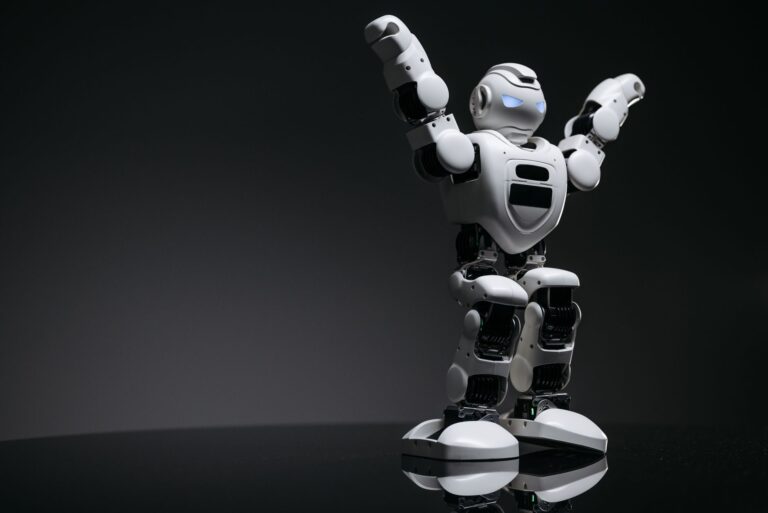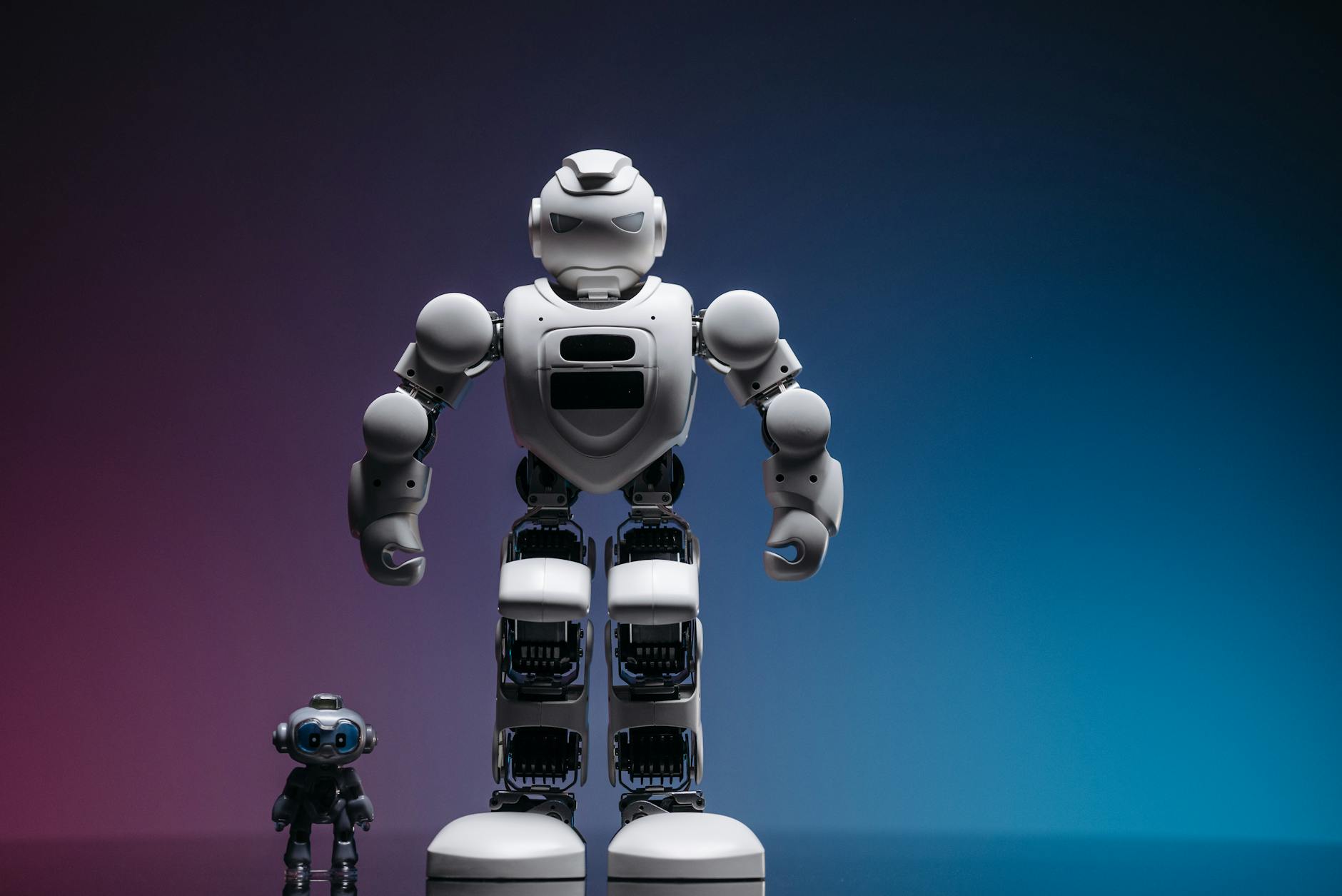

The next Nvidia in robotics won’t be a chip company or software startup—it will be a robotics hardware platform that does for physical automation what Nvidia did for AI: establish itself as the indispensable foundation layer that competitors must build on. A hardware platform in this context means a standardized robotic system—whether humanoid, arm-based, or mobile—that comes bundled with integrated software, standardized interfaces, and ecosystem support, allowing third parties to build specialized applications on top. This position has become increasingly valuable as the robotics market exploded to $38 billion in 2026, representing 34% year-over-year growth—the fastest expansion the sector has experienced in a decade.
The opportunity is real because robotics manufacturers currently face a fragmentation problem. Unlike the computing industry, where standardized platforms (Windows, Android, iOS) let developers write once and deploy widely, robotics companies are forced to either build entire custom stacks or cobble together incompatible components from dozens of vendors. A company that solves this problem—by providing a complete hardware platform with locked-in software, trusted APIs, and proven ecosystem partnerships—would capture outsized value, similar to how Nvidia became the essential supplier for AI by providing chips that everyone needed. We’re already seeing the contours of this race emerge, with massive capital investments flowing toward platform consolidation rather than individual point solutions.
Table of Contents
- Why Robotics Hardware Platforms Beat Point Solutions
- The Platform Economy in Robotics Hardware
- Network Effects and the Race for Dominance
- Capital Investment and Strategic Positioning
- The Standardization Challenge and Ecosystem Fragmentation
- Learning From Computing Platforms That Won and Lost
- The Path Forward and Market Consolidation
- Conclusion
Why Robotics Hardware Platforms Beat Point Solutions
The robotics industry is at an inflection point where platform dominance matters more than incremental hardware improvements. For the past decade, robotics growth came from narrow use-case optimization: a robot for warehouse picking, a manipulator for assembly, a humanoid for caregiving. These specialized solutions captured value, but they created a fragmented ecosystem where technical debt accumulated quickly. When a new task emerged or technology improved, manufacturers had to start from scratch or fork their entire software stack. Consider the current landscape: 12 commercial humanoid robot platforms are available for purchase or lease, and 14 manufacturers produce industrial robotic arms priced under $10,000. That proliferation sounds healthy on the surface, but it creates a coordination problem for enterprise customers. A manufacturer deploying humanoids alongside traditional arms alongside mobile robots faces integration nightmares, vendor lock-in risks, and duplicated engineering effort.
This is precisely the problem nvidia solved in AI—instead of building their own large language models or training pipelines, Nvidia provided the chips and software platform that made it trivial for others to build. A robotics hardware platform that achieves similar standardization would capture similar leverage. The funding data supports this thesis. Robotics funding hit $27.6 billion in 2025, up 101% from $13.7 billion in 2024, with 70%+ of Q1 2026 capital going to warehouse and industrial automation firms. However, a significant portion of that money is flowing to integrated platform companies—not point-solution vendors. WIRobotics, a South Korean humanoid platform, raised $68 million in Series B funding in May 2026 with revenue doubling annually. Mind Robotics, founded by Rivian CEO RJ Scaringe, reached a $3.4 billion valuation with over $1 billion in total funding. Both are betting that building a complete hardware and software stack is more defensible than selling individual components.
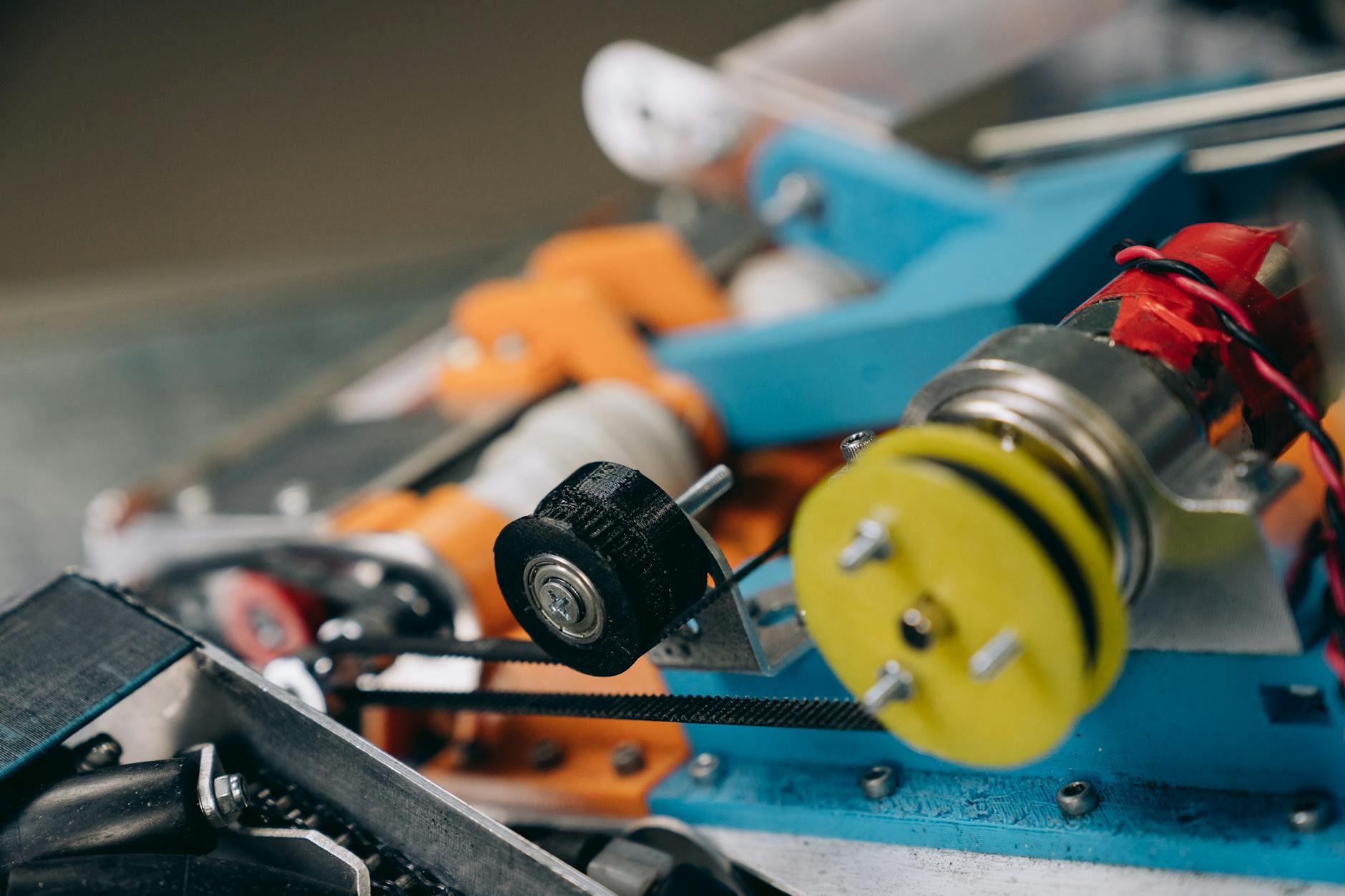
The Platform Economy in Robotics Hardware
A robotics hardware platform succeeds or fails based on ecosystem lock-in and standardization. Unlike previous robotics eras where each robot was essentially a bespoke system, platforms create network effects: the more developers and integrators standardize on a platform, the more valuable it becomes. This mirrors Android in mobile—Google didn’t need to build every Android app; they built the platform and let others build the applications, which made the platform more valuable, which attracted more developers. Nvidia is already making aggressive moves in this direction. At CES 2026, Nvidia released the Jetson T4000 module with 4x greater energy efficiency powered by Blackwell architecture, and launched the Rubin platform featuring open robot foundation models and edge hardware (Jetson Thor on Arm Neoverse). Rather than building their own robots, Nvidia is following the proven Android playbook: provide the foundational silicon, software libraries, and standardized interfaces, then partner with OEMs to manufacture robots on top of that platform.
Their partner ecosystem includes Boston Dynamics, Caterpillar, Franka Robotics, Humanoid, LG Electronics, and NEURA Robotics—a roster that suggests Nvidia is positioning itself as the de facto infrastructure provider. However, there’s a critical limitation here: Nvidia’s approach creates dependency on their proprietary hardware and software stack. Robotics companies that bet heavily on Nvidia’s platform face the same vendor lock-in risk that has plagued other technology industries. If Nvidia decides to raise prices, restrict access, or shift strategy, platform partners have limited options. This is why platforms like WIRobotics and Mind Robotics are aggressively pursuing open standards and diversified supplier relationships. The next Nvidia in robotics could be a company that solves Nvidia’s lock-in problem while still providing platform advantages—or it could be an open-source foundation that provides the standardization without commercial control.
Network Effects and the Race for Dominance
The robotics hardware platform that establishes dominance first will enjoy exponential advantages. Consider the industrial robot market: global robot installations reached an all-time high of $16.7 billion in value, but the market is still fragmented across ABB, KUKA, Fanuc, Yaskawa, and dozens of smaller players. None has achieved platform dominance because they compete on hardware specs rather than ecosystem value. A platform winner would consolidate this fragmentation the way Nvidia consolidated GPU computing. The capital markets are clearly betting on platform consolidation. Robotics sector unicorn creation hit a high in March 2026, with 6 new billion-dollar startups entering the space (3 from China).
Meanwhile, traditional venture investors like SoftBank Vision Fund participated in 8 robotics deals totaling over $1.5 billion from 2022-2025, often betting on platform companies rather than single-product robotics makers. The global robotics market is projected to reach $88.3 billion by 2026, and that’s where the platform advantage compounds: in a $38 billion market, building a better arm matters; in an $88 billion market, controlling the platform matters more. But here’s the limitation: building a dominant platform requires solving the cold-start problem. Early adopters need compelling reasons to commit to an unproven ecosystem. Why would a robotics company bet on a new hardware platform when KUKA or ABB have proven supply chains and customer relationships? The answer typically involves one of three strategies: dramatically superior technology (as Nvidia had in GPUs), significantly lower price (as Android had in mobile), or massive capital investment and partnerships (as Nvidia is executing now with Rubin). Most new entrants can’t execute all three, which is why the robotics platform race looks like it could be between established players like Nvidia and well-funded newcomers like Mind Robotics rather than true startups.

Capital Investment and Strategic Positioning
The venture capital community has shifted from funding point-solution robotics companies to funding integrated platform players. This reflects a maturing market where technology differentiation alone isn’t enough—you need a defensible moat, and platforms provide that. When Nvidia and NVentures participated in 15 robotics deals between 2022 and 2025, they weren’t diversifying their bets; they were positioning themselves at the center of the robotics ecosystem. This capital concentration creates both opportunity and risk. For platform builders, massive funding enables the long-term, capital-intensive work of building ecosystems and standardized interfaces. Mind Robotics’ $1+ billion funding position allows them to absorb years of development and market education before proving ROI. For smaller robotics companies, this concentration creates pressure to either align with a dominant platform or build something truly differentiated.
A startup building a specialized warehouse robot in 2026 isn’t competing on robotics—they’re competing on whether they’ll use NVIDIA’s Rubin, Mind’s platform, or build independently. That’s a strategy problem, not a technology problem. The tradeoff is that platform dominance often comes at the cost of specialization. A platform company must optimize for broad utility rather than niche excellence. Mind Robotics’ humanoid robots might not be the optimal design for hospital environments, and NVIDIA’s Rubin might not match Fanuc’s industrial arm precision. Platforms succeed despite these compromises because their ecosystem advantages outweigh their technical limitations. A hospital operator can use Mind’s humanoid with custom software from a third-party integrator and achieve 95% of what a purpose-built caregiving robot delivers, at lower total cost of ownership. That math is compelling enough to drive adoption.
The Standardization Challenge and Ecosystem Fragmentation
One of the most underestimated challenges facing the next Nvidia in robotics is the lack of agreed-upon standards. In semiconductor computing, x86 and ARM are entrenched instruction set architectures with decades of ecosystem support. In robotics, there is no equivalent standard. ROS (Robot Operating System) is open-source and widely used, but it’s not a hardware platform—it’s software middleware that can run on any robot. NVIDIA’s Rubin is attempting to fill this gap, but it competes with proprietary approaches from companies like Boston Dynamics and Tesla’s robotics projects. Standards battles are notoriously difficult and slow. The USB standard took years to achieve broad adoption, and even today you’ll find proprietary connectors in specialized hardware. Robotics standards are more complex because they involve mechanical, electrical, and software integration—you can’t just plug in a new arm the way you plug in a USB device.
A platform company that tries to enforce too much standardization will face backlash from OEMs who see it as limiting their design freedom. One that enforces too little will fail to deliver the coordination benefits that make the platform valuable. Finding that balance is a competitive advantage, which is why both NVIDIA and Mind Robotics are investing heavily in partnership negotiations and ecosystem development. Another limitation: global robotics growth is unevenly distributed. 70%+ of 2026 robotics funding went to warehouse and industrial automation firms, reflecting current market priorities. A hardware platform that optimizes for these use cases may struggle to expand into healthcare, logistics, or consumer applications. Conversely, a platform built for humanoids (where Mind Robotics is focused) faces inherent design constraints that make industrial arm integration awkward. The winning platform might not be a single architecture but a federation of compatible systems—similar to how Nvidia’s GPU lineup ranges from embedded Jetson chips to data center H100s. That federation approach adds complexity but increases defensibility.

Learning From Computing Platforms That Won and Lost
The history of computing platforms provides useful lessons for robotics. When Nvidia entered the GPU market in the early 2000s, GPUs were niche accelerators used primarily for graphics rendering. Nvidia’s strategic insight was recognizing that GPU parallel processing architecture was ideal for machine learning and scientific computing. They invested heavily in CUDA—a software platform and programming environment that made it easy for researchers and engineers to write code for Nvidia GPUs. This ecosystem investment proved more valuable than the hardware itself. Today, Nvidia’s dominance rests less on having the fastest chips and more on having the most valuable software platform. By contrast, consider Intel’s Xeon Phi project.
Intel invested billions trying to position Phi as a competitor to GPUs for AI and scientific computing. Xeon Phi had decent specifications and Intel’s manufacturing excellence behind it, but it failed to build an ecosystem because they arrived late and couldn’t overcome CUDA’s momentum. The lesson for robotics is clear: hardware specifications matter, but ecosystem momentum matters more. A platform company that can convince developers, integrators, and enterprises to build on top of their stack creates compounding advantages that technical inferiority can’t overcome. NVIDIA is applying this lesson aggressively. By providing Jetson hardware, CUDA support, and pre-built AI models for robotics tasks (through their GR00T foundation models), they’re creating ecosystem friction against competitors. A robotics company considering which hardware platform to build on faces a decision: NVIDIA’s ecosystem comes with proven AI infrastructure and extensive developer support, while a competitor’s platform might have better robotics-specific features but less ecosystem support. That calculation favors NVIDIA, the same way it favored Android despite iOS having superior user interface design in the early years.
The Path Forward and Market Consolidation
The robotics hardware platform market will likely consolidate around 2-4 dominant players within the next 5 years. This prediction is based on market maturity patterns: as markets grow, platform dominance typically increases, and winners-take-most dynamics accelerate. We’re seeing early signs of this with NVIDIA’s 15 deals, Mind Robotics’ funding trajectory, and the emergence of specialized platforms for specific verticals (like humanoid-focused platforms versus industrial arms). What success looks like for a robotics hardware platform isn’t subtle: it’s being the stack that the majority of robotics companies can’t ignore.
When a warehouse automation company evaluates robotics solutions, the platform choice becomes so integral to their decision that they prioritize platform compatibility over point-product features. When a robotics startup is deciding whether to build custom hardware or adapt an existing platform, the platform option is compelling enough to be the obvious choice. That’s when you have platform dominance. We may already be watching the defining moments of this transition—WIRobotics’ rapid growth, Mind Robotics’ valuation, and NVIDIA’s Rubin launch suggest the race is entering its critical phase. The winner will likely emerge from this cohort within 24-36 months, and the second-place finisher will face significantly diminished opportunities as lock-in accelerates.
Conclusion
The next Nvidia in robotics will be a hardware platform that solves the fragmentation problem currently plaguing the industry. It won’t necessarily be Nvidia itself, though they’re clearly competing aggressively for that position. It could be Mind Robotics, WIRobotics, or an emerging player not yet in the spotlight. What matters is that the market dynamics favor platform consolidation, and capital is flowing toward companies attempting to establish platform dominance rather than incremental hardware improvements.
The robotics market’s growth to $38 billion in 2026 and projected expansion to $88 billion by 2026 provides enough opportunity to support multiple platforms, but not dozens—the winner will control significant leverage. The implications for robotics companies, investors, and integrators are straightforward: the platform choice you make in the next 12-24 months will likely define your technical and financial options for the next decade. Build on a dominant platform and you inherit its ecosystem advantages. Build independently and you face constant friction against platform-locked competitors. The next Nvidia in robotics will be the company that makes platform adoption feel inevitable, not optional.