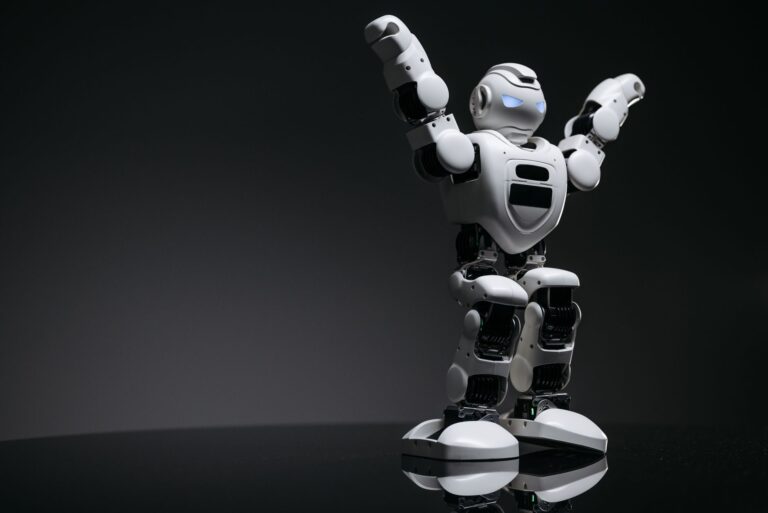

Yes, Nvidia’s robotics software stack could very well become the next monopoly in industrial automation—but not in the way you might expect. The question isn’t whether Nvidia will dominate robotics chips; the company already does. According to Stephen Witt, author of “The Thinking Machine: Jensen Huang, Nvidia, and the World’s Most Coveted Microchip,” every single robotics manufacturer surveyed—all 40 companies—runs on Nvidia Thor chips. That’s not dominance. That’s saturation. What makes this a potential software monopoly, however, is the gravitational pull of Nvidia’s ecosystem: the Jetson platforms, Isaac robotics frameworks, Omniverse simulation environments, and the newly announced Cosmos world models.
Once you’re locked into Nvidia’s hardware, you’re increasingly locked into their software stack, and that combination is nearly impossible to escape. The difference between a hardware monopoly and a software monopoly matters enormously. Hardware monopolies can be disrupted by better chips. Software monopolies are stickier. They become part of the organizational DNA, require expensive retraining, and create lock-in effects that persist even when competitors offer superior alternatives. Nvidia is systematically building this trap, and the robotics industry is walking into it with eyes wide open.
Table of Contents
- How Nvidia Became the Default Choice for Robotics
- The Technical Lock-In Effect
- Enterprise Adoption Creates the Moat
- Competitors Are Running Out of Time
- The Risks of Dependency on a Single Vendor
- The Performance Gains Are Real, Even If Lock-In Is the Real Story
- What Comes After the Monopoly
- Conclusion
- Frequently Asked Questions
How Nvidia Became the Default Choice for Robotics
The dominance didn’t happen overnight. nvidia spent years positioning Jetson as the accessible AI compute platform for robots, before the Thor era when GPUs were far less capable. The strategy was simple: make it the easiest, most cost-effective path for robotics companies to add autonomy features to their products. The Jetson Orin generation achieved 1,120 TFLOPS of performance, but this year’s Jetson Thor upgrade represents a quantum leap. With 2,070 FP4 TFLOPS performance capacity and 128 GB of LPDDR5X memory with 273 GB/s bandwidth, Thor delivers 7.5 times the AI performance of Orin while improving energy efficiency by 3.5 times. For a robotics engineer, that’s not a marginal improvement—it’s the difference between what’s possible and what’s impossible.
The 2026 announcements accelerated this lock-in. At CES, Nvidia released the Jetson T4000 module at $1,999 for 1,000-unit volumes, complete with Blackwell architecture optimized for autonomous machines. Three months later at GTC 2026, the company unveiled Cosmos world models, Isaac simulation frameworks, and GR00T N models—new foundational models trained specifically for robotic control and understanding of physical environments. In April, Nvidia announced the Physical AI Data Factory Blueprint, an entire system for automatically generating training data for robotics applications. This isn’t just hardware anymore. This is a complete software ecosystem designed to make other choices feel incomplete by comparison.
The Technical Lock-In Effect
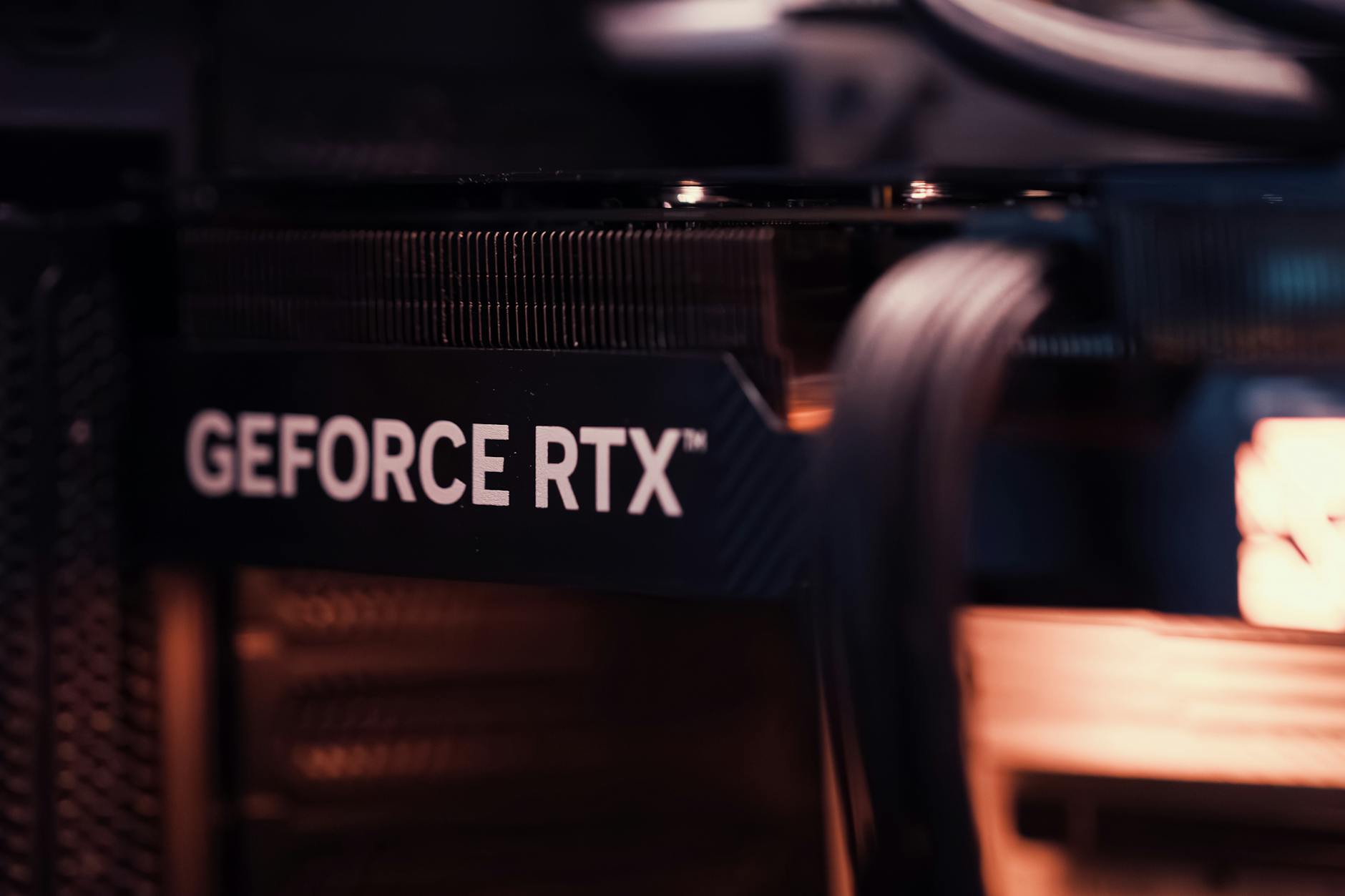
What separates a hardware vendor from a software monopoly is the switching cost. Nvidia’s CUDA ecosystem is notoriously difficult to abandon, even for companies that want to. The same principle applies to robotics. Once a company has invested in engineers trained on CUDA, built applications on Isaac frameworks, and validated robots using Omniverse simulation, the cost of switching to AMD, Intel, or custom silicon becomes astronomical. It’s not just the cost of new hardware—it’s rewriting software stacks, retraining teams, and validating that everything still works on different chips. The 2,560 CUDA cores in Thor, coupled with the 1,035 TOPS performance at FP8, give Nvidia a technical advantage that will take competitors years to match.
But here’s the concerning part: the advantage is compounding. As more robotics companies build on Nvidia’s platform, more talent concentrates on CUDA and Isaac. More robotics vendors optimize their products for Thor. More software libraries target Nvidia’s architecture. this creates a self-reinforcing cycle where using Nvidia becomes the only rational choice, not because it’s always technically superior, but because everyone else is using it. That’s the monopoly position to worry about—not because Nvidia is beating competitors on pure performance, but because competitors become irrelevant.
Enterprise Adoption Creates the Moat
The enterprise partnerships reveal the scale of this commitment. ABB Robotics, FANUC, Yaskawa, Boston Dynamics, Caterpillar, Figure AI, Universal Robots, and KUKA are all integrating Nvidia Isaac frameworks and Omniverse libraries into their next-generation products. These aren’t startups experimenting with new platforms. These are the titans of industrial robotics, companies with decades of market history and billions in annual revenue. Their adoption signals that Nvidia’s stack isn’t just viable—it’s the industry standard. At GTC 2026, Nvidia CEO Jensen Huang made a statement that crystallizes the company’s ambition: “Every industrial company will become a robotics company.” That’s not hyperbole from a CEO trying to pump stock prices. That’s a strategic vision backed by the company’s $20 trillion market thesis, which positions robotics and simulation software as the primary revenue driver for the next decade.
When ABB, FANUC, and Yaskawa integrate Isaac frameworks, they’re betting that Nvidia’s vision is correct. And their adoption makes the vision increasingly likely to come true, regardless of whether it’s actually the best technical path forward. The danger here is familiar to anyone who watched the mobile OS wars. The company with the most market share gets the best developers. The best developers attract more users. More users justify more investment in the platform. The cycle continues until you have a monopoly, not because you cheated, but because you were good enough first and grew fast enough second.

Competitors Are Running Out of Time
The alternatives exist, but they’re struggling to gain traction. AMD’s CDNA architecture offers competitive performance in some applications, and Intel’s discrete GPUs are improving. But neither company has spent the last five years building the robotics-specific software ecosystem that Nvidia has. Neither has partnerships with eight of the ten largest industrial robotics manufacturers. And neither is announcing world models, generative robotics models, and automated data factory blueprints. OpenVINO (Intel’s inference toolkit) and HIP (AMD’s CUDA alternative) exist, but they require developers to rewrite code that already works on CUDA. That’s a hard sell when your deadline is next quarter.
For robotics companies evaluating platforms in 2026, the choice feels obvious: use Nvidia, use the software that everyone else is using, use the platform with the most documentation and community support. By the time a meaningful alternative emerges, the switching cost will be so high that only new entrants will consider it. Incumbent robotics manufacturers will have optimized their entire supply chains around Thor hardware and Isaac software. The real wildcard is custom silicon. If a robotics manufacturer decides to design its own chips—the way Tesla designed Dojo, or the way hyperscalers are designing their own AI chips—Nvidia’s dominance becomes less relevant. But custom silicon requires billions in R&D and years of engineering time. It’s a bet that only the largest companies can make, and even they hesitate to move away from an ecosystem as mature as Nvidia’s.
The Risks of Dependency on a Single Vendor
Every software monopoly eventually becomes a liability. Nvidia has been generous with its pricing relative to the value provided, but there’s no guarantee that generosity continues. Once customers are locked in, the power dynamics shift. A single price increase across the entire robotics industry—on Thor chips, on Isaac licensing, on Omniverse platform fees—would ripple through every major manufacturer. They’d complain, but they’d pay, because abandoning Nvidia would be more expensive than absorbing a 10 or 20 percent cost increase. This isn’t speculation. We’ve seen this pattern repeatedly in enterprise software.
Microsoft’s dominance in office productivity led to years of stagnant innovation because no one had an incentive to disrupt the ecosystem. Cloud providers consolidated power and now exercise enormous influence over which technologies thrive and which disappear. The robotics industry has an opportunity to learn from these mistakes, but the economic incentives are pushing in the wrong direction. Betting on Nvidia is rational for any individual company. It’s only irrational when everyone does it simultaneously. There’s also a strategic risk. If Nvidia decides to prioritize its own robotics products—if the company decides to build robots using its own platforms before licensing them to competitors—then Nvidia’s partners are simultaneously funding their own disruption. This is standard corporate practice in tech, but it creates a fundamental misalignment of interests between platform vendors and platform users.
The Performance Gains Are Real, Even If Lock-In Is the Real Story
It’s worth noting that Nvidia’s technical advantages aren’t illusory. The Qwen2.5-VL-7B model runs 3.5 times faster on Thor than on competing hardware. Generative AI models including LLMs, VLMs, and VLAs see 5x performance improvements on Thor. For robotics applications where inference speed matters—autonomous navigation, real-time object detection, responsive human-robot interaction—these numbers translate directly to better products.
A robot that can process camera input and make decisions in 100 milliseconds instead of 350 milliseconds is a meaningfully better robot. Nvidia deserves credit for that engineering. The issue is that this technical excellence is inseparable from the lock-in strategy. The performance gains are real, but they come bundled with ecosystem dependency, vendor concentration, and reduced competitive pressure. It’s possible to acknowledge both truths simultaneously: Nvidia built genuinely better technology, and that success has created unhealthy market dynamics.
What Comes After the Monopoly
The robotics industry is entering a critical decade. The companies making platform choices now are essentially deciding the industry’s architecture for the next 20 years. Once every major robotics manufacturer is optimized around Nvidia hardware and software, changing that becomes nearly impossible. New startups will build on Nvidia because everyone else has. Established players will defend their Nvidia investments.
Nvidia will grow more entrenched, extract more value, and eventually slow down the pace of innovation because competition has been effectively eliminated. This cycle doesn’t last forever, but it can last for decades. The question isn’t whether an alternative to Nvidia’s robotics stack will eventually emerge—it will. The question is how long the industry will tolerate Nvidia’s dominance before sufficient frustration builds to justify the switching cost. Given the speed of robotics development and the strategic importance of automation to every major economy, the answer could be “not long enough.” By the time the industry wants to diversify, breaking free from Nvidia’s ecosystem could be the work of an entire generation of engineers.
Conclusion
Nvidia isn’t just capturing the robotics hardware market—it’s building the software layers that will make switching away from Nvidia’s chips economically irrational for decades to come. The 40 robotics manufacturers running on Thor, the partnerships with industry giants, the new Cosmos world models, the Isaac frameworks, and the Physical AI Data Factory all point toward a unified ecosystem where Nvidia’s platform becomes not just dominant but inescapable. This is the next Nvidia in robotics: not the company that sells the most chips, but the company that owns the software that makes all the chips work together.
The robotics industry should proceed with caution. The technical advantages are real, and the short-term benefits of standardization are genuine. But the long-term cost of surrendering this much market power to a single vendor could prove extraordinarily expensive—not in dollars, but in forgone innovation, reduced competition, and the inevitable rent-seeking behavior that follows monopoly consolidation. The time to build alternatives, support multiple platforms, and maintain competitive pressure is now, while choice still exists.
Frequently Asked Questions
Why is software monopoly riskier than hardware monopoly in robotics?
Hardware monopolies can be disrupted by better chips or competitors. Software monopolies create deeper lock-in through ecosystems, training, and integrated workflows that are expensive to replace, even if better hardware becomes available.
What would it take for a competitor to challenge Nvidia’s robotics dominance?
A competitor would need to match Nvidia’s performance per watt, build equivalent simulation and AI frameworks, secure major OEM partnerships, and offer significantly better pricing or capabilities—all while Nvidia’s installed base grows. The window for this is closing rapidly.
Is Nvidia’s dominance inevitable, or can it be resisted?
It’s not inevitable, but it requires coordinated effort. Robotics companies could deliberately diversify platforms, support multiple chip architectures, and fund open-source alternatives. Most won’t, because standardization on Nvidia offers short-term benefits and lowest risk today.
What happens if Nvidia raises prices after robotics companies are locked in?
Customers would have limited options. Competitors would gain share slowly because switching costs are high. The most likely outcome is a decade of gradual price increases until frustration builds enough to justify migration, by which time Nvidia’s lead has only grown.
Are there any regulatory concerns with this level of market concentration?
Potentially, though regulators have been slow to act against technology monopolies. If robotics becomes as strategically important as semiconductors, governments may eventually intervene. For now, the risks are primarily market-based rather than regulatory.
What should robotics companies do to protect themselves?
Maintain some platform diversity in R&D, support open standards, invest in multi-architecture training, and negotiate aggressively on long-term contracts while they still have leverage. The time to negotiate favorable terms is before you’re fully locked in.